


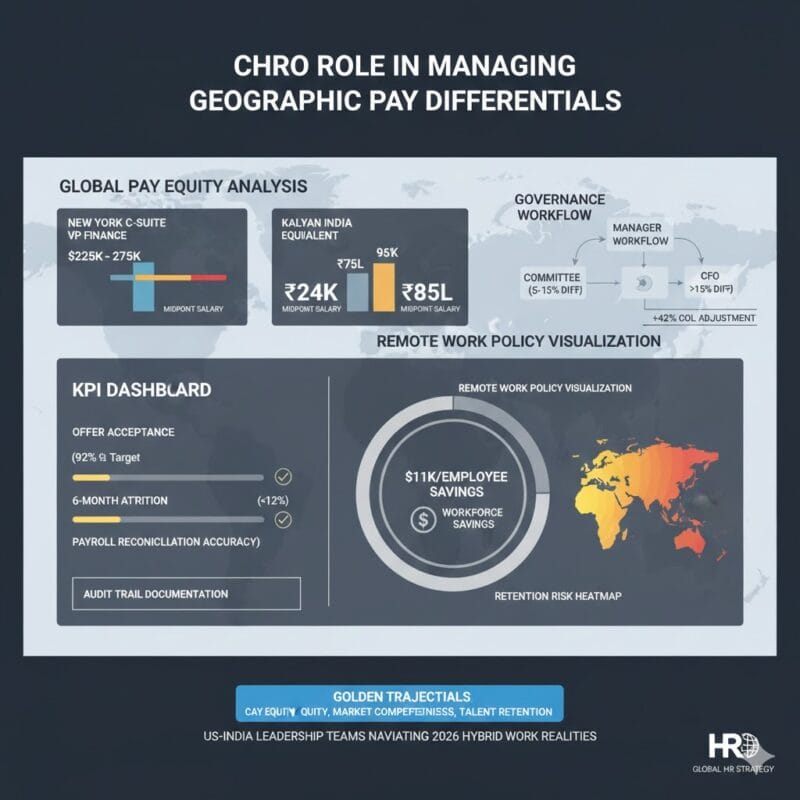
The CHRO’s Fiduciary Role in Geographic Pay Differential Governance In an increasingly fluid talent landscape, the strategic imperatives for executive leadership, particularly the Chief Human Resources Officer (CHRO), have never been more pronounced. Effective management necessitates a profound understanding of evolving market dynamics, robust data analytics, and a crystal-clear compensation philosophy that judiciously balances local market demands with overarching internal.
Author Archives: Jeremy Gleason
Blog section for Employers and Job Seekers, COO Executive Recruiting, executive recruiting, Executive Search Challenges
Case Study: How to Successfully Onboard a Fully Remote C-Suite Executive
12
Jan
Jan
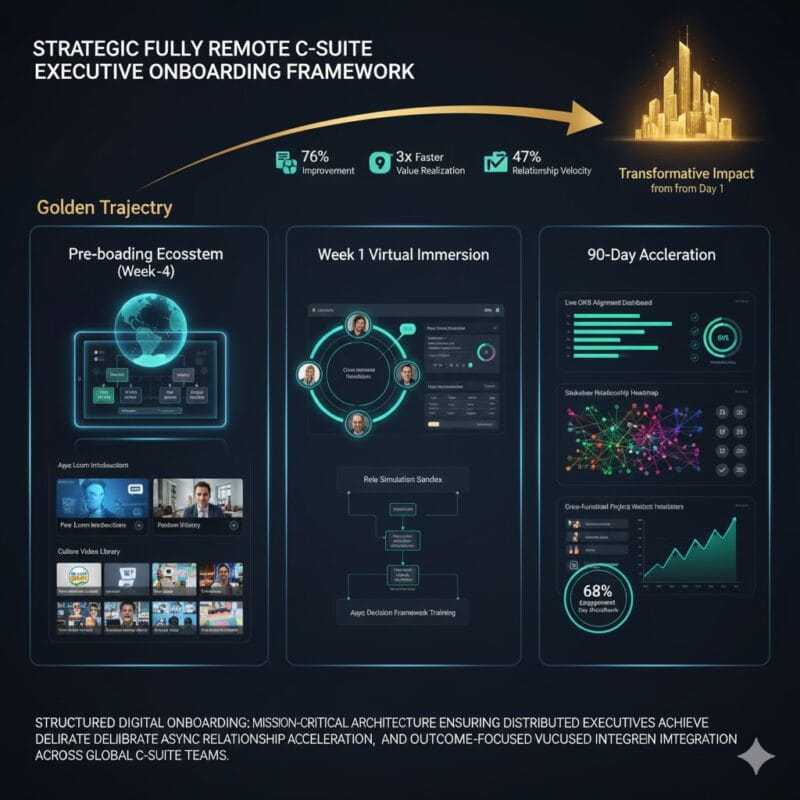
Strategic Imperatives for Successfully Onboarding Fully Remote C-Suite Executives In an era defined by a dynamic talent landscape and evolving operational models, the successful integration of fully remote C-suite executives has become a critical determinant of organizational resilience and growth. The paradigm shift towards distributed leadership mandates a sophisticated approach to executive assimilation, especially within the highly competitive US market.
Blog section for Employers and Job Seekers
Why a Structured Return-to-Office Policy Can Sabotage Executive Hiring
12
Jan
Jan
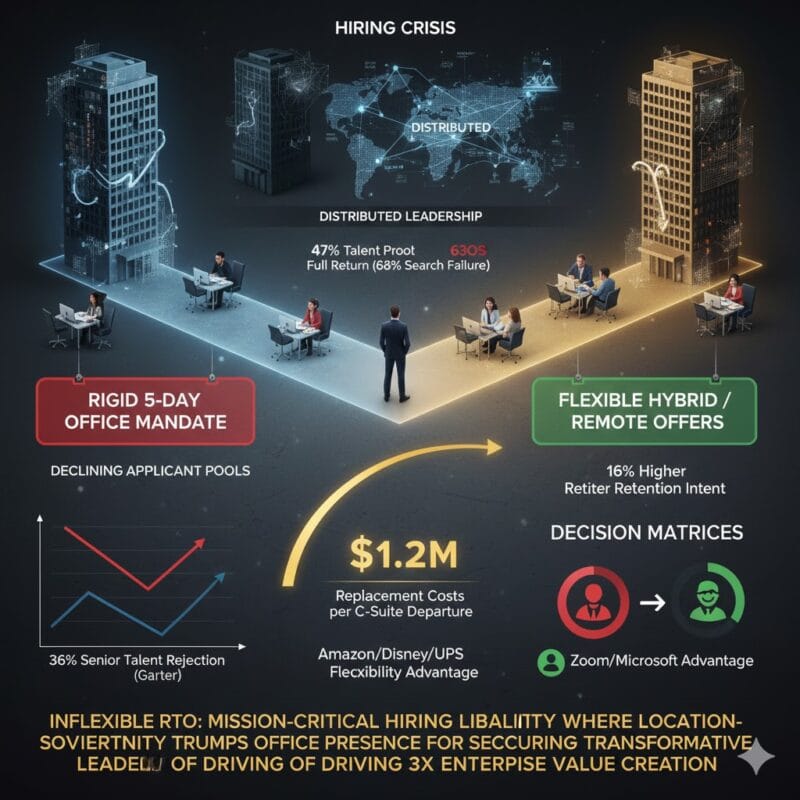
The Unseen Cost: How Rigid RTO Policies Are Undermining Executive Recruitment in the US Market As the Global Head of Research & Leadership Advisory at , a premier US-based executive search firm, our market intelligence consistently reveals a significant challenge in the current talent landscape.
Blog section for Employers and Job Seekers, CEO Recruitment, Search, Style
Creating a ‘Digital-First’ Culture: The New Challenge for CEOs

12
Jan
Jan
Strategic Briefing: Creating a ‘Digital-First’ Culture – The New Mandate for US CEOs and Executive Talent This confidential advisory outlines critical insights for US boards and C-suite executives on cultivating a truly ‘digital-first’ culture. This paradigm shift requires US CEOs to act as the principal architects and champions of a profound cultural transformation, articulating a compelling vision and embodying a.
Blog section for Employers and Job Seekers, CEO Recruitment, Search
Evaluating Leadership Performance in an Outcome-Based Hybrid Model

09
Jan
Jan
Confidential Advisory: Evaluating Executive Leadership Performance in an Outcome-Based Hybrid Model In an era of unprecedented organizational flux, the traditional paradigms for assessing executive performance are demonstrably insufficient, particularly within the nascent yet pervasive hybrid operational model. As ‘ Global Head of Research & Leadership Advisory, our mandate is to provide foresight into the critical shifts defining future-ready leadership.
COO Executive Recruiting, executive recruiting, Executive Search Challenges, Search
The Strategic Advantage of Four-Day Work Week for Executive Retention
09
Jan
Jan
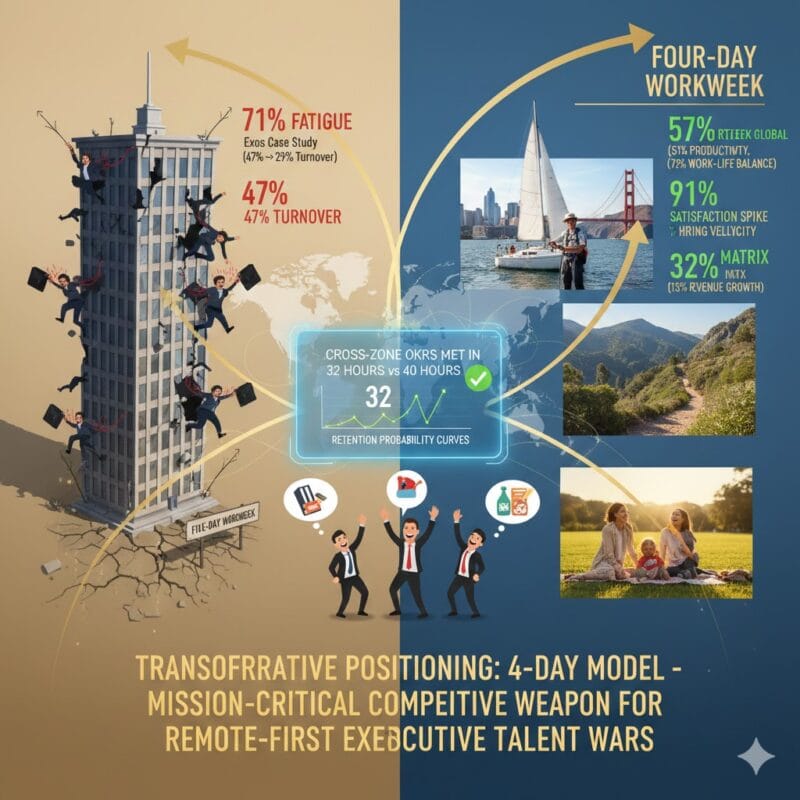
A four-day work week (4DWW) offers a measurable strategic advantage for executive retention. Organizations implementing compressed schedules for senior leaders report improved work-life integration, reduced attrition, and a stronger competitive edge in attracting top-tier talent—particularly among C-suite executives evaluating roles through the lens of flexibility and autonomy.
Blog section for Employers and Job Seekers, For Employers, Style
Compensation and Equity for a Distributed Executive Team in the US

09
Jan
Jan
Compensation and Equity for a Distributed Executive Team in the US: Navigating the New Frontier of Executive Pay As enterprises increasingly embrace distributed operational models, the traditional paradigms governing executive remuneration demand urgent re-evaluation. Our analysis at , drawn from extensive engagements with leading US organizations, reveals a critical juncture where established compensation frameworks intersect with the imperative of.
Blog section for Employers and Job Seekers, CEO Recruitment, For Employers, Search
Recruiting the ‘Ambassador CEO’: Bridging the Gap Between Remote Employees and the Office

08
Jan
Jan
Recruiting the ‘Ambassador CEO’ The profound evolution of the organizational landscape, particularly within the United States, demands a sophisticated recalibration of executive leadership paradigms. The sustained shift towards geographically dispersed operations necessitates a new leadership archetype: the Ambassador CEO . This strategic leader is uniquely positioned to bridge cultural and logistical divides, ensuring a cohesive and high-performing enterprise.
executive recruiting, Executive Search Challenges
The Four Pillars of an Effective Remote-First Executive Team

08
Jan
Jan
Navigating the Distributed Enterprise: The Four Pillars of an Effective Remote-First Executive Team As the landscape of corporate governance continues its dramatic evolution, remains at the forefront of identifying and securing transformative executive talent. Our intelligence indicates an urgent need for Boards and C-suites across the US market to deeply understand and strategically embed remote-first operating models.
COO Executive Recruiting, executive recruiting, Executive Search Challenges, Search
The New Global Talent Pool: Sourcing Executive Talent Beyond US Borders

08
Jan
Jan
Strategic Briefing on the Borderless Executive Talent Landscape: Sourcing Leadership Beyond US Borders This confidential brief outlines a critical strategic imperative for US-based enterprises: the profound reorientation of the global executive talent market. No longer can our organizations rely solely on a domestic talent architecture; globalization necessitates a truly borderless approach to securing senior leadership.