



The building products industry is navigating a complicated business environment. Housing affordability challenges, fluctuating construction activity, changing material costs, evolving distribution models, and continued mergers and acquisitions are influencing how manufacturers and distributors compete. For leadership teams, these conditions create a difficult balance: protect margins during periods of uncertainty while investing in capabilities that support long-term growth.
These pressures are also changing executive recruitment. Companies need leaders who can manage cyclical demand, strengthen operational performance, integrate acquisitions, and identify growth opportunities beyond traditional residential construction. Experience alone is no longer enough. Employers must evaluate whether candidates can adapt their decisions as market conditions, customer expectations, and competitive dynamics change.
For CEOs, boards, private equity investors, and human resources leaders, understanding these shifts is essential to building an executive team that can navigate uncertainty without losing sight of strategic objectives.
1. Why Housing Cycles Are Changing Executive Leadership Requirements
Building products companies are closely connected to construction activity, housing transactions, remodeling demand, and broader investment in commercial and industrial infrastructure. Changes in interest rates, financing availability, home prices, and consumer confidence can influence demand for products ranging from roofing materials and insulation to windows, flooring, lumber, and building systems.
However, housing cycles do not affect every business equally. A manufacturer heavily exposed to new single-family construction may face different challenges from a distributor serving commercial contractors or a building materials company supplying infrastructure and data center projects.
That variation makes market awareness a critical executive competency.
Managing Demand Volatility

When construction activity slows, manufacturers may face lower order volumes, excess inventory, underutilized production capacity, and pressure on selling prices. During stronger periods, the same businesses may struggle with labor availability, production bottlenecks, delivery commitments, and the need to expand capacity quickly.
Executives must understand how to adjust operations without undermining the company’s ability to respond when demand improves.
Effective leaders typically focus on:
- Developing demand forecasts using customer, channel, and market data.
- Aligning production schedules with realistic order expectations.
- Managing inventory and working capital carefully.
- Maintaining flexibility in labor, sourcing, and manufacturing capacity.
- Identifying opportunities to improve productivity during slower periods.
- Protecting critical customer relationships when delivery schedules change.
During recruitment, employers should ask candidates to explain how they managed previous demand downturns and recoveries. The objective is to identify leaders who can make disciplined decisions rather than simply reduce costs whenever revenue weakens.
Distinguishing Temporary Weakness From Structural Change
A decline in orders does not necessarily mean a product category has lost its long-term potential. Equally, a temporary increase in demand should not automatically justify permanent capacity expansion.
Senior leaders need to distinguish cyclical fluctuations from structural changes such as new building standards, shifts in construction methods, changing customer preferences, or the adoption of alternative materials.
Executives who can interpret these signals are better positioned to decide when to preserve capacity, redirect investment, enter new markets, or reconsider a product portfolio.
2. M&A Is Reshaping the Building Products Leadership Agenda
Mergers and acquisitions have become an important strategic tool for building products manufacturers, distributors, and investment firms seeking greater scale, broader product portfolios, stronger geographic coverage, and improved access to customers.
Industry analysis in 2026 has highlighted renewed transaction activity alongside continued consolidation across parts of the building products and distribution landscape. Buyers are evaluating businesses for their market positions, differentiated capabilities, customer relationships, operational performance, and opportunities to expand into adjacent categories. FMI’s building products M&A update discusses these developments and the differences in demand across residential and nonresidential markets.
For executive recruitment, the implications extend well beyond hiring a corporate development leader. Acquisitions can change the responsibilities of executives across finance, operations, sales, supply chain, technology, and human resources.

Leadership Challenges During Integration
Combining businesses requires decisions about overlapping facilities, product lines, distribution networks, supplier agreements, reporting structures, and customer coverage. Even when the strategic rationale for an acquisition is clear, realizing its intended benefits can be difficult.
Executives may need to manage several priorities simultaneously:
- Maintaining customer service throughout the transition.
- Aligning operating procedures, systems, and performance metrics.
- Identifying opportunities to consolidate procurement and logistics.
- Clarifying leadership responsibilities across the combined organization.
- Retaining employees with critical customer or technical knowledge.
- Tracking integration milestones and financial performance.
Companies should therefore look for executives who have led meaningful integration work, not simply participated in an acquisition. Candidates should be able to explain their role in planning, execution, stakeholder communication, and the measurement of results.
When Scale Changes the Required Leadership Model
A business that grows through acquisitions may eventually outgrow its existing management structure. A founder-led manufacturer with a small number of facilities may operate effectively through informal communication and direct oversight. A larger organization with multiple brands, distribution centers, and regional teams needs more consistent processes and clearer accountability.
That transition may require a new COO, CFO, CHRO, or commercial leader. It can also mean replacing a highly centralized management approach with a structure that gives regional leaders greater responsibility while maintaining enterprise-wide standards.
The recruitment question becomes whether the candidate has successfully operated at the scale the company is trying to achieve.
3. The Executive Roles Becoming More Important
Housing volatility and consolidation are influencing demand for several leadership capabilities. The exact roles depend on the company’s size, business model, ownership structure, and growth strategy.
Chief Executive Officer
The CEO must connect market conditions with portfolio decisions, capital allocation, customer strategy, and organizational performance. During uncertain periods, the strongest candidates demonstrate sound judgment, communicate priorities clearly, and understand when to preserve flexibility rather than pursue growth at any cost.
For acquisitive companies, experience managing organizational change and aligning leadership teams after transactions can be especially valuable.
Chief Financial Officer
The CFO’s responsibilities extend beyond financial reporting. Building products businesses may need stronger cash-flow forecasting, inventory management, pricing analysis, capital discipline, and transaction evaluation.
Employers should assess candidates on their ability to model different demand scenarios, explain working-capital trade-offs, and connect operating decisions with financial outcomes. Experience supporting acquisitions, refinancing, or post-merger integration may also be relevant.
Chief Operating Officer

The COO translates strategy into manufacturing, distribution, and service performance. Depending on the organization, this may involve improving plant productivity, standardizing processes, strengthening procurement, coordinating multiple facilities, or integrating acquired operations.
Recruiters should look for evidence that candidates can improve performance across the full operating system rather than optimize individual departments in isolation.
Chief Commercial Officer and Chief Sales Officer
Commercial leadership is evolving as manufacturers and distributors reconsider customer segmentation, channel relationships, pricing, digital sales, and geographic expansion.
Strong candidates understand how contractors, builders, dealers, distributors, and large purchasing organizations make decisions. They can also evaluate account profitability, strengthen sales forecasting, and build relationships that remain valuable during market downturns.
Chief Human Resources Officer
Consolidation, succession challenges, and changing workforce requirements make talent leadership increasingly important. The CHRO may need to align compensation structures, retain key employees, develop future leaders, and help the organization adapt to a new operating model.
Companies should evaluate whether HR leaders can connect talent strategy with business outcomes rather than treating recruitment and organizational development as separate administrative functions.
Chief Information Officer and Digital Transformation Leaders
Digital systems can help building products businesses improve forecasting, pricing, inventory visibility, customer experience, and supply-chain coordination. However, technology investments require leaders who can connect implementation with practical operating needs.
Depending on the business, relevant experience may include ERP modernization, analytics, e-commerce, digital customer platforms, cybersecurity, and systems integration following acquisitions.
4. Why Operational Excellence Matters During a Downturn
When demand softens, companies often look for ways to protect margins. Yet indiscriminate cost reductions can damage manufacturing reliability, product quality, customer service, and employee capability.
Executives must determine which costs can be removed without weakening the business and which investments remain necessary for competitiveness.
Manufacturing Productivity
For manufacturers, operational improvements may include reducing scrap, improving equipment utilization, reviewing production schedules, standardizing processes, and strengthening preventive maintenance.
When evaluating a COO or manufacturing executive, ask for examples of measurable improvements. Candidates should explain the initial problem, the actions they led, the resources involved, and whether the results were sustained.
Supply Chain Resilience
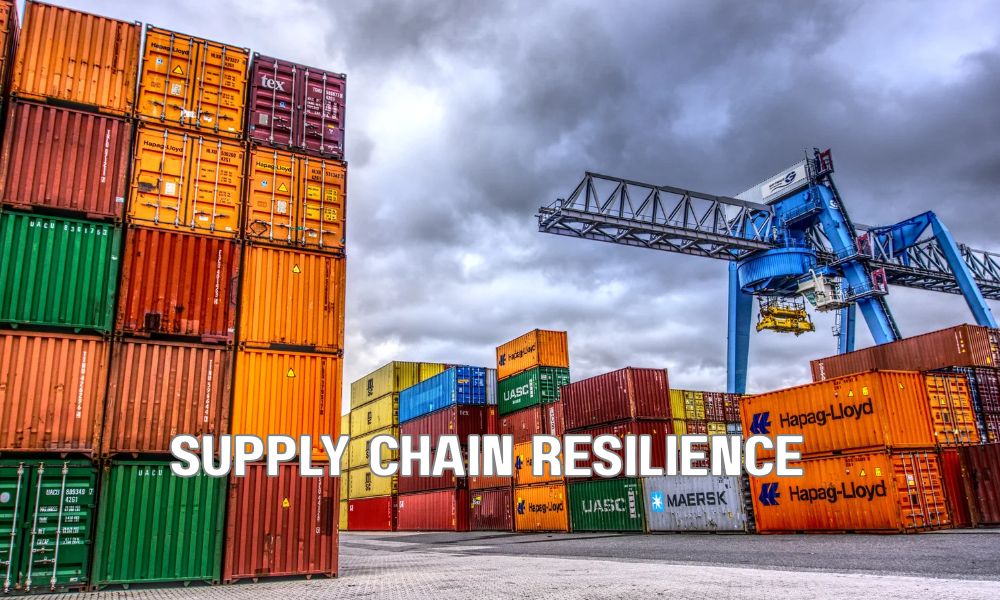
Building products businesses may depend on lumber, steel, aluminum, glass, insulation materials, chemicals, or specialized components. Input-cost changes, supplier concentration, transportation disruptions, and tariffs can complicate planning.
Executives need to balance purchasing economics with supply reliability. The lowest-cost supplier is not necessarily the best option if inconsistent availability creates production interruptions or missed customer commitments.
Useful experience includes supplier diversification, procurement strategy, inventory optimization, logistics planning, and collaboration between purchasing, operations, and finance.
Pricing and Margin Management
Material-cost fluctuations and competitive pressure can make pricing decisions more complex. Leaders must understand the difference between revenue growth and profitable growth.
Commercial and finance executives should be able to evaluate product-level profitability, customer-specific economics, discounting practices, and the timing of price adjustments. They should also understand how distributors and contractors respond to changes in pricing and availability.
5. Building Products Companies Need Leaders Who Can Find Growth Beyond Housing
Residential construction remains important to much of the sector, but companies may have opportunities in remodeling, commercial construction, industrial facilities, infrastructure, energy systems, and data center development.
Recent market analysis has highlighted differences between residential construction pressures and demand in selected nonresidential and infrastructure-related categories. These differences can influence which product lines, customer segments, and capabilities attract investment. Capstone Partners’ 2026 Building Products Market Update discusses the effect of market uncertainty, supply-chain pressures, and selected growth opportunities.
However, entering an adjacent market requires more than identifying attractive demand. Companies must determine whether they have the products, certifications, distribution reach, technical expertise, and customer relationships needed to compete.
Commercial Judgment and Market Expansion
Executives should be able to assess potential markets based on customer needs, competitive differentiation, required investment, and expected profitability.
During interviews, ask candidates to describe a market expansion they led. Determine how they evaluated the opportunity, secured organizational support, allocated resources, and measured commercial results.
Portfolio Management
Some companies may need to diversify their product mix, while others may benefit from concentrating resources on their strongest categories. The appropriate decision depends on the company’s capabilities, market position, and financial objectives.
Leaders should understand how to evaluate product profitability, strategic fit, customer concentration, and the operational implications of adding or exiting a category.
6. How to Recruit Executives Who Can Navigate Industry Change

A successful executive search begins with a precise definition of the business challenge. Companies that start with a generic job description risk attracting candidates whose experience does not match the role’s actual requirements.
Step 1: Define the Business Mandate
Identify the outcomes the new executive must deliver. These may include improving operating margins, leading acquisition integration, expanding into new markets, strengthening cash flow, or professionalizing a founder-led business.
Separate essential requirements from desirable qualifications. This creates a clearer basis for candidate evaluation.
Step 2: Identify the Required Experience
Relevant experience may include building products manufacturing, specialty distribution, construction materials, industrial manufacturing, or related sectors. The appropriate background depends on the role.
For example, a CFO leading an acquisition strategy may need strong transaction and integration experience, while a COO overseeing a network of manufacturing facilities may need a proven record in multi-site operations.
Step 3: Evaluate Achievements Rather Than Titles
Job titles can be misleading because responsibilities vary considerably between organizations. Assess the size of the business, reporting structure, geographic footprint, financial accountability, and complexity of the candidate’s previous roles.
Ask candidates to provide concrete examples of the results they delivered and clarify their personal contribution.
Step 4: Test Strategic and Operational Judgment
Structured interviews should explore how candidates respond to realistic business situations. For example, ask how they would respond to declining residential orders while demand increases in another product category.
A strong candidate should explain how they would validate demand assumptions, assess profitability, review capacity, identify customer implications, and develop options for leadership consideration.
Step 5: Assess Leadership During Change
Ask candidates to describe a difficult transformation, acquisition, restructuring, or market downturn. Explore how they communicated decisions, managed competing priorities, retained critical talent, and maintained performance.
The goal is to understand not only what changed, but how the candidate influenced the outcome.
Step 6: Align Compensation and Expectations
Compensation should reflect the role’s scope, market demand, company size, location, and financial responsibility. For senior positions, performance incentives should reinforce the company’s actual priorities.
Employers should also communicate the challenges associated with the role, including integration commitments, operating constraints, travel requirements, or the need to rebuild organizational capabilities.
7. When Specialized Executive Search Can Help
Building products companies often compete for executives whose expertise is transferable across manufacturers, distributors, industrial businesses, and construction-related organizations. The most suitable candidates may not be actively applying for new positions.
A specialized search process can help companies define the talent profile, map relevant organizations, identify passive candidates, and assess leadership experience against the business mandate.
External search support may be especially valuable when:
- The role has a direct impact on business performance or strategic execution.
- The company is preparing for an acquisition, divestiture, or integration.
- The required combination of industry expertise and leadership experience is difficult to find.
- The search must remain confidential.
- Internal recruitment efforts have not produced a sufficiently strong candidate pool.
- The organization is expanding into new product categories or geographic markets.
Companies looking for sector-specific leadership talent can explore Building Products & Materials Executive Recruiters for support with executive recruitment across the building products and materials sector.
The objective is not simply to fill an executive vacancy. It is to identify a leader whose experience matches the company’s strategic priorities and whose capabilities can support measurable business results.
Frequently Asked Questions
How do housing cycles affect executive hiring in building products?
Housing cycles influence demand, production capacity, inventory, pricing, and cash flow. Companies may need executives with stronger forecasting, cost management, supply-chain planning, and market diversification capabilities to navigate changes in construction activity.
Which executive roles are most important during building products consolidation?
The most important roles depend on the transaction and company structure. CEOs, CFOs, COOs, commercial leaders, CHROs, and integration executives may all be critical when companies combine operations, standardize processes, manage financial commitments, and retain key employees.
What should companies look for when hiring a building products CEO?
Companies should assess strategic judgment, industry understanding, financial discipline, customer relationships, leadership development, and experience managing change. For acquisitive businesses, candidates should also demonstrate an ability to integrate organizations and translate acquisitions into sustainable operating results.
How can building products companies recruit stronger operations leaders?
Define the operating challenges clearly and evaluate candidates against measurable achievements in productivity, quality, maintenance, supply-chain performance, and cost management. Experience should match the complexity of the manufacturing or distribution network the executive will oversee.
Why is M&A integration experience valuable in building products?
Acquisitions can create opportunities to expand geographic coverage, improve procurement, broaden product portfolios, and increase scale. Leaders with integration experience can help coordinate systems, teams, processes, and customer relationships while protecting ongoing business performance.
When should a building products company use an executive search firm?
A company may benefit from specialized executive search when a role is strategically important, confidential, difficult to fill, or requires a combination of industry expertise and transformation experience. External search can help identify and assess candidates beyond those actively seeking a new position.
Conclusion
Housing cycles and industry consolidation are changing the leadership requirements of building products manufacturers and distributors. Executives must be able to respond to fluctuating demand, protect margins, strengthen operations, evaluate growth opportunities, and manage organizational change.
For employers, the challenge is to recruit leaders whose experience matches the company’s next stage of development. That means looking beyond titles and years of service to evaluate strategic judgment, measurable achievements, industry knowledge, and the ability to execute under changing conditions.
Companies that connect executive recruitment with their operating strategy, acquisition plans, and succession priorities will be better positioned to build resilient leadership teams.
To explore recruitment support for the sector, visit Building Products & Materials Executive Recruiters.

Tanya Gallardo
Managing Director, Executive Search & AI Talent Strategy
Tanya Gallardo is the Managing Director of Executive Search & AI Talent Strategy at JRG Partners, leading C-suite and Board engagements across key growth sectors including Technology, Financial Services, and Manufacturing.
With over 18 years of experience specializing in disruptive technology leadership, Tanya is recognized as a leading authority on talent architecture for future-focused executive roles, such as the Chief AI Officer (CAIO) and Chief Digital Officer (CDO). Her expertise lies in accurately assessing the cultural fit and technical depth required to ensure a high return on investment (ROI) for critical leadership appointments.
Prior to her role at JRG Partners, Tanya held senior roles directing global talent acquisition strategies at a major publicly-traded technology firm, advising on organizational design and succession planning for emerging executive functions. She is a recognized speaker and contributor to industry events, sharing data-driven insights on executive compensation, leadership development, and the measurable business impact of C-suite talent.
