



Key Takeaways in Executive Talent Strategy No Universal Winner in Leadership Transition: Our analysis, drawing from robust US corporate governance norms, suggests that neither internal nor external chief executive officers (CEOs) consistently outperform across all key metrics. Context, industry specifics, and the unique needs of a company are paramount in determining the ideal leadership choice. […]
Category Archives: CEO Recruitment
CEO Recruitment, Executive Search Challenges
Private Equity Portfolio CEO Turnover Statistics: The 2026 Data

02
Jul
Jul
Key Takeaways: De-Risking the CEO Seat in PE Persistent Instability: Despite increased strategic focus on human capital, CEO turnover rates in PE-backed companies remain elevated, indicating a systemic challenge rather than a transient issue. This necessitates a robust approach to executive talent management. Strategic Stage-Specific Risks: Distinct peaks in CEO changes are evident at specific […]
CEO Recruitment, executive recruiting
Executive Search Fees by Role: What CEO, CFO, and VP Searches Cost

02
Jul
Jul
The Nuance of Executive Search Investment Differentials by Leadership Tier The inherent complexity, overarching strategic impact, and the scarcity of specialized expertise associated with a particular leadership position are the primary determinants driving executive search fee differentials. Higher-tier roles, such as Chief Executive Officers, necessitate an expansive, often global, quest for singular skill sets and […]
Blog section for Employers and Job Seekers, CEO Recruitment, COO Executive Recruiting, executive recruiting, For Employers, Search
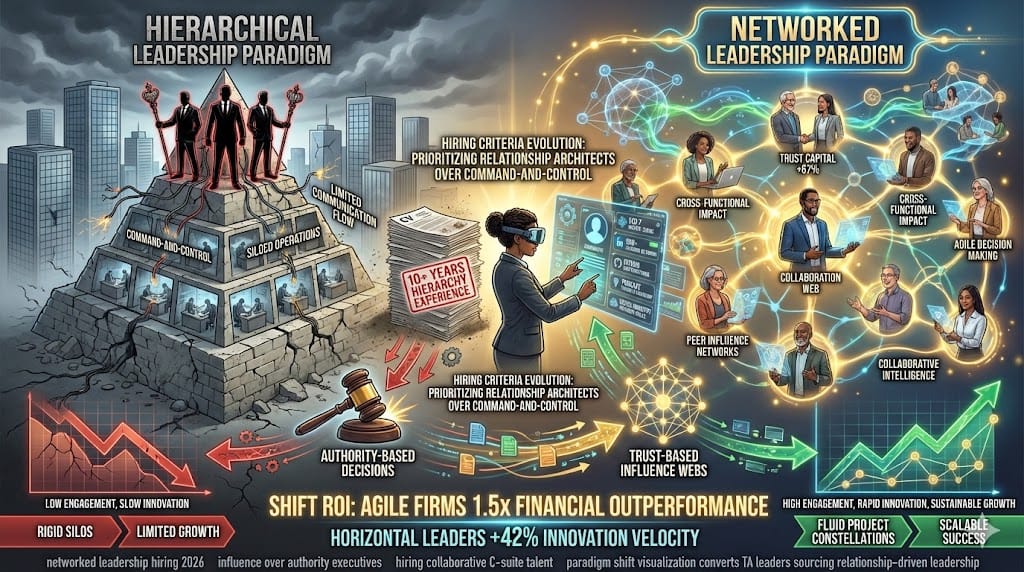
From Hierarchical to Networked Leadership: Hiring for Influence Over Authority
23
Feb
Feb
From Hierarchical to Networked Leadership: Hiring for Influence Over Authority As the Global Head of Research & Leadership Advisory at , I present this critical analysis on the evolving landscape of executive talent. The fundamental shift from traditional hierarchical command structures to agile, influence-driven leadership models is undeniable. Boards must consider: What defines networked leadership versus traditional authority?
Blog section for Employers and Job Seekers, CEO Recruitment, COO Executive Recruiting, executive recruiting, Executive Search Challenges, For Employers, Search
Effective Board Performance Reviews and Director Recruitment

23
Feb
Feb
The Strategic Imperative of Board Excellence in the US Market In an increasingly volatile, uncertain, and complex global environment, particularly within the competitive US market, a truly high-performing board is the bedrock of strategic resilience and sustained organizational success. This analysis outlines a holistic approach to optimizing board effectiveness, integrating rigorous performance reviews with a forward-looking director recruitment strategy.
CEO Recruitment, executive recruiting, Executive Search Challenges
Biotech CEO Search: What Investors Value Beyond Scientific Prowess

18
Feb
Feb
As the US biotechnology sector navigates an era of unprecedented evolution, the criteria for executive leadership have fundamentally shifted. No longer is deep scientific acumen the sole determinant for a successful biotech chief executive; rather, a holistic suite of capabilities is now demanded by sophisticated investors and corporate boards.
CEO Recruitment, executive recruiting, Executive Search Challenges, For Employers
The Future of the Health System CEO: Leading Through Consolidation and Digital Health

17
Feb
Feb
The US healthcare ecosystem is undergoing a profound paradigm shift, demanding an evolution in executive leadership. At , our extensive experience in identifying and placing transformational talent across the nation’s most complex healthcare organizations reveals a clear truth: the role of the chief executive has never been more multifaceted.
CEO Recruitment, executive recruiting, Executive Search Challenges
Evaluating a Candidate? Experience with Revenue-Based Financing and Alternative Capital

13
Feb
Feb
In the current dynamic economic environment, the ability of executive leadership to navigate complex capital markets is paramount. The strategic imperative for modern US enterprises to secure optimal funding has led to a paradigm shift in how we assess top-tier talent. Traditional capital avenues are increasingly complemented, or even supplanted, by innovative funding structures.
CEO Recruitment, COO Executive Recruiting, executive recruiting, Executive Search Challenges
The Strategic CFO: Moving Beyond the Numbers to Drive Corporate Strategy

13
Feb
Feb
In the dynamic landscape of US corporate governance and intense talent competition, the Chief Financial Officer’s mandate has fundamentally transformed. No longer solely a custodian of historical financial records, the modern Chief Financial Officer is now a pivotal architect of corporate strategy and value creation. This evolution demands a rigorous re-evaluation of executive talent acquisition and development.
CEO Recruitment, COO Executive Recruiting, executive recruiting, Executive Search Challenges
Bridging Silicon Valley and Corporate America: Recruiting Tech Leaders with Enterprise Experience

11
Feb
Feb
In an era defined by relentless digital transformation, the imperative to infuse corporate structures with agile, innovative leadership has never been more pronounced. This memo outlines a critical talent strategy: the nuanced art of Bridging Silicon Valley and Corporate America: Recruiting Tech Leaders with Enterprise Experience.