


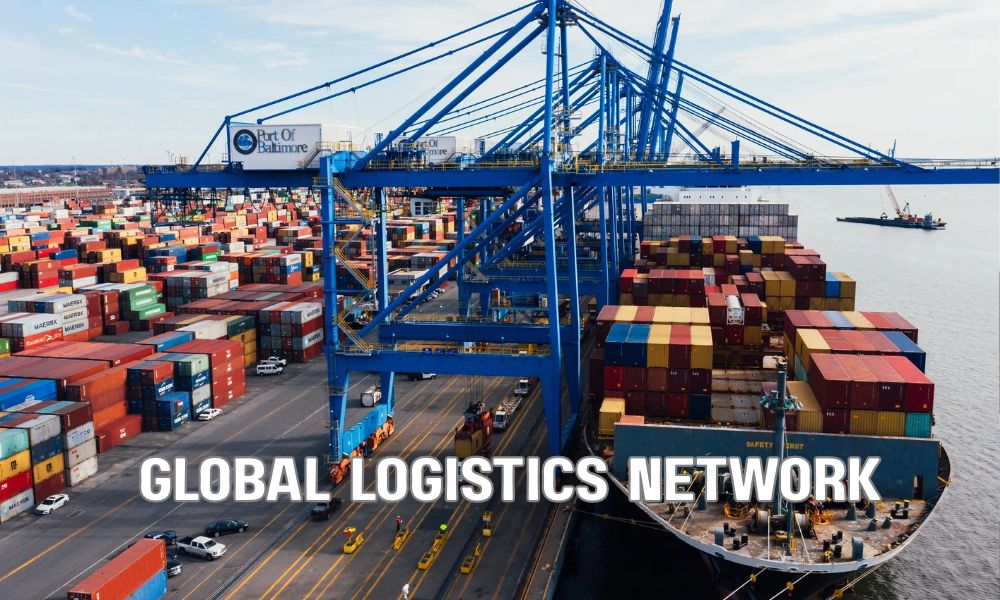
For decades, the corporate supply chain occupied a predictable, thankless position on the enterprise organizational chart. Viewed through the lens of traditional accounting, procurement, warehousing, logistics, and manufacturing operations were treated almost exclusively as back-office cost centers. Boards of directors rarely discussed supply chain strategy unless a major factory shutdown, port strike, or recall triggered an emergency earnings warning. The mandate handed to Vice Presidents of Supply Chain was simple and relentless: shave three to five percent off unit freight and procurement costs every year, run lean just-in-time inventory buffers, and stay out of the headlines.
Heading into 2027, that legacy paradigm has been permanently dismantled. Across manufacturing, industrial distribution, life sciences, consumer goods, and energy infrastructure, the Chief Supply Chain Officer (CSCO) has moved from the basement loading dock to the center of the boardroom table. Triggered by persistent geopolitical trade fragmentation, shifting tariff regimes, regional nearshoring mandates, autonomous agentic AI deployments, and institutional investor scrutiny over Scope 3 emissions and working capital velocity, supply chain architecture has become the primary determinant of enterprise valuation.
In 2027, a company’s supply chain is no longer merely the plumbing that moves goods from point A to point B—it is the central nervous system connecting commercial promise, balance-sheet liquidity, and competitive differentiation. Boards and private equity sponsors that continue recruiting legacy “cost-cutter” logistics managers rather than commercially fluent, strategically empowered Chief Supply Chain Officers risk catastrophic margin compression and lost market share. This comprehensive executive guide explores why supply chain has cemented its status as a premier boardroom priority in 2027, defines the modern CSCO mandate, and outlines how boards must structure leadership, governance, and incentives for the new era of global operations.
1. The Structural Forces Elevating Supply Chain to the Boardroom in 2027
The elevation of supply chain governance is not a temporary hangover from pandemic-era disruptions; it is anchored in five permanent structural realities reshaping global commerce in 2027.
Geopolitical Fragmentation & Tariff Volatility as Permanent Operating Conditions
The era of frictionless, single-source global arbitrage is over. Companies entering 2027 operate inside a complex patchwork of bilateral tariffs, export controls, domestic content mandates, and regional trade blocs. Shifting production footprints through “China-plus-one” diversification, Mexican and North American nearshoring, or European regionalization requires multi-year capital allocation decisions. Boards now rely directly on supply chain leadership to model landed-cost scenarios, vet secondary and tertiary supplier tiers, and protect gross margins against sudden geopolitical shocks.
Working Capital Velocity & Balance Sheet Protection
In an environment defined by disciplined capital costs and heightened private equity scrutiny, trapped inventory is one of the fastest drains on enterprise liquidity. Over-correcting from just-in-time leanness to bloated “just-in-case” safety stock ties up tens of millions of dollars in cash while exposing companies to obsolescence write-downs. Modern boards demand precision inventory optimization—deploying predictive demand sensing and multi-echelon inventory modeling so working capital turns accelerate without sacrificing customer fill rates.
From AI Pilots to Autonomous Agentic Execution
Across enterprise operations in 2027, artificial intelligence has graduated from isolated forecasting experiments into daily autonomous workflow execution. Agentic AI systems now monitor real-time shipment telemetry, detect supplier production anomalies, automatically re-route freight, and dynamically re-allocate safety stock across distribution networks. Simultaneously, major ERP modernization milestones—including the 2027 end of mainstream maintenance for legacy SAP ECC systems—have forced boards to fund massive digital core transformations. Because supply chain sits at the intersection of ERP data, IoT sensors, and customer fulfillment, the CSCO has become one of the largest technology capital allocators in the enterprise.
Supply Chain Resilience as a Revenue & Market-Share Weapon
In 2027, reliability wins commercial contracts. Enterprise buyers and industrial OEMs routinely audit a supplier’s supply chain redundancy, real-time shipment visibility, and business continuity plans before awarding multi-year agreements. Organizations that can guarantee 99%+ on-time-in-full (OTIF) delivery and predictive delivery transparency capture pricing power and steal market share from competitors still fighting recurring stockouts.
Regulatory & Environmental Accountability
Supply chain compliance is now a direct board fiduciary obligation. Forced-labor due diligence laws, product traceability mandates, circular packaging regulations, and institutional investor audits of Scope 3 carbon emissions require verifiable, auditable transparency down to raw material extraction. A compliance failure in a third-tier overseas sub-supplier can trigger immediate customs seizures, regulatory fines, and severe brand damage.
2. Legacy Cost-Center Manager vs. 2027 Strategic CSCO
As supply chain’s strategic weight has expanded, a massive capability gap has opened across corporate leadership teams. Many sitting Vice Presidents of Supply Chain built their careers optimizing freight rates, squeezing supplier payment terms, and managing warehouse headcount. When placed in a 2027 boardroom, purely tactical operators struggle to translate operational metrics into financial value-creation narratives. The matrix below contrasts the legacy cost-center mindset against the modern boardroom CSCO archetype:
| Governance Dimension | Legacy Cost-Center VP | 2027 Boardroom Chief Supply Chain Officer |
|---|---|---|
| Primary Board Mandate | Minimize annual logistics, warehousing, and unit procurement expense (PPV). | Maximize risk-adjusted EBITDA, return on invested capital (ROIC), cash conversion cycle, and revenue reliability. |
| Network & Sourcing Strategy | Single-source lowest-cost offshore manufacturing with thin buffer inventories. | Multi-region “China-plus-one” and nearshoring ecosystems balancing cost efficiency with agile surge capacity. |
| Sales & Finance Integration | Operates in a reactive silo—fulfilling whatever forecasts sales generates. | Leads Integrated Business Planning (IBP), aligning commercial demand, manufacturing capacity, and CFO working capital targets. |
| Technology & AI Posture | Relies on static spreadsheets, backward-looking ERP reports, and manual exception firefighting. | Deploys AI control towers, autonomous agentic workflows, digital twins, and physical warehouse robotics. |
| Supplier Relationships | Adversarial annual price bidding treating vendors as interchangeable commodities. | Collaborative strategic partnerships featuring shared demand visibility, joint R&D, and co-invested resilience. |
3. Five Core Pillars of the 2027 Supply Chain Executive Mandate
To transform supply chain from an operational vulnerability into an enduring competitive moat, boards and CEOs must charter the Chief Supply Chain Officer around five interconnected strategic pillars:
1. Integrated Business Planning (IBP) & Commercial Alignment
Traditional Sales and Operations Planning (S&OP) often devolved into a monthly negotiation over unit volumes. In 2027, top-performing CSCOs own enterprise Integrated Business Planning—connecting commercial promotion calendars, new product introductions, supplier lead times, and CFO financial forecasts into a single operating model. Instead of simply asking “Can we ship this order?” the modern CSCO asks “What is the net margin and working capital impact of serving this customer segment under current network constraints?”
2. Network Regionalization & Tier-N Supplier Visibility
Knowing your Tier-1 contract manufacturer is no longer sufficient when a disruption at a Tier-3 raw material refiner or specialty semiconductor packager can halt production globally. Modern supply chain leaders deploy multi-tier network mapping and predictive risk intelligence to uncover hidden geographic concentration risks, qualify alternate regional tooling, and structure flexible manufacturing footprints that can pivot production across borders when tariffs or port disruptions strike.
3. Governing Agentic AI & Physical Warehouse Automation
In 2027, supply chain organizations are among the heaviest enterprise adopters of both digital AI agents and physical robotics. From autonomous order-management agents that negotiate carrier spot rates to autonomous mobile robots (AMRs) and computer-vision quality inspection on warehouse floors, technology is reshaping unit economics. However, industry benchmarks show that technology spending frequently outpaces organizational confidence. The CSCO must enforce strict ROI stage-gates—ensuring clean master data governance, human-in-the-loop oversight for high-stakes trade-offs, and practical frontline change management so planners and warehouse supervisors actually trust and adopt automated recommendations.
4. Working Capital & Total Landed Cost Architecture
A strategic CSCO speaks the language of the CFO fluently. By linking real-time transportation and inventory telemetry directly to balance-sheet visibility, supply chain leadership can dynamically adjust safety-stock buffers based on SKU margin volatility, negotiate collaborative vendor-managed inventory agreements, and eliminate unprofitable SKU complexity that inflates warehouse overhead without driving net margin.
5. Supply Chain Cybersecurity & Operational Continuity
As supply chains become hyper-connected through cloud control towers, IoT asset trackers, and third-party vendor portals, they have become prime targets for ransomware and cyber-physical attacks. In 2027, the CSCO partners tightly with the Chief Information Security Officer (CISO) to enforce vendor cybersecurity standards, audit operational technology (OT) resilience on plant floors, and run regular tabletop crisis simulations.

4. How Boards Must Restructure Governance to Empower Supply Chain
Simply changing a Vice President’s title to Chief Supply Chain Officer will fail if the underlying corporate governance keeps them trapped in a subordinate reporting line. Too many organizations still bury supply chain leadership two or three layers below the CEO—reporting through a Divisional President or administrative back-office function—while excluding them from board meetings and M&A diligence. Heading into 2027, progressive boards are instituting four structural governance upgrades:
- Direct CEO Reporting & Executive Committee Membership: Because supply chain decisions directly govern gross margin, customer retention, CapEx deployment, and working capital, the CSCO must sit as an equal peer alongside the CFO, Chief Commercial Officer, and Chief Transformation Officer—reporting directly to the CEO.
- Dedicated Boardroom Reporting Cadence: Rather than waiting for a crisis, boards should establish a recurring semi-annual or quarterly Supply Chain & Operational Resilience review—covering supplier concentration heatmaps, inventory health, tariff exposure modeling, ERP/AI transformation milestones, and sustainability compliance.
- Pre-Close M&A Integration Authority: In private equity buy-and-build platforms and acquisitive corporates, supply chain synergies (procurement consolidation, warehouse footprint rationalization, and freight optimization) frequently represent 40% to 60% of projected deal value. Bringing the CSCO into confirmatory due diligence prevents acquiring targets with hidden supplier liabilities or incompatible ERP systems.
- Cross-Functional Accountability with Sales & Product Engineering: Supply chain cannot fix complexity created upstream by undisciplined product proliferation or unrealistic sales promises. Boards must enforce joint governance requiring CSCO sign-off on new product complexity (Design for Supply Chain) and non-standard customer SLA commitments.
5. Five Non-Negotiable Questions to Vet CSCO Candidates in 2027
Recruiting a boardroom-caliber Chief Supply Chain Officer is notoriously challenging because the market is flooded with capable operational managers who lack commercial, financial, and board-level executive presence. When interviewing finalists in 2027, search committees should probe beyond operational buzzwords using five diagnostic questions:
- 1. “Walk us through a major geopolitical, tariff, or supplier shock you navigated. How did you balance immediate customer service protection against gross margin and working capital impact?” Look for structured scenario modeling, swift commercial pricing/sourcing trade-offs, and proactive board communication rather than reactive panic.
- 2. “How have you personally partnered with a CFO to unlock trapped cash from inventory without hurting OTIF fill rates?” Elite CSCOs cite exact reductions in Cash Conversion Cycle (CCC) days, SKU rationalization frameworks, and multi-echelon safety-stock segmentation.
- 3. “Describe an AI, digital twin, or ERP transformation you led. How did you ensure frontline planners and warehouse teams adopted the system rather than reverting to spreadsheets?” Probe for genuine change-management ownership, master data hygiene discipline, and verified operational ROI rather than vendor slideware.
- 4. “Tell us about a time you pushed back on the Chief Commercial Officer or product engineering team over unprofitable complexity—and how you resolved the conflict.” A true C-suite peer possesses the political gravitas to challenge low-margin SKU bloat and custom customer demands constructively.
- 5. “How have you redesigned a global or regional manufacturing/supplier footprint to build resilience while keeping unit costs competitive?” Evaluate hands-on execution of nearshoring, dual-sourcing qualification, and long-term supplier alliance building.
6. Aligning CSCO Compensation with Enterprise Value Creation
If a board wants a Chief Supply Chain Officer to think and act like an enterprise value creator rather than a cost-center administrator, executive compensation must reflect that broader mandate. Relying on outdated bonus metrics—such as raw Purchase Price Variance (PPV) or lowest freight cost per mile—actively harms the business by incentivizing procurement teams to buy excessive bulk quantities that bloat inventory or select fragile, unreliable carriers.
In 2027, high-performing Compensation Committees align CSCO variable incentives (typically 50% to 80% of base salary) and Long-Term Incentive (LTI) / Management Incentive Plan equity around four balanced metrics:
- Enterprise EBITDA & Gross Margin Expansion: Ensuring supply chain decisions protect net profitability rather than shifting costs between departments.
- Cash Conversion Cycle & Inventory Turns: Rewarding disciplined working capital management and healthy inventory velocity.
- Customer Service Reliability (OTIF & Perfect Order Rate): Preventing cost reductions that degrade customer retention or trigger retail chargebacks.
- Strategic Transformation & Resilience Milestones: Tying multi-year payouts to successful regional network diversification, ERP/AI production deployment, and verified supplier risk reduction.
Conclusion
Entering 2027, the transformation of the supply chain from a back-office cost center into a defining boardroom priority is complete. In an operating environment shaped by geopolitical friction, tariff volatility, autonomous AI execution, and relentless scrutiny over working capital, an organization’s supply chain is its strategy. Companies that treat logistics and procurement merely as expense lines to be squeezed will remain trapped in a cycle of brittle networks, trapped cash, and recurring margin surprises.
Conversely, boards and private equity sponsors that elevate a commercially fluent, digitally adept Chief Supply Chain Officer to the executive committee—arming them with Integrated Business Planning authority, balanced financial incentives, and modern predictive telemetry—turn operational resilience into an enduring competitive moat. When supply chain leadership is architected for strategic agility rather than narrow cost containment, it becomes one of the most powerful engines of sustained EBITDA growth and enterprise valuation in 2027 and beyond.
Frequently Asked Questions (FAQs)
1. Why has supply chain become a top boardroom priority going into 2027?
Persistent geopolitical trade fragmentation, shifting tariffs, working capital pressures, mandatory sustainability/traceability regulations, and the transition from AI pilots to autonomous operations have made supply chain architecture a primary driver of gross margin, cash flow, and customer retention. Boards now recognize that supply chain risk is enterprise financial risk.
2. How does a 2027 Chief Supply Chain Officer differ from a traditional VP of Supply Chain?
A traditional VP of Supply Chain focused primarily on tactical cost containment—minimizing unit freight rates, warehouse overhead, and purchase prices. A 2027 Chief Supply Chain Officer operates as a strategic C-suite peer who leads Integrated Business Planning, governs multi-tier geopolitical network resilience, deploys agentic AI and automation, and optimizes working capital and return on invested capital alongside the CFO and CRO.
3. What is Integrated Business Planning (IBP) and why is it critical in 2027?
Integrated Business Planning (IBP) evolves traditional Sales and Operations Planning by connecting commercial demand forecasts, product portfolio changes, supply chain capacity constraints, and financial P&L/cash-flow projections into one unified decision-making cadence. It ensures commercial promises align with profitable, resilient fulfillment.
4. How is agentic AI changing supply chain leadership in 2027?
Unlike earlier predictive analytics that only generated alerts for human planners, agentic AI in 2027 autonomously executes multi-step operational workflows—such as detecting shipment delays, re-routing freight, rebalancing regional safety stock, and following up with carriers within predefined governance guardrails. This frees supply chain leaders to focus on strategic supplier partnerships, network design, and complex commercial trade-offs.
5. Why are legacy bonus metrics like Purchase Price Variance (PPV) dangerous for supply chains?
Rewarding procurement teams solely on Purchase Price Variance incentivizes buying oversized bulk quantities from single, fragile low-cost suppliers—which inflates warehouse inventory, ties up working capital, increases obsolescence risk, and leaves the business vulnerable to single-point supply disruptions. Modern boards tie CSCO incentives to enterprise gross margin, Cash Conversion Cycle, OTIF reliability, and resilience milestones.
6. When should a private equity portfolio company hire a dedicated Chief Supply Chain Officer?
Private equity sponsors should install a dedicated CSCO immediately when executing multi-site manufacturing or distribution roll-ups, navigating complex global tariff exposure, preparing for major ERP transformations, or scaling platforms where working capital optimization and procurement synergies represent major Value Creation Plan levers.

Tanya Gallardo
Managing Director, Executive Search & AI Talent Strategy
Tanya Gallardo is the Managing Director of Executive Search & AI Talent Strategy at JRG Partners, leading C-suite and Board engagements across key growth sectors including Technology, Financial Services, and Manufacturing.
With over 18 years of experience specializing in disruptive technology leadership, Tanya is recognized as a leading authority on talent architecture for future-focused executive roles, such as the Chief AI Officer (CAIO) and Chief Digital Officer (CDO). Her expertise lies in accurately assessing the cultural fit and technical depth required to ensure a high return on investment (ROI) for critical leadership appointments.
Prior to her role at JRG Partners, Tanya held senior roles directing global talent acquisition strategies at a major publicly-traded technology firm, advising on organizational design and succession planning for emerging executive functions. She is a recognized speaker and contributor to industry events, sharing data-driven insights on executive compensation, leadership development, and the measurable business impact of C-suite talent.
