



As the North American construction and infrastructure sector enters 2027, the fundamental physics of project delivery have inverted. For generations, construction executives built their businesses around a straightforward premise: capital and backlog were the scarce commodities, while skilled field labor could be scaled up or down dynamically to match project awards. Entering 2027, that operating model has permanently broken. Driven by a massive wave of hyperscale data center capital expenditures, semiconductor fabrication builds, utility grid modernization, healthcare facility expansions, and federal infrastructure deployments, project backlogs sit at historic highs. Yet across every major metropolitan and industrial corridor, capital is no longer the constraint—human capacity is.
Industry telemetry paints an unmistakable picture of structural scarcity. More than 92% of construction firms report severe difficulty filling critical craft and field supervision positions, while demographic retirements continue to strip decades of institutional knowledge from jobsites faster than apprentice pipelines can replace them. Simultaneously, megaprojects—particularly mission-critical data centers and industrial facilities—are offering substantial wage premiums and multi-year schedule certainty, siphoning top superintendents, electrical and mechanical trades, and project executives away from conventional commercial, institutional, and residential builders. Even where macroeconomic adjustments created brief pockets of relief in 2026, deferred projects moving into active execution in 2027 are projected to trigger an acute rebound in workforce bottlenecks.
For general contractors, specialty trade platforms, engineering-procurement-construction (EPC) firms, and private equity sponsors rolling up commercial and industrial contractors, this labor reality demands a radical upgrade in C-suite leadership. Legacy executives who rely on brute-force overtime, adversarial subcontractor squeezing, and reactive field firefighting will watch gross margins evaporate under schedule delays and rework. When every skilled working hour on a jobsite is a precious, constrained resource, victory belongs to a new breed of construction executive. This comprehensive guide examines why labor scarcity in 2027 is fundamentally a leadership problem, defines the five executive archetypes required to protect margins and schedule certainty, and outlines how boards must recalibrate their leadership architecture for the next era of building.
1. The 2027 Construction Reality: Why Labor Scarcity Is a Leadership Crisis
Framing the 2027 construction workforce challenge purely as a recruiting problem misses the deeper operational transformation underway. While expanding trade school partnerships, veteran hiring pipelines, and competitive compensation packages remain essential, no contractor can simply out-hire a structural demographic deficit. Today, roughly one in five construction workers is aged 55 or older, and hundreds of thousands of annual openings exist merely to replace retiring veterans before accounting for a single dollar of industry growth.
When field labor is permanently constrained, the primary differentiator between top-quartile profitability and project write-downs becomes how efficiently leadership deploys every available human hour. Historically, construction tolerated massive field friction: late design changes, uncoordinated trade stacking, material delivery delays, and rework were absorbed by throwing extra weekend overtime at the schedule. In 2027, that safety valve no longer exists. If a superintendent loses two days of crew productivity due to incomplete preconstruction coordination or missing switchgear, there is no surplus pool of journeyman electricians waiting on the bench to recover the critical path.
Furthermore, the labor bottleneck extends sharply into project management and field leadership itself. Industry projections indicate that the sector faces a multi-year shortfall of experienced project managers, general superintendents, preconstruction directors, and project executives capable of owning complex risk. Many mid-level managers hold impressive titles on paper but have never guided a complex, supply-chain-constrained project from early preconstruction through commissioning without constant executive escalation. Consequently, boards must look beyond traditional “dirt-and-concrete” resumes and install executives who treat labor productivity, industrialized prefabrication, and predictive risk governance as core boardroom disciplines.

2. Five Executive Archetypes Built to Lead Through the 2027 Bottleneck
To thrive when skilled labor is the binding constraint, general contractors and specialty trade enterprises must transition from reactive, project-by-project contracting to repeatable, systemized production. Achieving that shift requires recruiting and empowering five distinct executive archetypes across the leadership team.
1. The Chief Operating Officer / VP of Field Operations (The Productivity & Flow Architect)
Traditional construction COOs acted primarily as chief troubleshooters—flying into distressed jobsites to rescue blown schedules through sheer force of personality. In 2027, the modern COO must operate as an industrial flow architect. Their core mandate is eliminating jobsite friction before a single craft worker steps onto the site.
- Core Competencies: Lean construction methodologies (Last Planner System, Takt time planning), multi-project resource load-balancing, rigorous milestone readiness gates, and standardizing field execution across regional divisions.
- Value-Creation Impact: By ensuring workfaces are 100% cleared, materials are kitted and staged, and design clashes are resolved virtually prior to mobilization, this leader increases direct tool-time productivity by 15% to 25% without adding headcount.
2. The VP of Preconstruction & Virtual Design (The Risk & Margin Gatekeeper)
In a labor-constrained market, project profitability is won or lost months before groundbreaking. A transformative VP of Preconstruction shifts estimating from a passive bidding department into a proactive constructability and risk-engineering engine.
- Core Competencies: Early contractor involvement (ECI), target value design, real-time labor escalation modeling, Building Information Modeling (BIM) clash detection, and trade partner capacity vetting.
- Value-Creation Impact: Prevents the organization from bidding fixed-price work where regional trade capacity is exhausted, embeds labor productivity contingencies into complex scopes, and locks in long-lead equipment early.
3. The VP of Industrialized Construction & Prefabrication (The Off-Site Scaler)
The single most effective way to overcome on-site skilled labor shortages in 2027 is moving complex assembly off the chaotic jobsite and into controlled, climate-stabilized manufacturing facilities. Leading general contractors and mechanical, electrical, and plumbing (MEP) platforms are installing dedicated executives to lead prefabrication, modularization, and Design for Manufacture and Assembly (DfMA).
- Core Competencies: Manufacturing floor optimization, supply chain kitting, cross-training semi-skilled shop technicians to support master tradespeople, and integrating off-site fabrication schedules with field crane and rigging windows.
- Value-Creation Impact: Compresses on-site field labor hours by up to 40% on repeatable scopes (such as data center skid assemblies, hospital bathroom pods, and multi-family wall panels) while dramatically improving safety and quality consistency.
4. The Chief Technology & AI Officer / VP of Digital Delivery (The Force Multiplier)
Construction has historically lagged behind manufacturing in technology adoption, burying project engineers and superintendents under manual daily logs, RFIs, submittal tracking, and spreadsheet forecasting. In 2027, digital delivery leaders are deploying practical artificial intelligence and connected jobsite telemetry to strip administrative drag away from scarce field leaders.
- Core Competencies: AI-assisted automated estimating and contract risk review, computer-vision reality capture for real-time progress tracking, predictive schedule-delay analytics, and unified ERP-to-field data integration.
- Value-Creation Impact: Frees senior project managers and superintendents from 10 to 15 hours per week of administrative reporting, allowing them to focus exclusively on crew coordination, safety, and client alignment.
5. The Chief People & Workforce Strategy Officer (The Talent Pipeline Builder)
Treating workforce development as a routine HR administrative function is a strategic error in 2027. High-performing contractors elevate talent strategy to the executive table—appointing a commercial-minded Chief People Officer who treats craft retention and superintendent succession as core revenue-protecting assets.
- Core Competencies: Internal superintendent and project manager academies, structured craft-to-leadership career pathways, rapid 48-hour recruiting velocity, data-driven compensation benchmarking, and total-wellbeing retention programs.
- Value-Creation Impact: Slashes costly field leadership turnover, builds a proprietary bench of homegrown project executives, and positions the company as the employer of choice for elite tradespeople.
3. Legacy vs. 2027 Construction Leadership: Shifting the Operating Model
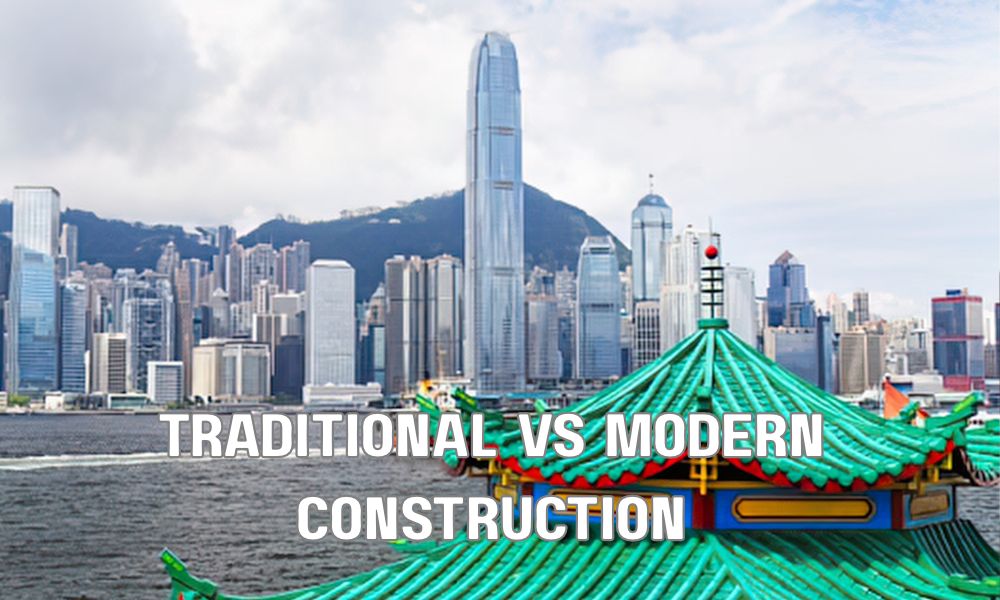
Boards evaluating internal succession candidates or interviewing external executives must distinguish between leaders built for yesterday’s abundant-labor market and those engineered for 2027’s capacity-constrained reality. The matrix below contrasts legacy habits against modern executive benchmarks:
| Operating Dimension | Legacy Construction Executive | 2027 Labor-Resilient Executive |
|---|---|---|
| Schedule Recovery | Throws unbudgeted weekend overtime and extra headcount at delayed milestones. | Uses Takt planning, constraint removal, and off-site prefabrication to protect flow without burnout. |
| Subcontractor & Trade Relations | Treats specialty trades as interchangeable commodities squeezed on lowest initial bid price. | Builds long-term strategic trade alliances, sharing early BIM models and guaranteeing clean workfaces. |
| Preconstruction & Bidding | Chases top-line backlog volume first and expects field teams to “figure out” labor shortages later. | Enforces strict bid-selectivity gates based on verified superintendent and craft availability. |
| Technology & AI Posture | Views digital tools as IT overhead disconnected from field realities. | Deploys AI scheduling, automated RFI/submittal workflows, and reality capture to amplify every manager’s span of control. |
| Succession & Talent | Relies on reactive last-minute recruiting when a project manager quits or retires. | Maintains a 12-month forward leadership capacity plan and structured field-to-office career ladders. |
4. Sector-Specific Leadership Pressures Shaping 2027
While labor scarcity affects every corner of the built environment, the severity and specific leadership requirements vary sharply depending on where an organization competes in 2027:
Mission-Critical Data Centers & Advanced Industrial
With hyperscale data center capital expenditures surging toward $1.6 trillion and reshoring driving massive semiconductor and battery plant builds, mission-critical contractors face hyper-compressed schedules where liquidated damages can reach hundreds of thousands of dollars per day. Here, the bottleneck is specialized electrical, mechanical, and commissioning leadership. Winning executives must master modular power-skid integration, utility interconnect coordination, and high-velocity commissioning protocols while retaining elite MEP superintendents who are aggressively targeted by competitors every week.
Private Equity-Backed Specialty Trade Roll-Ups
Private equity sponsors have poured billions into consolidating regional HVAC, electrical, plumbing, fire protection, and site-work contractors. In a buy-and-build platform, labor scarcity is both the greatest operational risk and the greatest strategic moat. Platform CEOs and COOs must quickly harmonize safety cultures, centralize recruiting engines, cross-level skilled technicians across regional branches during peak demand, and shift revenue mixes toward high-margin recurring service and maintenance agreements—which insulate EBITDA from cyclical construction swings while stabilizing year-round technician utilization.
Civil Infrastructure, Utilities & Healthcare
Multi-year public infrastructure programs, grid-hardening mandates, and demographic-driven hospital expansions require leaders fluent in complex stakeholder ecosystems. Executives in these verticals must balance strict prevailing-wage and apprenticeship compliance rules with collaborative delivery methods—such as Progressive Design-Build and Integrated Project Delivery (IPD)—that align owners, engineers, and contractors around shared labor efficiency rather than adversarial claims.
5. Five Non-Negotiable Questions to Vet Construction Executives in 2027
Because seasoned construction leaders are overwhelmingly passive candidates currently running active projects, hiring committees cannot rely on superficial resume screening or generic behavioral interviews. Two candidates may both hold the title of Vice President of Operations, yet one relies on brute-force crisis management while the other builds repeatable, labor-efficient delivery systems. Search committees should interrogate finalists using five diagnostic questions:
- “Walk us through a major project where severe trade labor shortages threatened the critical path. What structural changes did you make to the work sequence or delivery method rather than simply paying overtime?” Look for specific examples of off-site prefabrication, re-sequencing zones, pull-planning, or design simplification that protected gross margin.
- “How do you govern ‘go/no-go’ bid decisions when commercial demand exceeds our verified superintendent and field leadership capacity?” Elite leaders demonstrate commercial discipline—refusing to chase revenue that forces the company to stretch thin or promote unready project managers into high-risk roles.
- “What specific operational systems have you installed to reduce rework and warranty callbacks?” Every avoidable rework hour steals scarce skilled labor from profitable new builds. Top executives track first-time quality metrics, digital QA/QC sign-offs, and pre-installation checklists religiously.
- “How have you personally used technology or AI workflows to expand the span of control of your project managers and superintendents?” Probe past generic software mentions to verify real adoption of predictive scheduling, automated submittal/RFI logs, or digital field telemetry.
- “Tell us about the superintendents and project managers you have developed from the field—and what your voluntary turnover rate among key project leaders was over the past three years.” Retention of proven project executives and general superintendents is the clearest indicator of cultural credibility and sustainable leadership.
6. Structuring Compensation & Retention for Scarce Construction Leaders

Securing transformative construction executives in 2027 requires compensation structures that reflect both intense market competition and the direct impact these leaders have on bottom-line margin preservation:
- Margin-Protected Variable Incentives: Move away from annual bonuses tied solely to top-line revenue bookings or raw project volume. Anchor Short-Term Incentives (typically 40% to 75% of base salary) to realized gross margin fade prevention, schedule-certainty milestones, first-time quality metrics, and key superintendent retention.
- Long-Term Equity & Phantom Stock Alignment: Whether in employee-owned (ESOP) general contractors, family-held enterprises, or private equity platforms, top-decile COOs, VPs of Preconstruction, and Divisional Presidents expect meaningful long-term wealth participation tied to multi-year EBITDA and enterprise value growth.
- Protecting Executive Bandwidth & Sustainability: Burnout is a silent driver of C-suite and project executive attrition in construction. Boards that pair competitive compensation with dedicated preconstruction support, modern digital workflows, and realistic project-load governance retain their best leaders far longer than competitors who treat exhaustion as a badge of honor.
Conclusion
Entering 2027, the construction industry stands at a historic crossroads. Trillions of dollars in data center, industrial, energy, healthcare, and civil infrastructure demand have created an extraordinary runway for growth—yet persistent skilled labor and project leadership shortages ensure that not every contractor will capture those returns. When field capacity is the ultimate bottleneck, operational brute force stops working.
The winners of 2027 will be led by executives who treat every skilled hour as a sacred asset—architects of Lean jobsite flow, champions of off-site prefabrication, disciplined preconstruction gatekeepers, and builders of deep internal talent pipelines. By upgrading leadership architecture today and recruiting executives engineered for productivity rather than firefighting, construction boards and private equity sponsors can turn the industry’s greatest constraint into an insurmountable competitive advantage.
Frequently Asked Questions (FAQs)
1. Why is the construction labor shortage projected to intensify in 2027?
While slight slowdowns in conventional commercial building temporarily eased hiring pressure in parts of 2026, structural demographic retirements—with roughly one in five construction workers aged 55 or older—continue unabated. As deferred projects move into active construction alongside massive data center, utility, and infrastructure builds in 2027, demand for skilled trades and experienced project leaders is projected to rebound sharply.
2. How does a VP of Preconstruction help solve a field labor bottleneck?
A strong VP of Preconstruction prevents labor bottlenecks before mobilization by vetting regional trade capacity prior to bidding, resolving design clashes virtually via BIM, shifting complex assemblies into off-site prefabrication, and locking in early trade partner commitments so field crews never stall waiting on materials or drawings.
3. Why are general contractors and trade platforms hiring VPs of Prefabrication?
Moving repeatable mechanical, electrical, plumbing, and structural assemblies off the jobsite into controlled manufacturing facilities reduces on-site skilled labor requirements by up to 40%, accelerates project schedules, improves safety, and allows contractors to leverage semi-skilled shop technicians alongside master tradespeople.
4. What is the biggest mistake construction boards make when hiring operations executives?
The most common error is hiring based purely on past project size or charismatic “firefighting” reputation rather than evaluating whether the candidate builds repeatable operational systems. In a labor-constrained market, leaders who rely on reactive overtime and ad-hoc heroics burn out teams and erode margins.
5. How can mid-sized contractors compete with hyperscale data center projects for talent?
While mid-sized firms may not always match the highest prevailing megaproject hourly rates, they win and retain top superintendents and project managers by offering predictable regional travel footprints, year-round backlog stability, recurring maintenance/service career tracks, rapid 48-hour hiring decisions, and clear paths to senior leadership.
6. How is AI practically changing construction executive roles in 2027?
Rather than replacing field craftsmanship, AI in 2027 is eliminating administrative friction—automating bid takeoffs, contract risk reviews, submittal/RFI tracking, and predictive schedule risk alerts. This expands the span of control of scarce project managers and superintendents, allowing them to spend more time leading crews and protecting margins.

Tanya Gallardo
Managing Director, Executive Search & AI Talent Strategy
Tanya Gallardo is the Managing Director of Executive Search & AI Talent Strategy at JRG Partners, leading C-suite and Board engagements across key growth sectors including Technology, Financial Services, and Manufacturing.
With over 18 years of experience specializing in disruptive technology leadership, Tanya is recognized as a leading authority on talent architecture for future-focused executive roles, such as the Chief AI Officer (CAIO) and Chief Digital Officer (CDO). Her expertise lies in accurately assessing the cultural fit and technical depth required to ensure a high return on investment (ROI) for critical leadership appointments.
Prior to her role at JRG Partners, Tanya held senior roles directing global talent acquisition strategies at a major publicly-traded technology firm, advising on organizational design and succession planning for emerging executive functions. She is a recognized speaker and contributor to industry events, sharing data-driven insights on executive compensation, leadership development, and the measurable business impact of C-suite talent.
