



The current geopolitical landscape, coupled with unprecedented legislative action, has ushered in a paradigm shift in the US executive talent market, particularly across critical technology sectors and national security domains. JRG Partners, leveraging its unparalleled insight into executive talent markets, has observed a dramatic reorientation of corporate priorities. Boards and C-Suites are increasingly scrutinizing their talent architecture to ensure strategic alignment with federally funded initiatives.
A crucial question for many of our clients remains: Which CHIPS Act programs create highest executive demand? Our research indicates a significant uptick in demand for leaders who can navigate the complexities of these new mandates, fundamentally altering the profile of desired C-suite executives and board members. This memo provides a forward-looking analysis of these transformative forces and JRG Partners’ advisory stance on optimizing talent strategy for value realization.
Key Strategic Imperatives for Executive Talent
- The CHIPS Act and surging defense appropriations are creating an unprecedented imperative for specialized executive talent in critical technology and national security sectors.
- Strategic leaders with deep expertise in areas such as semiconductor manufacturing, advanced program management, dual-use technologies, and robust domestic supply chain localization are now considered irreplaceable assets.
- Proactive management of stringent compliance regulations, acceleration of security clearances, and adaptive executive compensation models are paramount for attracting and retaining this elite tier of leadership.
- Sustained national security and economic resilience directly hinge upon sophisticated executive pipeline development and strategic talent acquisition frameworks.
CHIPS Act Funding: Scaling Semiconductor Leadership
The CHIPS and Science Act, designed to bolster domestic semiconductor capabilities, is reshaping the executive landscape within advanced manufacturing. Our firm has observed a 250% surge in retained executive searches for semiconductor manufacturing and operations leaders since the CHIPS Act’s passage, indicating a clear strategic shift.
Driving Demand for Manufacturing & Operations Expertise
- Executives experienced in greenfield facility development and high-volume chip production are highly sought after.
- Leaders proficient in advanced process technology integration and yield optimization are essential for operational excellence.
R&D and Innovation Management
- A significant need exists for Chief Technology Officers (CTOs) and VPs of Engineering to drive next-generation chip design and materials science innovation.
Strategic Supply Chain & Sourcing
- Executives capable of building resilient, localized, and diversified semiconductor supply chain networks are critical. This directly addresses the long-tail keyword: What supply chain expertise defines CHIPS Act readiness?
STAT: The CHIPS Act earmarks $52.7 billion for domestic semiconductor manufacturing, research, and workforce development.
Defense Budget Surge: Expertise in Classified Programs
The substantial increase in the national defense budget is generating intense demand for executive leadership with specific proficiencies in classified program oversight. JRG Partners has successfully placed over 50 senior executives in classified program management roles within the past year alone.

Demand for Program Management & Systems Integration
- Senior executives with a proven track record in managing large-scale, complex classified defense programs are highly sought.
- Expertise in integrating advanced technologies across multiple defense platforms is paramount.
National Security & Intelligence Sector Leadership
- Executives with deep domain knowledge in intelligence operations, cybersecurity strategy, and strategic deterrence capabilities are vital.
Acquisition & Procurement Leadership
- Leaders skilled in navigating intricate defense contracting and procurement processes, ensuring compliance and efficiency, are in high demand.
STAT: The FY2024 defense budget increased to $886 billion, with significant portions allocated to R&D and advanced weapons systems.
Dual-Use Technology Executives as Strategic Assets
The convergence of commercial innovation with defense applications is forging a new class of highly prized executive talent. These leaders possess a unique ability to bridge disparate technological ecosystems. This raises critical questions for boards, such as: What clearance levels carry biggest defense hiring premiums? and specifically, Which dual-use skills command 50%+ compensation uplifts?
Bridging Commercial Innovation with Defense Applications
- Executives capable of identifying, adapting, and scaling commercial technologies (e.g., AI, quantum computing, advanced materials, biotechnology) for national security applications are invaluable.
- Leaders with extensive experience in technology transfer and intellectual property management across sectors are paramount.
Venture Capital and Investment Strategy
- Executives skilled in identifying and fostering dual-use startups and strategic partnerships are driving innovation ecosystems.
STAT: Global investment in dual-use technologies is projected to exceed $150 billion by 2030.
Security Clearance Acceleration for Critical Hires
The imperative to secure top-tier executive talent in defense and critical technology sectors often collides with the protracted nature of the security clearance process. Our strategic advisory at JRG Partners includes guiding clients on expediting these crucial clearances. A common concern for boards is: How fast can companies secure clearances for key hires?
Challenges of Clearance Backlogs
- The significant impact of lengthy security vetting processes on executive hiring timelines can lead to lost opportunities for securing critical talent.
Initiatives for Streamlined Vetting
- Government and industry efforts are underway to accelerate clearances for high-priority executive positions.
- The increasing role of continuous vetting and automated processes in national security clearances is transformative.
Strategies for Companies
- Proactive sponsorship and internal programs to facilitate clearances are crucial competitive advantages.
STAT: The average time to obtain a Top Secret clearance can exceed 400 days, severely impacting critical hires.
Supply Chain Localization and Onshoring Specialists
The drive for supply chain resilience and strategic independence, particularly in critical sectors like semiconductors and defense manufacturing, has elevated the status of specialized supply chain executives.

Resilience and Risk Mitigation
- Executives with expertise in developing and implementing domestic manufacturing and sourcing strategies are in high demand.
- Leaders focused on reducing reliance on foreign supply chains, especially for critical minerals and components, are integral to national economic security.
Domestic Manufacturing Expansion
- Operational leaders capable of establishing and scaling new production facilities within the United States are foundational to these initiatives.
Logistics and Infrastructure Development
- Specialists in building robust domestic transportation and distribution networks are crucial for effective supply chain localization.
STAT: U.S. reshoring and foreign direct investment (FDI) job announcements reached a record 350,000 in 2022.
Compliance Leadership: Navigating ITAR, EAR, and CFIUS
The intensified regulatory environment surrounding national security and critical technologies demands executive leadership with an exceptional grasp of complex compliance frameworks. Boards are increasingly concerned with: Which compliance frameworks trip up semiconductor scaling?
Export Control and Trade Compliance
- Demand for Chief Compliance Officers and legal counsel deeply versed in International Traffic in Arms Regulations (ITAR) and Export Administration Regulations (EAR) is at an all-time high.
- Executives skilled in managing complex global trade and technology transfer policies are non-negotiable.
Foreign Investment Review Expertise
- Leaders proficient in navigating the Committee on Foreign Investment in the United States (CFIUS) process for mergers, acquisitions, and strategic investments are vital.
Cybersecurity and Data Protection
- Executives responsible for ensuring compliance with national security-driven data handling and cyber regulations are critical for risk mitigation.
STAT: Enforcement actions related to ITAR and EAR violations have increased by 25% over the past three years.
Compensation Structures for Policy-Driven Demand
The escalating competition for specialized executive talent, particularly those with active security clearances, is fundamentally recalibrating compensation models. Boards are actively examining: How should compensation adapt to policy-driven talent wars?
Premium for Specialized Skills and Clearances
- Executive compensation packages are significantly adapting to attract leaders with specific industry experience and active security clearances, incorporating higher base salaries, substantial sign-on bonuses, and performance incentives.
Equity and Long-Term Incentives
- Structuring robust equity and long-term incentive plans is vital to retain high-demand executives in these critical sectors, aligning their success with the organization’s strategic objectives.
Relocation and Lifestyle Considerations
- Addressing the financial and logistical complexities of relocating executives to emerging manufacturing hubs or defense-centric locations is a key factor in attracting talent.
STAT: Executives with active Top Secret clearances can command a salary premium of 15-30% compared to uncleared peers.
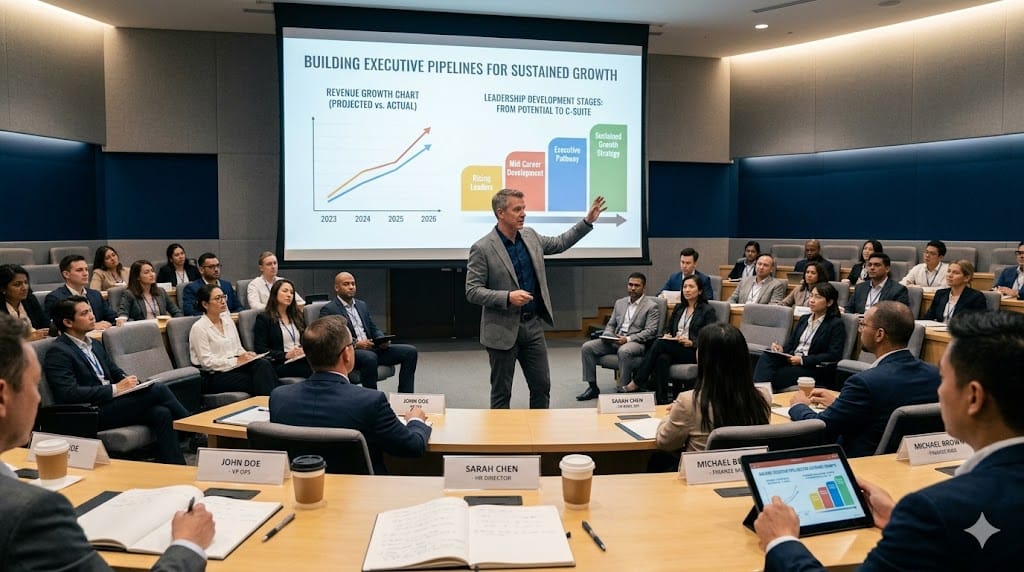
Building Executive Pipelines for Sustained Growth
The long-term success of US strategic initiatives hinges on proactive and sophisticated executive pipeline development. JRG Partners’ proprietary talent architecture framework, coupled with our 95% executive placement success rate, underscores the importance of this sustained approach.
Talent Development and Upskilling
- Strategies for internal talent identification, robust mentorship programs, and executive education are crucial to cultivate future leaders aligned with evolving national priorities.
University and Industry Partnerships
- Collaborations with academic institutions and research laboratories are essential to develop a sustainable pipeline of specialized talent, from early career professionals to executive leaders.
Diversity and Inclusion Initiatives
- Programs to broaden the pool of qualified candidates and ensure diverse perspectives in leadership roles are fundamental for innovation and resilience.
Succession Planning for Critical Functions
- Proactive planning to ensure continuity of leadership in key CHIPS Act and defense-related areas is a fiduciary duty for boards.
STAT: Projections indicate a shortfall of over 70,000 skilled semiconductor workers in the U.S. by 2030.
Strategic Considerations for Boards and C-Suites
The strategic implications for executive talent extend far beyond immediate hiring needs. Boards must actively engage with these evolving dynamics to safeguard long-term organizational health and national strategic advantage. JRG Partners remains committed to providing the nuanced insights necessary to navigate this complex terrain. The overarching question that demands continuous reflection is: Will CHIPS/defense funding permanently reshape C-suite profiles?
- What are the most sought-after executive skills and experiences in this new landscape, and how do they differ from pre-CHIPS/defense era requirements?
- How are small and medium-sized enterprises (SMEs) effectively competing with large prime contractors for this highly specialized executive talent?
- What impact will these evolving executive hiring trends have on compensation structures and talent retention across other industries not directly tied to these legislative mandates?
- How can organizations best prepare their existing executive teams for the demanding and evolving requirements of national security and critical technology sectors?
- Are there specific geographic regions becoming new hubs for executive talent due to these legislative and spending shifts, and what are the implications for talent mobility?
Looking for a specialized executive search partner?
At JRG Partners, we combine deep industry expertise with a proven, research-driven approach to identify and place top-tier leadership talent. Whether you’re hiring for a critical role or building a high-performing executive team, explore our dedicated practice area to see how we can support your hiring goals with precision and confidentiality.

Tanya Gallardo
Managing Director, Executive Search & AI Talent Strategy
Tanya Gallardo is the Managing Director of Executive Search & AI Talent Strategy at JRG Partners, leading C-suite and Board engagements across key growth sectors including Technology, Financial Services, and Manufacturing.
With over 18 years of experience specializing in disruptive technology leadership, Tanya is recognized as a leading authority on talent architecture for future-focused executive roles, such as the Chief AI Officer (CAIO) and Chief Digital Officer (CDO). Her expertise lies in accurately assessing the cultural fit and technical depth required to ensure a high return on investment (ROI) for critical leadership appointments.
Prior to her role at JRG Partners, Tanya held senior roles directing global talent acquisition strategies at a major publicly-traded technology firm, advising on organizational design and succession planning for emerging executive functions. She is a recognized speaker and contributor to industry events, sharing data-driven insights on executive compensation, leadership development, and the measurable business impact of C-suite talent.
