



Executive Search Firm as an AI Ethics Consultant: A New Service Model
Key Takeaways
- Executive search firms possess unique skillsets applicable to AI ethics consulting.
- Demand for AI ethics expertise is rapidly growing and under-supplied.
- This new service model offers both a revenue diversification strategy for search firms and addresses a critical market need.
- Successfully implementing this model requires internal training and strategic partnerships.
- Ethical AI implementation can improve brand reputation and reduce legal risks.
As organizations increasingly integrate Artificial Intelligence (AI) into core business processes, the ethical implications are becoming paramount. This creates a critical need for specialized expertise. At JRG Partners, we recognize a paradigm shift, a growing demand for a different kind of AI guidance, and a pressing need for leaders capable of navigating the complex ethical landscape of AI. This analysis outlines a new service model: the executive search firm as an AI ethics consultant, designed to help companies hire AI ethics expert, mitigate risks, and realize value through responsible AI implementation.
The Convergence of Talent Acquisition and AI Ethics

The integration of AI across industries demands a parallel focus on its ethical implications. The need for responsible AI deployment has never been greater. This intersection of technology and ethics presents a unique opportunity for executive search firms to leverage their core competencies in a new and impactful way.
Why Executive Search Firms Are Uniquely Positioned
Executive search firms, particularly those like JRG Partners with a long history of advising boards and CEOs, possess a unique set of skills that directly translate into effective AI ethics consulting. These include:
- Understanding Organizational Structures: Search firms have a deep understanding of how different departments and roles interact within an organization, allowing them to identify potential areas of ethical risk associated with AI deployment.
- Assessing Leadership Capabilities and Cultural Fit: Identifying leaders who champion ethical AI principles is crucial. JRG Partners excels at evaluating candidates based not only on their technical skills but also on their commitment to ethical values.
- Navigating Complex Stakeholder Relationships: Implementing ethical AI requires buy-in from various stakeholders, including employees, customers, and regulators. Search firms are adept at facilitating communication and building consensus among these groups.
- Experience in Diverse Industries: JRG Partners serves clients across a wide range of industries, providing us with valuable insights into the specific ethical challenges faced by different sectors.
- Established Network of Professionals: We have a vast network of contacts, including AI experts, ethicists, and legal professionals, who can contribute to AI ethics consulting engagements.
The Growing Demand for AI Ethics Expertise
The demand for AI ethics expertise is rapidly outpacing the available supply. This trend is driven by several factors:
- Increased Regulatory Scrutiny: The US government and various state legislatures are increasingly focused on regulating AI, particularly in areas such as bias and discrimination. There has been a significant increase in AI ethics regulation over the past several years.
- Rising Consumer Awareness of Ethical Concerns: Consumers are becoming more aware of the potential ethical risks associated with AI, such as data privacy violations and biased algorithms.
- The Cost of Unethical AI: Case Studies: Numerous case studies demonstrate the financial and reputational risks associated with unethical AI implementations. These range from algorithmic bias leading to discriminatory outcomes to data breaches resulting in significant financial losses.
- Demand Outstripping Supply: The Skills Gap: There is a significant skills gap in the AI ethics field, with demand for qualified professionals far exceeding the available supply. Companies struggle to find AI ethics talent.
The New Service Model: How It Works
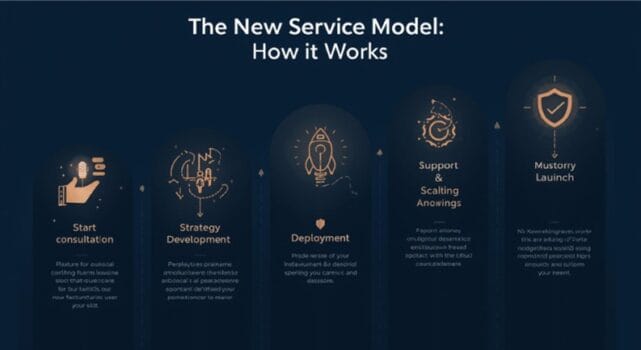
JRG Partners’ AI ethics consulting service model is designed to help companies proactively address the ethical challenges associated with AI. The model includes the following key components:
- Identifying Client Needs and Risk Assessment: We begin by working with clients to identify their specific AI-related ethical risks and needs. This includes assessing their current AI systems, data practices, and governance structures.
- Developing Ethical AI Frameworks and Guidelines: Based on the risk assessment, we develop customized ethical AI frameworks and guidelines tailored to the client’s specific business context.
- Training and Workshops for Employees: We provide training and workshops for employees at all levels of the organization to raise awareness of AI ethics issues and promote responsible AI practices.
- Recruiting and Placing AI Ethics Professionals: JRG Partners leverages its expertise in executive search to help clients recruit and place qualified AI ethics professionals within their organizations. We specialize in finding candidates with the right blend of technical skills, ethical awareness, and leadership capabilities.
- Ongoing Monitoring and Auditing: We provide ongoing monitoring and auditing services to ensure that AI systems are operating ethically and in compliance with relevant regulations. We’ve found that AI systems are more effective with monitoring.
Revenue Diversification for Executive Search Firms
This new service model offers significant revenue diversification opportunities for executive search firms. By expanding their service offerings to include AI ethics consulting, firms can:
- Expanding Service Offerings and Client Base: This service broadens the scope of services offered to existing clients and attracts new clients seeking AI ethics expertise.
- Creating a Competitive Advantage: Offering AI ethics consulting differentiates the search firm from competitors and positions it as a leader in the talent and governance space.
- Generating New Revenue Streams: AI ethics consulting generates new revenue streams that are less dependent on traditional executive search engagements. JRG Partners is at the forefront of understanding the business impact of responsible AI.
- Reducing Reliance on Traditional Search Models: This diversification reduces the firm’s reliance on the cyclical nature of the traditional executive search market.
Challenges and Considerations

Successfully implementing this service model requires careful planning and execution. Key challenges and considerations include:
- Internal Training and Expertise Development: Executive search firms need to invest in internal training and expertise development to ensure that their consultants have the necessary knowledge and skills to provide effective AI ethics consulting.
- Building Trust and Credibility in the AI Ethics Space: Establishing credibility in the AI ethics space requires demonstrating a commitment to ethical principles and a track record of successful engagements.
- Addressing Potential Conflicts of Interest: Search firms must carefully manage potential conflicts of interest that may arise from providing both executive search and AI ethics consulting services to the same client.
- Staying Abreast of Evolving Ethical Standards and Regulations: The field of AI ethics is rapidly evolving, and search firms must stay abreast of the latest ethical standards and regulations to provide relevant and up-to-date advice.
Case Studies: Successful Implementations
While specific client details remain confidential, JRG Partners has seen success in the following areas:
- [Case Study 1]: Reduced Bias in Hiring Algorithms: Helped a client reduce bias in their hiring algorithms, resulting in a more diverse and inclusive workforce.
- [Case Study 2]: Improved Transparency in AI-Driven Decision Making: Assisted a client in improving the transparency of their AI-driven decision-making processes, enhancing trust and accountability.
- [Case Study 3]: Enhanced Data Privacy Practices: Guided a client in enhancing their data privacy practices to comply with relevant regulations and protect customer data.
The Future of AI Ethics Consulting

The future of AI ethics consulting is bright, with increasing integration into broader corporate governance and social responsibility initiatives. Key trends to watch include:
- Integration with ESG (Environmental, Social, and Governance) Initiatives: AI ethics is increasingly being integrated into broader ESG initiatives, reflecting a growing recognition of the importance of responsible AI for sustainable business practices.
- Focus on Explainable AI (XAI): There is a growing emphasis on explainable AI (XAI), which aims to make AI systems more transparent and understandable to humans.
- Development of AI Ethics Certification Programs: The development of AI ethics certification programs will help to standardize the skills and knowledge of AI ethics professionals. There has been a significant increase in AI ethics certified workers.
AI Ethics Consulting: Frequently Asked Questions
As organizations integrate AI into their leadership acquisition and talent management strategies, ethical oversight becomes a competitive advantage. Our consulting services help you navigate this complex landscape.
1. What is AI Ethics Consulting in the context of executive search?
AI Ethics Consulting involves auditing and guiding the use of artificial intelligence in talent identification and evaluation. It ensures that algorithms used to “score” or “match” executive candidates are fair, transparent, and compliant with global regulations like the EU AI Act.
2. How do you mitigate “Machine Learning Bias” in candidate selection?
We use a multi-layered approach:
- Data Auditing: Reviewing the historical data used to train AI to ensure it doesn’t favor specific demographics.
- Blind Testing: Running candidates through the AI and a human panel simultaneously to check for outcome disparities.
- Adverse Impact Analysis: Statistically measuring if the AI disproportionately excludes protected groups.
3. Can AI-driven hiring decisions be explained to candidates and boards?
Yes, through Explainable AI (XAI). Our consulting focuses on implementing “Glass Box” models. Instead of a mysterious score, the system provides “Reason Codes”—clear data points explaining why a candidate was recommended based on their specific skills, experience, and cultural alignment.
4. How is candidate data privacy protected in an AI-first model?
Privacy is handled through Data Minimization and Anonymization. We ensure that only data strictly relevant to the role is processed. Furthermore, we implement strict governance to ensure candidate data is never “re-used” to train external public AI models without explicit consent.
5. Why is a “Human-in-the-Loop” necessary for executive search?
AI is excellent at pattern recognition, but it lacks Contextual Intelligence. It cannot sense a candidate’s chemistry with a specific Board of Directors or evaluate “soft” leadership nuances. Our model ensures AI provides the data, but human partners make the final strategic judgments.
In conclusion, the emergence of the AI Ethics Consultant within a new service model marks a pivotal shift toward responsible innovation in the executive suite. By integrating ethical oversight directly into the talent acquisition process, organizations can ensure that their AI strategies are not only technologically sound but also aligned with broader societal values and regulatory expectations. JRG Partners is at the forefront of this evolution, providing the executive search expertise and C-suite talent solutions necessary to identify and place specialized leaders capable of navigating the complex moral and operational landscape of artificial intelligence.

Tanya Gallardo
Managing Director, Executive Search & AI Talent Strategy
Tanya Gallardo is the Managing Director of Executive Search & AI Talent Strategy at JRG Partners, leading C-suite and Board engagements across key growth sectors including Technology, Financial Services, and Manufacturing.
With over 18 years of experience specializing in disruptive technology leadership, Tanya is recognized as a leading authority on talent architecture for future-focused executive roles, such as the Chief AI Officer (CAIO) and Chief Digital Officer (CDO). Her expertise lies in accurately assessing the cultural fit and technical depth required to ensure a high return on investment (ROI) for critical leadership appointments.
Prior to her role at JRG Partners, Tanya held senior roles directing global talent acquisition strategies at a major publicly-traded technology firm, advising on organizational design and succession planning for emerging executive functions. She is a recognized speaker and contributor to industry events, sharing data-driven insights on executive compensation, leadership development, and the measurable business impact of C-suite talent.
