



Florida’s Space Coast has transformed from a seasonal government launch range into the epicenter of global commercial spaceflight, defense manufacturing, and satellite production. Stretching across Brevard County—from Titusville and Cape Canaveral down through Merritt Island, Melbourne, and Palm Bay—the corridor is witnessing an unprecedented wave of capital deployment. Major launch providers and defense primes, including Blue Origin, SpaceX, L3Harris, Northrop Grumman, and expanding innovators like Relativity Space, Extant Aerospace, and CesiumAstro, are pouring hundreds of millions of dollars into high-bay manufacturing facilities, vertical integration campuses, and rapid-cadence launch infrastructure.
However, the Space Coast’s explosive expansion has collided with a profound operational bottleneck: a severe shortage of battle-tested aerospace operations and quality executive leadership. In 2026, the industry mandate has fundamentally shifted from bespoke, artisanal engineering (“building one exquisite rocket or satellite”) to repeatable, high-rate serial production (“launching multiple missions per week”). Transitioning from prototype R&D to commercial manufacturing velocity requires an entirely different caliber of executive—leaders who master AS9100 and emerging IA9100 quality management frameworks, Nadcap special process accreditations, and resilient tier-two supply chain governance.
For aerospace boards, private equity sponsors, and general managers scaling operations in Florida, securing these rare leaders is the decisive factor between hitting manifest schedules and suffering costly regulatory holds. This comprehensive guide dissects the specific operations and quality executive archetypes required across the Space Coast, detailing critical vetting competencies, regulatory imperatives, and compensation strategies for winning top-tier aerospace talent.
1. The Space Coast Paradigm Shift: From Bespoke R&D to High-Rate Production
Historically, aerospace manufacturing operated on low-volume, cost-plus timelines where multi-year development cycles were standard. Today, commercial launch providers and defense contractors on the Space Coast are racing to achieve airline-like launch cadences and mass satellite constellation assembly. Simultaneously, prime contractors are pushing massive manufacturing volume down to regional precision machine shops, composite fabricators, and avionics assemblers across Brevard County.
This shift exposes a dangerous leadership gap. Founding R&D engineers and prototype shop managers frequently struggle when tasked with scaling serial production. Without institutional operations and quality executives who can enforce statistical process control (SPC), First Article Inspection (FAI) rigor, and Advanced Product Quality Planning (APQP), high-rate production lines quickly succumb to non-conformance backlogs, scrap spikes, and catastrophic delivery delays.
2. The Five Critical Operations & Quality Leadership Hires
To scale safely and profitably in Florida’s aerospace corridor, companies must prioritize five specialized executive and senior leadership archetypes:
1. VP of Operations / Site General Manager (The High-Rate Velocity Master)
Holding ultimate P&L and delivery accountability for the Florida facility, this executive transforms engineering designs into repeatable, on-time flight hardware.
- Core Mandate: Transition manufacturing lines from low-rate initial production (LRIP) to high-rate serial cadence, optimize shop-floor takt times, manage multi-million-dollar CapEx machine tool deployments, and enforce strict on-time delivery (OTD) to prime customers.
- Ideal Profile: An engineering-degreed manufacturing executive with proven experience scaling complex aerospace, defense, or high-reliability propulsion/avionics production in FAA, NASA, or DoD-regulated environments.
2. VP / Director of Quality Assurance & Mission Assurance (The Regulatory & IA9100 Gatekeeper)
In aerospace and defense, quality is not a back-office compliance function—it is an existential license to operate. As the industry transitions toward updated IA9100 standards alongside rigorous AS9100D and Nadcap requirements, the head of quality serves as the ultimate guardian of flight safety and customer trust.
- Core Mandate: Architect and maintain AS9100/IA9100 Quality Management Systems (QMS), oversee Nadcap accreditations for special processes (heat treating, chemical processing, welding, composites, and non-destructive testing), enforce zero-tolerance counterfeit parts prevention, and command Corrective and Preventive Action (CAPA) boards.
- Ideal Profile: An uncompromising quality leader who possesses the executive authority to halt a shipment when a critical characteristic deviates, while partnering proactively with manufacturing engineers to build quality into the process rather than relying solely on end-of-line inspection.
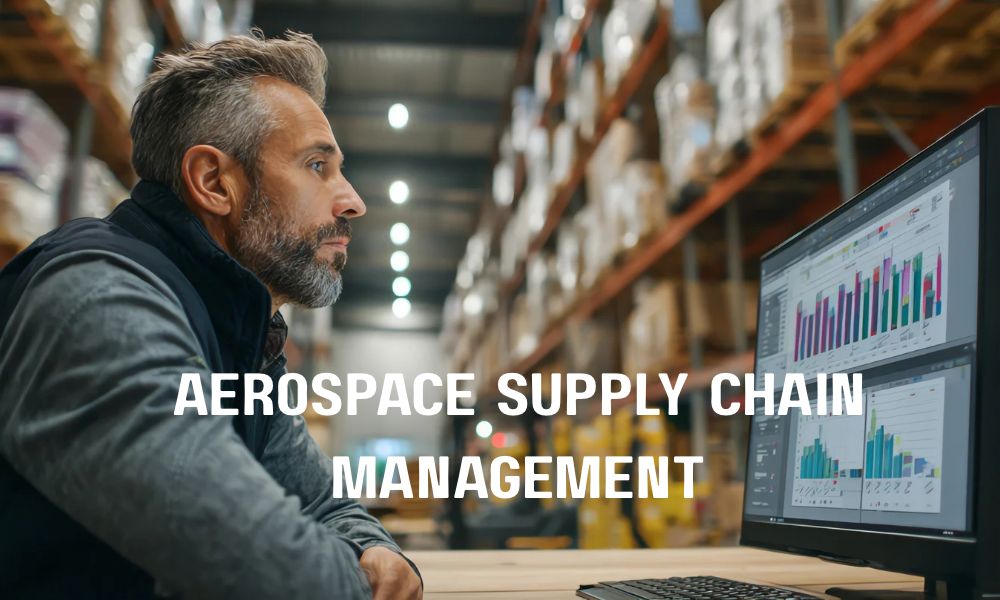
3. Director of Supply Chain & Sub-Tier Supplier Quality (The Ecosystem Orchestrator)
A prime contractor or tier-one integrator is only as reliable as its weakest sub-tier machine shop or special processor. With Brevard County’s supplier network expanding rapidly, supply chain leadership must manage intricate external dependencies.
- Core Mandate: Qualify and audit sub-tier suppliers via eAuditNet and prime Qualified Manufacturers Lists (QML), enforce flow-down of customer-designated special process requirements, mitigate single-source bottlenecks for exotic alloys and avionics components, and manage ITAR/EAR export-controlled data transfers.
- Ideal Profile: A strategic aerospace procurement and supplier development leader experienced in complex Bill of Materials (BOM) orchestration and Production Part Approval Process (PPAP) execution.
4. Director of Manufacturing Engineering & Industrialization (The DFM Architect)
Bridging the divide between design engineering and the shop floor, this leader ensures that next-generation spacecraft, satellites, and defense systems are engineered for manufacturability (DFM) before hitting the production line.
- Core Mandate: Lead tooling design, automate precision CNC machining and additive manufacturing (3D printing) workflows, embed statistical process controls directly into Manufacturing Execution Systems (MES), and compress cycle times on high-tolerance assemblies.
- Ideal Profile: A hands-on aerospace manufacturing engineer who masters both traditional subtractive machining and emerging additive/composite fabrication technologies.
5. Director of Test, Launch & Integration Operations (The Mission-Readiness Commander)
Unique to the Space Coast is the tight physical proximity between factory fabrication and active launch pads at Cape Canaveral Space Force Station and Kennedy Space Center. This leader governs final vehicle integration, environmental testing, and pad turnaround.
- Core Mandate: Manage hazardous propellant/ordnance safety protocols, oversee thermal vacuum and vibration testing, coordinate booster recovery and refurbishment workflows, and maintain razor-sharp schedule discipline under unforgiving launch windows.
- Ideal Profile: An operations leader with deep flight-hardware integration, range safety, and high-consequence crisis management experience.
3. The Space Coast Executive Scorecard: 5 Vetting Domains
Because the Space Coast talent market is fiercely competitive, hiring committees must distinguish true aerospace operators from general industrial managers who lack regulatory depth. Candidates should be graded across five specific operational and quality domains:
| Evaluation Domain | Critical Core Competencies | Sample Board Interview Question |
|---|---|---|
| 1. AS9100 / IA9100 & Nadcap Mastery | QMS architecture, special process audit readiness, APQP/PPAP deployment, counterfeit parts prevention, configuration management. | “Walk us through how you prepared a facility for a zero-finding Nadcap special process audit while simultaneously scaling production throughput by 50%.” |
| 2. High-Rate Production & Scrap Reduction | Takt-time optimization, Statistical Process Control (SPC), First Article Inspection (AS9102), root-cause CAPA execution. | “Describe a recurring non-conformance or escape event on a flight-critical assembly. How did you isolate the systemic process failure and permanently eliminate the defect?” |
| 3. Sub-Tier Supplier & Flow-Down Control | Supplier quality audits, QML verification, exotic material lead-time mitigation, ITAR/EAR and CMMC cybersecurity compliance. | “When a critical special-process vendor loses accreditation or misses delivery milestones, what pre-qualified contingency and supplier development levers do you pull?” |
| 4. Culture of Psychological Safety & Escalation | Empowering technicians to halt lines without retaliation, eliminating “pencil-whipping,” transparent customer/regulator communication. | “Tell us about a time you had to tell a major defense prime or launch customer that a shipment would be delayed due to a quality hold. How did you protect executive trust?” |
| 5. Skilled Workforce Scaling & Retention | Recruiting and upskilling A&P mechanics, CNC machinists, and NDT inspectors; building local apprenticeship pipelines. | “Given the intense competition for cleared technicians and machinists in Brevard County, how have you structured shop-floor training and retention to protect tribal knowledge?” |
4. Winning the Brevard County Talent War: Compensation & Relocation Dynamics
With multiple anchor expansions occurring simultaneously across Titusville, Cape Canaveral, and Melbourne, local poaching among Space Coast aerospace employers is relentless. Securing passive operations and quality leaders requires competitive compensation packages paired with compelling relocation strategies for out-of-state talent from traditional hubs like Southern California, Seattle, Wichita, and Huntsville.
- Competitive Base & Milestone Bonuses: Base salaries for Space Coast VPs of Operations and Site GMs typically range from $260,000 to $400,000+, while VPs and Directors of Quality command $210,000 to $315,000+, depending on facility headcount and program criticality. Annual performance bonuses (30% to 60% of base) must balance on-time delivery metrics with strict quality and zero-escape KPIs so executives are never incentivized to cut corners.
- Equity & Long-Term Incentives: Growth-stage commercial space companies and private equity-backed defense suppliers differentiate their offers through meaningful stock option grants or Profits Interest Units (PIUs), alongside cash sign-on bonuses to offset forfeited unvested equity.
- Leveraging Florida’s Tax & Lifestyle Arbitrage: When recruiting executives from high-tax states like California or Washington, hiring committees should highlight Florida’s zero state personal income tax alongside structured relocation packages that address Brevard County housing transitions and spousal career support.
Conclusion
Florida’s Space Coast has cemented its position as the premier manufacturing and launch hub of the global aerospace economy. Yet, multi-million-dollar facility expansions and record defense backlogs will only translate into enterprise value if companies pair capital investment with elite operational and quality leadership. Transitioning from prototype craftsmanship to repeatable, audit-ready serial production requires executives who command absolute technical credibility on the shop floor and unwavering regulatory discipline in the boardroom.
Because verified aerospace operations and quality executives are fiercely defended by tier-one primes and high-growth space ventures alike, relying on passive job boards or generalist recruiters consistently leads to prolonged vacancies and costly compliance exposure. To map national aerospace talent pools, rigorously vet AS9100/Nadcap mastery, and extract passive leaders into Brevard County, forward-thinking boards partner with specialized search experts. Collaborating with a dedicated Aerospace & Defense Executive Search Firm in Florida ensures your organization gains direct, confidential access to the proven leaders who will power your Space Coast growth.
Frequently Asked Questions (FAQs)
1. Why are operations and quality leaders the biggest bottleneck for Space Coast aerospace companies?
Capital investment in Titusville, Cape Canaveral, and Melbourne has outpaced the local supply of senior manufacturing leaders. As commercial space and defense companies shift from building one-off prototypes to high-rate serial production, they urgently need executives who understand how to scale throughput without triggering AS9100 audit findings, Nadcap process failures, or flight-hardware escapes.
2. What is the difference between AS9100/IA9100 certification and Nadcap accreditation for a Quality Director?
AS9100 (and its upcoming IA9100 evolution) governs the overarching enterprise Quality Management System (QMS)—covering management responsibility, configuration management, counterfeit prevention, and risk controls. Nadcap is a deeply technical, process-specific accreditation required by primes for special processes such as heat treating, chemical plating, welding, composites, and non-destructive testing. A strong Space Coast Quality Director must master both.
3. Can an operations executive from automotive or medical device manufacturing transition into Space Coast aerospace?
Yes, with careful calibration. Medical device executives bring exceptional FDA regulatory discipline and cleanroom rigor, while automotive leaders excel at high-volume Lean takt times and APQP/PPAP frameworks. However, because aerospace relies on lower-volume, ultra-high-tolerance exotic alloys, strict ITAR export controls, and exhaustive traceability, pairing an adjacent-industry VP of Operations with a deeply tenured aerospace Quality Director is often the optimal formula.
4. How long does a retained executive search for a Space Coast VP of Operations or Quality take?
A targeted, retained executive search for senior aerospace leadership in Florida typically takes 10 to 14 weeks from search kickoff to a signed offer letter. This timeline accounts for national market mapping across aerospace hubs, security clearance and ITAR eligibility verification, technical vetting, and relocation negotiations.
5. How do ITAR and security clearances affect executive recruiting on the Space Coast?
Many propulsion, satellite, and defense programs operating in Brevard County fall under International Traffic in Arms Regulations (ITAR) or classified DoD contracts. Candidates must be U.S. Persons (U.S. citizens or permanent residents) and often require active Secret or Top Secret clearances, narrowing the eligible talent pool and making proactive, specialized headhunting essential.
6. What are the biggest red flags when interviewing an aerospace quality or operations candidate?
Key warning signs include: viewing quality assurance purely as end-of-line paperwork rather than upstream process engineering; an inability to explain how they manage sub-tier supplier flow-downs and special process audits; a history of sacrificing compliance protocols to meet quarter-end shipment numbers; and a lack of hands-on experience building technician retention programs in tight labor markets.

Tanya Gallardo
Managing Director, Executive Search & AI Talent Strategy
Tanya Gallardo is the Managing Director of Executive Search & AI Talent Strategy at JRG Partners, leading C-suite and Board engagements across key growth sectors including Technology, Financial Services, and Manufacturing.
With over 18 years of experience specializing in disruptive technology leadership, Tanya is recognized as a leading authority on talent architecture for future-focused executive roles, such as the Chief AI Officer (CAIO) and Chief Digital Officer (CDO). Her expertise lies in accurately assessing the cultural fit and technical depth required to ensure a high return on investment (ROI) for critical leadership appointments.
Prior to her role at JRG Partners, Tanya held senior roles directing global talent acquisition strategies at a major publicly-traded technology firm, advising on organizational design and succession planning for emerging executive functions. She is a recognized speaker and contributor to industry events, sharing data-driven insights on executive compensation, leadership development, and the measurable business impact of C-suite talent.
