


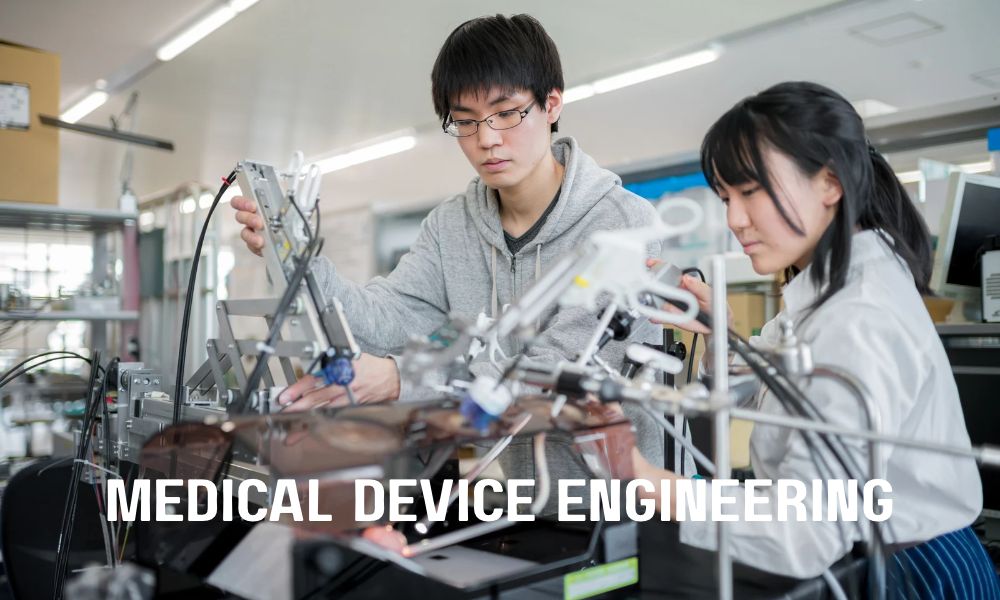
The medical device industry is approaching 2027 at a time when technological innovation, regulatory expectations, and commercial pressures are reshaping the requirements for successful leadership. Companies are developing increasingly sophisticated products, including connected medical devices, robotic surgical systems, advanced diagnostic technologies, wearable monitoring solutions, and AI-enabled clinical tools. These developments are creating opportunities to improve patient care, but they are also increasing the complexity of bringing products to market and maintaining them throughout their commercial lifecycle.
Medical device manufacturers must balance innovation with patient safety, regulatory compliance, manufacturing reliability, cybersecurity, and financial performance. A promising technology is not necessarily a commercially successful product. It must demonstrate clinical value, satisfy applicable regulatory requirements, achieve manufacturing consistency, and earn confidence from healthcare providers and patients.
These responsibilities are placing greater demands on executive teams. CEOs must make difficult investment decisions, regulatory leaders must anticipate changing requirements, and operations executives must ensure that manufacturing systems can support increasingly complex products. Commercial leaders must also understand healthcare purchasing behavior, reimbursement considerations, and the evidence required to demonstrate product value.
1. Accelerating Innovation While Managing Commercial Risk
Innovation remains one of the most important sources of competitive advantage in the medical device sector. Advances in materials science, miniaturization, robotics, sensors, imaging, software, and artificial intelligence are expanding what medical technologies can accomplish. Companies are exploring devices that provide more precise measurements, support less invasive procedures, improve patient monitoring, and help healthcare professionals make better-informed decisions.
However, innovation creates significant financial and organizational demands. Product development can require substantial investment in research, engineering, clinical evaluation, testing, regulatory preparation, and manufacturing capabilities. Development timelines may extend when technical problems emerge, clinical evidence is insufficient, or regulatory expectations require additional work.
Executives must therefore determine which opportunities deserve investment and which should remain under evaluation. Pursuing every promising technology can spread resources too thinly and create a portfolio of products that are difficult to commercialize.
2. Navigating Increasing Regulatory Complexity
Regulatory compliance will remain one of the defining leadership responsibilities for medical device companies in 2027. Medical technologies operate in highly regulated environments because product performance and reliability can directly affect patient safety. Manufacturers must understand the requirements applicable to their products, intended uses, risk classifications, markets, and distribution arrangements.
Companies selling internationally may need to manage different regulatory pathways, documentation requirements, quality expectations, and post-market responsibilities. A product strategy designed for one market may require additional evidence, modifications, or documentation before entering another.
Regulatory requirements also extend beyond initial product authorization. Manufacturers must maintain appropriate quality systems, document design and manufacturing changes, monitor product performance, investigate complaints, and respond to safety concerns. Compliance is therefore a continuing organizational responsibility rather than a final approval milestone.
3. Managing AI-Enabled Medical Devices and Software Innovation
Artificial intelligence is creating new opportunities in medical imaging, diagnostic support, patient monitoring, clinical decision support, and workflow management. Software-enabled medical devices can analyze information, identify patterns, and support healthcare professionals in ways that were difficult to achieve through conventional technologies alone.
However, AI introduces challenges that traditional device development processes may not fully address. Performance can depend on training data, clinical environments, patient populations, software updates, and the quality of information entering a system. An algorithm that performs well in one setting may produce different results when used in another.
Companies must also consider how software changes affect product performance and regulatory obligations. Systems that evolve after deployment require appropriate controls, validation, documentation, and monitoring.
Leadership Accountability for AI Safety
Executives must ensure that AI initiatives have clear ownership and appropriate oversight. Technology leaders should work with clinical, regulatory, cybersecurity, and quality teams to establish processes for evaluating performance and managing risks.
Organizations need to understand how their products generate recommendations, what limitations exist, and when human review is necessary. Healthcare professionals should not be expected to rely blindly on automated outputs, particularly when decisions could have significant clinical consequences.
AI governance must also address data privacy, cybersecurity, model monitoring, bias, transparency, and accountability. Companies that treat AI as a technology investment without considering its clinical and regulatory implications may create risks that are difficult to correct after commercialization.

4. Strengthening Clinical Evidence and Demonstrating Product Value
Developing a technically successful medical device is only one part of achieving commercial success. Companies must demonstrate that their products are safe, perform as intended, and offer meaningful value within the environments where they will be used. Clinical evidence plays an important role in establishing confidence among regulators, healthcare providers, purchasing organizations, and other stakeholders.
Evidence requirements vary depending on the device, its intended purpose, risk profile, and applicable regulatory pathway. Some products may require extensive clinical investigation, while others may rely on different forms of testing and supporting evidence. Regardless of the pathway, companies need a clear understanding of what information will support their claims.
Commercial pressure can encourage organizations to accelerate development, but insufficient evidence can create problems later. Healthcare providers may hesitate to adopt products when benefits are unclear, and purchasing organizations may require stronger proof before approving expenditure.
5. Addressing Cybersecurity and Connected Device Risks
Connectivity is becoming increasingly important across medical technology. Devices may exchange information with hospital networks, cloud platforms, electronic health records, remote monitoring systems, and other connected products. These capabilities can improve access to information and support more coordinated care, but they also expand the potential cybersecurity exposure.
A vulnerability in a connected medical device can create risks involving patient information, system availability, product performance, and healthcare operations. Manufacturers must consider cybersecurity throughout product development, deployment, maintenance, and post-market support.
Security cannot be treated as a feature added immediately before launch. Device architecture, software components, authentication, access controls, update mechanisms, and vulnerability management all influence the security of the finished product.
6. Modernizing Manufacturing and Quality Operations
Medical device manufacturing requires precision, consistency, traceability, and strict process control. Products may involve specialized materials, sensitive components, complex assembly processes, software integration, and demanding inspection requirements. As devices become more sophisticated, manufacturing systems must evolve to support increasing technical and quality expectations.
Automation, advanced inspection technologies, connected equipment, and digital production systems can improve productivity and consistency. However, introducing new equipment or changing established manufacturing processes requires careful validation and documentation.
Manufacturers must also manage supplier reliability, component availability, production capacity, and the consequences of design changes. A shortage of a specialized component can delay production, while an uncontrolled manufacturing change may create quality concerns.
7. Managing Supply Chain Vulnerability and Critical Components
Medical device supply chains can be particularly complex because products may depend on specialized electronics, sensors, polymers, metals, precision components, and materials supplied by a limited number of qualified manufacturers. Replacing a supplier is not always straightforward. Alternative components may require technical evaluation, testing, documentation, and appropriate quality approvals.
Global disruptions, transportation constraints, geopolitical developments, and changes in supplier capacity can therefore create significant risks. A shortage affecting one critical component may interrupt production even when most other materials remain available.
Companies must identify vulnerabilities across their supplier networks and understand which components have limited alternatives. Procurement decisions should consider reliability, quality performance, geographic exposure, financial stability, and the time required to qualify another source.
Building Supply Chain Resilience
Chief supply chain officers should work with engineering, quality, regulatory, and finance teams to establish sourcing strategies for critical materials. Supplier diversification may improve resilience, but additional sources must meet the organization’s technical and quality requirements.
Companies should also improve demand forecasting, inventory visibility, supplier communication, and contingency planning. Strategic inventory can provide protection for selected components, although excessive stockholding can increase costs and create obsolescence risks.
Effective supply chain leadership involves understanding the consequences of disruption before it occurs. Executives must know which products, customers, and manufacturing operations require priority protection and how the organization will respond when supply conditions deteriorate.

8. Navigating Reimbursement and Healthcare Purchasing Pressure
Medical device companies must understand not only whether a product can receive regulatory authorization but also whether healthcare organizations can justify purchasing and using it. Hospitals, clinics, healthcare networks, and other providers operate within financial and operational constraints. Their purchasing decisions may involve clinical value, total cost of ownership, reimbursement considerations, training requirements, maintenance, and compatibility with existing systems.
A product that offers technical advantages may still face adoption challenges if it requires expensive infrastructure, substantial staff training, or changes to established clinical workflows. Similarly, a device may struggle commercially if its economic benefits are difficult to demonstrate.
Strengthening Market Access and Commercial Strategy
Commercial leaders must understand how healthcare purchasing decisions are made and which stakeholders influence adoption. Procurement teams may focus on cost, while clinicians evaluate performance and usability. Hospital administrators may consider workflow efficiency, capacity, and financial sustainability.
Companies should develop evidence-based value propositions that explain how their products address clinical and operational needs. Depending on the product, this may involve demonstrating improvements in workflow, reduced procedural complexity, better monitoring capabilities, or other relevant benefits.
Market access expertise is becoming increasingly important because product development and commercial planning must reflect the realities of healthcare purchasing. Leaders who understand these relationships can help organizations avoid investing in products that are technically impressive but commercially difficult to adopt.
9. Managing Talent Shortages and the Leadership Squeeze
Talent availability is becoming a strategic concern for medical device manufacturers. Companies need experienced professionals across engineering, regulatory affairs, clinical research, quality assurance, cybersecurity, manufacturing, product management, and commercial operations. Competition for people with specialized experience can make recruitment difficult, particularly when organizations are developing new technologies or expanding into additional markets.
The challenge is especially significant at the executive level. Companies increasingly require leaders who understand more than one functional discipline. A regulatory executive may need strong commercial awareness, while an operations leader may need experience with digital manufacturing and complex quality systems.
These combinations are not always easy to find. Experienced candidates may also be reluctant to move from stable leadership positions unless an opportunity offers meaningful responsibility, organizational support, and a credible strategic direction.
10. Balancing Growth, Investment, and Financial Discipline
Medical device companies frequently face competing demands for investment. Research and development, clinical studies, regulatory submissions, manufacturing expansion, cybersecurity, talent acquisition, and commercialization can all require substantial resources. The challenge is determining how to fund these priorities without creating excessive financial pressure.
Companies operating in competitive markets may also face pressure to accelerate launches, expand product portfolios, or acquire emerging technologies. These decisions can create growth opportunities, but they also introduce integration, execution, and financial risks.
Chief financial officers must help leadership teams evaluate the complete economics of product development and commercialization. This includes development expenditure, manufacturing costs, service requirements, regulatory maintenance, distribution, and expected market adoption.
Prioritizing Investments With Clear Accountability
Executives should evaluate projects through defined milestones and realistic assumptions. Investment decisions should consider technical feasibility, clinical value, regulatory requirements, market demand, and the organization’s ability to manufacture and support the product.

Strong CFOs help organizations make balanced decisions by connecting financial information with product, clinical, and operational realities. They provide the transparency needed to allocate resources toward initiatives that support sustainable growth.
11. Strengthening Post-Market Surveillance and Patient Trust
Medical device companies remain responsible for monitoring product performance after commercialization. Complaints, adverse events, field performance, service information, and other post-market data can reveal problems that were not apparent during development or initial evaluation.
Organizations must maintain processes for collecting and assessing relevant information, investigating potential safety concerns, and taking appropriate corrective action. Depending on the circumstances and applicable requirements, this may involve product changes, customer notifications, field actions, or recalls.
Post-market responsibilities are particularly important for connected and software-enabled products because performance can be influenced by software updates, cybersecurity vulnerabilities, changing environments, and ongoing use patterns.
Making Patient Safety an Executive Priority
Quality and regulatory leaders need sufficient authority to raise concerns and initiate investigations. Senior management must ensure that commercial considerations do not prevent appropriate responses to safety issues.
Organizations should encourage transparent reporting and effective communication between customer support, engineering, clinical, quality, and regulatory teams. Information from the field should also inform product development and risk management.
Trust depends on how consistently a company protects patients and responds when problems arise. A strong safety culture must be visible in executive decisions, resource allocation, and everyday operating practices.
12. The Executive Capabilities Medical Device Companies Will Need in 2027
The industry’s changing requirements are creating demand for a broader executive skill set. Technical expertise remains important, but leaders must also understand regulation, commercial performance, clinical evidence, operational execution, and organizational change.
Medical device companies should prioritize executives who demonstrate the following capabilities:
- Innovation leadership: The ability to prioritize development opportunities and connect technical progress with genuine clinical needs.
- Regulatory judgment: A strong understanding of compliance, quality systems, product risk, and international market requirements.
- Clinical and commercial awareness: The ability to connect product evidence with healthcare provider needs and purchasing decisions.
- Technology fluency: An understanding of AI, connected devices, software development, and cybersecurity responsibilities.
- Operational discipline: Experience improving manufacturing performance, supplier reliability, quality, and production scalability.
- Financial decision-making: The ability to evaluate development investment, commercialization costs, and sustainable growth opportunities.
- Talent development: The ability to build specialist teams, develop future executives, and manage organizational transformation.
These capabilities should complement one another across the leadership team. Companies do not necessarily need every executive to possess identical experience, but they do need a structure in which important risks and opportunities receive informed attention.
Conclusion: Leadership Will Define the Next Phase of Medical Device Growth
Medical device companies will enter 2027 facing significant opportunities alongside increasingly demanding responsibilities. Advances in AI, robotics, connected technologies, and diagnostics can create new possibilities for healthcare delivery. However, innovation must be supported by clinical evidence, regulatory discipline, cybersecurity, manufacturing reliability, and commercial understanding.
These demands are placing pressure on traditional leadership structures. Companies need executives who can work across functional boundaries, understand the implications of technological change, and make decisions that protect patients while supporting business performance.
The most successful organizations will not necessarily be those that introduce the greatest number of new products. They will be those that develop valuable technologies, demonstrate their benefits, maintain quality, and build the capabilities required for long-term adoption.
For boards and CEOs, the priority should be ensuring that leadership teams have the experience and judgment to manage these responsibilities. The right executives will help companies navigate regulatory uncertainty, improve innovation outcomes, strengthen operations, and build confidence among healthcare stakeholders.
Frequently Asked Questions
1. What are the biggest challenges facing medical device companies in 2027?
Major challenges include regulatory complexity, faster technological innovation, clinical evidence requirements, cybersecurity, manufacturing quality, supply chain resilience, reimbursement considerations, and shortages of experienced talent. Companies must manage these priorities while maintaining patient safety and commercial performance.
2. How will AI influence the medical device industry in 2027?
AI may support diagnostic tools, medical imaging, patient monitoring, clinical decision support, and healthcare workflows. Companies will need appropriate validation, human oversight, cybersecurity, data governance, and regulatory planning to manage the risks associated with AI-enabled products.
3. Why is regulatory leadership important for medical device manufacturers?
Regulatory leaders help companies understand product requirements, manage quality systems, prepare submissions, monitor compliance, and address post-market responsibilities. Their involvement throughout development can reduce regulatory risks and support more effective commercialization planning.
4. Why is cybersecurity becoming a major concern for medical device companies?
Connected devices exchange information with networks, software platforms, and healthcare systems. Security vulnerabilities can expose sensitive information, disrupt operations, or affect product reliability. Manufacturers therefore need cybersecurity controls throughout the product lifecycle.
5. What skills will medical device CEOs need in 2027?
CEOs will need strategic judgment, regulatory awareness, financial discipline, innovation leadership, technology fluency, operational understanding, and the ability to build cross-functional teams. They must balance commercial growth with product quality and patient safety.
6. How can medical device companies address executive talent shortages?
Organizations can strengthen succession planning, develop internal talent, provide cross-functional leadership opportunities, and recruit externally when specialized capabilities are missing. Recruitment should focus on demonstrated outcomes and the specific challenges the organization needs to address.
7. Why is clinical evidence important for medical device commercialization?
Clinical evidence helps demonstrate product safety, performance, and value for intended uses. It can support regulatory requirements, healthcare provider confidence, purchasing decisions, and appropriate product positioning. Evidence planning should begin early in development.
8. What should medical device companies prioritize when recruiting senior executives?
Companies should prioritize relevant industry experience, measurable achievements, regulatory and quality awareness, commercial understanding, operational judgment, and cross-functional leadership. Candidates should demonstrate that they can manage the organization’s specific strategic and operational challenges.

Tanya Gallardo
Managing Director, Executive Search & AI Talent Strategy
Tanya Gallardo is the Managing Director of Executive Search & AI Talent Strategy at JRG Partners, leading C-suite and Board engagements across key growth sectors including Technology, Financial Services, and Manufacturing.
With over 18 years of experience specializing in disruptive technology leadership, Tanya is recognized as a leading authority on talent architecture for future-focused executive roles, such as the Chief AI Officer (CAIO) and Chief Digital Officer (CDO). Her expertise lies in accurately assessing the cultural fit and technical depth required to ensure a high return on investment (ROI) for critical leadership appointments.
Prior to her role at JRG Partners, Tanya held senior roles directing global talent acquisition strategies at a major publicly-traded technology firm, advising on organizational design and succession planning for emerging executive functions. She is a recognized speaker and contributor to industry events, sharing data-driven insights on executive compensation, leadership development, and the measurable business impact of C-suite talent.
