



In the dynamic and intensely competitive landscape of US private equity, the search for top-tier financial leadership presents unique challenges and demands a nuanced understanding of the ecosystem. As the Global Head of Research & Leadership Advisory at , a premier US-based executive search firm, our expertise lies in identifying and securing transformative financial executives.
Category Archives: Executive Search Challenges
CEO Recruitment, COO Executive Recruiting, executive recruiting, Executive Search Challenges
The Strategic CFO: Moving Beyond the Numbers to Drive Corporate Strategy

13
Feb
Feb
In the dynamic landscape of US corporate governance and intense talent competition, the Chief Financial Officer’s mandate has fundamentally transformed. No longer solely a custodian of historical financial records, the modern Chief Financial Officer is now a pivotal architect of corporate strategy and value creation. This evolution demands a rigorous re-evaluation of executive talent acquisition and development.
executive recruiting, Executive Search Challenges, For Employers
The Strategic Importance of the VP of Developer Experience (DX)

13
Feb
Feb
The Strategic Imperative: Elevating Developer Experience to a Board-Level Mandate In an increasingly digitized economy, where software defines competitive advantage and talent scarcity persists across the United States, the role of a dedicated Developer Experience (DX) leader has transcended mere operational optimization to become a critical component of enterprise strategy.
executive recruiting, Executive Search Challenges, For Employers
How to Structure Compensation for High-Demand Tech Leaders

12
Feb
Feb
As the Global Head of Research & Leadership Advisory for , I present this strategic brief outlining the critical imperatives for executive compensation structures within the US tech sector. Navigating the fierce competition for premier talent requires a proactive, data-informed approach to reward strategy. Specifically, understanding what base salary ranges compete for CTO/CIO roles in 2026?

12
Feb
Feb
Members of the Board, in an era defined by rapid technological evolution and persistent disruption, the caliber of your organization’s digital leadership is paramount to sustained competitive advantage. Traditional, often perfunctory, candidate validation processes are unequivocally insufficient for the complexity and strategic imperative of today’s senior technology leadership roles.
executive recruiting, Executive Search Challenges
The Board’s View: What Directors Expect from a Modern CTO

12
Feb
Feb
The role of the Chief Technology Officer (CTO) has undergone a profound paradigm shift. No longer confined to the technical implementer archetype, today’s CTO is an indispensable strategic partner, directly influencing enterprise valuation and competitive posture. Boards now demand a leader who can articulate technology’s intrinsic link to business growth, operational efficiency, and comprehensive risk mitigation.
executive recruiting, Executive Search Challenges, For Employers
From Legacy to Cloud-Native: Finding Transformation-Oriented CIOs

12
Feb
Feb
The strategic imperative for digital transformation, particularly the comprehensive shift towards cloud-native architectures, is irrevocably reshaping the competitive landscape for leading US enterprises. This monumental undertaking necessitates a Chief Information Officer (CIO) whose mandate transcends traditional technology stewardship to encompass strategic architect of profound business agility and innovation.
executive recruiting, Executive Search Challenges, For Employers
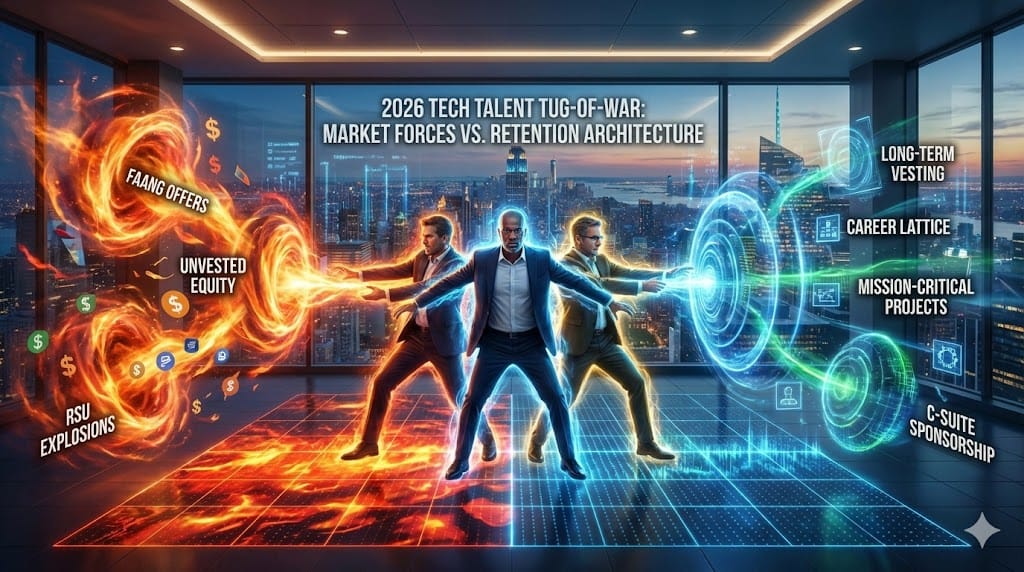
The Challenge of Retaining Top Tech Executives in a Hot Market
12
Feb
Feb
In today’s highly dynamic and competitive US technology landscape, the imperative of retaining visionary leadership talent has escalated from a mere human resources concern to a critical strategic determinant of long-term enterprise value. Boards must therefore critically evaluate how should boards structure executive retention audits?
executive recruiting, Executive Search Challenges, For Employers
Recruiting Executive Talent with Expertise in AI/ML Platforms and MLOps

12
Feb
Feb
Dear Board Members and C-Suite, it is with utmost urgency and strategic foresight that we present this analysis on the critical challenges and unparalleled opportunities in securing transformative AI/ML leadership. The accelerating pace of technological evolution dictates that enterprises must prioritize the recruitment of exceptional executive talent capable of steering complex AI/ML initiatives from concept to widespread operational impact.
executive recruiting, Executive Search Challenges, For Employers
Assessing Leadership in Agile and DevOps Transformations

12
Feb
Feb
In the rapidly evolving US corporate landscape, the distinction between successful and stalled digital initiatives often hinges on a singular, critical factor: leadership. Our proprietary research at consistently demonstrates that the caliber of executive talent steering Agile and DevOps transformations directly dictates their strategic value realization.