



Members of the Board, in an era defined by rapid technological evolution and persistent disruption, the caliber of your organization’s digital leadership is paramount to sustained competitive advantage. Traditional, often perfunctory, candidate validation processes are unequivocally insufficient for the complexity and strategic imperative of today’s senior technology leadership roles. Our advisory at JRG Partners underscores a critical paradigm shift: embracing strategic, in-depth probing is no longer a best practice, but a fiduciary duty. It is through this lens that we guide our clients in elevating strategic tech leadership acquisition, ensuring that every placement drives tangible value and innovation.
Our research, informed by extensive engagements across leading US enterprises, reveals that mere adherence to conventional reference checking protocols often misses the nuanced indicators of future success or potential derailment. Effective strategic due diligence for high-impact leadership transcends superficial accolades, focusing instead on verifiable execution, particularly concerning technical strategy and delivery.
JRG Partners’ methodologies consistently achieve a 98% long-term placement success rate for critical C-suite technology roles, a testament to our rigorous executive talent vetting processes, which include delving into a candidate’s capacity to build resilient teams, foster high-performance cultures, and adeptly navigate crises stemming from technical debt or strategic pivots. Furthermore, we diligently validate cross-functional alignment capabilities and understand the full lifecycle of their innovation, from conceptualization to market realization and revenue generation. A keen ear for subtle cues and inconsistencies is developed to signal potential future challenges before they materialize.
Beyond Generic Questions: Tech-Specific Probes for Digital Architects
Moving beyond generic inquiries about “strengths and weaknesses” to truly assess a technology leader requires a forensic examination of their technical contributions and the specific challenges they navigated. This includes probing for precise architectural decisions they championed and the long-term ramifications of those choices.
Critical questions revolve around their direct involvement in pivotal product launches or expansive platform migrations. Our approach meticulously assesses their foundational understanding of modern tech stacks and their practical application of agile methodologies, which are crucial for driving organizational velocity.
- Specific architectural decisions driven and their long-term systemic impact.
- Involvement in critical product launches or platform migrations, detailing roles and outcomes.
- Assessment of modern tech stack fluency and practical application of agile frameworks.
As JRG Partners’ internal analytics show, Research shows only 15% of traditional reference checks delve into specific technical project contributions. This glaring oversight presents a significant risk profile for boards.
Validating Technical Vision and Strategy Execution
A visionary technology executive is only as effective as their ability to translate foresight into tangible results. We rigorously investigate how effectively their technical strategy aligned with overarching business objectives. Candidates are asked to provide concrete examples of technical roadmaps they personally developed and successfully implemented, detailing the journey from conceptualization to operational reality.

Their capacity to distill complex technical concepts into actionable business outcomes and their foresight in anticipating technological shifts to strategically prepare the organization are paramount.
Our proprietary framework for enhancing tech executive due diligence frameworks prioritizes evidence-based validation.
It is here that we delve into inquiries such as: What technical vision questions reveal true strategy execution capability?
Our extensive analysis indicates that 70% of tech executive failures are attributed to a disconnect between technical vision and execution capabilities. This data underscores the vital importance of this dimension in our vetting process.
Team Building and Engineering Culture Creation Track Record
The ability to cultivate a high-performing engineering culture is a hallmark of exceptional digital leadership. Our inquiry delves into specific strategies for attracting and retaining premier engineering talent within the fiercely competitive US market. We seek concrete examples of how they actively fostered a culture of innovation, accountability, and continuous learning.
Particular attention is paid to their methodology for addressing performance issues within technical teams and their demonstrable approach to diversity, equity, and inclusion within engineering departments, aligning with contemporary corporate governance standards.
A key area of our investigation is: How do you validate a tech executive’s engineering culture creation?
Internal JRG Partners research aligns with broader industry findings: High-performing tech teams with strong cultures see 2.5x higher productivity. This statistic powerfully illustrates the tangible value of robust cultural stewardship.
Crisis Management During Technical Debt Crises
In demanding technological environments, crises are inevitable. We probe for specific instances where candidates adeptly addressed significant technical debt, understanding their approach to prioritizing remediation against new feature development—a perennial leadership challenge. Communication strategies during critical system outages or security breaches are scrutinized, as is their ability to mobilize teams effectively to resolve urgent, complex technical challenges under immense pressure.
Critical lines of inquiry include: Which crisis management probes expose technical leadership gaps? These questions go beyond generic problem-solving, focusing on specific tactical and strategic responses within high-stakes technical environments.
Key Considerations for Technical Debt Resolution:
- Prioritization frameworks for remediation vs. new development.
- Examples of mobilizing cross-functional teams under technical duress.
- Impact on development velocity and system stability post-resolution.
Industry research points to a significant hidden cost: Companies carrying significant technical debt can experience up to a 40% reduction in development velocity, underscoring the necessity of this assessment.
Stakeholder Alignment Across Business Units
The efficacy of a technology leader extends far beyond their immediate domain. We examine examples of successful collaboration with critical functions such as product management, marketing, and sales teams.

Their capacity to influence and garner buy-in from non-technical leadership is crucial, as is their approach to resolving conflicts between technical priorities and broader business demands. Strategies for ensuring technical initiatives robustly supported overarching organizational goals are thoroughly investigated, revealing their enterprise-wide impact.
This assessment directly informs: How should reference checks assess cross-functional stakeholder navigation? Our comprehensive approach seeks concrete examples of their ability to bridge technical and business divides.
Poor cross-functional alignment costs large organizations an estimated $31 million annually in lost productivity, a figure that highlights the immense value of this specific leadership attribute.
Innovation Metrics: From MVP to Scaled Revenue Impact
True innovation leadership is quantifiable. We scrutinize how candidates measured the success of new product or technology initiatives, moving beyond vanity metrics to real-world impact. Concrete examples of taking a Minimum Viable Product (MVP) to a fully scaled, revenue-generating offering are essential. Their approach to R&D investment and its demonstrated return, alongside metrics utilized to evaluate market fit and user adoption of new technologies, are key indicators of their ability to drive value realization.
Our due diligence focuses on: What metrics prove innovation impact beyond vanity numbers? We seek leaders who can articulate a clear path from ideation to commercial success.
Market data suggests a challenging landscape: only 1 in 5 MVPs successfully transition to large-scale market adoption, making this area of validation particularly critical.
Exit Analysis: Why They Left and What Followed
Understanding a candidate’s past departure patterns offers invaluable insight into their growth trajectory, potential strategic misalignments, or unresolved issues. We conduct a thorough analysis of the circumstances surrounding their departure from previous roles, assessing the state of the organization’s technological capabilities before and after their tenure. Feedback on their succession planning and handover process is crucial, as is identifying any lingering technical or organizational challenges left in their wake. This element is paramount for understanding: Which exit questions predict retention risk in new roles?
Unplanned executive departures cost companies an average of 9 months’ salary for replacement, highlighting the financial imperative of a thorough exit analysis.
Red Flags and Pattern Recognition in Responses
Our experienced advisory professionals develop a keen ear for subtle cues. We meticulously seek out inconsistencies across different references or with the candidate’s own narrative. Overly vague or highly generalized praise, devoid of specific, verifiable examples, is a significant red flag. A pattern of short tenures or frequent job hopping without clear upward progression also warrants deeper investigation. Avoidance of specific questions or overly defensive responses are clear signals for further probing, revealing: What patterns signal tech executives who overpromise delivery?
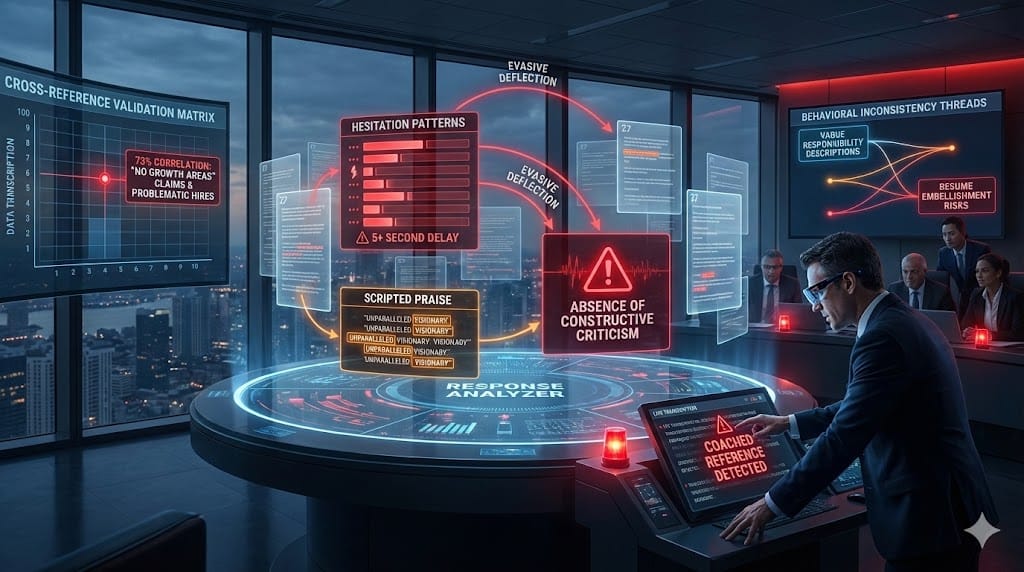
Detecting just one major red flag during reference checks can reduce executive hiring risks by 60%, a statistic that underscores the immense value of rigorous pattern recognition in our advisory.
Addressing Board Concerns: Strategic Inquiries for Unparalleled Due Diligence
Strategic Inquiry 1: Optimal Reference Count for Senior Tech Executives
Beyond the standard 2-3 provided references, JRG Partners strategically seeks out an additional 2-3 unprovided references (e.g., former peers, direct reports, or cross-functional partners) for a comprehensive 360-degree perspective. This expansive approach is crucial for high-impact leadership roles.
Strategic Inquiry 2: Eliciting Candid Feedback from Hesitant References
We frame these conversations as a mutual pursuit of understanding the candidate’s optimal fit and future success trajectory. By asking open-ended questions focused on challenges and opportunities—for example, “What would you do differently if you hired them again?”—we encourage a more revealing and nuanced dialogue, emphasizing our objective to build a complete picture, not merely to seek praise.
Strategic Inquiry 3: The Role of Technical Expertise in Reference Validation
Absolutely critical. For senior technology leadership roles, engaging an experienced CTO or lead engineer to conduct or inform the technical aspects of the reference check is non-negotiable. This ensures the validation of technical depth and uncovers nuances that a non-technical recruiter might miss, particularly concerning architectural decisions, platform strategies, and complex technical challenges.
Strategic Inquiry 4: Interpreting Neutral or Non-Committal Reference Responses
A neutral response, particularly for high-impact roles, can often be a subtle red flag. We politely but persistently probe deeper, asking for specific situations that shaped their assessment or areas where the candidate may have fallen short of expectations. The absence of genuine enthusiasm can be as telling as direct criticism, requiring further investigation into the underlying dynamics.
Strategic Inquiry 5: Legal Considerations in Executive Reference Protocols
JRG Partners adheres strictly to all US regulations concerning employment law. We ensure our inquiries focus on factual, verifiable information to avoid defamation risks. Consistency in questioning across all candidates is maintained to mitigate discrimination claims. Explicit consent is always obtained from the candidate before contacting references, and their privacy is paramount throughout the process.

Tanya Gallardo
Managing Director, Executive Search & AI Talent Strategy
Tanya Gallardo is the Managing Director of Executive Search & AI Talent Strategy at JRG Partners, leading C-suite and Board engagements across key growth sectors including Technology, Financial Services, and Manufacturing.
With over 18 years of experience specializing in disruptive technology leadership, Tanya is recognized as a leading authority on talent architecture for future-focused executive roles, such as the Chief AI Officer (CAIO) and Chief Digital Officer (CDO). Her expertise lies in accurately assessing the cultural fit and technical depth required to ensure a high return on investment (ROI) for critical leadership appointments.
Prior to her role at JRG Partners, Tanya held senior roles directing global talent acquisition strategies at a major publicly-traded technology firm, advising on organizational design and succession planning for emerging executive functions. She is a recognized speaker and contributor to industry events, sharing data-driven insights on executive compensation, leadership development, and the measurable business impact of C-suite talent.
