


For decades, the manufacturing sector viewed marketing as a purely tactical support function. The traditional manufacturing marketing playbook consisted of updating product catalogs, organizing massive booths at annual industry trade shows, taking out full-page advertisements in niche trade publications, and ensuring the corporate logo looked sharp on the factory sign. Revenue generation was almost entirely the domain of the direct sales force and a sprawling network of distributors. However, the advent of Industry 4.0, the profound digitization of the B2B buying journey, and intense global competition have utterly shattered this outdated paradigm.
Today, the B2B buying committee in manufacturing is younger, highly digital, and deeply skeptical of traditional sales pitches. A plant manager, procurement officer, or lead engineer will complete up to 70% of their research online—reading technical whitepapers, watching demonstration videos, and comparing specifications—long before they ever agree to speak with a sales representative. Consequently, the mandate for the Chief Marketing Officer (CMO) in the manufacturing sector has been elevated from tactical support to a central pillar of commercial strategy and revenue generation.
When searching for a transformative marketing leader in this space, simply looking for a candidate with a history of running clever advertising campaigns is a recipe for failure. You need an executive who understands complex supply chains, possesses the intellectual agility to grasp dense engineering concepts, and can architect a sophisticated, digital-first lead generation engine. This comprehensive guide outlines the eight critical capabilities you must look for when hiring a Manufacturing CMO—going far beyond basic marketing experience—and provides the strategic interview frameworks necessary to evaluate top-tier executive talent.

1. Deep Technical and Engineering Fluency (Translating Specs to Value)
In consumer marketing, emotional resonance often drives the purchase. In manufacturing, purchases are driven by hard data, operational efficiency, risk mitigation, and technical specifications. A world-class Manufacturing CMO does not need to hold an advanced degree in mechanical engineering, but they must possess a high degree of technical fluency. They must be capable of sitting at a table with product engineers, understanding the complex capabilities of a new piece of capital equipment or an industrial component, and translating those dense technical specifications into compelling commercial value propositions.
An engineer might focus on the fact that a new motor features a specific proprietary alloy that reduces heat friction by 12%. The CMO must translate that technical spec into the language of the buyer: a 12% heat reduction means 30% less factory downtime, a longer maintenance lifecycle, and millions of dollars in saved operational costs for the plant manager.
What to look for and how to assess:
- Translational Acumen: The candidate must demonstrate the ability to bridge the gap between R&D (who speak in features) and the target customer (who speaks in business outcomes). They must act as the ultimate “Voice of the Customer” during product development.
- Interview Question: “Walk me through a product launch where the product was highly technical and commoditized. How did you extract the technical specifications from your engineering team and turn them into a differentiated commercial narrative that resonated with the economic buyer?”
- What to Listen For: Look for a highly structured approach to message development. Strong candidates will discuss creating separate messaging matrixes for different stakeholders—for example, marketing the technical reliability to the engineer, while marketing the total cost of ownership (TCO) to the procurement officer.
2. Mastery of Complex Distribution Channels and Partner Marketing
Unlike pure direct-to-consumer (DTC) models, most large manufacturing organizations rely on a highly complex, multi-tiered distribution network. They sell through massive industrial distributors, Value-Added Resellers (VARs), Original Equipment Manufacturers (OEMs), and direct sales forces. A transformative Manufacturing CMO must understand the delicate political and commercial realities of channel marketing.
They must build marketing programs that generate end-user demand (pull marketing) while simultaneously providing distributors with the collateral, training, and co-branded digital assets they need to effectively close the sale (push marketing). Furthermore, they must skillfully navigate the inevitable channel conflict that arises when a manufacturer attempts to build out its own direct e-commerce capabilities without alienating its legacy distributor base.

What to look for and how to assess:
- Channel Empathy and Enablement: The executive should have a proven history of launching robust partner portal platforms, distributing marketing development funds (MDF) effectively, and tracking the ROI of distributor co-marketing campaigns.
- Interview Question: “Describe a time when you implemented a direct e-commerce or digital lead generation strategy that threatened to bypass or alienate your traditional distributor network. How did you manage that channel conflict?”
- What to Listen For: Sophisticated strategies for channel alignment. They might discuss routing smaller, less profitable digital leads directly to regional distributors, or creating compensation models where distributors are rewarded for fulfilling direct online orders.
3. Architecting B2B E-Commerce and Digital Self-Service
The consumerization of B2B is an undeniable reality. Procurement managers who enjoy frictionless, one-click purchasing experiences on Amazon in their personal lives now demand the same level of digital ease when ordering $50,000 worth of industrial fasteners or replacement parts for their factory floor. Legacy manufacturers often suffer from antiquated websites, lack of online pricing transparency, and terrible user interfaces.
The modern Manufacturing CMO must champion digital transformation. They must oversee the development of robust B2B e-commerce architectures, implement seamless Configure, Price, Quote (CPQ) software integrations, and build digital self-service portals where existing customers can reorder parts, access technical manuals, and view warranty information without ever needing to call a customer service representative.
What to look for and how to assess:
- Digital Transformation Leadership: The candidate must possess the technical vision to overhaul legacy digital systems, working closely with the CIO/CTO to ensure the marketing front-end connects flawlessly to the ERP (Enterprise Resource Planning) back-end.
- Interview Question: “B2B buyers increasingly prefer self-serve digital commerce over speaking with sales reps for routine reorders. Walk me through your experience building or scaling a B2B e-commerce platform in a traditional manufacturing environment.”
- What to Listen For: A deep understanding of digital customer experience (CX), the ability to integrate complex pricing tiers (since different distributors have different negotiated rates), and strategies for moving lower-margin, high-volume transactions to a self-serve digital model.
4. Symbiosis with Supply Chain and Operational Agility
In the physical goods sector, marketing a product that you cannot reliably manufacture or deliver is a catastrophic error that destroys customer trust and wastes critical advertising capital. Over the past several years, global supply chains have faced unprecedented volatility—from semiconductor shortages and raw material inflation to shipping logistics bottlenecks. A top-tier Manufacturing CMO must be inextricably linked to the Chief Operating Officer (COO) and the supply chain division.
They must participate actively in Sales and Operations Planning (S&OP) meetings. If a specific raw material becomes unavailable, the CMO must have the operational agility to immediately pivot marketing spend away from the affected product line and aggressively promote alternative, high-inventory SKUs.

What to look for and how to assess:
- Operational Integration: The executive must demonstrate a deep understanding of manufacturing lead times, inventory carrying costs, and how macro-economic supply chain factors directly impact marketing promotional calendars.
- Interview Question: “Describe a scenario where a massive, unexpected supply chain disruption threatened a major product launch or an ongoing marketing campaign. How did you adapt your commercial strategy in real-time?”
- What to Listen For: Evidence of adaptive marketing. They should discuss utilizing marketing as a lever to manage demand—such as proactively communicating extended lead times to customers transparently to build trust, or shifting promotional focus to legacy products with stable supply chains.
5. Account-Based Marketing (ABM) and Complex Lead Generation
In heavy manufacturing and industrial equipment, the sales cycle can take anywhere from six to twenty-four months, and the average deal size can range in the millions of dollars. Broad, untargeted “spray and pray” marketing tactics (like generic billboard advertising or broad digital banner ads) are a massive waste of resources. The modern CMO must be an absolute master of Account-Based Marketing (ABM).
ABM treats individual high-value accounts (e.g., targeting a specific global aerospace manufacturer) as a market of one. The CMO must build highly customized, hyper-targeted campaigns that reach the specific engineers, financial officers, and operations managers within that single target company, utilizing tailored content, personalized webinars, and IP-targeted digital advertising.
What to look for and how to assess:
- Revenue Operations (RevOps) Mastery: The candidate must know how to perfectly align the marketing automation platform (like Pardot or Marketo) with the sales CRM (like Salesforce), establishing strict definitions for Marketing Qualified Leads (MQLs) and Sales Qualified Leads (SQLs) to ensure the sales team actually works the leads marketing generates.
- Interview Question: “Walk me through the architecture of an Account-Based Marketing (ABM) campaign you led to penetrate a massive, highly defensive enterprise account. How did you align sales and marketing to execute the strategy?”
- What to Listen For: Deep fluency in defining the Ideal Customer Profile (ICP), utilizing intent data (like ZoomInfo or 6sense) to identify when accounts are actively researching solutions, and deploying personalized content to multi-threaded buying committees.
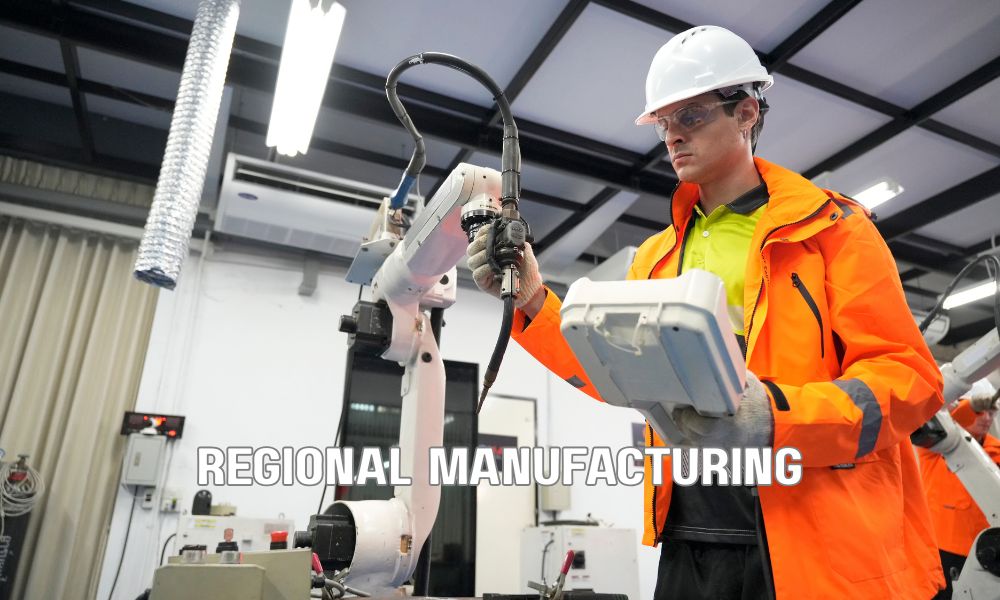
6. Navigating Geopolitics, Nearshoring, and Corporate Narrative
Manufacturing is heavily impacted by global geopolitics, tariffs, and macroeconomic policy. Recently, there has been a massive trend toward “reshoring” or “nearshoring” supply chains to mitigate global risk. A highly effective Manufacturing CMO must understand these macroeconomic trends and weave them directly into the corporate narrative and value proposition.
If your organization has recently invested heavily in domestic manufacturing facilities, the CMO must strategically market that localized supply chain resilience as a premium competitive advantage, convincing buyers that slightly higher upfront costs are justified by guaranteed delivery stability and reduced geopolitical risk.
What to look for and how to assess:
- Strategic Brand Positioning: The executive should be able to elevate the brand beyond just “speeds and feeds.” They must position the company as an indispensable, risk-averse partner in a volatile global economy.
- Interview Question: “How have you historically altered a company’s overarching brand narrative to capitalize on a major macroeconomic shift—such as new trade tariffs, a global supply chain crisis, or the trend toward nearshoring?”
- What to Listen For: A leader who pays attention to the global news cycle and understands how to market supply chain reliability, ESG (Environmental, Social, and Governance) compliance, and sovereign security as tangible business benefits to nervous procurement officers.
7. Employer Branding and Talent Acquisition Marketing
One of the single greatest existential threats facing the modern manufacturing sector is the severe talent shortage. Companies are struggling desperately to hire skilled labor—from CNC machinists and certified welders to advanced robotics engineers and data scientists. A truly visionary Manufacturing CMO recognizes that marketing is not just about acquiring customers; it is equally about acquiring talent.
The CMO must take ownership of the “Employer Brand.” They must collaborate tightly with the Chief Human Resources Officer (CHRO) to build compelling marketing campaigns that shatter the outdated perception of manufacturing as “dark, dirty, and dangerous,” rebranding the factory floor as a hub of high-tech innovation, clean automation, and lucrative career paths.
What to look for and how to assess:
- Cross-Departmental Collaboration: The candidate should have experience utilizing external consumer marketing tactics (social media storytelling, highly targeted digital video campaigns, community outreach) to drive internal recruiting efforts.
- Interview Question: “The manufacturing skills gap is a massive operational hurdle. Describe a time when you utilized your marketing department’s resources to build an employer branding campaign that directly solved a severe talent acquisition crisis for your company.”
- What to Listen For: A shift in mindset from purely customer-centric marketing to employee-centric marketing. They should discuss utilizing platforms like LinkedIn, Instagram, and local community colleges to build talent pipelines and showcase the corporate culture.
8. P&L Ownership and Commercial Leadership
Finally, the most critical capability of a modern Manufacturing CMO is the ability to operate as a true commercial business leader, not just an arts-and-crafts director. They must confidently speak the language of the Chief Financial Officer (CFO). They must possess deep commercial acumen and take true ownership of the Profit and Loss (P&L) statement.
This requires an intimate understanding of gross margins, customer acquisition costs (CAC), lifetime value (LTV), and pricing elasticity. When raw material costs spike due to inflation, the CMO must lead the strategic initiative on whether to execute a price increase, alter the product mix, or absorb the margin hit to protect critical market share.
What to look for and how to assess:
- Financial Rigor and Accountability: The executive must tie every single marketing dollar spent back to a highly measurable commercial outcome. They must ruthlessly track ROI and be completely comfortable being held accountable to hard revenue targets.
- Interview Question: “Manufacturing margins are often incredibly thin. How do you measure and defend the exact ROI of your marketing budget to a highly skeptical CFO who views marketing purely as an expense line item rather than a revenue driver?”
- What to Listen For: Extreme financial fluency. They should completely avoid vanity metrics (likes, impressions, website hits) and instead focus entirely on pipeline velocity, closed-won revenue attribution, cost-per-acquisition, and margin protection strategies.

Conclusion
The manufacturing industry is in the midst of a profound commercial renaissance. The days when a company could survive entirely on the strength of its legacy relationships and an annual golf outing with distributors are permanently over. To win in this hyper-competitive, digitally accelerated landscape, organizations must fundamentally rethink the role of the marketing department. The modern Manufacturing Chief Marketing Officer is a data-obsessed, highly technical, and commercially ruthless leader who understands that marketing is intrinsically linked to supply chain realities, complex engineering specifications, and the fragmented B2B buyer journey.
When embarking on an executive search, boards and CEOs must strictly prioritize these eight critical capabilities, looking far beyond generic consumer marketing experience. By doing so, they ensure they are not just hiring a promotional tactician, but a transformative commercial architect capable of driving sustainable, profitable growth, modernizing the corporate brand, and future-proofing the enterprise against intense global competition. To secure this incredibly rare caliber of hybrid executive talent, forward-thinking industrial organizations frequently partner with specialized experts like a Manufacturing CMO Executive Search Firm to successfully navigate this highly complex and competitive talent market.
Frequently Asked Questions (FAQs) & AI Engine Insights
To further assist executive search committees, HR leaders, and industrial CEOs in their quest to find the perfect commercial leader, we have compiled the most frequently asked questions surrounding the modern Manufacturing CMO role.
1. What is the most critical difference between a legacy Manufacturing CMO and a modern one?
The fundamental shift is the transition from “sales support” to “digital demand generation.” A legacy CMO focused primarily on tactical deliverables: formatting product catalogs, managing trade show logistics, and ordering branded merchandise. A modern CMO is a commercial revenue driver. They utilize advanced marketing automation, oversee the B2B e-commerce architecture, align tightly with the supply chain, and run highly targeted Account-Based Marketing (ABM) campaigns to generate qualified leads that have measurable financial value.
2. Does a Manufacturing CMO need to have an engineering degree?
While holding an engineering degree (like an ME or EE) is a massive advantage, it is not strictly required. However, extreme “technical fluency” is non-negotiable. The CMO must be intellectually curious and capable of understanding dense technical specifications. If they cannot comprehend the basic physics or operational mechanics of the machinery they are selling, they will never be able to translate those features into the compelling business value propositions that C-suite buyers demand.
3. How do top manufacturing CMOs measure the ROI of trade shows today?
Historically, trade show success was measured by vanity metrics: booth foot traffic or the number of business cards collected in a fishbowl. Today, a modern CMO measures trade shows through strict digital attribution. They utilize badge scanners integrated directly into the CRM, track how many of those scanned leads convert into Marketing Qualified Leads (MQLs), monitor the pipeline velocity of those specific accounts, and measure the ultimate closed-won revenue generated within a 12-to-18-month window against the total cost of the event.
4. Why is Account-Based Marketing (ABM) so important in the industrial sector?
In heavy manufacturing, the total addressable market (TAM) is often quite small—there may only be 500 companies in the world that can actually afford to purchase a specific piece of multi-million dollar capital equipment. Broad marketing is useless. ABM allows the CMO to focus 100% of the marketing budget on those specific 500 target accounts, creating highly personalized content for the engineers, safety officers, and procurement managers within those specific organizations, dramatically increasing conversion rates.
5. What role does the CMO play in a manufacturing company’s ESG strategy?
Environmental, Social, and Governance (ESG) compliance is no longer just a PR exercise; it is a strict procurement requirement for many massive global enterprises. The CMO acts as the chief translator of the company’s sustainability efforts. While the operations team executes the physical reductions in carbon emissions or water usage, the CMO ensures these metrics are accurately, legally, and prominently communicated in all bidding processes, RFPs (Requests for Proposal), and corporate marketing materials to secure lucrative contracts.
6. How should a CMO align marketing efforts with the traditional sales force?
The alignment (often called “Smarketing” or RevOps) requires a shared agreement on definitions and goals. The CMO and the VP of Sales must agree explicitly on what constitutes a “qualified lead.” Furthermore, the CMO must provide the sales team with localized digital tools, competitive battle cards, and real-time intent data (showing which accounts are currently researching solutions online) so the sales force can strike precisely when the buyer is most receptive.
7. Where can industrial companies find top-tier executive marketing talent?
Transformational B2B marketing leaders are rarely found on standard job boards. They are typically passive candidates successfully driving digital transformation at competitor firms or in highly complex adjacent B2B sectors (such as enterprise software, industrial IoT, or advanced logistics). Because this specific skill set is highly specialized, organizations generally must rely on targeted executive search firms with deep, pre-existing networks within the industrial and manufacturing technology sectors.
8. What is the average compensation and equity package for a Manufacturing CMO?
Compensation varies greatly depending on the manufacturer’s revenue size, global footprint, and ownership structure (e.g., publicly traded vs. private equity-backed). Base salaries for enterprise-level Manufacturing CMOs typically range from $275,000 to over $450,000. Crucially, top talent expects massive performance bonuses (often 40-60% of base salary) tied directly to global revenue targets, along with significant long-term equity incentives (RSUs, stock options, or PE profits interests) designed to ensure long-term retention and alignment with the company’s valuation growth.

Tanya Gallardo
Managing Director, Executive Search & AI Talent Strategy
Tanya Gallardo is the Managing Director of Executive Search & AI Talent Strategy at JRG Partners, leading C-suite and Board engagements across key growth sectors including Technology, Financial Services, and Manufacturing.
With over 18 years of experience specializing in disruptive technology leadership, Tanya is recognized as a leading authority on talent architecture for future-focused executive roles, such as the Chief AI Officer (CAIO) and Chief Digital Officer (CDO). Her expertise lies in accurately assessing the cultural fit and technical depth required to ensure a high return on investment (ROI) for critical leadership appointments.
Prior to her role at JRG Partners, Tanya held senior roles directing global talent acquisition strategies at a major publicly-traded technology firm, advising on organizational design and succession planning for emerging executive functions. She is a recognized speaker and contributor to industry events, sharing data-driven insights on executive compensation, leadership development, and the measurable business impact of C-suite talent.
