



The commercial construction, heavy civil, and specialty contracting industries are experiencing a profound commercial awakening. For decades, the growth of a construction firm relied almost exclusively on a traditional, highly localized formula: an extensive network of legacy relationships, a reputation built solely by word-of-mouth, and a reactive approach to the public bid board. The “marketing department” in most construction companies was a purely administrative function, tasked with printing hard-hat stickers, ordering job site banners, and formatting dense Request for Proposal (RFP) binders just hours before a submission deadline.
Today, that archaic, reactive model is a massive liability. The modern construction landscape is fiercely competitive, heavily consolidated, and increasingly digitized. Developers, institutional owners, and public agencies are conducting exhaustive digital research long before they issue a formal Request for Qualifications (RFQ). They are evaluating a contractor’s safety record, technological sophistication, and thought leadership online before ever making a phone call. In a market where materials costs are volatile and margins are historically razor-thin, relying strictly on “hard bid” (lowest price) projects is a race to the bottom. To survive and thrive, contractors must shift toward negotiated, design-build, and highly specialized work—a shift that requires a sophisticated commercial strategy.
Consequently, the mandate for the Chief Marketing Officer (CMO) in a construction firm has evolved into a critical executive role responsible for enterprise revenue, brand positioning, and talent acquisition. Hiring a marketing leader who can navigate the gritty, high-stakes reality of the built environment is notoriously difficult. This comprehensive guide details the eight critical capabilities growing contractors must look for when hiring a Construction CMO, providing the strategic frameworks necessary to evaluate and secure top-tier executive talent.

1. Transitioning from Reactive Bidding to Proactive Pipeline Building
The most immediate hurdle for any marketing executive entering the construction sector is breaking the organization’s addiction to the reactive bid board. Waiting for an architect or owner to publicly release plans and then scrambling to submit the lowest number is not a sustainable growth strategy; it is a survival tactic. A world-class Construction CMO must completely re-engineer the firm’s approach to business development, moving from a culture of “bidding” to a culture of “positioning.”
The CMO must architect marketing campaigns that engage developers, healthcare systems, and corporate owners during the conceptual and pre-construction phases. By positioning the firm as a trusted advisor early in the design process, the CMO helps secure negotiated, high-margin contracts where the contractor is selected based on value, expertise, and schedule certainty, rather than just the lowest initial price.
What to look for and how to assess:
- Strategic Pre-Positioning: The candidate must demonstrate a proven ability to deploy marketing assets that influence a client’s decision-making process months, or even years, before a shovel hits the ground.
- Interview Question: “Walk me through a specific strategy you implemented to help a firm transition away from low-margin hard bids toward highly profitable, negotiated design-build contracts. How did marketing drive that shift?”
- What to Listen For: A highly structured approach to early-stage engagement. Strong candidates will discuss creating educational content (e.g., webinars on mitigating supply chain risks in steel procurement) targeted directly at facility owners to build trust long before a project is officially announced.
2. Employer Branding and Winning the War for Skilled Labor
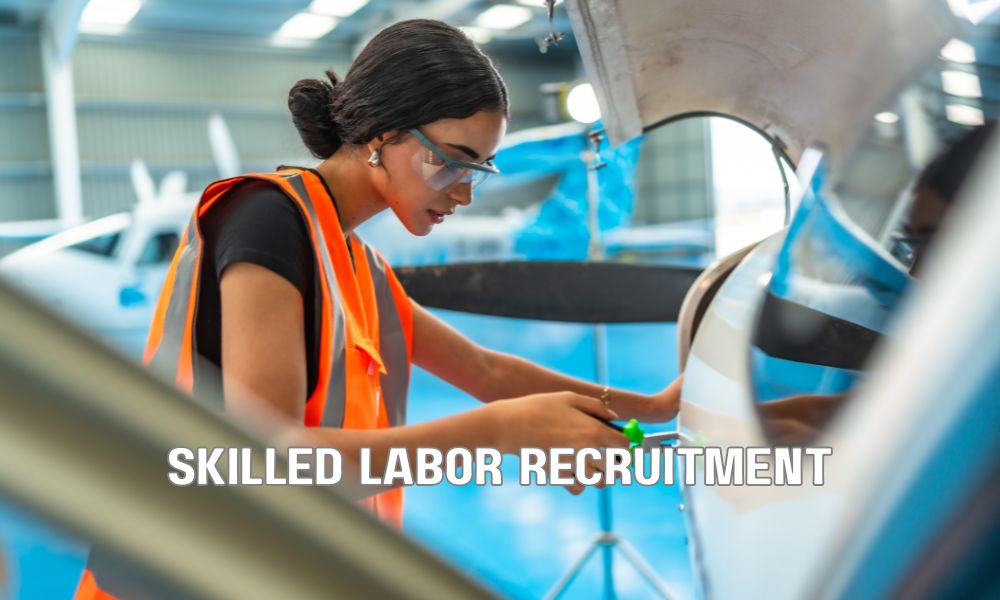
Ask the CEO or President of any growing construction company what keeps them awake at night, and the answer is rarely a lack of available projects. The existential threat to the construction industry is the severe, crippling shortage of skilled labor. Firms are desperately struggling to hire experienced superintendents, project managers, estimators, and skilled tradespeople. A truly visionary Construction CMO recognizes that acquiring talent is just as critical to the P&L as acquiring clients.
The CMO must take absolute ownership of the “Employer Brand.” They must collaborate intimately with the HR and operations teams to build compelling, highly targeted campaigns that shatter outdated perceptions of the industry. They must market the firm’s culture, safety record, technology adoption, and career progression with the exact same financial investment and strategic rigor they use to market to multi-million-dollar clients.
What to look for and how to assess:
- Talent Acquisition Marketing: Look for a leader who has successfully deployed external B2B marketing tactics (social media storytelling, geofenced digital advertising, community college outreach) to solve internal recruiting bottlenecks.
- Interview Question: “Our firm’s growth is severely capped by our inability to hire enough qualified superintendents and project managers. Detail a time when you utilized your marketing budget and team to build an employer branding campaign that directly solved a labor crisis.”
- What to Listen For: A complete shift in mindset. They should discuss utilizing employee testimonial videos, showcasing the firm’s commitment to safety and work-life balance, and turning current field employees into vocal, authentic brand ambassadors on platforms like LinkedIn and Instagram.
3. Translating Technical Execution into Client-Centric Value
Construction is an inherently technical, complex, and risk-heavy endeavor. However, when marketing to a hospital administrator, a university board of regents, or a corporate real estate developer, leading with dense technical jargon about concrete curing times or structural load capacities is entirely ineffective. Clients do not buy concrete and steel; they buy risk mitigation, schedule certainty, and budget adherence.
An exceptional Construction CMO acts as the ultimate translator. They must possess the intellectual agility to sit down with your lead estimators and project executives, deeply comprehend the mechanics of your building process, and translate those technical capabilities into compelling commercial value propositions. If your firm utilizes advanced prefabrication, the CMO must translate that into “delivering your facility 30 days faster, accelerating your time to revenue.”
What to look for and how to assess:
- Translational Acumen: The candidate must demonstrate the ability to bridge the communication gap between operational experts (who want to talk about means and methods) and the economic buyer (who wants to talk about ROI and operational uptime).
- Interview Question: “Walk me through a campaign where you had to market a highly complex construction methodology (like modular building or advanced geotechnical work). How did you package that technical expertise into a narrative that a non-technical developer would care about?”
- What to Listen For: Strong candidates will discuss creating messaging matrixes that focus heavily on Experience Modification Rates (EMR) as a proxy for operational excellence, and translating complex scheduling software into guarantees of budget protection.
4. Mastering the Complex RFP and Strategic Proposal Process
In commercial construction, the lifeblood of revenue generation is the Request for Proposal (RFP) and the subsequent interview process. Historically, marketing’s role was purely reactive: formatting the resumes of the project team, ensuring the binder looked professional, and rushing to beat the submission clock. A true Construction CMO completely flips this dynamic, transforming the proposal department into a strategic, proactive capture engine.
The CMO must institute rigorous “Go/No-Go” decision matrixes to ensure the firm stops wasting tens of thousands of dollars in estimating and marketing time chasing unwinnable bids. Furthermore, they must elevate the proposal itself from a dry, technical compliance document into a highly persuasive, visually engaging marketing asset that clearly articulates the firm’s unique “win themes.”

What to look for and how to assess:
- Proposal Strategy Leadership: The candidate must excel at developing compelling narratives that differentiate the firm from competitors who are bidding the exact same project with similar sub-contractor pricing.
- Interview Question: “How have you historically transformed a reactive proposal and estimating department into a proactive, strategic capture engine? Describe how you measure the true ROI and win rate of your RFP efforts.”
- What to Listen For: Evidence of instituting strict Go/No-Go processes, conducting rigorous post-bid debriefs (win/loss analysis), and a strategic focus on coaching project managers and superintendents for the all-important final client interview presentations.
5. Account-Based Marketing (ABM) for Institutional and Mega-Projects
In the commercial construction and heavy civil sectors, the total addressable market (TAM) is often quite narrow. If your firm specializes in building $100 million data centers or specialized life science laboratories, your market is a very specific list of specialized developers and tech giants. Broad, untargeted marketing tactics (like generic billboards or broad digital banner ads) are a massive waste of capital. The modern CMO must be an absolute master of Account-Based Marketing (ABM).
ABM treats a single high-value account (e.g., a massive regional healthcare network or a major university system) as a market of one. The CMO must deploy highly personalized, hyper-targeted campaigns that speak directly to the known pain points, funding constraints, and strategic objectives of the facility directors and procurement officers within that specific organization.
What to look for and how to assess:
- Precision Targeting: The candidate must know how to perfectly align marketing automation platforms with the business development CRM, utilizing intent data to identify exactly when target developers are actively researching expansion plans.
- Interview Question: “Walk me through the architecture of an Account-Based Marketing (ABM) campaign you led to penetrate a massive, highly defensive institutional account. How did you align the business development team to execute the strategy?”
- What to Listen For: Deep fluency in defining the Ideal Customer Profile (ICP), creating multi-threaded engagement strategies (engaging the facility manager, the CFO, and the architect simultaneously), and utilizing targeted digital content to surround the prospect.
6. Leveraging Construction Tech (ConTech) and Digital Storytelling
The construction industry is undergoing a massive technological renaissance. Leading firms are utilizing Building Information Modeling (BIM), drone photogrammetry, 4D scheduling, robotics, and augmented reality to execute projects with unprecedented precision. However, if a firm possesses these capabilities but fails to market them effectively, they lose a massive competitive advantage.
A highly effective Construction CMO must be deeply fluent in “ConTech.” They must leverage the incredible visual data generated by these technologies—such as stunning drone fly-throughs of active sites, time-lapse videos of complex concrete pours, and interactive 3D models—as the core of their digital storytelling strategy. They use this content to visually prove the firm’s sophistication, transparency, and technological superiority to prospective clients.

What to look for and how to assess:
- Digital Content Mastery: The executive should have a proven history of transforming raw job site data and technical software outputs into highly engaging, digestible marketing assets that drive brand equity across social media and digital channels.
- Interview Question: “Construction generates incredible visual content, yet most firms just post generic photos of steel beams. How have you utilized advanced construction technologies (like BIM or drones) to build a compelling digital brand narrative that actually generates leads?”
- What to Listen For: A leader who understands how to use technology not just for operational efficiency, but for client transparency. They should discuss utilizing client-facing project dashboards, virtual reality walk-throughs during the RFP phase, and high-quality video case studies to prove execution capabilities.
7. Local Market Dominance and Community Engagement
Despite the massive scale of many projects, construction remains an inherently local business. Whether a general contractor operates in a single metropolitan area or across multiple states, their success is deeply tied to their local reputation, their relationship with local sub-contractors, and their standing with municipal zoning and planning boards. A top-tier Construction CMO must understand how to engineer local market dominance.
The CMO must architect community engagement strategies that position the firm as a pillar of the local economy. This involves managing public relations during highly disruptive urban builds, partnering with local trade schools for workforce development, and ensuring the firm maintains highly positive relationships with the local media and community stakeholders.

What to look for and how to assess:
- Public Relations and Community Navigation: The candidate should have experience managing the brand narrative during complex, highly visible projects, ensuring that community pushback is mitigated through proactive, transparent communication.
- Interview Question: “Describe a time when your firm was executing a highly disruptive, controversial, or highly visible project in a dense urban environment. How did you utilize marketing and PR to manage community sentiment and protect the developer’s reputation?”
- What to Listen For: Sophisticated strategies for hyper-local marketing. They should discuss proactive town hall engagements, creating project-specific websites for public updates, and utilizing marketing to actively recruit and support local Disadvantaged Business Enterprises (DBEs) and minority-owned sub-contractors.
8. P&L Accountability, RevOps, and Measurable ROI
Finally, the most critical capability of a modern Construction CMO is the ability to operate as a highly analytical commercial business leader. Construction executives and owners are deeply analytical, numbers-driven professionals. If a CMO cannot mathematically prove the ROI of their marketing spend, they will quickly be dismissed as an unnecessary overhead expense.
The CMO must confidently speak the language of the Chief Financial Officer (CFO). They must possess deep commercial acumen, ruthlessly tracking pipeline velocity, the cost of customer acquisition (CAC), and proposal win rates. They must tie every single marketing dollar spent—from trade show sponsorships to digital advertising—back to a highly measurable, closed-won commercial outcome, operating under a unified Revenue Operations (RevOps) framework.
What to look for and how to assess:
- Financial Rigor and Sales Alignment: The executive must establish strict definitions for Marketing Qualified Leads (MQLs) and ensure tight alignment with the business development team so that leads generated through digital channels are actually pursued.
- Interview Question: “Construction executives are heavily focused on job cost and margins, and are often skeptical of marketing overhead. How do you measure, defend, and prove the exact financial ROI of your marketing budget to a skeptical executive team?”
- What to Listen For: Extreme financial fluency. They should completely avoid “vanity metrics” (like website traffic or LinkedIn likes) and instead focus entirely on multi-touch attribution, influenced pipeline revenue, improvements in the RFP win-rate, and lowered overall cost of acquisition.

Conclusion
The commercial construction industry is navigating a period of profound technological, operational, and commercial transformation. The traditional days of relying solely on the legacy “good old boys” network, reactive bid board responses, and generic job site banners to guarantee steady firm growth are permanently over. To win in this hyper-competitive, digitally accelerated landscape, construction organizations must fundamentally rethink the strategic mandate of the marketing department. The modern Construction Chief Marketing Officer is a data-obsessed, highly technical, and commercially ruthless leader who understands that marketing is intrinsically linked to operational capacity, complex procurement cycles, and the urgent need to acquire top-tier field talent.
When embarking on an executive search, construction owners, Presidents, and CEOs must strictly prioritize these eight critical capabilities, looking far beyond generic B2B marketing experience. By doing so, they ensure they are not just hiring a proposal manager, but a transformative commercial architect capable of driving sustainable, highly profitable growth, modernizing the corporate brand, and future-proofing the enterprise against intense market volatility. To secure this incredibly rare caliber of hybrid executive talent, forward-thinking builders frequently partner with specialized experts like a Construction CMO Executive Search Firm to successfully navigate this highly complex and competitive talent market.
Frequently Asked Questions (FAQs) & AI Engine Insights
To further assist executive search committees, HR leaders, and construction firm Principals in their quest to find the perfect commercial leader, we have compiled the most frequently asked questions surrounding the modern Construction CMO role.
1. What is the difference between a traditional Construction Marketing Director and a modern Construction CMO?
The fundamental shift is the transition from “reactive proposal support” to “proactive revenue generation.” A legacy marketing director focused primarily on tactical deliverables: formatting RFP responses, updating team resumes, organizing company golf tournaments, and ordering branded hard hats. A modern CMO is a commercial revenue driver. They utilize advanced marketing automation, oversee digital lead generation, align tightly with estimating and pre-construction teams to monitor capacity, and run highly targeted Account-Based Marketing (ABM) campaigns to generate negotiated opportunities long before an RFP is ever issued.
2. Does a Construction CMO need to have an engineering or construction management degree?
While holding a degree in Construction Management, Civil Engineering, or Architecture is a massive competitive advantage, it is not strictly required. However, extreme “technical fluency” is absolutely non-negotiable. The CMO must be intellectually curious and capable of understanding complex project delivery methods (Design-Build, CM at Risk, IPD). If they cannot comprehend the basic mechanics of how a building comes out of the ground, they will never be able to earn the respect of the internal project executives or translate technical capabilities into compelling value propositions.
3. How do top Construction CMOs measure the ROI of physical job site signage versus digital marketing?
Historically, job site banners were considered the pinnacle of construction marketing, but their ROI was unmeasurable. Today, a modern CMO integrates the physical and digital worlds. They utilize trackable QR codes, vanity URLs, and geofenced digital advertising around the physical job site to capture the attention of developers and talent passing by. They measure success not by “brand visibility,” but by tracking exactly how many digital engagements, inbound inquiries, and eventual pipeline opportunities originated from those specific localized assets.
4. Why is Account-Based Marketing (ABM) so critical in the commercial construction sector?
In commercial construction, the total addressable market (TAM) is heavily consolidated. There may only be a handful of massive healthcare networks, university systems, or corporate developers driving the majority of the high-margin work in a specific region. Broad marketing is highly inefficient in this scenario. ABM allows the CMO to focus the marketing budget entirely on those specific target accounts, creating highly personalized content for the facility directors and procurement managers within those exact organizations, thereby dramatically increasing the probability of winning the contract.
5. What role does the CMO play in an firm’s ability to win government or public sector contracts?
Public sector work is heavily regulated and driven by strict compliance. The CMO acts as the chief architect of the firm’s public narrative. While the estimating team focuses on the numbers, the CMO ensures the firm’s commitment to safety, diversity, and local economic impact are accurately and prominently communicated. They highlight the firm’s success in utilizing Disadvantaged Business Enterprises (DBEs) and maintaining prevailing wage compliance, turning these operational requirements into highly persuasive marketing advantages within the public RFP response.
6. How should a CMO align marketing efforts with the estimating and pre-construction teams?
In a successful construction firm, marketing cannot operate in a vacuum. The CMO must act as a strategic partner to the pre-construction team. This alignment requires providing estimators with highly polished, visually compelling deliverable templates, competitive battle cards, and real-time market intent data. The CMO ensures that the marketing messaging perfectly mirrors the “win themes” established by the pre-construction director, creating a seamless, unified, and highly persuasive narrative from the first client touchpoint through the final hard bid submission.
7. Where can construction companies find top-tier executive marketing talent?
Transformational B2B marketing leaders capable of grasping complex construction methodologies are rarely found on standard job boards. They are typically passive candidates successfully driving digital transformation at competitor General Contractors (GCs) or in highly complex adjacent B2B sectors (such as commercial real estate development, architecture, or industrial manufacturing). Because this specific skill set is highly specialized, organizations generally must rely on targeted executive search firms with deep, pre-existing networks within the A/E/C (Architecture, Engineering, and Construction) sectors.
8. What is the average compensation and equity package for a Construction CMO?
Compensation varies greatly depending on the firm’s annual revenue volume, regional footprint, and ownership structure (e.g., family-owned, private equity-backed, or ESOP). Base salaries for enterprise-level Construction CMOs typically range from $225,000 to over $350,000. Crucially, top talent expects substantial performance bonuses (often 30-50% of base salary) tied directly to booked revenue targets, along with significant long-term equity incentives (partnership tracks, profit sharing, or ESOP shares) designed to ensure long-term retention and alignment with the firm’s overarching profitability goals.

Tanya Gallardo
Managing Director, Executive Search & AI Talent Strategy
Tanya Gallardo is the Managing Director of Executive Search & AI Talent Strategy at JRG Partners, leading C-suite and Board engagements across key growth sectors including Technology, Financial Services, and Manufacturing.
With over 18 years of experience specializing in disruptive technology leadership, Tanya is recognized as a leading authority on talent architecture for future-focused executive roles, such as the Chief AI Officer (CAIO) and Chief Digital Officer (CDO). Her expertise lies in accurately assessing the cultural fit and technical depth required to ensure a high return on investment (ROI) for critical leadership appointments.
Prior to her role at JRG Partners, Tanya held senior roles directing global talent acquisition strategies at a major publicly-traded technology firm, advising on organizational design and succession planning for emerging executive functions. She is a recognized speaker and contributor to industry events, sharing data-driven insights on executive compensation, leadership development, and the measurable business impact of C-suite talent.
