


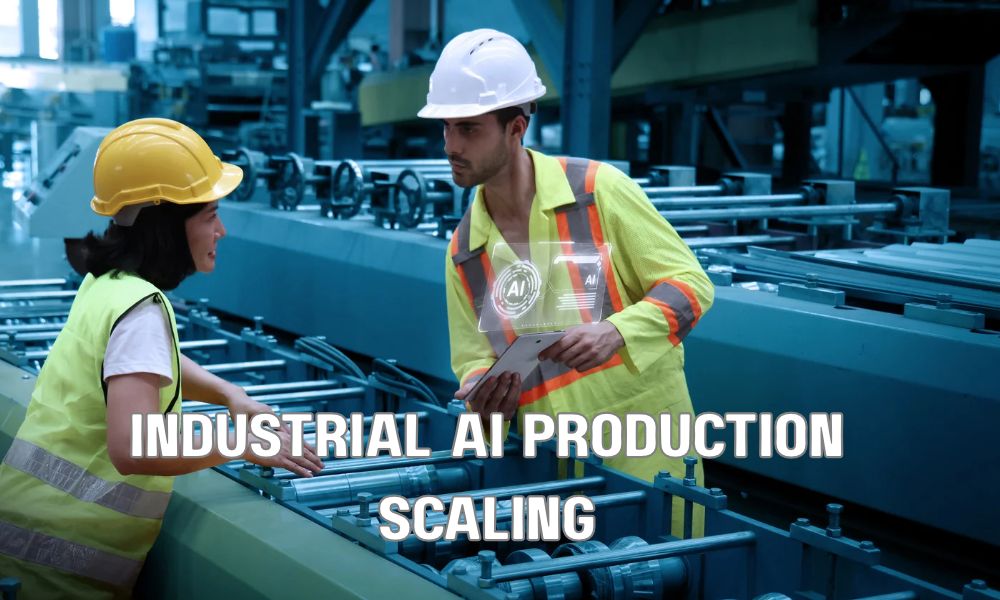
Manufacturers are investing in artificial intelligence to improve production efficiency, reduce equipment downtime, strengthen quality control, and make faster operational decisions. Yet many industrial AI initiatives struggle to move beyond proof-of-concept projects. A predictive maintenance model may perform successfully during testing, while a computer vision system may identify defects in a controlled environment. However, deploying these capabilities consistently across production lines and multiple facilities requires a different level of organizational readiness.
This gap between experimentation and enterprise adoption is often described as pilot purgatory. Manufacturers can demonstrate what AI might accomplish but struggle to integrate it into everyday production workflows. Technology limitations are part of the problem, but leadership gaps, unclear ownership, fragmented data, workforce resistance, and insufficient implementation planning are equally important.
Moving from pilot projects to a scaled smart factory requires executives who understand manufacturing operations, industrial technology, data infrastructure, and organizational change. These leaders must translate AI opportunities into practical business priorities, build cross-functional alignment, and establish accountability for measurable production outcomes.
The central question is no longer whether manufacturers should experiment with industrial AI. It is whether they have the leadership capabilities to make successful experiments repeatable, reliable, and commercially valuable.
Why Industrial AI Projects Get Stuck in Pilot Purgatory
Industrial AI initiatives frequently begin with a specific operational problem. A manufacturer may want to predict equipment failures, identify product defects through computer vision, optimize energy consumption, or improve production scheduling. A small pilot can demonstrate the technical potential of the solution without requiring major changes to the wider manufacturing environment.
However, scaling that solution introduces challenges that may not have been visible during the initial experiment. Production systems differ across facilities, equipment may generate inconsistent data, and existing workflows may not support automated recommendations. Employees may also be uncertain about how AI-generated insights should influence operational decisions.
Disconnected Data and Legacy Manufacturing Systems
AI applications depend on reliable, relevant, and accessible data. Many manufacturers operate a mixture of legacy equipment, programmable logic controllers, manufacturing execution systems (MES), enterprise resource planning (ERP) platforms, and industrial IoT solutions.
These systems may have different data structures, communication protocols, and levels of connectivity. As a result, information can remain fragmented across production environments, making it difficult to develop models that perform consistently across facilities.
Leaders must establish a practical data and integration strategy before expecting AI applications to scale. This includes improving data quality, defining ownership, addressing interoperability, and ensuring that systems can exchange information securely.
Successful Pilots Without Clear Business Ownership
A pilot project may be sponsored by an innovation team, engineering department, or external technology partner. Once the initial demonstration is complete, responsibility for implementation can become unclear.
Plant managers may not have the budget or technical resources to deploy the solution. IT and OT teams may disagree about integration requirements. Operations leaders may question whether the technology addresses their most urgent production challenges.
Without an accountable executive sponsor, successful pilots can remain isolated projects rather than becoming part of a broader manufacturing strategy.
Workforce Resistance and Limited Adoption
Industrial AI changes how employees interact with equipment, production information, and operational decisions. Maintenance technicians may need to incorporate predictive alerts into their schedules, while quality teams may have to review AI-generated inspection results.
If employees do not understand how a system works or how it affects their responsibilities, adoption can remain low. Leadership must involve frontline employees early, provide appropriate training, and establish clear procedures for using AI recommendations.
The Leadership Profile Required to Scale Industrial AI
Manufacturers need executives who can connect business strategy with industrial implementation. The strongest leaders combine manufacturing experience, technology understanding, financial judgment, and the ability to lead organizational change.
The exact title may vary. Some organizations appoint a Chief Manufacturing Technology Officer (CMTO), while others use a VP of Digital Manufacturing, Chief Digital Officer, or senior industrial transformation executive. The title is less important than the authority and capabilities assigned to the position.
1. Deep Understanding of Manufacturing Operations
Industrial AI leaders must understand how factories operate. They should be familiar with production planning, equipment reliability, manufacturing engineering, quality systems, maintenance processes, and operational performance measures.
This knowledge helps executives distinguish between technology that looks impressive in a demonstration and technology that can function reliably under real production conditions.
For example, a predictive maintenance solution must account for equipment operating conditions, maintenance schedules, sensor reliability, and the consequences of false alerts. A computer vision system must be evaluated against actual inspection requirements, product variations, and acceptable defect thresholds.
Candidates should be able to explain how they have worked with plant managers, manufacturing engineers, maintenance teams, and production leaders to solve operational problems.
2. Strong Industrial Technology and Systems Knowledge
Scaling AI requires an understanding of the systems that connect the factory. Executives do not necessarily need to develop software or machine learning models personally, but they must understand how industrial technologies interact.
Relevant experience may include:
- Manufacturing execution systems and production monitoring platforms.
- Industrial IoT architecture and connected equipment.
- Programmable logic controllers and industrial control environments.
- Enterprise resource planning and manufacturing data integration.
- Cloud, edge computing, and industrial data platforms.
- AI applications involving predictive analytics, computer vision, and process optimization.
Leaders should also understand the difference between technology integration and operational adoption. Connecting a model to a data platform does not automatically mean that its recommendations are being used effectively on the plant floor.
3. Ability to Build a Scalable AI Roadmap
Successful industrial AI leaders do not treat every technology opportunity as an independent project. They establish a roadmap that prioritizes use cases according to business value, technical readiness, implementation complexity, and scalability.
For example, a manufacturer may identify dozens of potential AI applications but have limited engineering resources and investment capacity. The executive must determine which initiatives should be implemented first and which require additional data infrastructure or process improvements.
A practical roadmap should define:
- The operational problems AI is expected to address.
- The facilities, production lines, or processes included in each initiative.
- Required data, infrastructure, and integration capabilities.
- Investment requirements and expected business outcomes.
- Implementation ownership and cross-functional responsibilities.
- Performance indicators and criteria for expanding successful applications.
This approach prevents manufacturers from investing in disconnected experiments that cannot support a broader transformation strategy.
4. Financial and Commercial Judgment
Industrial AI investments must produce measurable business value. Executives should be able to evaluate the financial implications of technology deployment and explain how expected improvements connect to operational performance.
Relevant outcomes may include reduced unplanned downtime, lower scrap rates, improved first-pass yield, better equipment utilization, reduced energy consumption, and more reliable production schedules.
Strong candidates understand that the business case must account for more than software licensing. Integration, sensors, infrastructure, cybersecurity, training, maintenance, and ongoing model monitoring can all affect the total cost of ownership.
Hiring teams should ask candidates to describe how they have evaluated technology investments, established financial baselines, and measured results after implementation.
5. Cross-Functional Leadership and Change Management
Industrial AI programs depend on cooperation between departments that may have different priorities. Operations teams focus on production continuity, IT teams prioritize enterprise architecture and security, engineering teams manage equipment and processes, and data teams concentrate on model performance.
The executive responsible for transformation must align these groups around shared objectives. This requires clear communication, decision-making authority, and the ability to resolve disagreements about implementation priorities.
Change management is equally important. Leaders must explain how AI will support employees, involve frontline teams in implementation decisions, and provide training that reflects actual job responsibilities.
Which Executive Should Lead the Transformation?
Manufacturers may assign industrial AI leadership to different executive positions depending on their size, technology maturity, and organizational structure. Two particularly relevant roles are the Chief Manufacturing Technology Officer and the VP of Digital Manufacturing.
Chief Manufacturing Technology Officer
A CMTO typically oversees the broader manufacturing technology strategy. The role may include enterprise architecture, industrial automation, IT and OT alignment, AI investment governance, cybersecurity coordination, and technology standardization across facilities.
This position is appropriate when industrial technology has become a major enterprise priority and requires executive-level coordination across multiple manufacturing locations.
VP of Digital Manufacturing
A VP of Digital Manufacturing often focuses more directly on deploying digital technologies across production environments. Responsibilities may include connected factory initiatives, manufacturing analytics, AI implementation, digital workflows, and plant-level adoption.
This role can be particularly valuable when a manufacturer has established enterprise technology leadership but needs an executive who can translate digital strategy into operational improvements.
How to Decide Which Role Is Needed
The decision should reflect the company’s actual leadership gap. A manufacturer with fragmented technology architecture across multiple facilities may need a CMTO. A business with a clear enterprise technology strategy but limited digital adoption in its plants may benefit more from a VP of Digital Manufacturing.
Larger manufacturers may need both positions, provided that responsibilities are clearly separated. The CMTO can establish enterprise direction and governance, while the VP leads implementation and adoption across production environments.
For a detailed comparison of these leadership positions, manufacturers can read Who Owns Plant-Floor AI? Chief Manufacturing Technology Officer vs. VP Digital Manufacturing Technology Leadership.
Conclusion: The Right Leadership Turns Industrial AI Into Manufacturing Performance
Moving from pilot purgatory to a scaled smart factory is fundamentally a leadership challenge. Manufacturers need executives who can connect AI capabilities with production priorities, build reliable technology foundations, align cross-functional teams, and establish accountability for measurable results.
The most effective industrial AI leaders combine manufacturing knowledge, technology understanding, financial judgment, and change management experience. They know how to identify valuable use cases, overcome integration barriers, support workforce adoption, and create a repeatable model for deployment across facilities.
As manufacturers expand their smart factory strategies, appointing the right executive becomes an important part of achieving sustainable transformation. Organizations seeking experienced leaders for industrial AI, digital manufacturing, automation, and smart factory initiatives can explore JRG Partners’ Smart Factory & Industrial AI Executive Search Firm for specialized executive recruitment support.
Frequently Asked Questions
1. Why do industrial AI projects get stuck in pilot purgatory?
Industrial AI projects often struggle to scale because of fragmented data, legacy manufacturing systems, unclear executive ownership, limited integration capabilities, and workforce resistance. A successful pilot does not automatically provide the infrastructure, governance, or organizational support required for enterprise deployment.
2. What type of executive should lead industrial AI transformation?
The right executive depends on the organization’s needs. A Chief Manufacturing Technology Officer may lead enterprise manufacturing technology strategy and governance, while a VP of Digital Manufacturing may focus on implementation and plant-level adoption. The essential requirement is demonstrated experience connecting industrial technology with operational performance.
3. What skills should a smart factory executive have?
A smart factory executive should understand manufacturing operations, industrial automation, AI applications, data integration, cybersecurity, financial planning, and change management. The ability to coordinate engineering, IT, OT, operations, and data teams is also important.
4. How can manufacturers measure the success of industrial AI implementation?
Manufacturers should measure improvements in equipment reliability, production efficiency, product quality, operating costs, and workforce adoption. Financial indicators such as verified savings and return on investment should also be tracked against established baseline performance.
5. How can manufacturers find executives with experience scaling industrial AI?
Manufacturers should use a structured executive search process that identifies candidates with relevant industrial experience, proven AI deployment results, systems integration knowledge, and cross-functional leadership capabilities. Candidate assessments should focus on initiatives that reached sustained production use rather than relying solely on pilot experience or technology credentials.

Tanya Gallardo
Managing Director, Executive Search & AI Talent Strategy
Tanya Gallardo is the Managing Director of Executive Search & AI Talent Strategy at JRG Partners, leading C-suite and Board engagements across key growth sectors including Technology, Financial Services, and Manufacturing.
With over 18 years of experience specializing in disruptive technology leadership, Tanya is recognized as a leading authority on talent architecture for future-focused executive roles, such as the Chief AI Officer (CAIO) and Chief Digital Officer (CDO). Her expertise lies in accurately assessing the cultural fit and technical depth required to ensure a high return on investment (ROI) for critical leadership appointments.
Prior to her role at JRG Partners, Tanya held senior roles directing global talent acquisition strategies at a major publicly-traded technology firm, advising on organizational design and succession planning for emerging executive functions. She is a recognized speaker and contributor to industry events, sharing data-driven insights on executive compensation, leadership development, and the measurable business impact of C-suite talent.
