


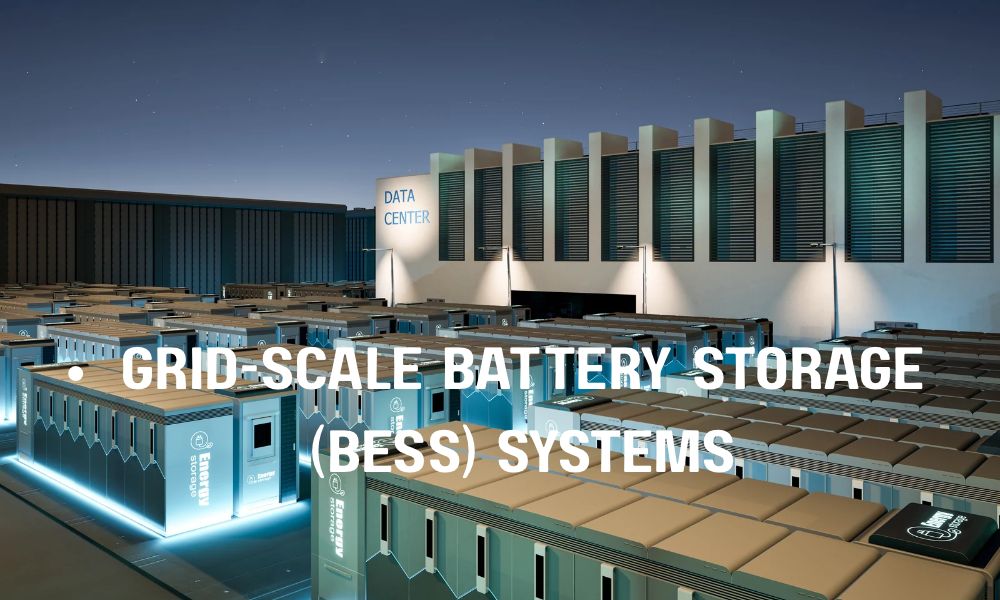
The rapid electrification of the global economy has ignited an unprecedented hardware arms race. As utility-scale Battery Energy Storage Systems (BESS), commercial solar installations, electric vehicle (EV) fast-charging networks, and AI data center microgrids scale simultaneously, the electrical grid is undergoing a fundamental architectural transformation. Beneath the surface of every megawatt-hour of stored energy and every solar array lies the mission-critical brain and muscle of modern clean energy: high-voltage power electronics.
However, the massive influx of capital into clean energy manufacturing and grid infrastructure has collided with a severe structural bottleneck: a global deficit of executive-level power electronics talent. Today, grid-forming inverter manufacturers and utility-scale BESS integrators are locked in a fierce tug-of-war over the exact same, hyper-scarce pool of VP-level engineering, product, and operations leaders. Because modern BESS enclosures and grid-tied inverters share identical technological DNA—relying on wide-bandgap semiconductors (SiC/GaN), high-voltage DC-to-AC conversion, thermal management, and complex grid-forming firmware—the talent overlap is nearly total.
For corporate boards, private equity sponsors, and CEOs across the energy storage and solar hardware ecosystems, understanding this convergence is essential. Traditional recruitment strategies fail when companies do not realize who their true talent competitors are. This comprehensive guide examines the root causes of the power electronics talent gap, dissects the overlapping leadership archetypes both sectors demand, and provides a strategic roadmap and evaluation scorecard to win the war for elite electrical engineering leadership.
1. The Technological Convergence: Why BESS and Inverter Talent Pools Are Identical
Historically, solar inverter companies and battery storage integrators operated in adjacent, relatively distinct lanes. Solar manufacturers focused on unidirectional DC-to-AC string and central inverters, while early energy storage players focused primarily on battery chemistry, cell packaging, and basic Battery Management Systems (BMS). Over the last several years, market demands have forced these technologies to fuse completely.
Modern utility-scale BESS architectures are no longer passive energy containers; they are active grid-stabilizing assets. Achieving grid-forming capabilities—allowing batteries and inverters to synthesize voltage and frequency without a traditional spinning turbine—requires extraordinary sophistication in bidirectional Power Conversion Systems (PCS). Both BESS OEMs and solar inverter manufacturers now require executives who can master the exact same technical challenges:
- Wide-Bandgap Semiconductor Integration: Transitioning from legacy silicon IGBTs to Silicon Carbide (SiC) and Gallium Nitride (GaN) MOSFETs to achieve higher switching frequencies, greater power density, and reduced thermal losses.
- High-Voltage Architecture (1500V DC+): Designing safe, reliable insulation, switchgear, and busbar architectures capable of handling extreme DC voltages without arcing or insulation breakdown.
- Grid-Forming Firmware & Control Loops: Developing real-time digital signal processing (DSP) algorithms that manage synthetic inertia, black-start capabilities, and sub-millisecond fault ride-through required by utilities and ISOs.
- Thermal Management & Enclosure Reliability: Engineering liquid-cooled power stages and ruggedized NEMA-rated enclosures that survive 20-year lifespans in extreme desert, coastal, and sub-zero environments.
2. The Roots of the Talent Deficit: Decades of Underinvestment
The severity of the power electronics talent gap is not a temporary market fluctuation; it is the result of a multi-decade structural pipeline failure. Throughout the 1990s and 2000s, university electrical engineering programs and top engineering graduates flocked overwhelmingly toward low-voltage digital electronics, consumer software, telecommunications, and microprocessor design. High-voltage power electronics was widely viewed as a mature, unglamorous industrial niche.
Simultaneously, much of the high-volume power supply and inverter manufacturing shifted offshore, hollowing out domestic hands-on hardware leadership. Now, as reshoring mandates under the Inflation Reduction Act (IRA) and global grid modernization require massive domestic R&D and manufacturing scale, companies are discovering that the cohort of engineers who understand high-power magnetics, EMI/EMC compliance, and thermal dissipation is exceptionally small—and heavily concentrated among a handful of legacy industrial, aerospace, and EV powertrain leaders.
3. The Four Contested Executive Roles Both Sectors Are Fighting For
When BESS integrators and inverter OEMs go to market for senior leadership, their search mandates frequently target the exact same four executive profiles:
1. VP of Power Electronics & Hardware Engineering
This executive is the overarching technical architect of the Power Conversion System (PCS). They manage the electrical, mechanical, and thermal engineering teams responsible for taking a power converter from schematic concept through high-volume manufacturability.
- Why Both Sectors Need Them: Whether the DC source is a solar array or a lithium-ion battery rack, converting high-voltage DC into grid-compliant AC with >98.5% efficiency requires identical circuit topology and component expertise.
- Core Mandate: Accelerate product roadmaps (e.g., scaling from 1500V to 2000V architectures), eliminate field failure modes, and design hardware for cost-effective automated assembly (DFM/DFA).
2. VP of Embedded Firmware, Controls & Grid Integration
Hardware without sophisticated control software is a liability on the modern grid. This leader oversees the embedded software engineers writing the real-time DSP code, SCADA interfaces, and cybersecurity protocols that govern how the inverter or BESS interacts with utility infrastructure.
- Why Both Sectors Need Them: Both BESS and solar-plus-storage assets must pass rigorous IEEE 1547, UL 1741 SB, and NERC-CIP cybersecurity certifications to interconnect to the grid.
- Core Mandate: Deliver stable grid-forming control algorithms, prevent firmware-induced nuisance tripping, and ensure seamless communication between the PCS, the Battery Management System (BMS), and site-level Energy Management Systems (EMS).
3. Chief Operating Officer / VP of Power Systems Manufacturing
As domestic content incentives drive companies to build U.S. assembly plants, both sectors desperately need operations executives who understand automated electronics manufacturing, high-voltage end-of-line testing, and contract manufacturer (CM/EMS) governance.
- Why Both Sectors Need Them: Scaling production of high-power inverters and integrated BESS skid assemblies requires identical surface-mount technology (SMT) oversight, heavy busbar assembly workflows, and high-voltage burn-in testing protocols.
- Core Mandate: Ramp domestic assembly lines, compress unit manufacturing costs, enforce zero-defect quality control, and manage complex contract manufacturing partnerships.
4. VP of Global Supply Chain & Power Semiconductor Sourcing
Lead times for insulated-gate bipolar transistors (IGBTs), SiC modules, custom magnetics, and high-voltage switchgear have repeatedly crippled clean energy deployment schedules. Both BESS and inverter makers compete aggressively for supply chain leaders with tier-one semiconductor allocations.
- Why Both Sectors Need Them: Both industries source from the exact same bottlenecked tier-one suppliers (e.g., Infineon, Wolfspeed, STMicroelectronics, ABB, Schneider).
- Core Mandate: Secure multi-year wafer and power module allocations, qualify dual-source domestic vendors to capture IRA tax credits, and prevent single-component shortages from halting multi-million-dollar shipments.
4. The Power Electronics Executive Scorecard: 5 Vetting Domains
Because demand vastly exceeds supply, search committees must be disciplined enough to distinguish true high-power engineering leaders from executives whose experience is limited to low-voltage consumer electronics or pure software. Candidates should be graded across five specific domains:
| Evaluation Domain | Critical Core Competencies | Sample Board Interview Question |
|---|---|---|
| 1. High-Power Topology & Reliability | 1500V+ DC architecture, SiC/GaN switching optimization, thermal dissipation, MTBF (Mean Time Between Failures) modeling. | “Walk us through a major field reliability failure involving thermal cycling or semiconductor degradation in a high-voltage converter. How did you isolate the root cause and re-engineer the power stage?” |
| 2. Grid Compliance & Certification | UL 1741 SB, IEEE 1547, UL 9540/9540A, grid-forming control algorithms, utility interconnection testing. | “Describe your framework for managing third-party certification bottlenecks (UL/CSA) while rapidly iterating grid-forming firmware to meet aggressive utility interconnection deadlines.” |
| 3. Design for Manufacturability (DFM) & Cost | Automated assembly integration, BOM cost reduction, high-voltage end-of-line (EOL) testing, CM/EMS transfer. | “How have you successfully stripped 15% to 20% out of the Bill of Materials (BOM) cost on a commercial inverter or PCS platform without sacrificing thermal margin or field durability?” |
| 4. Semiconductor & Magnetics Supply Chain | Tier-1 power module allocation, custom transformer/inductor sourcing, IRA Domestic Content compliance, dual-sourcing. | “When silicon carbide module lead times stretched past 50 weeks, what architectural redesigns and supplier negotiation levers did you execute to keep production lines running?” |
| 5. Cross-Disciplinary Team Leadership | Aligning hardware, embedded firmware, mechanical/thermal, and compliance teams; bridging R&D and field service. | “Power electronics projects often stall in friction between hardware designers and embedded firmware engineers. How do you structure hardware-in-the-loop (HIL) testing to force rapid cross-functional debugging?” |
5. How to Win the Talent War: Expanding the Aperture and Structuring Offers
If a BESS integrator or inverter manufacturer restricts its executive search exclusively to direct competitors, the search will stall for months. Winning the talent war requires expanding the recruitment aperture into adjacent high-reliability power sectors while structuring compelling, equity-driven executive packages.
- Tap Adjacent High-Voltage Industries: Elite power electronics leaders can be successfully extracted from Electric Vehicle (EV) powertrain and fast-charging OEMs, aerospace/defense power systems, industrial motor drives, and hyperscale data center uninterruptible power supply (UPS) manufacturers. These leaders already possess deep mastery of SiC topologies, thermal management, and rigorous reliability standards.
- Lead with Technical Autonomy and Product Vision: Top engineering VPs are driven by architectural impact. Boards must clearly articulate their next-generation product roadmap (e.g., 2000V utility architectures or proprietary grid-forming platforms) and grant the executive genuine authority over R&D capital allocation.
- Structure Competitive Compensation & Equity: Base salaries for VPs of Power Electronics, Firmware, and Operations typically range from $285,000 to $425,000+, supplemented by 35% to 60% performance bonuses tied to product launch milestones, certification timelines, and BOM cost targets. Because many candidates sit on substantial unvested equity at public EV or industrial tech firms, private equity sponsors and growth-stage boards must offer meaningful equity participation (RSUs, stock options, or Profits Interest Units) alongside cash sign-on “make-whole” provisions.
Conclusion
The convergence of battery energy storage and solar inverter technology has created a unified, hyper-competitive market for executive talent. Whether an organization is manufacturing grid-forming inverters or deploying containerized utility-scale BESS solutions, commercial success hinges on securing leaders who can master high-voltage power electronics, real-time grid firmware, and resilient semiconductor supply chains.
Because verified power electronics executives are exceptionally rare and relentlessly pursued across the clean energy, EV, and data center sectors, relying on generalist recruiters or passive job postings guarantees prolonged vacancies and delayed product launches. To map the broader power conversion landscape, rigorously vet architectural fluency, and extract passive technical leaders, forward-thinking boards partner with specialized advisors. Collaborating with a dedicated Battery Energy Storage Executive Search Firm provides your organization with the industry intelligence and direct executive network required to close the power electronics talent gap and dominate the modern grid.
Frequently Asked Questions (FAQs)
1. Why are BESS integrators and solar inverter manufacturers competing for the exact same executives?
Modern utility-scale BESS systems require bidirectional Power Conversion Systems (PCS) to connect DC battery racks to the AC utility grid. Those PCS units utilize the exact same wide-bandgap semiconductors (SiC/GaN), high-voltage architectures (1500V DC), thermal management systems, and grid-forming control firmware as modern solar inverters—meaning both industries rely on the exact same pool of power electronics engineering and operations leaders.
2. Can a power electronics leader from the EV or data center sector successfully transition into BESS or solar inverters?
Yes. Executives from EV traction inverter/fast-charging companies and hyperscale data center UPS manufacturers make exceptional hires. They possess deep expertise in high-power density, thermal dissipation, and high-volume manufacturing. The primary onboarding focus is simply familiarizing them with utility-specific grid interconnection standards (IEEE 1547, UL 1741 SB) and 20-year outdoor environmental durability requirements.
3. How long does a retained executive search for a VP of Power Electronics typically take?
Due to the severe global shortage of senior high-voltage hardware and firmware leaders, a retained executive search typically requires 12 to 16 weeks from kickoff to a signed offer letter. This timeline allows for comprehensive market mapping across clean energy, EV, and industrial drive sectors, technical vetting, and complex equity negotiations.
4. What is the biggest technical risk when hiring a power electronics executive?
Hiring an executive whose background is limited to low-voltage consumer electronics or pure software management. Designing and manufacturing 1500V+ high-power conversion systems involves unforgiving physical realities—including electromagnetic interference (EMI), arc-flash safety, parasitic inductance, and extreme thermal cycling—that cannot be solved through software patches alone.
5. How do domestic content tax credits under the IRA affect power electronics leadership?
To qualify for Domestic Content Bonus Credits under the Inflation Reduction Act, a growing percentage of manufactured components—including inverters and BESS enclosures—must be produced in the United States. This forces companies to recruit VPs of Operations and Supply Chain who can rapidly stand up domestic assembly lines and qualify North American contract manufacturers, magnetics suppliers, and enclosure fabricators.
6. What compensation structure is required to extract a top power electronics VP from a competitor?
Competitive packages generally require a base salary between $285,000 and $425,000+, an annual performance bonus of 35% to 60% tied to product certification and BOM cost milestones, a meaningful long-term equity grant, and a cash sign-on “make-whole” bonus to offset unvested stock options or retention incentives the candidate forfeits by leaving their current employer.

Tanya Gallardo
Managing Director, Executive Search & AI Talent Strategy
Tanya Gallardo is the Managing Director of Executive Search & AI Talent Strategy at JRG Partners, leading C-suite and Board engagements across key growth sectors including Technology, Financial Services, and Manufacturing.
With over 18 years of experience specializing in disruptive technology leadership, Tanya is recognized as a leading authority on talent architecture for future-focused executive roles, such as the Chief AI Officer (CAIO) and Chief Digital Officer (CDO). Her expertise lies in accurately assessing the cultural fit and technical depth required to ensure a high return on investment (ROI) for critical leadership appointments.
Prior to her role at JRG Partners, Tanya held senior roles directing global talent acquisition strategies at a major publicly-traded technology firm, advising on organizational design and succession planning for emerging executive functions. She is a recognized speaker and contributor to industry events, sharing data-driven insights on executive compensation, leadership development, and the measurable business impact of C-suite talent.
