


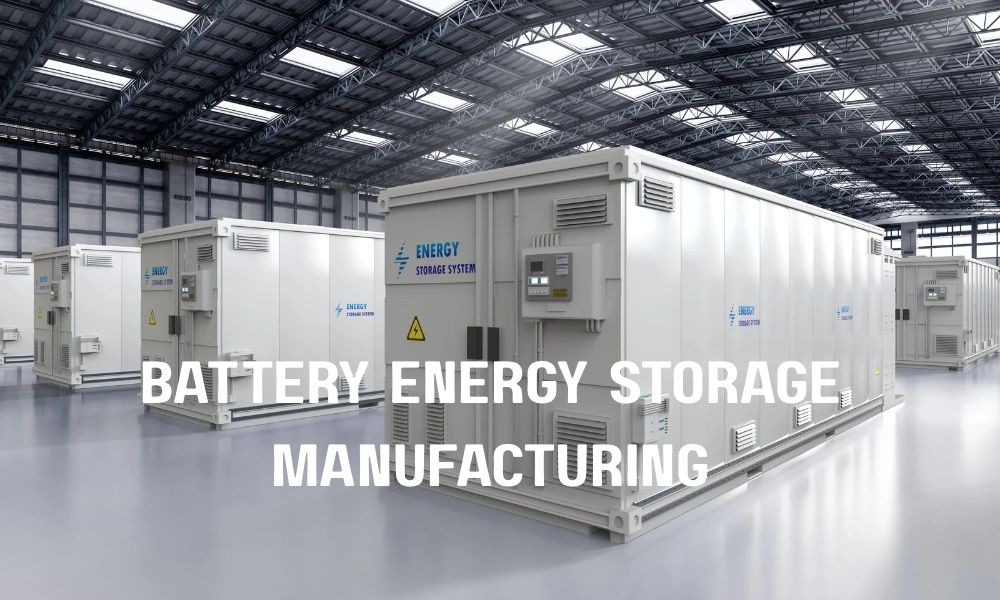
The United States is experiencing an unprecedented industrial renaissance in domestic energy storage manufacturing. Propelled by historic federal incentives under the Inflation Reduction Act (IRA), grid decarbonization mandates, and the explosive power demands of AI data centers, billions of dollars in private equity and institutional capital are pouring into domestic battery energy storage system (BESS) production. Across the American “Battery Belt”—stretching from Michigan and Ohio down through Georgia, Tennessee, and the Carolinas—massive gigafactories, cathode active material refineries, and utility-scale module assembly plants are rising at breakneck speed.
However, capital expenditures and gigawatt-hour (GWh) capacity announcements do not produce functional battery cells. The industry is confronting a stark operational reality: building a 30 GWh facility is vastly easier than successfully ramping it to commercial yield. Domestic battery manufacturing is plagued by a severe, generational shortage of battle-tested executive leadership. Unlike traditional automotive or heavy industrial assembly, lithium-ion and next-generation solid-state cell manufacturing operates at the volatile intersection of electrochemistry, micron-level mechanical precision, and strict dry-room environmental controls.
Without leaders who have personally survived the “valley of death” during high-volume cell manufacturing ramps, multi-billion-dollar facilities risk catastrophic scrap rates, thermal runaway safety hazards, and missed offtake agreements. This comprehensive guide dissects the exact leadership architecture required to translate gigawatt-hour ambitions into commercial reality, detailing the critical executive hires behind U.S. battery storage manufacturing, key vetting competencies, and compensation strategies for securing scarce global talent.
1. The Domestic Battery Manufacturing Bottleneck: Capital vs. Capability
For the past two decades, the global supply chain for lithium-ion battery cells, precursor materials, and specialized manufacturing equipment consolidated heavily in East Asia. While North American companies excelled at downstream pack integration and software energy management systems (EMS), upstream cell manufacturing talent largely atrophied in the West.
Now, as domestic manufacturers race to satisfy strict Domestic Content Bonus Credit requirements and insulate supply chains from geopolitical friction, they are attempting to compress twenty years of industrial learning into thirty-six months. Hiring a traditional automotive plant manager or generic industrial operations VP to run a gigafactory is a perilous miscalculation. Battery manufacturing involves continuous wet-chemical slurry mixing, precision slot-die coating, calendering, vacuum drying, and multi-week electrolyte formation cycles—processes where microscopic humidity fluctuations or metallic contaminants ruin entire production lots.
2. The Five Critical Executive Hires for U.S. Battery Storage Manufacturing
To successfully take a battery manufacturing facility from greenfield concrete to high-volume commercial output, corporate boards and sponsors must assemble five foundational leadership archetypes:
1. Chief Operating Officer / VP of Gigafactory Operations (The Ramp & Yield Master)
This executive holds ultimate accountability for converting capital assets into profitable gigawatt-hours. They manage the entire manufacturing floor, overseeing equipment installation, commissioning, qualification (IQ/OQ/PQ), and the brutal transition from pilot line to 24/7 High-Volume Manufacturing (HVM).
- Core Mandate: Compress yield ramp timelines, minimize scrap rates during electrode coating and cell assembly, maximize Overall Equipment Effectiveness (OEE), and enforce uncompromising thermal and chemical safety protocols.
- Ideal Profile: A battle-tested operations leader with direct, hands-on experience ramping commercial lithium-ion cell lines, possessing the operational grit to troubleshoot complex equipment bottlenecks alongside international OEM technicians.
2. VP of Cell Engineering & Electrochemistry (The Physics & Formulation Authority)
While Operations focuses on throughput and uptime, the VP of Cell Engineering owns the electrochemical integrity of the product. Whether manufacturing LFP (Lithium Iron Phosphate), NMC, or emerging sodium-ion chemistries, this leader bridges the gap between laboratory R&D formulations and mass-production manufacturability.
- Core Mandate: Optimize energy density, cycle life, and thermal stability; manage failure mode and effects analysis (FMEA); and lead root-cause debugging when cells fail formation or aging tests.
- Ideal Profile: Ph.D. or M.S. in Electrochemistry, Chemical Engineering, or Materials Science, paired with commercial manufacturing experience rather than purely academic research pedigree.
3. VP of Supply Chain & Critical Minerals Procurement (The IRA & Upstream Strategist)
In battery manufacturing, raw materials account for up to 70% of total cell cost. A world-class supply chain executive is not merely a purchasing manager; they are a geopolitical strategist responsible for securing long-term lithium, nickel, graphite, and electrolyte supply while ensuring strict compliance with Foreign Entity of Concern (FEOC) rules.
- Core Mandate: Negotiate multi-year mineral offtake agreements, qualify domestic and free-trade-agreement (FTA) tier-one suppliers, manage working capital across volatile commodity cycles, and audit supply chain traceability for IRA tax credit qualification.
- Ideal Profile: A sophisticated industrial procurement leader fluent in global commodity hedging, chemical supply chains, and complex federal regulatory compliance.

4. VP of BESS Systems Engineering & Integration (The Grid-Scale Architect)
For companies building complete Battery Energy Storage Systems (BESS) for utility-scale or commercial & industrial (C&I) deployment, producing a good cell is only half the equation. The VP of Systems Engineering oversees the integration of cells into modules, racks, and containerized enclosures, complete with Battery Management Systems (BMS), HVAC thermal controls, and fire suppression.
- Core Mandate: Ensure seamless hardware-software integration, achieve UL 9540 and UL 9540A thermal runaway safety certifications, and optimize containerized energy density for transport and site installation.
- Ideal Profile: A multi-disciplinary power electronics and mechanical systems leader who understands high-voltage DC architecture, grid interconnection standards, and utility customer reliability demands.
5. VP of Quality, EHS & Dry-Room Compliance (The Risk & Safety Gatekeeper)
A single thermal event on a manufacturing floor or at a customer utility site can bankrupt an emerging battery manufacturer. The VP of Quality and Environmental, Health, and Safety (EHS) operates as an independent check on production velocity, ensuring safety and quality are never sacrificed to hit quarterly shipment targets.
- Core Mandate: Govern dew-point tolerances in ultra-low-humidity dry rooms, enforce NMP (N-Methyl-2-pyrrolidone) solvent recovery environmental standards, manage ISO/IATF quality systems, and oversee battery fire safety protocols.
- Ideal Profile: An uncompromising quality and safety executive with deep background in chemical manufacturing, semiconductor cleanrooms, or high-volume battery production.
3. The Battery Manufacturing Executive Scorecard: 5 Vetting Domains
To prevent hiring executives who possess theoretical renewable energy enthusiasm but lack industrial manufacturing grit, search committees must grade candidates across five rigorous operational domains:
| Evaluation Domain | Critical Core Competencies | Sample Board Interview Question |
|---|---|---|
| 1. High-Volume Ramp & Scrap Reduction | Slurry mixing stability, coating uniformity, winding/stacking speed, electrolyte filling, formation cycle optimization. | “Walk us through a high-volume battery ramp where initial scrap rates exceeded 30%. How did you isolate the root cause across mixing, coating, and assembly to bring yields above 90%?” |
| 2. Equipment Commissioning & Vendor Control | Asian/European equipment OEM management, Factory Acceptance Testing (FAT), Site Acceptance Testing (SAT), spare parts localization. | “Given that much of the specialized coating and assembly equipment comes from overseas OEMs, how do you manage language barriers, commissioning delays, and long-term maintenance support in a U.S. plant?” |
| 3. Dry-Room & Thermal Safety Governance | Ultra-low dew-point HVAC control, fire suppression engineering, NMP solvent handling, UL 9540A compliance. | “Describe a time you had to halt a production line or delay a major customer shipment due to a subtle dry-room excursion or cell safety anomaly. How did you manage executive pressure?” |
| 4. IRA Compliance & Supply Chain Resilience | FEOC compliance auditing, domestic content tracking (Section 45X/48), mineral offtake structuring, working capital management. | “How do you structure supplier contracts and material tracking systems to guarantee that every gigawatt-hour produced qualifies for full federal domestic manufacturing tax credits?” |
| 5. Workforce Scaling & Technical Upskilling | Technician training academies, 24/7 shift retention, bridging expatriate engineering advisors with U.S. plant operators. | “Since the U.S. lacks a deep pool of experienced battery operators, what exact training curriculum and retention structure have you built to turn local industrial workers into skilled cell technicians?” |
4. Navigating International Talent Extraction and Compensation
Because the domestic U.S. talent pool of leaders who have scaled multi-gigawatt-hour battery plants is exceptionally small, executive searches frequently require targeting international talent—extracting experienced leaders from established battery hubs in South Korea, Japan, Germany, and China, alongside veterans from U.S. automotive EV programs and adjacent semiconductor or chemical manufacturing sectors.
Securing this scarce leadership requires structuring highly competitive compensation packages tailored to the intense operational risk of the role:
- Base Compensation: Base salaries for Gigafactory COOs and VPs of Operations typically range from $325,000 to over $500,000, scaling with facility GWh capacity and upstream vs. downstream complexity.
- Milestone-Driven Performance Incentives: Short-Term Incentives (50% to 100% of base) tied strictly to hard operational triggers—such as achieving Factory Acceptance Testing milestones, hitting target GWh run-rates, compressing scrap rates below contractual thresholds, and maintaining zero lost-time safety incidents.
- Long-Term Equity & Value Alignment: Substantial equity grants (RSUs, stock options, or Profits Interest Units in PE-backed platforms) that align the executive with long-term enterprise valuation and successful commercial offtake execution.
- Cross-Border Relocation & Immigration Support: When extracting international talent, boards must provide comprehensive visa sponsorship (O-1, L-1, or EB-1 pathways), tax equalization guidance, family relocation packages, and cultural integration support for secondary U.S. manufacturing markets.

Conclusion
The transformation of the U.S. energy grid and industrial base depends entirely on domestic battery energy storage manufacturing. Yet, gigawatt-hour capacity targets on investor presentations mean nothing without the operational leadership required to conquer the physics of mass production. Converting multi-billion-dollar capital commitments into reliable, profitable, and safe battery systems requires assembling an executive team that blends electrochemical mastery, relentless manufacturing discipline, and geopolitical supply chain agility.
Because verified battery manufacturing executives are among the most fiercely contested leaders in the global industrial economy, traditional recruiting methods consistently fail. Forward-thinking boards, energy transition funds, and CEOs partner with specialized recruitment experts who understand the technical nuances of the battery value chain. Collaborating with a dedicated Battery Energy Storage Executive Search Firm ensures your organization has confidential, direct access to the global talent networks required to seat the leaders who will power America’s energy future.
Frequently Asked Questions (FAQs)
1. Why can’t traditional automotive manufacturing executives easily run a battery cell gigafactory?
Traditional automotive manufacturing is primarily a mechanical assembly, stamping, and welding operation. Battery cell manufacturing is fundamentally a continuous chemical and precision coating process operating in ultra-low-humidity dry rooms. Leaders without experience in electrochemistry, slurry rheology, and multi-week formation cycles often struggle to diagnose yield losses and prevent catastrophic scrap rates.
2. What is the “valley of death” in battery manufacturing ramps, and how does leadership prevent it?
The “valley of death” occurs when a company transitions from a small pilot line to high-volume commercial production, frequently experiencing scrap rates of 30% to 50% that burn through cash reserves before commercial revenue starts. Experienced battery COOs prevent this by enforcing rigorous equipment qualification (FAT/SAT), implementing inline optical metrology, and maintaining strict environmental controls during commissioning.
3. How long does a retained executive search for a Battery Operations or Engineering VP take?
Due to the extreme scarcity of domestic talent and the frequent necessity of cross-border extraction, a retained executive search for a senior battery manufacturing leader typically takes 12 to 16 weeks from kickoff to a signed offer letter, plus additional time if international visa processing is required.
4. How do Inflation Reduction Act (IRA) rules impact the VP of Supply Chain role?
Under the IRA (specifically Section 45X production tax credits and Domestic Content Bonus Credits), manufacturers lose massive financial subsidies if critical minerals or battery components are sourced from Foreign Entities of Concern (FEOC). The VP of Supply Chain must build auditable, end-to-end material traceability systems and negotiate compliant domestic or Free Trade Agreement (FTA) supplier contracts.
5. What is the difference between cell manufacturing leadership and BESS integration leadership?
Cell manufacturing leadership focuses on upstream electrochemistry, electrode coating, and high-speed cell assembly. BESS integration leadership focuses on downstream systems engineering: combining thousands of cells into modules and containers, designing high-voltage Battery Management Systems (BMS), optimizing HVAC thermal management, and achieving UL 9540A fire safety certifications.
6. Where are the primary talent pools for U.S. battery energy storage executives located?
Domestically, key talent hubs are emerging in Michigan, California, Nevada, Georgia, Tennessee, and Texas, alongside adjacent talent pools in chemical manufacturing (Gulf Coast) and semiconductor fabs (Arizona/Oregon). Internationally, deep pools of experienced gigafactory leaders reside in South Korea, Japan, Germany, and China.

Tanya Gallardo
Managing Director, Executive Search & AI Talent Strategy
Tanya Gallardo is the Managing Director of Executive Search & AI Talent Strategy at JRG Partners, leading C-suite and Board engagements across key growth sectors including Technology, Financial Services, and Manufacturing.
With over 18 years of experience specializing in disruptive technology leadership, Tanya is recognized as a leading authority on talent architecture for future-focused executive roles, such as the Chief AI Officer (CAIO) and Chief Digital Officer (CDO). Her expertise lies in accurately assessing the cultural fit and technical depth required to ensure a high return on investment (ROI) for critical leadership appointments.
Prior to her role at JRG Partners, Tanya held senior roles directing global talent acquisition strategies at a major publicly-traded technology firm, advising on organizational design and succession planning for emerging executive functions. She is a recognized speaker and contributor to industry events, sharing data-driven insights on executive compensation, leadership development, and the measurable business impact of C-suite talent.
