


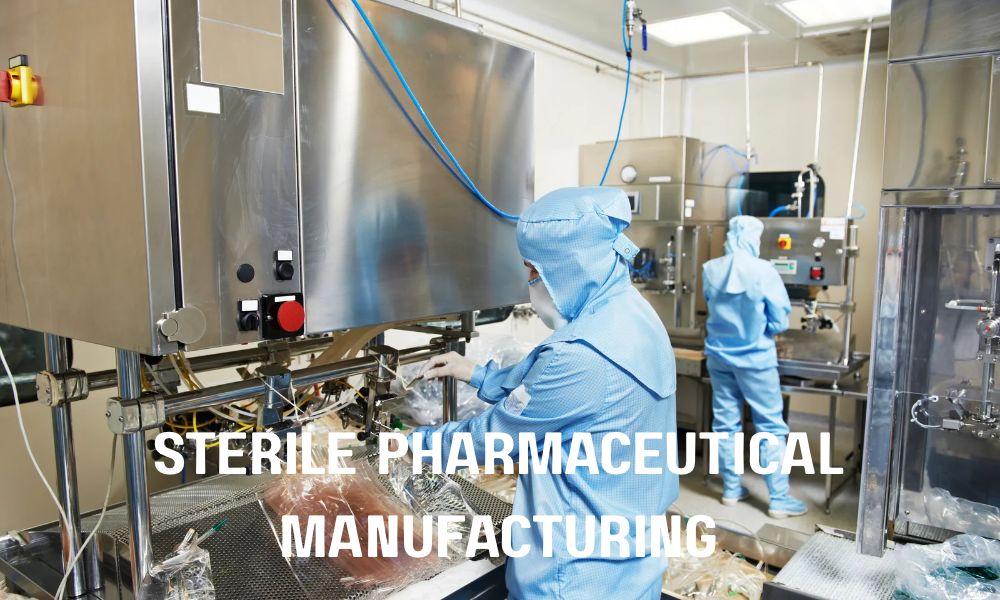
The sterile injectables market is experiencing explosive growth, propelled by the rapid advancement of complex biologics, GLP-1 agonists, and targeted oncology therapies. However, manufacturing these life-saving therapeutics involves the highest regulatory and operational risks in the entire pharmaceutical supply chain. The margin for error in aseptic processing is absolutely zero. A single microbial excursion or particulate contamination event can lead to millions of dollars in discarded product, drug shortages, and catastrophic regulatory action.
Compounding this baseline risk is a monumental shift in global regulatory expectations. The implementation of the revised EU Annex 1 has fundamentally transformed how sterile manufacturing facilities must operate. Regulators no longer accept reactive, end-product testing as proof of sterility. Instead, they demand a proactive, holistic Contamination Control Strategy (CCS) and deeply embedded Quality Risk Management (QRM) frameworks spanning the entire facility lifecycle—from cleanroom design and isolator integration to operator gowning and environmental monitoring.
To survive and scale in this unforgiving environment, Contract Development and Manufacturing Organizations (CDMOs) and captive biopharma plants must elevate their Quality leadership. The traditional “quality cop” who merely checks boxes post-production is entirely obsolete. Today’s sterile facilities require highly strategic, scientifically rigorous Quality executives capable of architecting a predictive compliance culture without suffocating commercial batch release velocity. This guide details the specific executive archetypes, core competencies, and vetting frameworks required to recruit elite Quality leadership for sterile injectables.
1. The Annex 1 Paradigm Shift: From Reactive to Predictive Quality
The revised EU Annex 1 is not merely a European guideline; it has become the de facto global standard for sterile manufacturing, heavily influencing FDA inspectors and global health authorities. The core philosophy of Annex 1 is that sterility cannot be tested into a product; it must be engineered and maintained through a comprehensive Contamination Control Strategy (CCS).
For a Quality leader, this requires a fundamental pivot. They must possess the engineering fluency to evaluate airflow visualization (smoke studies) in Grade A environments, the microbiological expertise to interpret complex environmental monitoring (EM) trends, and the operational authority to halt production if a systemic risk is identified. Furthermore, as facilities transition from traditional cleanrooms to Restricted Access Barrier Systems (RABS) and fully enclosed isolators, the Quality executive must govern the validation and decontamination (e.g., VHP) protocols of this highly complex capital equipment.
If a facility’s Head of Quality views Annex 1 as a simple documentation update rather than a structural overhaul of facility physics and human behavior, the plant is at immediate risk of critical audit observations.
2. Key Executive Archetypes in Sterile Quality Leadership
To safely scale a sterile injectables plant, corporate boards and site leaders must build a robust Quality triad, led by executives with highly specialized aseptic expertise.
A. The VP / Head of Quality (The Compliance Architect)
This executive sits on the site leadership team and holds ultimate authority over the facility’s Quality Management System (QMS) and batch release. They act as the primary liaison during FDA and EMA inspections.
- Core Strengths: Enterprise risk management, QMS digitalization, cross-functional diplomacy (partnering with Operations rather than fighting them), and Annex 1 CCS governance.
- Ideal Background: A seasoned quality executive with 15+ years of aseptic manufacturing experience, holding a proven track record of hosting successful regulatory inspections and driving Right-First-Time (RFT) batch release metrics.
B. Head of Sterility Assurance / Microbiology (The Scientific Guardian)
Sterility assurance is the beating heart of an aseptic facility. This highly technical leader governs the microbiology lab and the environmental monitoring programs that prove the facility is in a state of control.
- Core Strengths: Media fills (Process Simulation), rapid microbiological methods, sterilisation validation (autoclaves/SIP), and complex root-cause investigations for microbial excursions.
- Ideal Background: A credentialed microbiologist who understands the complex interplay between facility HVAC systems, personnel gowning, and cleanroom bioburden.
C. Director of Quality Operations (The Shop Floor Enforcer)
Quality cannot be managed solely from a desk. This executive leads the QA-on-the-floor teams, providing real-time oversight and coaching to aseptic operators during commercial filling.
- Core Strengths: Real-time batch record review, aseptic intervention coaching, deviation management, and fostering psychological safety for operators to report errors.
- Ideal Background: A pragmatic leader with deep shop-floor experience who understands that human behavior and fatigue are the highest risk factors in Grade A/B cleanrooms.

3. Critical Competencies to Demand in Aseptic Quality Leaders
When vetting executive candidates to lead Quality at a sterile injectables site, search committees must rigorously test their technical depth and commercial pragmatism. Boards must demand the following competencies:
1. Designing and Defending a Contamination Control Strategy (CCS)
Under Annex 1, the CCS is a living document that connects facility design, equipment, utilities, personnel, and process parameters into a cohesive risk profile. The Quality leader must be able to architect this document from scratch, utilize it to identify hidden vulnerabilities, and confidently defend its scientific rationale to global regulators during a high-stakes audit.
2. Tech Transfer and Validation Oversight
As CDMOs onboard highly sensitive biologics, the Quality leader must govern the validation of new processes. This includes overseeing analytical method transfers, filtration validations, and the critical execution of Process Simulation (media fills). They must possess the agility to qualify new products rapidly without compromising the facility’s baseline compliance.
3. Cultivating a “Speak-Up” Quality Culture
In sterile manufacturing, if an operator accidentally touches a sterile surface during an intervention and fails to report it, the entire batch is compromised. Elite Quality leaders focus heavily on psychological safety. They build cultures where operators are praised, not punished, for immediately reporting deviations. They understand that transparency is the ultimate defense against contamination.
4. The Sterile Quality Executive Scorecard: 5 Vetting Domains
To prevent costly mis-hires, executive search committees should score every finalist across five distinct operational domains utilizing a structured rubric:
| Evaluation Domain | Critical Core Competencies | Sample Board Interview Question |
|---|---|---|
| 1. Annex 1 & CCS Mastery | Contamination Control Strategy architecture, Quality Risk Management (QRM), airflow dynamics. | “Walk us through how you developed and implemented a holistic Contamination Control Strategy to align a legacy cleanroom facility with the new EU Annex 1 requirements.” |
| 2. Sterility Assurance & Excursion Management | Media fill (process simulation) governance, environmental monitoring, root-cause microbiology. | “Describe your immediate protocol and root-cause investigation methodology when your facility experiences an unexpected microbial excursion in a Grade A environment.” |
| 3. Regulatory Audit Defense | FDA/EMA inspection management, Form 483 mitigation, Warning Letter remediation. | “How do you prepare a site for an unannounced FDA inspection, and how do you manage the narrative when an inspector zeroes in on a complex recurring deviation?” |
| 4. QMS Digitalization & Batch Release | Veeva/TrackWise integration, Right-First-Time (RFT) optimization, reducing cycle times. | “Quality is often viewed by Operations as a bottleneck. How have you utilized digital QMS tools and ‘QA-on-the-floor’ to accelerate commercial batch release without sacrificing compliance?” |
| 5. Cross-Functional Operations Diplomacy | Partnering with Site Heads/Manufacturing, managing client audits, conflict resolution. | “When a CDMO client demands the immediate release of a critical clinical batch, but your team has identified a documentation gap, how do you manage the commercial friction while protecting the site’s license?” |
5. Structuring Compensation for Elite Aseptic Quality Talent
Because the regulatory consequences of a sterile manufacturing failure are catastrophic, the demand for proven aseptic Quality leaders vastly outweighs the supply. These executives function as the ultimate insurance policy for multi-billion-dollar product pipelines. Extracting them requires highly strategic, performance-aligned compensation structures.
- Premium Base Compensation: Base salaries for VP of Quality and Head of Sterility Assurance roles carry a significant premium over traditional solid-dose manufacturing, typically ranging from $250,000 to $350,000+, directly reflecting the intense regulatory risk profile.
- Compliance-Linked Annual Incentives (STI): Annual cash bonuses (typically 30% to 50% of base) should not be tied solely to revenue. Elite organizations tie variable compensation to hard quality metrics: achieving zero critical observations during regulatory audits, improving Right-First-Time (RFT) batch records, and maintaining media fill success rates.
- Long-Term Equity (LTI): True executive talent requires participation in the equity stack. Granting RSUs, stock options, or Profits Interest Units (PIUs in private equity settings) ensures the Quality leader is economically aligned with the long-term enterprise value they are protecting.
- Sign-On & Relocation Provisions: Top-tier aseptic talent is highly localized in specific biotech hubs (e.g., Boston, Research Triangle Park, Switzerland). Search committees must deploy comprehensive relocation packages and sign-on bonuses to offset unvested equity candidates forfeit when leaving their current roles.
Conclusion
The stakes in sterile injectables have never been higher. As production demands surge and regulators enforce the rigorous expectations of EU Annex 1, relying on legacy quality management philosophies is a severe corporate liability. A sterile manufacturing facility is only as robust as its Contamination Control Strategy, and that strategy requires a visionary, scientifically elite Quality leader to architect and defend it. They must serve as an uncompromising guardian of patient safety while acting as a pragmatic commercial partner to the operations team.
Identifying, vetting, and successfully extracting these rare compliance executives requires deep biopharmaceutical fluency and a highly targeted recruitment methodology. Generalist recruiters lack the technical vocabulary to differentiate a standard QA manager from an elite sterility assurance architect. By partnering with a dedicated Sterile Fill-Finish Executive Search Firm, corporate boards, CDMOs, and private equity sponsors gain the proprietary market intelligence, technical vetting rigor, and discreet execution required to secure the leadership that will protect their commercial batches and scale their aseptic capacity.
Frequently Asked Questions (FAQs)
1. How exactly did EU Annex 1 change the role of a VP of Quality?
Prior to the Annex 1 revision, Quality leaders often relied heavily on end-product sterility testing and routine environmental monitoring to prove compliance. Annex 1 shifted the burden to proactive Quality Risk Management (QRM). The VP of Quality must now orchestrate a holistic Contamination Control Strategy (CCS) that integrates engineering, facility design, equipment choices, and operator training to prevent contamination before it can occur.
2. Why is Sterility Assurance separated from general Quality Assurance in some org charts?
General Quality Assurance deals with QMS governance, batch record review, supplier audits, and document control. Sterility Assurance is a highly specialized, deeply scientific discipline focused explicitly on microbiology, cleanroom physics, airflow dynamics, and sterilization validation (e.g., autoclaves, VHP). Because of the extreme technical depth required, elite sterile facilities elevate Sterility Assurance to its own dedicated leadership pillar.
3. How long does a retained executive search for a VP of Quality take in the aseptic sector?
A rigorous, retained executive search for a top-tier sterile Quality leader generally requires 12 to 16 weeks. This timeline accounts for deep global market mapping, confidentially extracting passive candidates from competing CDMOs or pharma innovators, rigorous technical vetting against complex regulatory frameworks, and complicated relocation negotiations.
4. What is the most critical metric for evaluating a Quality leader’s success?
While passing FDA and EMA audits is the ultimate pass/fail metric, the day-to-day operational success of a Quality leader is best measured by the Right-First-Time (RFT) batch release rate and the cycle time required to close deviations. A great Quality leader identifies compliance issues early, resolves them efficiently, and accelerates the release of life-saving therapeutics without sacrificing rigor.
5. What is a major red flag when interviewing a Quality candidate for a sterile facility?
A critical warning sign is an executive who displays an adversarial, “us vs. them” attitude toward the manufacturing operations team. If the candidate views their role purely as policing the shop floor rather than partnering with Operations to design inherently compliant processes, they will create a toxic, bottlenecked culture that severely damages the facility’s commercial viability.

Tanya Gallardo
Managing Director, Executive Search & AI Talent Strategy
Tanya Gallardo is the Managing Director of Executive Search & AI Talent Strategy at JRG Partners, leading C-suite and Board engagements across key growth sectors including Technology, Financial Services, and Manufacturing.
With over 18 years of experience specializing in disruptive technology leadership, Tanya is recognized as a leading authority on talent architecture for future-focused executive roles, such as the Chief AI Officer (CAIO) and Chief Digital Officer (CDO). Her expertise lies in accurately assessing the cultural fit and technical depth required to ensure a high return on investment (ROI) for critical leadership appointments.
Prior to her role at JRG Partners, Tanya held senior roles directing global talent acquisition strategies at a major publicly-traded technology firm, advising on organizational design and succession planning for emerging executive functions. She is a recognized speaker and contributor to industry events, sharing data-driven insights on executive compensation, leadership development, and the measurable business impact of C-suite talent.
