


The semiconductor industry enters 2026 facing an unusual leadership challenge: companies are investing aggressively in fabrication capacity, artificial intelligence, advanced packaging, chip design, supply-chain resilience, and next-generation manufacturing while competing for a relatively limited pool of executives who have already managed these complex environments.
Semiconductor companies do not simply need experienced managers. They need leaders who understand how technology, manufacturing, capital investment, supply chains, quality, engineering, and commercial strategy interact. A senior executive responsible for a new fabrication facility may need to understand process technology, yield improvement, equipment qualification, workforce development, operational discipline, customer requirements, and geopolitical supply-chain risks simultaneously.
The pressure is particularly visible as AI accelerates demand for advanced semiconductors. At the same time, semiconductor companies continue to face challenges involving workforce availability, manufacturing capacity, supply-chain resilience, and the need for highly specialized technical leadership.
This combination makes semiconductor executive recruitment one of the most specialized leadership challenges in the technology sector.
For companies searching for senior talent in 2026, four areas stand out: fabrication leadership, engineering and process technology, supply-chain management, and technology leadership. Each requires a different combination of technical expertise, operational experience, and strategic judgment.
Why Semiconductor Executive Recruitment Is So Difficult in 2026
The semiconductor industry has always required specialized talent, but the executive market has become considerably more complicated.
Semiconductor businesses operate across a highly interconnected value chain that can include intellectual property, electronic design automation, chip architecture, wafer fabrication, equipment, materials, packaging, testing, logistics, distribution, and end-market customers.
A leadership decision in one part of the value chain can affect several others.
For example, a manufacturing executive may be responsible for improving fab productivity while simultaneously managing equipment suppliers, process engineers, quality teams, regulatory requirements, energy availability, and customer production commitments. A supply-chain executive may need to understand not only procurement and logistics but also semiconductor manufacturing cycles, wafer capacity, packaging constraints, geopolitical exposure, and long lead-time equipment.
The talent shortage becomes even more difficult when companies need executives with direct experience scaling new facilities or technologies.
For executive recruiters, this means the most qualified candidates are often already employed, deeply specialized, and highly selective about their next opportunity.
1. Fab Leadership: The Executives Who Can Run Advanced Manufacturing
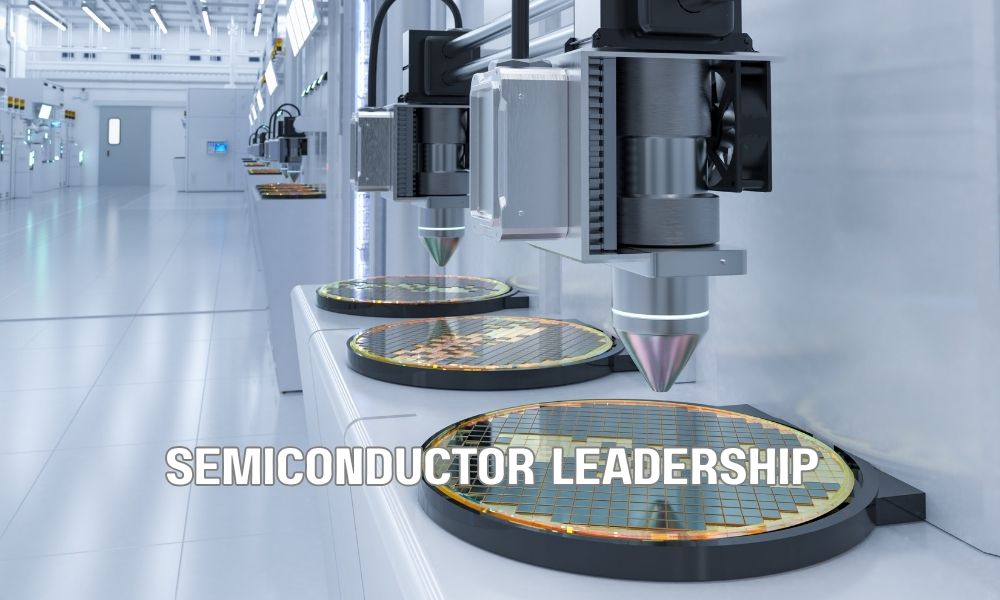
Few semiconductor leadership positions are more difficult to fill than senior fabrication executives.
A modern fab is an extraordinarily complex industrial operation. It combines precision manufacturing, advanced equipment, process engineering, automation, quality control, facilities management, environmental systems, materials management, and highly specialized labor.
A successful Fab General Manager, Site President, Vice President of Manufacturing, or Operations Executive must be able to translate corporate strategy into reliable manufacturing performance.
What Companies Look for in Fab Executives
The strongest candidates typically bring experience across several areas:
- High-volume semiconductor manufacturing
- Fab startup or expansion
- Yield improvement
- Process integration
- Equipment qualification
- Manufacturing operations
- Lean and continuous improvement
- Quality and reliability
- Capital expenditure management
- Workforce development
- Safety and regulatory compliance
- Customer delivery requirements
- Cross-functional leadership
The difficulty is that experience in one type of facility does not necessarily transfer perfectly to another.
A leader who has operated a mature memory fab may not have the experience required to launch a leading-edge logic facility. Similarly, an executive who has managed an established high-volume operation may not have the entrepreneurial and organizational skills needed to build a new site from the ground up.
Fab Expansion Is Increasing the Talent Competition
Global semiconductor manufacturers are expanding geographically, creating additional demand for leaders who understand advanced manufacturing.
Every major facility expansion creates demand not only for engineers but also for senior leaders capable of establishing operating systems, developing organizations, transferring manufacturing knowledge, and achieving production targets.
That makes experienced fab executives particularly valuable.
2. Semiconductor Engineering Leadership Is Becoming More Specialized
Engineering leadership is another area where semiconductor companies frequently struggle to identify qualified candidates.
The engineering organization may include process engineering, device engineering, design engineering, verification, packaging, test, reliability, manufacturing engineering, automation, and research and development.
At senior levels, companies increasingly need executives who can connect these disciplines rather than operate within only one technical silo.
The Rise of Advanced Packaging Leadership
One of the most important changes in semiconductor technology is the growing strategic importance of advanced packaging.
As AI processors become increasingly complex, performance improvements increasingly depend on how multiple components are integrated rather than simply making one monolithic chip larger.
Chiplets, high-bandwidth memory, 2.5D and 3D integration, hybrid bonding, silicon interposers, and advanced packaging technologies are becoming increasingly important to system performance.
This creates a particularly narrow executive talent pool.
An executive who understands packaging from an academic or research perspective may lack high-volume manufacturing experience. A manufacturing executive may understand production but not the technology roadmap. Companies increasingly want leaders who can bridge both.
Process Technology Leaders
Process technology executives are similarly difficult to recruit.
These leaders may oversee technology development, process integration, device engineering, process control, or technology transfer.
The ideal candidate may have experience moving a process from research and development through pilot production and ultimately high-volume manufacturing.
They also need to understand how process decisions affect:
- Yield
- Cost
- Performance
- Power consumption
- Reliability
- Time to market
- Manufacturing scalability
- Customer requirements
These executives are among the most specialized professionals in the semiconductor industry, and many have spent decades developing expertise at a small number of major semiconductor companies.
3. Supply Chain Executives Are Critical to Semiconductor Growth
Semiconductor supply-chain leadership has become one of the industry’s most strategically important executive functions.
The semiconductor supply chain is global, interconnected, and vulnerable to disruptions involving materials, equipment, logistics, energy, trade policy, geopolitical tensions, and manufacturing concentration.
This changes the profile companies need from a Chief Supply Chain Officer, Vice President of Supply Chain, Chief Procurement Officer, or senior procurement executive.
What Makes Semiconductor Supply Chain Leaders Different?
Traditional supply-chain expertise is valuable, but semiconductor companies often require deeper technical understanding.
Senior candidates may need experience with:
- Semiconductor equipment
- Wafer suppliers
- Specialty chemicals
- Industrial gases
- Silicon materials
- Packaging materials
- Outsourced semiconductor assembly and test
- Global logistics
- Supplier qualification
- Capacity planning
- Strategic sourcing
- Risk management
- Dual sourcing
- Global trade
- Inventory optimization
The executive must understand the difference between a supply problem that can be solved through additional purchasing and a technical constraint that cannot be resolved simply by increasing orders.
This is why semiconductor supply-chain recruitment often focuses on candidates with direct industry experience rather than general manufacturing backgrounds.
Geopolitical Risk Has Changed the Role
Supply-chain executives increasingly participate in corporate strategy.
Companies are examining manufacturing footprints, supplier concentration, regional capacity, strategic inventory, and geographic diversification.
Consequently, the best supply-chain leaders are no longer simply procurement specialists. They are strategic executives who can advise CEOs and boards on operational resilience.
4. Technology Leadership: Finding Executives Who Understand the AI Semiconductor Economy

Technology leadership is arguably the broadest executive category in semiconductor recruitment.
Chief Technology Officers, SVPs of Technology, R&D leaders, and senior product executives must increasingly understand the convergence of semiconductor technology and AI infrastructure.
AI is affecting semiconductor demand at almost every level of the value chain.
It influences processor architecture, memory, networking, packaging, manufacturing capacity, software compatibility, power consumption, data-center infrastructure, and customer requirements.
The Ideal Semiconductor CTO in 2026
A modern semiconductor technology executive may need experience across:
- AI accelerators
- CPUs and GPUs
- ASIC development
- Semiconductor architecture
- Advanced process nodes
- Chiplets
- High-bandwidth memory
- Advanced packaging
- Electronic design automation
- Silicon validation
- Product development
- Technology roadmaps
- Customer engagement
But technical knowledge alone is not enough.
The executive must also be capable of making investment decisions.
Should the company develop a technology internally?
Should it license intellectual property?
Should it partner with another semiconductor company?
Should it use a mature process node or invest in leading-edge manufacturing?
Should packaging capabilities be developed internally or outsourced?
These are executive-level questions because they affect capital allocation, product strategy, customer relationships, and competitive positioning.
5. Semiconductor Executives Who Can Bridge Engineering and Business Are Especially Valuable
One of the biggest trends in semiconductor executive recruitment is the increasing value of leaders who can operate across technical and commercial boundaries.
A highly technical executive who cannot communicate with customers, investors, or business leaders may struggle at the enterprise level.
Likewise, a commercially strong executive without sufficient technical understanding may struggle to make credible decisions about complex semiconductor technologies.
The most valuable candidates often combine three capabilities:
Technical depth + operational experience + business judgment.
This combination is difficult to find.
For example, a semiconductor executive who has helped commercialize a new process technology may understand engineering, manufacturing, customer qualification, and financial performance. That experience is considerably more valuable than simply having held a senior title.
6. Where Semiconductor Companies Find Executive Talent

Because the available candidate pool is limited, companies increasingly need to look beyond conventional job postings.
Competing Semiconductor Manufacturers
Direct competitors remain one of the most important sources of senior semiconductor talent.
Candidates from major foundries, integrated device manufacturers, memory manufacturers, fabless semiconductor companies, and packaging specialists may possess highly transferable expertise.
Semiconductor Equipment Companies
Equipment manufacturers can also produce exceptional executive candidates.
Leaders from companies involved in lithography, deposition, etching, metrology, inspection, process control, and automation may understand manufacturing environments at an unusually deep level.
Advanced Technology Companies
As semiconductor technology becomes increasingly connected to AI and high-performance computing, companies may also recruit leaders from adjacent technology sectors.
The challenge is identifying executives whose skills genuinely transfer to semiconductor operations rather than simply matching keywords on a resume.
Global Semiconductor Ecosystems
The best candidate may not be located in the same city or even the same country as the employer.
Semiconductor expertise is distributed across major technology hubs in North America, Taiwan, South Korea, Japan, Europe, Singapore, Israel, and other emerging semiconductor markets.
Executive search therefore requires a global perspective.
7. What Makes a Semiconductor Executive Search Successful?
A successful search begins with a detailed definition of the leadership problem.
Companies should avoid creating generic requirements such as “15+ years of semiconductor experience.”
Instead, the search should identify the specific business outcome the executive must deliver.
For example:
- Launch a new fab
- Improve manufacturing yield
- Reduce production costs
- Build a semiconductor supply chain
- Commercialize a new process
- Scale advanced packaging
- Develop an AI chip roadmap
- Build a global engineering organization
- Improve customer qualification
- Diversify manufacturing capacity
Once the desired outcome is defined, recruiters can identify the experiences most likely to predict success.
Evaluate Achievements, Not Just Titles
Two executives may have identical titles but dramatically different levels of responsibility.
One VP of Manufacturing may have inherited a stable fab.
Another may have launched a new facility, recruited hundreds of employees, qualified equipment, established production systems, and achieved high-volume manufacturing.
The second candidate may be substantially more valuable for a company entering a major expansion phase.
Executive assessment should therefore examine measurable achievements rather than relying exclusively on job titles.
8. The Importance of Leadership Style in Semiconductor Recruitment

Technical expertise gets candidates into the conversation. Leadership style often determines whether they succeed.
Semiconductor organizations operate under intense pressure.
Production interruptions can have significant financial consequences. Technology development involves long timelines and high levels of uncertainty. Engineering teams are highly specialized. Manufacturing environments demand strict operational discipline.
Successful executives must therefore be able to:
- Make decisions under pressure
- Build trust with technical teams
- Communicate clearly
- Develop future leaders
- Manage cross-functional conflict
- Maintain operational discipline
- Work effectively with customers
- Collaborate across cultures
- Balance short-term performance with long-term innovation
A technically brilliant executive who cannot build an organization may not deliver sustainable results.
9. What Semiconductor Companies Should Expect in 2026
The executive talent market is likely to remain competitive as semiconductor investment continues to expand.
The industry is simultaneously pursuing AI infrastructure, advanced manufacturing, supply-chain resilience, advanced packaging, geographic diversification, and workforce development.
The result is a growing need for executives who can manage complexity rather than simply specialize in one technical function.
Semiconductor companies should expect top candidates to evaluate opportunities carefully.
Senior executives may compare:
- Technology roadmap
- Capital investment
- Board and CEO support
- Organizational autonomy
- Compensation
- Equity opportunity
- Location
- Relocation requirements
- Long-term company strategy
- Manufacturing footprint
- Access to engineering talent
- Career progression
This means executive recruitment must become more strategic.
Companies cannot assume that compensation alone will attract the right leader.
10. The Future of Semiconductor Executive Search
Semiconductor leadership recruitment will continue to evolve alongside the technology itself.
Advanced packaging, AI accelerators, high-bandwidth memory, chiplets, automation, digital manufacturing, and new fabrication technologies are creating leadership requirements that continue to evolve.
At the same time, established roles such as Fab General Manager, VP Engineering, Chief Technology Officer, and Chief Supply Chain Officer are becoming broader and more strategically important.
The executive of the future will increasingly need to operate at the intersection of technology and business.
That is why semiconductor companies should approach leadership recruitment as a strategic capability rather than a conventional hiring exercise.
The right executive can influence yield, product development, manufacturing capacity, supply-chain resilience, customer relationships, technology commercialization, and ultimately enterprise value.
Conclusion
The most difficult semiconductor executives to recruit in 2026 are not necessarily those with the longest resumes. They are the leaders with highly specific combinations of technical expertise, operational experience, strategic judgment, and proven ability to scale complex organizations.
Fab leaders must understand advanced manufacturing and organizational execution. Engineering executives must navigate increasingly sophisticated process and packaging technologies. Supply-chain leaders must manage geopolitical and operational risk. Technology executives must understand how AI, advanced silicon, packaging, and computing architectures are changing the competitive landscape.
As semiconductor investment accelerates, competition for these executives will intensify.
Companies that identify leadership requirements early, search globally, evaluate candidates based on measurable achievements, and clearly communicate the strategic opportunity will be better positioned to secure scarce executive talent.
Frequently Asked Questions About Semiconductor Executive Recruitment
1. What semiconductor executives are the most difficult to recruit in 2026?
The most difficult semiconductor executives to recruit in 2026 include experienced fab leaders, semiconductor engineering executives, advanced packaging specialists, supply chain leaders, and technology executives with AI and advanced semiconductor expertise. These candidates are difficult to find because they require a combination of specialized technical knowledge, operational experience, strategic leadership, and proven industry results.
2. Why is semiconductor executive recruitment so challenging?
Semiconductor executive recruitment is challenging because the industry requires highly specialized leadership experience that cannot easily be transferred from other industries. Companies often need executives who understand semiconductor manufacturing, process technology, advanced packaging, supply chains, equipment, AI infrastructure, and complex global operations. The most qualified candidates are also frequently already employed in senior positions.
3. What qualifications should companies look for in a semiconductor executive?
Companies should look for a combination of semiconductor industry experience, technical expertise, operational leadership, strategic decision-making, and measurable business results. Depending on the role, important experience may include fab operations, process engineering, advanced packaging, supply chain management, technology development, product commercialization, yield improvement, or large-scale manufacturing expansion.
4. Where do semiconductor companies find qualified executive talent?
Semiconductor companies typically identify executive talent through specialized executive search, industry networks, competing semiconductor manufacturers, semiconductor equipment companies, advanced technology organizations, and global semiconductor hubs. Because the strongest candidates may be geographically dispersed and already employed, a targeted global executive search can be more effective than relying solely on conventional job postings.
5. How can companies improve their semiconductor executive hiring strategy?
Companies can improve semiconductor executive hiring by defining the specific business outcomes the new leader must deliver, identifying the technical and leadership capabilities required, evaluating measurable achievements rather than titles alone, and conducting a targeted search across relevant semiconductor markets. Working with an experienced executive search firm can also help companies access specialized candidates and assess their technical, operational, and strategic fit.
In an industry where a single leadership decision can influence significant technology investment and manufacturing capacity, finding the right executive is not simply an HR priority. It is a competitive advantage.
Explore Semiconductor Executive Search
Organizations seeking experienced leadership for semiconductor manufacturing, engineering, technology, supply chain, and related functions can learn more about specialized executive recruitment through JRG Partners:
Semiconductor Executive Search Firm

Tanya Gallardo
Managing Director, Executive Search & AI Talent Strategy
Tanya Gallardo is the Managing Director of Executive Search & AI Talent Strategy at JRG Partners, leading C-suite and Board engagements across key growth sectors including Technology, Financial Services, and Manufacturing.
With over 18 years of experience specializing in disruptive technology leadership, Tanya is recognized as a leading authority on talent architecture for future-focused executive roles, such as the Chief AI Officer (CAIO) and Chief Digital Officer (CDO). Her expertise lies in accurately assessing the cultural fit and technical depth required to ensure a high return on investment (ROI) for critical leadership appointments.
Prior to her role at JRG Partners, Tanya held senior roles directing global talent acquisition strategies at a major publicly-traded technology firm, advising on organizational design and succession planning for emerging executive functions. She is a recognized speaker and contributor to industry events, sharing data-driven insights on executive compensation, leadership development, and the measurable business impact of C-suite talent.
