


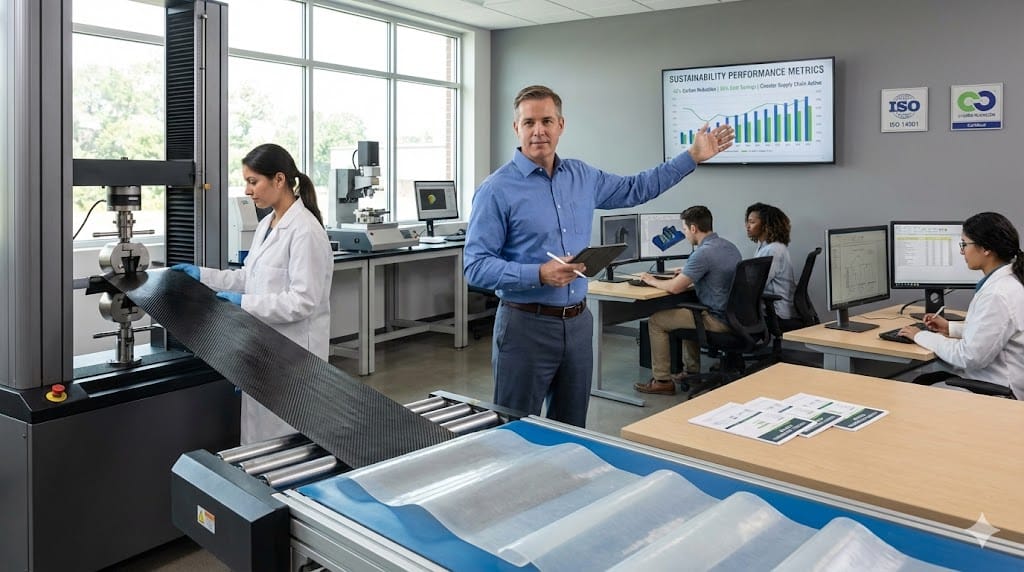
The intricate landscape of modern industry demands an evolution in executive stewardship, particularly within the dynamic sectors of advanced materials and sustainable engineering. As a premier US-based executive search firm, JRG Partners observes a clear paradigm shift: the most successful enterprises are led by visionaries capable of synthesizing deep technical insight with acute environmental and societal responsibility.
This memo outlines critical strategic imperatives for boards and senior leadership to cultivate the capabilities necessary for sustained competitive advantage and value creation in this transformative era. Our research indicates a pressing need to understand what hybrid skills define elite advanced materials executives? These leaders must expertly navigate complex technical challenges, while simultaneously championing environmental stewardship and robust operational excellence.
Key Imperatives for Superior Executive Leadership
Effective leadership in today’s advanced materials landscape necessitates a unique blend of strategic foresight, profound technical understanding, and an unwavering commitment to environmental sustainability. Boards must prioritize leaders who can strategically integrate deep technical foresight with environmental stewardship and robust global operational acumen. Future success hinges on cultivating hybrid leadership that intuitively grasps both the intricacies of materials science and the imperatives of sustainability, thereby propelling innovation, securing competitive advantage, and building geopolitical resilience for US enterprises.
Proactive initiatives in decarbonization, agile digital transformation, and diversified global supply chain strategies are not merely beneficial but critical for adeptly navigating complex regulatory environments and ensuring future enterprise growth. Moreover, strategic investment in specialized talent pipelines and the establishment of clear innovation metrics are fundamental to translating cutting-edge R&D in advanced materials into tangible revenue and long-term enterprise value.
Hybrid Leadership: Materials Science Meets Sustainability
The defining characteristic of the new executive archetype is the ability to bridge the traditional chasm between materials science expertise, core engineering principles, and a profound understanding of environmental, social, and governance (ESG) factors. This integrated leadership is a strategic imperative, driving unparalleled product innovation, optimizing intricate processes, and carving out significant market differentiation for US companies in an increasingly resource-constrained and environmentally conscious global marketplace.
Challenges involve dismantling organizational silos and cultivating leaders with dual competencies capable of leveraging interdisciplinary knowledge for breakthrough material solutions. From a geo-strategic perspective, this approach is crucial for positioning US industries at the forefront of green materials innovation, thereby securing future economic competitiveness and reducing critical reliance on volatile global resource markets. JRG Partners specializes in identifying and placing executives with this rare combination of technical mastery and sustainability acumen, ensuring our clients lead the charge.
Decarbonization Roadmaps and Green Manufacturing Scale
Boards must champion the development of actionable strategies for significant greenhouse gas emission reductions across the entire materials lifecycle, from raw material extraction to end-of-life management. The business case for aggressive investment in sustainable technologies, including carbon capture, utilization, and storage (CCUS), widespread green hydrogen adoption, renewable energy integration, and innovative waste-to-resource pathways in manufacturing, is becoming undeniable.

Scaling from pilot projects to large-scale green manufacturing operations presents financial, technical, and logistical hurdles that demand innovative executive problem-solving. How do leaders scale sustainable materials profitably? This is a question central to long-term value realization. The global race for leadership in low-carbon manufacturing technologies will profoundly impact US energy security, trade balances, and international climate agreement standing. It is projected that global investment in green manufacturing technologies will exceed $5 trillion by 2030, underscoring the urgency for US leadership.
Digital Transformation in Materials Processing
The strategic imperative to leverage Industry 4.0 technologies, including Artificial Intelligence (AI), machine learning, and advanced analytics, is paramount for accelerating materials discovery, enabling predictive maintenance, optimizing complex processes, and ensuring real-time quality control. The deployment of digital twins and simulation capabilities allows for the virtual optimization of material design, manufacturing processes, and product performance, significantly reducing physical prototyping needs and accelerating time-to-market.
Data-driven decision making, transforming vast datasets from production lines and intricate supply chains into actionable insights, is critical for achieving efficiency gains and sustainable resource management. This digital supremacy in materials science provides a clear competitive advantage for US firms. Addressing cybersecurity risks in advanced manufacturing infrastructure and ensuring robust intellectual property protection in this data-rich environment are also critical governance considerations. Digital transformation initiatives in US manufacturing are expected to boost operational efficiency by an average of 18% over the next five years, a substantial gain that leadership must seize.
Global Supply Chain Resilience Strategies
Mitigating geopolitical and environmental risks in the supply of critical materials requires robust, forward-looking strategies designed to counteract disruptions arising from trade conflicts, resource nationalism, natural disasters, and pandemics. A strategic shift towards multi-source procurement, near-shoring, and localized manufacturing hubs is essential to enhance the security of supply for both raw and advanced materials. Integrating circular economy principles into supply chain design, emphasizing material reuse, recycling, and remanufacturing, will significantly reduce reliance on virgin materials and bolster US resource security.
The strategic imperative of secure and resilient supply chains is fundamental to national economic stability and security, necessitating proactive fostering of alliances for critical mineral access and reducing dependency on geopolitical rivals. JRG Partners assists boards in identifying executives adept at navigating these complex global dynamics and building resilient supply architectures. Our deep market intelligence helps clients understand what supply chain strategies mitigate raw materials volatility? Annual supply chain disruptions are estimated to cost global businesses over $1.5 trillion annually, with materials sourcing identified as a primary vulnerability.
Talent Pipeline Development for Specialized Roles
Addressing the escalating skills gap is a paramount executive function, demanding proactive strategies for attracting, developing, and retaining top-tier talent in advanced materials science, sustainable engineering, data analytics for manufacturing, and circular economy design. Strategic academic and industry partnerships are vital, involving collaboration with leading US universities and research institutions to shape relevant curricula, offer invaluable apprenticeships, and fund joint research initiatives. Upskilling and reskilling initiatives, through continuous learning programs, are crucial to equip existing workforces with the necessary competencies for emerging technologies and sustainable practices.
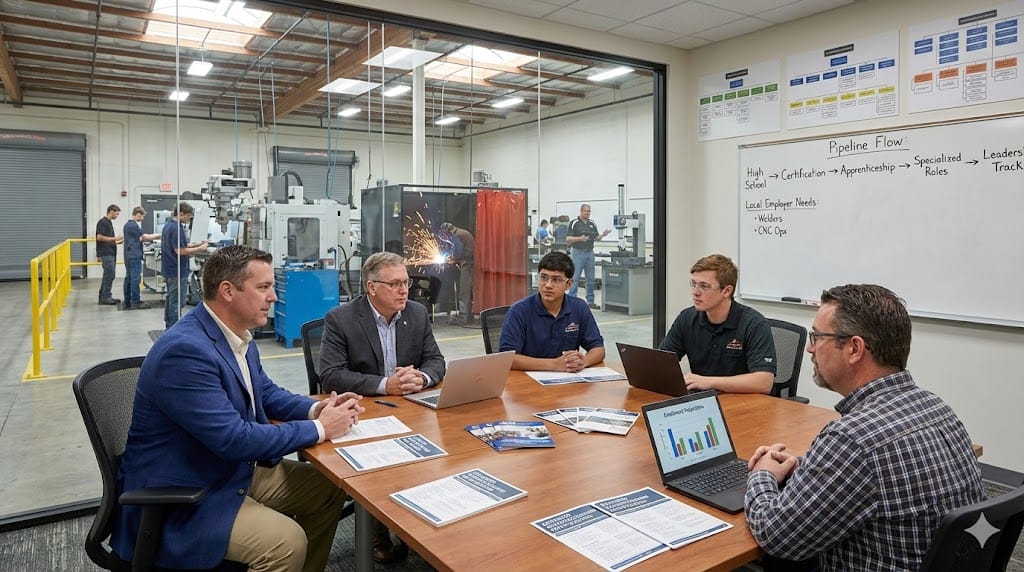
The international competition for highly skilled technical talent is fierce. US national strategies for fostering innovation ecosystems and preventing “brain drain” in critical technology sectors are essential for long-term competitiveness. JRG Partners has successfully helped numerous US enterprises build materials engineering talent pipelines by identifying and attracting next-generation leaders and specialists. A staggering 72% of manufacturing executives* in the US report a significant shortage of skilled workers in advanced materials and sustainable engineering roles.
Innovation Metrics Linking Materials to Revenue
Moving beyond traditional R&D expenditure, boards must insist on establishing robust metrics that directly correlate investments in advanced materials R&D and sustainable engineering with measurable business outcomes. This involves quantifying value creation through increased market share from sustainable products, demonstrable cost reductions from enhanced material efficiency, the generation of new revenue streams from circular business models, and an overall enhancement of brand equity.
Strategic alignment is critical, ensuring that innovation roadmaps are tightly integrated with financial objectives and the enterprise’s long-term strategic growth plans. Understanding which KPIs tie materials innovation to business growth? is essential for executive accountability. Strong innovation ecosystems and national policies that incentivize R&D in cutting-edge materials directly contribute to US economic growth and global market leadership. Companies leading in sustainable innovation see an average of 6% higher revenue growth compared to their peers.
Cross-Functional Collaboration Models
Breaking down organizational silos is fundamental. Implementing structures and processes that facilitate seamless collaboration between R&D, engineering, manufacturing, supply chain, marketing, and sustainability teams is imperative for accelerated progress. Engaging in external partnerships for accelerated innovation—collaborating with startups, research consortia, key customers, and critical suppliers in open innovation models—leverages diverse expertise and speeds up technology development.
Establishing shared visions and clear accountability through common goals and metrics drives collective effort towards both technological advancement and ambitious sustainability targets. Our insights also reveal how cross-industry collaborations accelerate materials breakthroughs, fostering an ecosystem of innovation. Cross-functional collaboration can significantly reduce product development cycles by up to 28%, a vital advantage in fast-evolving markets.
Regulatory Navigation and ESG Compliance
Executives must develop mechanisms for proactive regulatory intelligence, enabling them to monitor and anticipate evolving global environmental regulations, carbon pricing mechanisms, extended producer responsibility (EPR) schemes, and social labor standards impacting US operations. Integrating ESG considerations into core strategy involves embedding these factors into corporate strategy, robust risk management frameworks, and crucial capital allocation decisions, transcending mere compliance to become a source of strategic advantage.
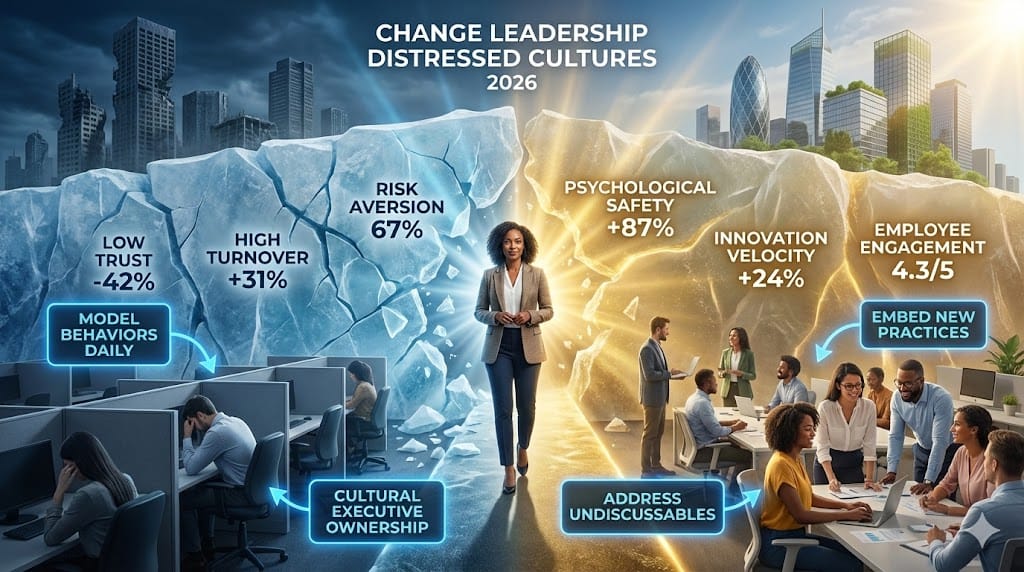
Implementing robust systems for data collection, rigorous auditing, and transparent reporting on ESG performance is essential to meet escalating stakeholder demands and maintain investor confidence. The impact of divergent national regulatory frameworks on global market access and competitive advantage for US firms is significant. Non-compliance with environmental regulations can result in fines and legal penalties totaling over $25 billion annually for the materials sector in the US and globally. Boards must proactively ensure their executive teams are equipped to manage this complex landscape.
In conclusion, the future success of US enterprises in advanced materials and sustainable engineering hinges on the caliber of their executive leadership. The questions posed in this memo—from what hybrid skills define elite advanced materials executives? to how do leaders scale sustainable materials profitably?—are not theoretical but operational challenges demanding immediate attention. At JRG Partners, we are uniquely positioned to assist boards in identifying and securing the visionary leaders who possess these critical competencies.
We understand the competitive landscape and the talent architecture required to lead with foresight and resilience. The imperative is clear: boards must proactively shape their executive teams to meet these evolving demands. This leads to a critical strategic question for every US enterprise: Will sustainability expertise dominate materials C-suites by 2030? Our analysis suggests it will be a non-negotiable requirement for impactful leadership. To effectively monetize these circular economy initiatives and navigate complex enterprise value-selling models, materials organizations must focus on recruiting sales and commercial leaders in B2B industrial tech. Securing forward-thinking revenue architects who can translate ESG-driven product lifecycles into highly profitable, subscription-based industrial offerings is the defining milestone needed to secure multi-layered enterprise accounts and guarantee sustained corporate effectiveness.

Tanya Gallardo
Managing Director, Executive Search & AI Talent Strategy
Tanya Gallardo is the Managing Director of Executive Search & AI Talent Strategy at JRG Partners, leading C-suite and Board engagements across key growth sectors including Technology, Financial Services, and Manufacturing.
With over 18 years of experience specializing in disruptive technology leadership, Tanya is recognized as a leading authority on talent architecture for future-focused executive roles, such as the Chief AI Officer (CAIO) and Chief Digital Officer (CDO). Her expertise lies in accurately assessing the cultural fit and technical depth required to ensure a high return on investment (ROI) for critical leadership appointments.
Prior to her role at JRG Partners, Tanya held senior roles directing global talent acquisition strategies at a major publicly-traded technology firm, advising on organizational design and succession planning for emerging executive functions. She is a recognized speaker and contributor to industry events, sharing data-driven insights on executive compensation, leadership development, and the measurable business impact of C-suite talent.
