


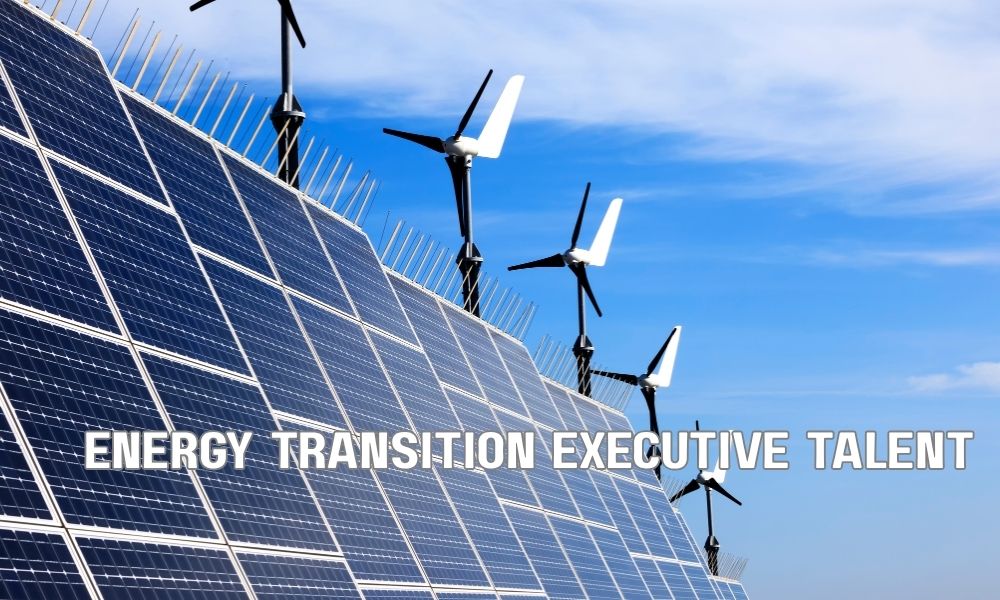
The energy industry is undergoing one of the most significant transformations in decades. Utilities, renewable energy developers, infrastructure investors, power producers, technology companies, and energy service organizations are investing in renewable generation, battery storage, transmission, distribution, grid modernization, electrification, and digital infrastructure.
This transformation is creating a growing demand for specialized executive talent.
Energy companies need leaders who can manage large capital programs while navigating regulatory requirements, evolving power markets, technology changes, financing considerations, customer expectations, and increasingly complex energy systems.
The leadership requirements of a renewable energy developer can differ significantly from those of an electric utility or grid technology company. Yet the strongest executives increasingly share several capabilities: technical understanding, commercial judgment, project development experience, regulatory awareness, financial discipline, and the ability to lead organizations through large-scale transformation.
For organizations competing for these leaders, knowing where energy transition executives come from and how to evaluate their experience has become a strategic priority.
Why Energy Transition Executive Recruitment Is Becoming More Difficult
The energy transition encompasses a broad ecosystem that includes renewable generation, electric utilities, battery storage, transmission, distribution, energy management, electrification, grid technology, energy efficiency, and related infrastructure.
Each segment creates different executive requirements.
A renewable energy company may need a development executive capable of taking projects from site identification through permitting, financing, construction, and commercial operation. A utility may need a leader who can modernize its grid while maintaining reliability and regulatory compliance. A battery storage company may require an executive who understands technology, power markets, project finance, and commercial deployment.
This diversity makes energy transition executive search highly specialized.
The strongest candidates are often already leading major projects, operating large businesses, or managing significant technology portfolios. As a result, companies cannot rely exclusively on conventional recruitment channels to identify them.
1. Renewable Energy Leaders: Finding Executives Who Can Scale Development

Renewable energy development has become a major source of executive demand.
Solar, wind, offshore wind, renewable fuels, and other clean-energy projects require significant capital, specialized development expertise, regulatory coordination, land and stakeholder management, engineering, procurement, and construction capabilities.
What Companies Look for in Renewable Energy Executives
Strong candidates may have experience in:
- Renewable project development
- Solar development
- Wind development
- Offshore wind
- Project finance
- Power purchase agreements
- Permitting
- Land acquisition
- Engineering and construction
- Commercial strategy
- Energy markets
- Portfolio management
The most valuable development executives understand the entire project lifecycle.
They can identify attractive opportunities, assess development risks, manage permitting, coordinate engineering teams, secure financing, negotiate commercial agreements, and move projects toward construction and operation.
Experience delivering projects rather than simply identifying development opportunities can be a major differentiator.
2. Grid Modernization Is Creating a New Leadership Demand
The electricity grid is becoming increasingly complex as renewable generation, distributed energy resources, electric vehicles, data centers, battery storage, and electrification change electricity demand and supply patterns.
This is creating a significant need for executives who understand grid modernization.
What Grid Modernization Executives Need to Know
Companies may seek leaders with experience in:
- Transmission infrastructure
- Distribution systems
- Grid modernization
- Smart grid technology
- Advanced metering
- Grid automation
- Distributed energy resources
- Demand management
- Grid resilience
- Power system planning
- Energy storage integration
- Digital grid platforms
Grid leaders must balance innovation with reliability.
Utilities cannot simply deploy new technologies without considering system stability, cybersecurity, regulatory requirements, operating costs, and customer impact.
The strongest executives therefore combine engineering expertise with regulatory, financial, and operational judgment.
3. Battery Storage Executives Are Increasingly Valuable
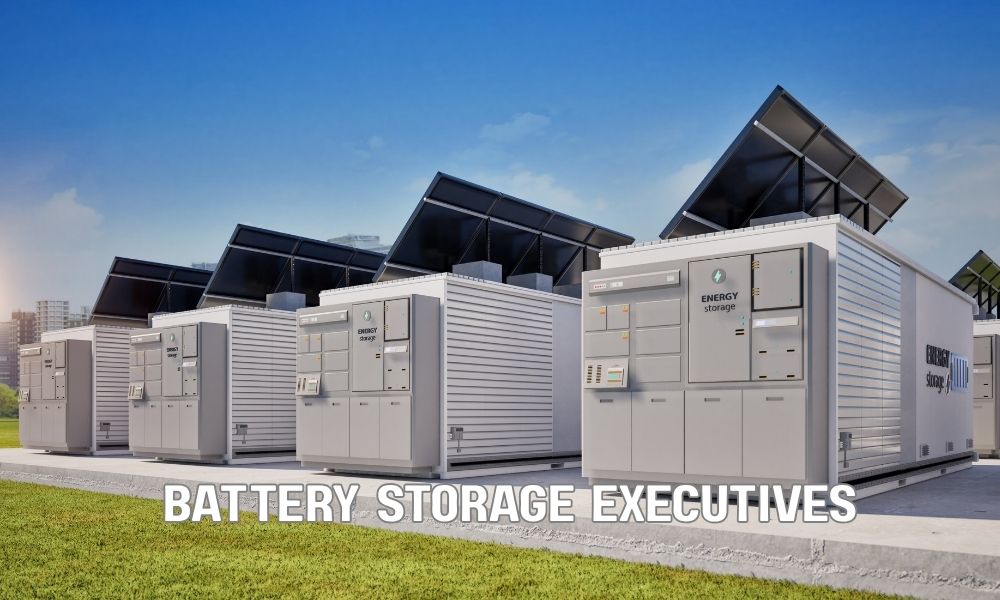
Energy storage is becoming an increasingly important part of the modern power system.
Battery storage can support grid flexibility, renewable integration, peak management, reliability, and energy-market participation.
As deployment expands, companies need executives who understand both storage technology and the economics of power markets.
The Modern Energy Storage Executive
Senior candidates may have experience in:
- Battery energy storage systems
- Utility-scale storage
- Energy storage development
- Battery technology
- Power electronics
- Energy trading
- Project finance
- Grid integration
- Energy markets
- System optimization
- Project development
Technical expertise is important, but commercial understanding is equally critical.
A storage executive needs to understand how a project generates economic value through capacity, ancillary services, energy arbitrage, grid support, or other market mechanisms.
This makes executives with both energy-market and technology experience particularly valuable.
4. Utility Leadership Is Being Redefined
Electric utilities are facing a rapidly changing operating environment.
Utilities must maintain reliability while integrating renewable generation, modernizing infrastructure, managing distributed energy resources, responding to changing electricity demand, and investing in digital systems.
This creates new expectations for utility executives.
What Companies Look for in Modern Utility Leaders
Strong utility executives may have experience in:
- Electric generation
- Transmission
- Distribution
- Grid operations
- Regulatory affairs
- Capital planning
- Rate strategy
- Customer operations
- Renewable integration
- Energy storage
- Grid modernization
- Cybersecurity
The modern utility executive must think beyond traditional infrastructure.
They need to understand how technology, customer behavior, distributed generation, electrification, and changing power markets are influencing the utility business model.
5. Electrification Is Creating Cross-Industry Executive Opportunities

Electrification is connecting the energy sector with transportation, industrial manufacturing, buildings, technology, and infrastructure.
Electric vehicles, charging infrastructure, heat pumps, industrial electrification, data centers, and other applications are changing electricity demand.
This creates opportunities for executives with experience across multiple industries.
Transferable Leadership Experience
Relevant executives may come from:
- Automotive companies
- Energy companies
- Utilities
- Infrastructure businesses
- Industrial technology organizations
- Battery companies
- Charging infrastructure providers
- Building technology companies
- Energy management organizations
Executives with experience connecting energy infrastructure with customer-facing technology can be particularly valuable.
6. Where Energy Transition Companies Find Executive Talent
Energy transition companies increasingly need to search across the broader energy, infrastructure, technology, industrial, and financial ecosystem.
Utilities and Independent Power Producers
Utilities and independent power producers remain important sources of executive talent.
Leaders from these organizations may understand power markets, generation assets, regulatory environments, capital planning, and large-scale infrastructure operations.
Renewable Energy Developers
Renewable energy developers can provide executives with specialized project-development experience.
These leaders may understand permitting, land acquisition, project finance, power purchase agreements, construction, and commercial operations.
Energy Technology Companies
Energy technology companies can provide executives with experience in batteries, software, grid systems, automation, power electronics, data analytics, and energy management.
These candidates can be particularly valuable for companies undergoing digital or technology transformation.
Infrastructure Investment Organizations
Infrastructure investment firms can also provide executives with valuable commercial and financial experience.
Leaders who have evaluated, financed, developed, or managed energy infrastructure investments may understand both project economics and strategic capital allocation.
7. Project Development Executives Are Critical to Growth

Many energy transition businesses depend on successfully moving projects from early development to commercial operation.
This requires leaders who can coordinate technical teams, developers, regulators, local stakeholders, contractors, lenders, investors, and customers.
What Project Development Leaders Must Deliver
- Site identification
- Feasibility analysis
- Permitting
- Interconnection
- Land acquisition
- Project finance
- Power purchase agreements
- Engineering
- Procurement
- Construction
- Commissioning
Project development executives must also manage uncertainty.
Permitting timelines can change. Interconnection requirements can evolve. Equipment costs can fluctuate. Financing conditions can shift.
The strongest executives can maintain project momentum while adapting to changing conditions.
8. Regulatory Leadership Is Essential in the Energy Transition
Energy is one of the most highly regulated sectors in the economy.
Renewable projects, utilities, transmission infrastructure, storage projects, and energy markets can all be influenced by federal, state, local, and regional policies.
This creates demand for executives who understand regulatory strategy.
Key Areas of Energy Regulatory Leadership
- Utility regulation
- Energy policy
- Permitting
- Rate cases
- Government affairs
- Environmental compliance
- Market regulation
- Transmission policy
- Renewable energy policy
- Stakeholder engagement
Strong regulatory executives can help organizations anticipate policy changes and incorporate regulatory considerations into investment and operating strategies.
9. Commercial Leadership Is Becoming More Important
Energy transition companies need strong commercial executives who understand increasingly complex energy markets.
Commercial leaders may negotiate power purchase agreements, energy supply contracts, equipment partnerships, joint ventures, development agreements, and strategic investments.
What Makes a Strong Energy Commercial Executive?
- Energy market knowledge
- Power purchase agreements
- Strategic partnerships
- Business development
- Project finance
- Contract negotiation
- Energy trading
- Customer development
- Portfolio strategy
- Risk management
The strongest commercial executives can understand both the technical and financial dimensions of an energy project.
10. Digital Transformation Is Changing Energy Leadership

Energy infrastructure is becoming increasingly digital.
Utilities and energy companies are adopting artificial intelligence, predictive analytics, digital twins, connected equipment, smart meters, automation, cloud platforms, and advanced control systems.
This creates demand for CIOs, CTOs, Chief Digital Officers, and technology leaders who understand the operational realities of energy infrastructure.
The Modern Energy Technology Executive
Companies may seek experience in:
- Artificial intelligence
- Data analytics
- Cloud computing
- Digital twins
- Industrial IoT
- Grid automation
- Cybersecurity
- Predictive maintenance
- Smart metering
- Energy management software
- Operational technology
The strongest technology leaders understand that energy systems require reliability, security, and operational resilience.
Technology cannot simply be deployed for innovation’s sake. It must improve reliability, efficiency, safety, customer service, or financial performance.
11. How Energy Companies Should Evaluate Executive Candidates
Executive recruitment should begin with a clearly defined business objective.
A utility modernizing its distribution network requires a different leadership profile from a renewable energy developer expanding its project portfolio.
Potential objectives may include:
- Develop a renewable energy portfolio
- Build utility-scale battery storage
- Modernize the electric grid
- Improve utility reliability
- Expand transmission infrastructure
- Develop new energy markets
- Lead electrification initiatives
- Modernize enterprise technology
- Improve energy asset performance
- Secure project financing
- Build strategic partnerships
Once the objective is clear, companies can evaluate candidates based on the complexity and relevance of their previous achievements.
Measure Results Rather Than Titles
A senior title does not necessarily indicate that an executive has managed the same level of complexity required by a new organization.
A renewable development executive who has successfully taken multiple projects through permitting, financing, construction, and commercial operation may be significantly more valuable than a candidate whose experience is limited to early-stage development.
Likewise, a utility technology executive who has successfully modernized a large operating environment may be more valuable than a candidate with extensive technology experience but limited exposure to critical infrastructure.
Recruitment should therefore focus on measurable outcomes.
12. Leadership Skills That Matter in the Energy Transition
Energy transition executives must operate across technical, financial, regulatory, and stakeholder environments.
The strongest leaders demonstrate:
- Strategic thinking
- Technical understanding
- Financial discipline
- Regulatory awareness
- Project development expertise
- Commercial judgment
- Stakeholder management
- Change management
- Risk management
- Team development
They must also be comfortable making decisions under uncertainty.
Energy projects often have long development timelines and significant capital requirements, meaning executives must make decisions today that may not generate returns for years.
13. M&A and Investment Experience Can Be a Major Differentiator
The energy transition is attracting significant investment from infrastructure funds, private equity firms, strategic investors, utilities, and energy companies.
As companies consolidate portfolios and acquire development platforms, M&A leadership is becoming increasingly valuable.
Executives may be responsible for:
- Due diligence
- Portfolio evaluation
- Acquisition strategy
- Integration planning
- Joint ventures
- Strategic partnerships
- Project valuation
- Capital allocation
- Portfolio optimization
- Synergy realization
Leaders who understand both operating businesses and investment decisions can provide significant strategic value.
14. What Top Energy Transition Executives Look For

Experienced energy executives are selective when considering new opportunities.
They may evaluate:
- Project pipeline
- Capital availability
- Technology strategy
- Regulatory environment
- Leadership team
- Board support
- Ownership structure
- Compensation and equity
- Geographic requirements
- Growth strategy
- Organizational autonomy
- Long-term market opportunity
Companies therefore need to communicate more than the responsibilities of the position.
Top candidates want to understand what they will be expected to build, transform, finance, or scale.
15. The Future of Energy Transition Executive Search
The energy transition will continue to connect previously separate industries.
Utilities are becoming technology companies. Renewable developers are becoming infrastructure operators. Energy storage businesses are becoming participants in power markets. Industrial companies are becoming major energy consumers and energy producers.
This convergence will increase demand for executives who can operate across multiple disciplines.
The future energy leader may need to understand renewable generation, grid infrastructure, storage, digital technology, project finance, regulatory strategy, and customer economics.
Companies that identify these leadership requirements early will be better positioned to secure scarce executive talent.
Conclusion
Energy transition executive talent is becoming increasingly valuable as organizations invest in renewable generation, grid modernization, battery storage, electrification, digital infrastructure, and utility transformation.
Renewable energy leaders must be able to develop and commercialize projects. Grid executives must modernize infrastructure while maintaining reliability. Storage leaders need to understand both battery technology and power-market economics. Utility executives must manage the convergence of traditional infrastructure and emerging technologies.
The strongest candidates may come from utilities, independent power producers, renewable energy developers, infrastructure investors, energy technology companies, industrial organizations, and adjacent technology sectors.
Finding these leaders requires a strategic executive search process based on specific business outcomes, measurable achievements, technical capabilities, and leadership potential.
For organizations navigating the energy transition, the right executive can influence project development, capital allocation, operational performance, technology adoption, regulatory relationships, and long-term enterprise value.
Frequently Asked Questions About Energy Transition Executive Recruitment
1. What energy transition executives are most difficult to recruit?
The most difficult energy transition executives to recruit include renewable energy development leaders, grid modernization executives, battery storage specialists, utility executives, energy technology leaders, project finance professionals, and senior commercial executives. Candidates who combine technical expertise with commercial and operational leadership are particularly competitive.
2. Where do energy transition companies find executive talent?
Energy transition companies can find executive talent through utilities, independent power producers, renewable energy developers, energy technology companies, infrastructure organizations, investment firms, industrial businesses, and adjacent technology companies. Global executive searches can also identify leaders with experience managing complex energy projects across multiple markets.
3. What skills should renewable energy executives have?
Strong renewable energy executives should understand project development, permitting, land acquisition, engineering, construction, project finance, power purchase agreements, energy markets, stakeholder management, and commercial strategy. Experience taking projects from development through commercial operation is particularly valuable.
4. Why is grid modernization leadership important?
Grid modernization leadership is important because utilities must integrate renewable generation, battery storage, distributed energy resources, electrification, digital systems, and increasing electricity demand while maintaining reliability and security. Strong grid executives can balance technology investment with operational, regulatory, and financial requirements.
5. How can energy companies improve executive hiring?
Energy companies can improve executive hiring by defining the specific business outcomes the leader must achieve, identifying the required technical and leadership capabilities, evaluating measurable achievements, and searching across utilities, renewable energy, infrastructure, technology, and investment organizations. Specialized executive search can also help identify experienced passive candidates.
Explore Energy & Utilities Executive Search
Organizations seeking experienced leadership across renewable energy, grid modernization, energy storage, utilities, infrastructure, project development, and related functions can learn more through JRG Partners:
Energy & Utilities Executive Search Firm

Tanya Gallardo
Managing Director, Executive Search & AI Talent Strategy
Tanya Gallardo is the Managing Director of Executive Search & AI Talent Strategy at JRG Partners, leading C-suite and Board engagements across key growth sectors including Technology, Financial Services, and Manufacturing.
With over 18 years of experience specializing in disruptive technology leadership, Tanya is recognized as a leading authority on talent architecture for future-focused executive roles, such as the Chief AI Officer (CAIO) and Chief Digital Officer (CDO). Her expertise lies in accurately assessing the cultural fit and technical depth required to ensure a high return on investment (ROI) for critical leadership appointments.
Prior to her role at JRG Partners, Tanya held senior roles directing global talent acquisition strategies at a major publicly-traded technology firm, advising on organizational design and succession planning for emerging executive functions. She is a recognized speaker and contributor to industry events, sharing data-driven insights on executive compensation, leadership development, and the measurable business impact of C-suite talent.
