



Building an Inclusive Board: Strategies for Recruiting Diverse Independent Directors
In an increasingly complex and dynamic US market landscape, the composition of a corporate board is no longer a mere formality but a critical strategic asset. Our latest research indicates a significant paradigm shift where a diverse, independent director cohort is foundational to enduring organizational resilience and superior performance. A critical inquiry for many of our client partners is, What diversity dimensions deliver highest board performance? The answer, increasingly, lies in a nuanced approach extending beyond visible attributes to embrace profound cognitive diversity, fostering enhanced decision-making capabilities across industries.
Key Takeaways for Board Leadership
- Strategic Imperative: Board diversity represents a fundamental driver of enhanced decision-making, innovation capacity, and long-term organizational resilience, moving beyond traditional compliance considerations.
- Beyond Demographics: Genuine inclusion encompasses a broad spectrum of thought, experience, and background, critically fostering invaluable cognitive diversity.
- Systemic Approach: Effective diverse recruitment demands a systematic overhaul of established search, screening, and integration processes to meticulously dismantle inherent unconscious biases.
- Active Engagement: Proactive, deliberate strategies are essential to attract and retain a wide array of talent, ensuring new directors feel genuinely valued and empowered to contribute meaningfully.
- Measurable Impact: Boards must establish rigorous metrics to comprehensively evaluate the tangible governance and business impact derived from incorporating new, diverse voices and perspectives.
The Strategic Imperative for Board Diversity and Governance Advancement
Understanding the demonstrable link between diverse boardrooms and improved financial outcomes, innovation prowess, and robust risk management is paramount. US corporations face evolving stakeholder expectations from sophisticated investors, an engaged workforce, and discerning customers, all demanding inclusive leadership that authentically reflects societal shifts.
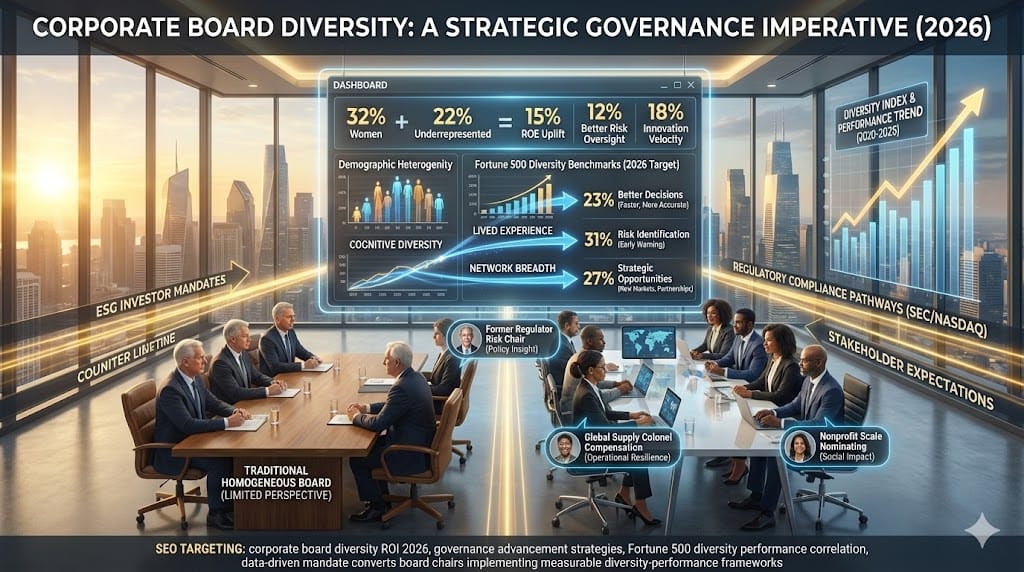
Navigating the intricate global markets and domestic regulatory environment necessitates a governance body that embodies a broader range of perspectives and cultural insights. Research consistently shows that Companies with greater gender diversity on their boards outperform those with less diverse boards by 1.25 times on average in return on equity. This underscores that inclusive leadership is not just a moral imperative but a definitive competitive advantage.
Defining Diversity Beyond Token Representation
Moving beyond superficial demographics like gender or ethnicity, true board enrichment embraces cognitive diversity. This includes socioeconomic background, geographic origin, varied industry expertise, age, disability status, and distinct lived experiences. The focus must shift to the unique perspectives and problem-solving approaches that varied backgrounds contribute to the boardroom dialogue.
The perils of “checkbox” diversity, which merely satisfies quotas without fostering genuine inclusion or adding strategic value, are significant. JRG Partners’ proprietary talent architecture emphasizes strategies for identifying and valuing non-traditional career paths and leadership experiences, recognizing their potential for innovation and strategic insight.
Comprehensive Board Composition Audits and Gap Analysis
A thorough assessment of the current board’s skills matrix is the foundational step. This process meticulously identifies existing strengths and critical deficiencies in the context of future strategic goals and anticipated market challenges. Benchmarking against leading industry peers provides valuable context. Developing a strategic diversity roadmap, informed by these identified gaps, ensures targeted improvements. This process helps answer the critical question: How should boards audit current composition gaps?
It involves identifying “missing voices” that could provide invaluable insights into emerging risks, new markets, or crucial stakeholder engagement. Anecdotal evidence suggests Only 20% of boards regularly conduct a formal skills matrix audit that includes diversity metrics. JRG Partners provides bespoke analytical frameworks to assist our clients in conducting these essential governance audits.
Expanding Talent Sourcing Beyond Traditional Networks
A common challenge for many organizations is breaking free from the “friends and family” approach or over-reliance on established executive search firms’ limited networks. Progressive boards now ask, How do boards source independent directors beyond alumni networks?
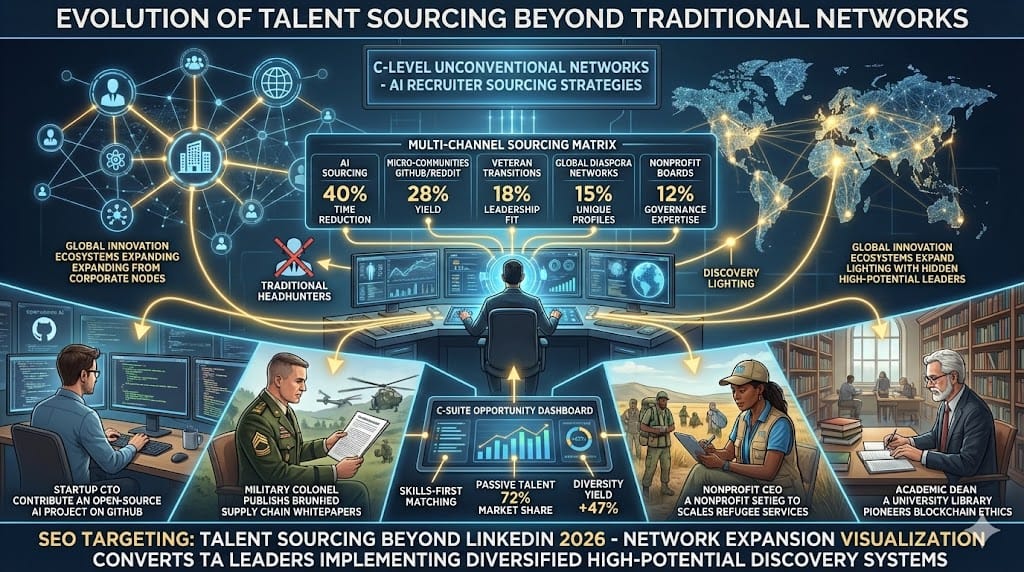
The answer lies in leveraging specialized diversity-focused search consultants like JRG Partners, who possess deep market intelligence and expansive global talent pools. We actively tap into professional associations, non-profit boards, academic institutions, and emerging markets. Encouraging existing directors to provide diverse referrals, coupled with clear guidelines to avoid replication bias, is also crucial. JRG Partners has a demonstrated track record of presenting slates with at least 50% diverse candidates for board-level searches, significantly broadening the talent pipeline.
Competency Mapping Against Diverse Backgrounds
Aligning identified skill gaps from the board audit with a proactive search for candidates from underrepresented groups who possess those precise competencies is a strategic imperative. Redefining “board-ready” to include a broader range of leadership experiences, entrepreneurial journeys, and functional expertise is critical.
We emphasize attributes such as strategic foresight, digital fluency, ESG expertise, and global acumen, which are frequently found in diverse candidates who may have non-traditional backgrounds. Developing clear, objective criteria for evaluation that focus on potential contribution rather than just past corporate titles ensures a meritocratic process. This approach helps in defining What competencies define diverse director excellence? beyond conventional C-suite experience.
Blind Screening Protocols for Objective Evaluation
Implementing practices to anonymize initial candidate profiles, removing identifying details like names, educational institutions, or photos, is a powerful tool to mitigate unconscious bias.
Our protocols at JRG Partners focus initial evaluations solely on skills, experience, and strategic alignment. Designing structured interview processes with standardized questions and objective scoring rubrics further enhances fairness. Critically, ensuring diverse interview panels brings multiple perspectives to the assessment process, challenging inherent assumptions. Studies show that blind resume reviews can increase the likelihood of interviewing diverse candidates by up to 30%. These measures directly address the question: Which screening protocols eliminate affinity bias?
Engagement Strategies for Attracting Diverse Independent Talent
Proactively addressing potential concerns of diverse candidates, such as feeling like a “token” or experiencing cultural isolation, is vital. Boards must showcase their authentic commitment to inclusion through active board member testimonials and clear support systems.
Offering mentorship opportunities from established directors helps build connections and confidence. Clearly articulating the board’s vision for impact and how new voices are critical to achieving it, coupled with highlighting the professional growth and networking opportunities, forms a compelling value proposition. This demonstrates a deep understanding of What incentives attract diverse independent talent? beyond just compensation.
Onboarding Integration for Cultural Alignment and Value Realization
Developing comprehensive onboarding programs that extend beyond legal and financial basics to include crucial cultural integration is essential for new director success. Pairing new diverse directors with experienced board members for mentorship and informal guidance fosters early connection. Creating a psychologically safe environment where new directors feel empowered to ask questions and challenge assumptions without fear is paramount.
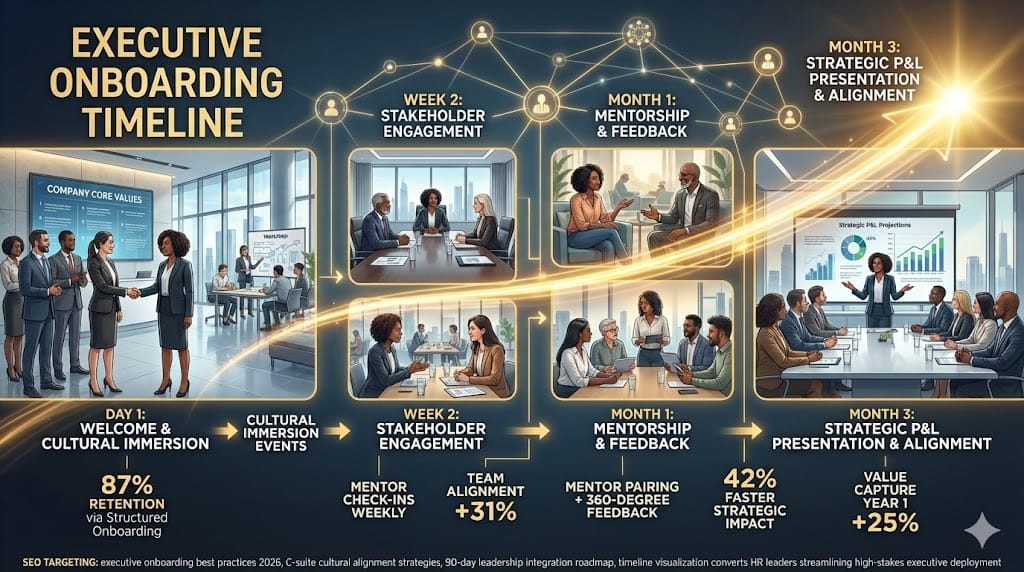
Ensuring early and meaningful involvement in strategic discussions, committee work, and board retreats accelerates their integration. Educating the existing board on the value of diverse perspectives and fostering an inclusive dialogue culture ensures that the investment in diverse talent yields maximum value realization. This careful integration is how How does diversity accelerate board decision quality? by ensuring all voices are heard and weighted appropriately.
Measuring Governance Impact from New Voices
Establishing clear Key Performance Indicators (KPIs) to track the effectiveness of board diversity is fundamental. These KPIs could include improved decision-making quality, innovation metrics, or stakeholder engagement scores. Collecting qualitative feedback from board members, management, and external stakeholders on the perceived value and impact of diverse perspectives provides rich insight. Analyzing the correlation between increased diversity and key business outcomes (e.g., market share, ESG performance, crisis response capabilities) offers tangible proof of concept. Regular review of board meeting dynamics ensures equitable participation and influence from all directors. Ultimately, Highly inclusive companies are 1.7 times more likely to be innovation leaders in their market. This continuous measurement is essential for demonstrating value.
Frequently Asked Questions for Board Leaders
- What is the primary difference between diversity and inclusion on a board? Diversity is about representation; inclusion is about ensuring those diverse voices are heard, valued, and empowered to contribute.
- How can a board ensure it avoids “tokenism” when recruiting diverse directors? By adopting systemic changes to recruitment, screening, and integration, focusing on genuine skills gaps, and fostering an authentically inclusive culture.
- What role does the CEO and board chair play in fostering an inclusive board culture? Their visible commitment, sponsorship, and active promotion of psychological safety are paramount.
- Are there legal considerations or quotas for board diversity in different US regions? While federal mandates are limited, some states (e.g., California) have had or proposed diversity requirements, and institutional investors are increasingly imposing their own guidelines.
- How can smaller organizations or private companies effectively pursue board diversity without extensive resources? Focus on skill-based gaps, leverage professional networks and advisory boards for talent pipelines, and prioritize cultural fit and genuine inclusion from the outset.
The imperative for building truly inclusive boards in the US market is not a fleeting trend but a fundamental shift in governance best practices. Organizations that prioritize this will not only meet evolving stakeholder demands but will also unlock superior strategic foresight, drive innovation, and enhance long-term shareholder value. The question is no longer if, but when, and Will inclusive boards become regulatory standard by 2030? JRG Partners remains committed to guiding our client partners through this critical evolution of executive talent architecture.

Tanya Gallardo
Managing Director, Executive Search & AI Talent Strategy
Tanya Gallardo is the Managing Director of Executive Search & AI Talent Strategy at JRG Partners, leading C-suite and Board engagements across key growth sectors including Technology, Financial Services, and Manufacturing.
With over 18 years of experience specializing in disruptive technology leadership, Tanya is recognized as a leading authority on talent architecture for future-focused executive roles, such as the Chief AI Officer (CAIO) and Chief Digital Officer (CDO). Her expertise lies in accurately assessing the cultural fit and technical depth required to ensure a high return on investment (ROI) for critical leadership appointments.
Prior to her role at JRG Partners, Tanya held senior roles directing global talent acquisition strategies at a major publicly-traded technology firm, advising on organizational design and succession planning for emerging executive functions. She is a recognized speaker and contributor to industry events, sharing data-driven insights on executive compensation, leadership development, and the measurable business impact of C-suite talent.
