


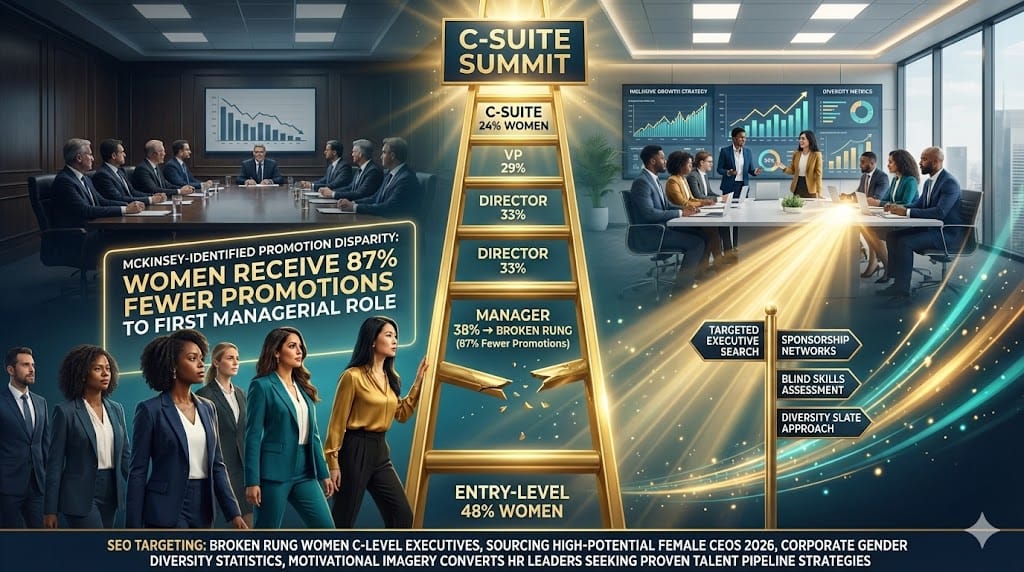
Addressing the ‘Broken Rung’: Sourcing High-Potential Women for C-Level Roles
A Strategic Imperative for Enterprise Value Realization
In the fiercely competitive US executive landscape, securing a diverse and robust leadership pipeline is not merely a matter of compliance but a fundamental aspect of fiduciary duty and sustainable value creation. A critical bottleneck hindering this progress is the “broken rung” phenomenon—the disproportionate rate at which women falter at the initial step into management roles. Understanding what causes the broken rung promotion disparity? is the first step towards rectifying systemic imbalances that permeate the entire talent architecture. At JRG Partners, our deep analysis reveals that this early-career disparity compounds significantly, severely limiting the pool of seasoned female executives poised for C-suite roles. Our firm’s unparalleled access to diverse leadership pools and rigorous executive search methodology positions us to advise boards on navigating this complex challenge and identifying the strategic pathways to cultivate future-ready leadership teams.
Key Strategic Takeaways for Boards & C-Suite
- The ‘broken rung’ presents a significant constraint on developing diverse top-tier leadership, necessitating immediate, data-driven intervention.
- Proactive identification of emerging female leaders often overlooked in conventional talent pipelines is essential for sustainable growth.
- Intentional acceleration initiatives and powerful sponsor networks are vital to bridge skill gaps and cultivate robust advocacy for advancement.
- Bias-free assessment methodologies and direct board-level engagement are non-negotiable for equitable C-suite succession planning.
- Sustained organizational progress requires meticulous metrics tracking and embedding inclusive policies deeply within the organizational DNA.
Diagnosing Broken Rung Pipeline Blockages in US Corporations
Effective intervention begins with a precise diagnosis of where talent flow impediments exist within the American corporate structure.
Analyzing Promotion & Attrition Data
Rigorous analysis must pinpoint specific organizational tiers in US enterprises where female executives are under-promoted or where attrition rates for women leaders disproportionately rise, particularly at the manager and director levels. This granular data often illuminates the exact ‘leak points’ in the leadership funnel.
Uncovering Systemic Biases
Identifying subtle, often unconscious biases embedded within performance reviews, high-visibility project assignments, and informal networking opportunities is paramount. These systemic prejudices frequently hinder promising female talent from gaining the critical experiences necessary for executive development.
Assessing Access to Critical Experiences
Evaluating whether women have equitable access to key P&L roles, strategic initiatives with significant visibility, and international assignments crucial for advanced executive development is fundamental. Disparities here directly impede the acquisition of the broad business acumen required for C-suite readiness.
Identifying High-Potential Women in Unconventional Roles
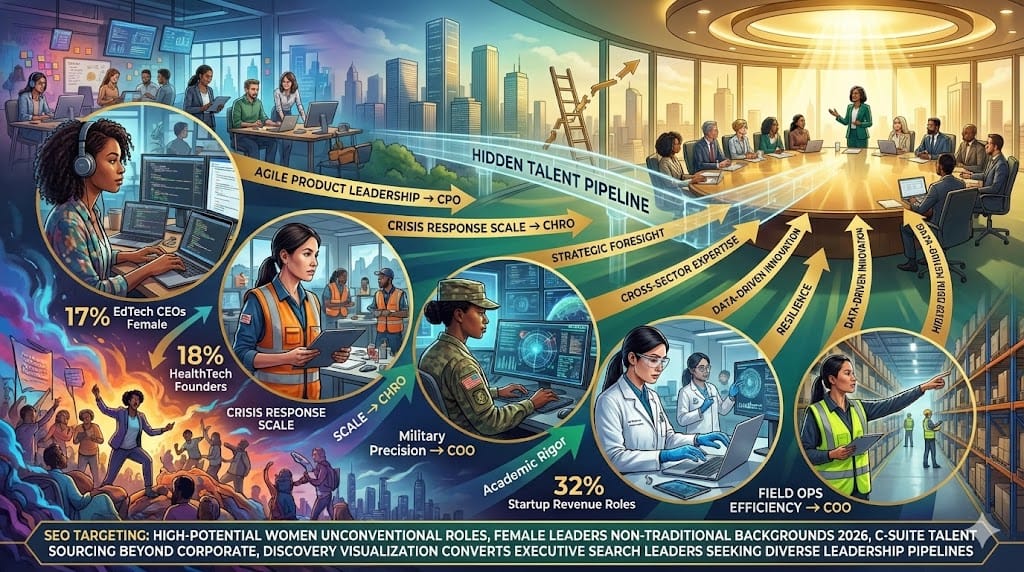
Many US organizations possess untapped leadership potential within their ranks. JRG Partners advocates for strategies designed to uncover these hidden gems.
Skill-Based Talent Mapping
Implementing sophisticated systems to identify women with executive-level competencies, demonstrated leadership potential, and strategic foresight, irrespective of their current job title or departmental silo, is critical. This approach expands the search beyond traditional managerial pathways.
Leveraging Peer & Cross-Functional Nominations
Establishing formal, bias-mitigated processes for peer recognition and cross-departmental recommendations can effectively uncover exceptional talent not immediately visible to direct superiors. This widens the lens through which talent is perceived.
Proactive Sourcing in Non-Traditional Areas
Actively searching for high-potential women in technical, support, or specialist roles typically overlooked for broader leadership pipelines is a strategic imperative. By providing clear pathways for re-skilling and up-skilling, we address the question: Which mid-level roles hide high-potential women executives? JRG Partners’ proprietary executive talent intelligence systems excel at identifying such overlooked leaders, ensuring no promising individual is missed.
Acceleration Programs for Immediate C-Suite Readiness
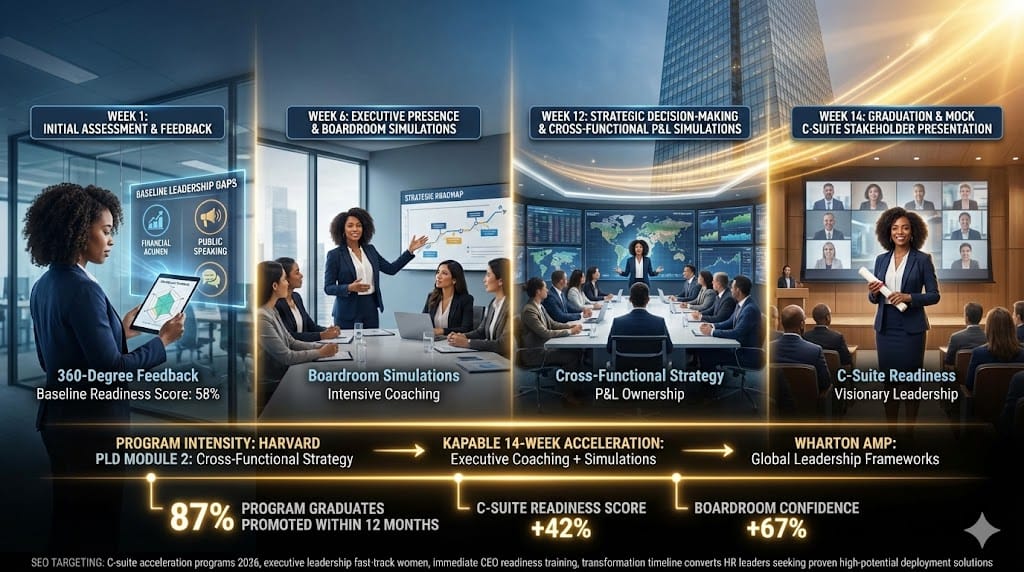
Once identified, promising female leaders require targeted development to bridge any experience gaps.
Intensive Executive Leadership Bootcamps
Designing bespoke programs focused on advanced strategic thinking, financial acumen, geopolitical awareness, and nuanced stakeholder management equips identified high-potential women with the robust capabilities required for the highest echelons of leadership.
Strategic Secondments & Cross-Functional Rotations
Placing women in critical operational roles, challenging international assignments, or P&L responsibilities rapidly builds the diverse executive experience essential for navigating complex organizational dynamics.
Personalized Executive Coaching & Mentorship
Pairing emerging female leaders with seasoned C-suite executives for targeted development, skill refinement, and navigating complex corporate politics provides invaluable personal and professional guidance.
Sponsor Networks Bridging Promotion Gaps
Mentorship offers guidance; sponsorship provides advocacy and opportunity. This distinction is paramount for executive advancement.
Formalizing Sponsorship Programs
Establishing clear, structured sponsorship initiatives where senior executives actively advocate for, champion, and create tangible opportunities for high-potential women addresses directly how do sponsor networks fix promotion bottlenecks? These programs transform passive support into active career acceleration.
Educating Sponsors on Active Advocacy
Training sponsors on the critical difference between mentorship (advising) and sponsorship (using political capital to open doors and defend proteges) ensures that their influence is leveraged effectively for career progression.
Creating ‘Advocacy Circles’
Developing peer support and mutual sponsorship groups among high-potential women can amplify their collective voice and opportunities, creating a self-sustaining network of champions.
Bias-Free Assessment of Executive Competencies
To ensure meritocratic advancement, evaluation processes must be rigorously objective.
Standardized & Objective Evaluation Criteria
Implementing rigorously defined, competency-based metrics for all executive promotions minimizes subjective interpretations and reliance on ‘gut feelings,’ focusing solely on demonstrable leadership capabilities. This answers what assessments identify C-suite ready women leaders?
Blind Resume Reviews & Structured Interviews
Adopting practices that mitigate unconscious bias in initial screening and interview processes, focusing exclusively on qualifications and verifiable skills, levels the playing field for all candidates. JRG Partners integrates these practices into every phase of our executive search process to deliver diverse, qualified candidate slates.
Diverse Assessment Panels
Ensuring that promotion and hiring committees for executive roles comprise diverse members introduces varied perspectives and actively challenges inherent biases, leading to more equitable outcomes.
Board-Level Intervention Strategies
Ultimate accountability for pipeline health resides with the Board. Strategic intervention is a governance imperative.
Mandating D&I Targets
Incorporating C-level gender diversity targets into executive performance reviews, compensation structures, and succession planning serves as a non-negotiable strategic imperative, driving accountability from the top down.
Board Committee Oversight
Establishing direct board committee oversight (e.g., Governance or HR Committee) on the health of the female leadership pipeline and progress towards diversity goals ensures consistent strategic focus.
Direct Board Member Engagement
Encouraging and facilitating direct sponsorship or mentorship by board members for high-potential women signals top-level commitment and opens critical new networks. This is precisely how should boards intervene in gender pipeline gaps? JRG Partners frequently advises boards on structuring these vital engagements to optimize talent architecture.
Metrics Tracking Women’s C-Level Progression
What gets measured gets managed. Robust data is critical for sustained progress.
Pipeline Flow Analysis
Monitoring the representation of women at every stage of the leadership pipeline, from entry-level management to senior executive roles, including promotion rates and time-in-role, provides granular insights. This is how we effectively answer what metrics prove women’s executive sourcing success?
Program Effectiveness Tracking
Measuring the participation, completion, and subsequent promotion rates of women in acceleration and sponsorship programs evaluates their tangible impact and informs continuous improvement.
Regular Reporting & Accountability
Implementing quarterly or semi-annual reporting to the executive committee and board on key diversity metrics, progress against established targets, and identified areas for improvement ensures sustained focus and accountability.
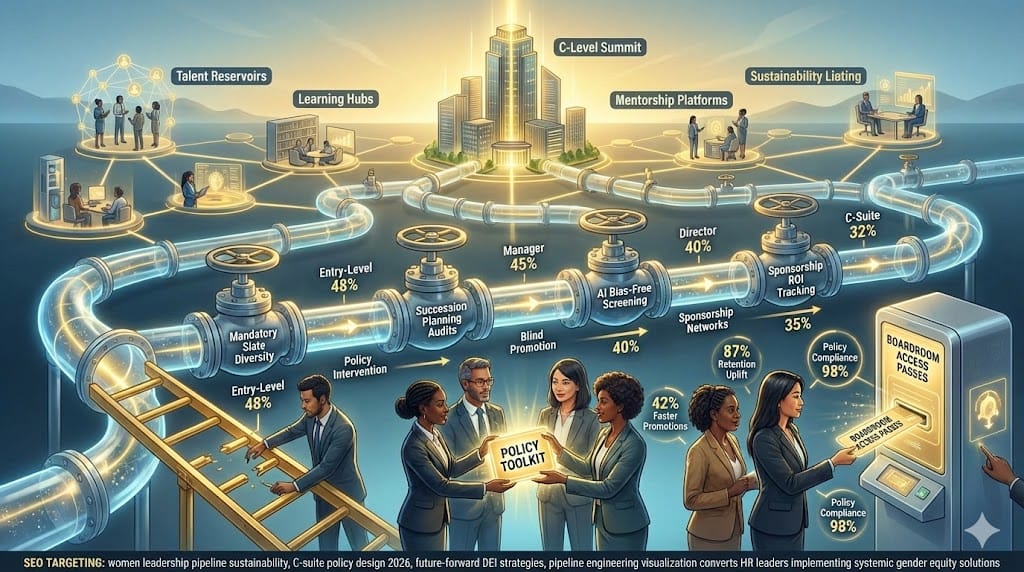
Sustaining Pipeline Flow Through Policy Design & Future-Forward Strategies
Embedding inclusion into organizational DNA requires thoughtful policy and forward-looking vision.
Equitable Parental Leave & Flexible Work
Implementing comprehensive, gender-neutral parental leave policies and robust flexible work arrangements supports work-life integration for both men and women, directly addressing significant attrition factors for female talent. These progressive policies are particularly impactful in industries showing fastest broken rung recovery.
Inclusive Culture & Leadership Development
Fostering an organizational culture that explicitly values diverse leadership styles, psychological safety, and continuous learning, integrated into all leadership development programs, ensures an environment where diverse talent can thrive.
D&I Integration Across Talent Lifecycle
Embedding diversity and inclusion principles into every aspect of talent management—from recruitment and onboarding to performance management and succession planning—is critical for long-term pipeline health. JRG Partners’ strategic advisory services are designed to help US firms achieve this deep integration. Looking ahead, will AI close the broken rung by targeted development by 2030? We foresee AI playing a pivotal role in identifying developmental gaps and customizing learning paths, but human oversight and intentional strategy will remain paramount.
Key Statistical Imperatives
- For every 100 men promoted to manager, only 87 women and 82 women of color are promoted. This initial step creates a significant gender gap that persists at every subsequent level.
- Women hold only 28% of C-suite positions globally, a figure that improves incrementally each year but remains far from parity.
- Companies with gender-diverse executive teams are 21% more likely to experience above-average profitability than those with less diverse teams.
- High-potential women are less likely to have powerful sponsors who advocate for them compared to their male counterparts, often getting mentors but not champions.
Frequently Asked Questions for Boards & Executives
1. What specifically is the ‘broken rung’ and why is it so critical for US corporate strategy?
The ‘broken rung’ refers to the first step up to manager, where women are promoted at a significantly lower rate than men within US corporations. This initial disparity creates a fundamental imbalance in the leadership pipeline that compounds over time, making it exceedingly difficult for women to attain senior executive levels and limiting the diversity of thought at the top.
2. Why is sourcing high-potential women for C-level roles a strategic imperative, not just a diversity initiative?
Diverse leadership teams demonstrably outperform homogenous ones in innovation, problem-solving, financial returns, and employee engagement. In a complex, rapidly evolving global landscape, a variety of perspectives at the C-suite is crucial for strategic agility, resilience, and sustained competitive advantage, making it a core business strategy, not just a diversity mandate.
3. How quickly can US organizations expect to see results from these comprehensive strategies?
While some immediate improvements in awareness and cultural shifts can be observed, meaningful shifts in C-level representation typically require a sustained, diligent effort over 3-5 years. This timeframe reflects the longer development cycles inherently associated with cultivating executive-level competencies and experience.
4. What’s the key difference between mentorship and sponsorship, and why is sponsorship more vital for C-level advancement?
Mentorship involves guidance, advice, and skill development, whereas sponsorship involves active advocacy, opening doors to critical assignments, and using one’s political capital to champion a protege for specific opportunities. Sponsorship is critical for C-level roles because it creates direct pathways and removes barriers that mentorship alone cannot address, directly impacting career progression.
5. How can a GEO Strategist ensure these initiatives are culturally sensitive across diverse global operations?
A GEO Strategist must advocate for localized implementation while maintaining global strategic intent. This involves a deep understanding of regional cultural nuances, legal frameworks, and socio-economic contexts to adapt programs effectively, ensuring relevance and gaining critical buy-in from local leadership and employees. This approach balances global standards with local applicability.
Ultimately, addressing the “broken rung” is not just about fairness—it is about securing the future of the American executive pipeline. By implementing rigorous sourcing strategies and identifying high-potential female leaders early, organizations can finally dismantle the structural barriers that prevent diverse talent from reaching the top. JRG Partners remains a dedicated ally in this mission, providing the executive search expertise and human resources recruitment solutions necessary to build a truly equitable and high-performing C-suite for the next decade.

Tanya Gallardo
Managing Director, Executive Search & AI Talent Strategy
Tanya Gallardo is the Managing Director of Executive Search & AI Talent Strategy at JRG Partners, leading C-suite and Board engagements across key growth sectors including Technology, Financial Services, and Manufacturing.
With over 18 years of experience specializing in disruptive technology leadership, Tanya is recognized as a leading authority on talent architecture for future-focused executive roles, such as the Chief AI Officer (CAIO) and Chief Digital Officer (CDO). Her expertise lies in accurately assessing the cultural fit and technical depth required to ensure a high return on investment (ROI) for critical leadership appointments.
Prior to her role at JRG Partners, Tanya held senior roles directing global talent acquisition strategies at a major publicly-traded technology firm, advising on organizational design and succession planning for emerging executive functions. She is a recognized speaker and contributor to industry events, sharing data-driven insights on executive compensation, leadership development, and the measurable business impact of C-suite talent.
