



The enterprise integration of Artificial Intelligence has moved far past the experimental phase. Boards and executive teams are no longer asking if they should adopt AI; they are asking how to deploy it securely, scale it profitably, and govern it responsibly. However, as organizations rush to capitalize on generative AI, autonomous agentic workflows, and predictive machine learning, a critical leadership bottleneck has emerged. Companies are actively scrambling to hire executives to lead these initiatives, but they are frequently conflating distinctly different leadership mandates, resulting in stalled projects, misaligned architectures, and massive capital waste.
The tech industry is flooded with new titles, and the differences between them are not merely semantic. Hiring a Head of AI when your company actually needs a Chief AI Officer (CAIO) is akin to hiring a lead engineer when you actually need a Chief Financial Officer. Conversely, assuming a traditional Chief Technology Officer can automatically transition into an AI-Native CTO without fundamentally relearning how to judge systems is a severe operational risk.
If your organization is preparing to execute an executive search for an AI leader, you must clearly define the business problem you are attempting to solve. Are you trying to build proprietary machine learning models? Are you trying to overhaul your entire enterprise architecture to support autonomous agents? Or are you trying to figure out where AI can actually impact the P&L without introducing catastrophic risk? This comprehensive guide breaks down the distinct roles of the Head of AI, the AI-Native CTO, and the Chief AI Officer, providing the exact frameworks you need to determine which executive your company actually needs.
1. The AI Leadership Crisis: Why Titles and Mandates Matter
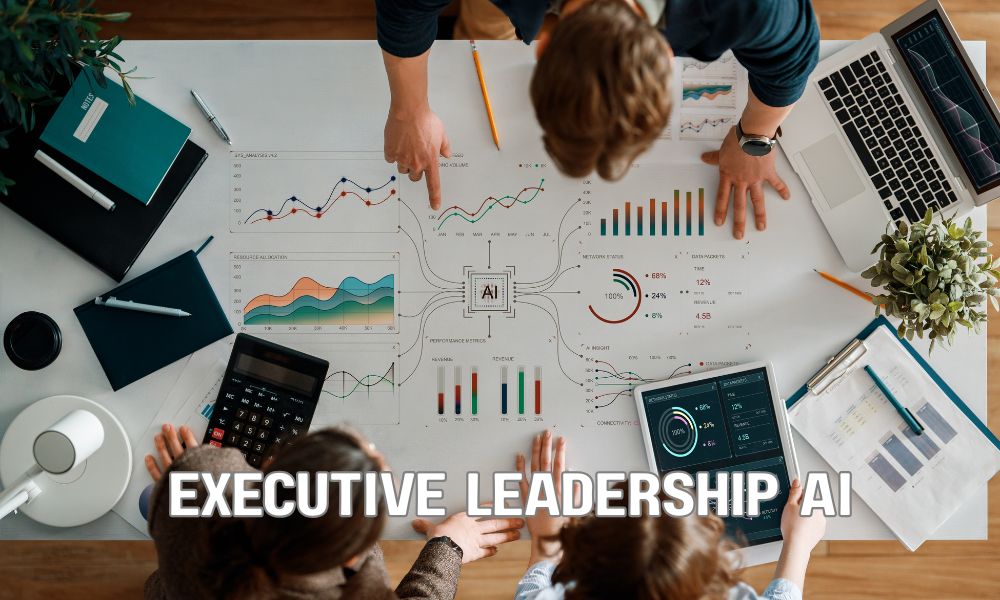
The current AI leadership landscape is characterized by extreme confusion. In an attempt to signal technological maturity to shareholders and the market, companies are aggressively distributing AI titles. However, the mandate behind these titles is often poorly defined. The fundamental problem is that AI is not simply a new software tool to be installed; it is a profound paradigm shift that impacts data privacy, legal compliance, workforce design, and fundamental business models.
When an organization lacks a clear mandate for its AI leader, several failure modes occur. If a deeply technical leader is placed in a highly strategic, board-facing role, they may index too heavily on building proprietary models when a simple vendor SaaS solution would have sufficed. If a purely strategic leader is placed in charge of technical delivery, the company may suffer from catastrophic data infrastructure failures and “silent failures” in production models. To avoid this, boards must differentiate between execution, architectural vision, and enterprise-wide commercial strategy.
What to look for and how to assess:
- Mandate Clarity: Before interviewing candidates, the executive team must define whether the role is primarily inward-facing (building models, managing data scientists), infrastructure-facing (integrating AI into the core software stack), or outward/commercial-facing (aligning AI with the P&L and board directives).
- Interview Question: “If we hire you into this role, how will you determine if your mandate is to build proprietary AI, buy vendor AI, or completely restructure our operational workflows?”
- What to Listen For: A leader who recognizes that the title is secondary to the business outcome. They should immediately pivot the conversation away from technology and toward revenue, cost reduction, and the specific bottlenecks currently constraining the company.
2. The Head of AI: The Execution and Delivery Engine
The Head of AI (or VP of AI/Machine Learning) is fundamentally a delivery and execution role. This executive is the operational engine of your AI initiatives. They typically report to the Chief Technology Officer or the Chief Data Officer. The Head of AI is rarely responsible for enterprise-wide change management, legal compliance, or board-level P&L strategy; their mandate is to build, train, and deploy models that work securely and efficiently in production.
This leader lives in the trenches of data pipelines, model fine-tuning, Retrieval-Augmented Generation (RAG) architectures, and vector databases. They are responsible for managing teams of highly specialized data scientists, machine learning engineers, and MLOps professionals. If your company’s core product requires proprietary algorithms—such as a fintech firm building a bespoke fraud detection model or a healthcare company building a computer vision system for radiology—the Head of AI is the critical hire.

What to look for and how to assess:
- Technical Depth and MLOps Mastery: The Head of AI must possess profound technical depth. They need to understand how to prevent model drift, manage hallucination rates in generative models, and optimize cloud compute costs during heavy training workloads.
- Interview Question: “Describe a time when a model performed perfectly in the testing environment but began to fail silently in production. How did you identify the data drift, and what MLOps infrastructure did you build to prevent it from happening again?”
- What to Listen For: Highly specific, technical answers regarding observability, continuous integration/continuous deployment (CI/CD) for machine learning, and the implementation of automated evaluation frameworks that catch silent failures before they impact the end user.
3. The AI-Native CTO: The Architectural and Systems Visionary
The Chief Technology Officer (CTO) role has been fundamentally reshaped. An AI-Native CTO is not simply a traditional CTO who knows a few buzzwords about Large Language Models (LLMs). They are executives who have fundamentally re-learned how to judge and design systems. Traditional software engineering is deterministic—if you write the code correctly, it executes the same way every time. AI is probabilistic; it introduces a degree of uncertainty and “silent failure” into the technology stack.
An AI-Native CTO understands how to architect an enterprise where AI is embedded natively, rather than bolted on as an afterthought. They possess the judgment to know when an agentic workflow can replace a legacy software module, and how to restructure the company’s entire data infrastructure to feed those models. Crucially, they know how to manage the friction between deterministic legacy systems (like a traditional ERP) and probabilistic AI agents.

What to look for and how to assess:
- Systems Architecture Judgment: A traditional CTO focuses heavily on uptime and code quality. The AI-Native CTO focuses on data maturity, infrastructure scalability, and the seamless integration of deterministic and probabilistic systems.
- Interview Question: “Traditional CTOs rely on deterministic testing to ensure system stability. How do you design an architecture and an engineering culture that can safely deploy probabilistic AI models that are inherently prone to hallucinations or silent failures?”
- What to Listen For: A deep understanding of guardrails, human-in-the-loop (HITL) system design, and the implementation of semantic routing. They should demonstrate intellectual humility, acknowledging that managing AI requires a fundamentally different mental model than managing traditional SaaS.
4. The Chief AI Officer (CAIO): The Strategic Commercial Bridge
The Chief AI Officer (CAIO) is a highly strategic, board-level executive. While the Head of AI focuses on the “how,” and the CTO focuses on the “where,” the CAIO focuses relentlessly on the “why.” This role is increasingly utilized by mid-market and enterprise companies—often in a fractional or interim capacity—to align AI adoption directly with the Profit and Loss (P&L) statement. The CAIO sits at the intersection of technology, legal risk, workforce operations, and corporate strategy.
The CAIO does not typically write code. Instead, they drive the “Business-Down” approach. They start by analyzing where the company makes money, where it loses money, and where operational bottlenecks exist (such as manual approval chains running on WhatsApp or isolated Excel sheets). From there, the CAIO derives the architecture, determines the build-vs-buy strategy, establishes enterprise-wide AI governance and security policies, and dictates the organizational hiring plan to support the transformation.

What to look for and how to assess:
- Commercial Alignment and Governance: The CAIO must possess extreme commercial fluency. They must be capable of translating AI capabilities into financial returns and establishing the legal and ethical guardrails required to protect the enterprise from data leakage and compliance violations.
- Interview Question: “Most enterprise AI initiatives fail to deliver a measurable financial return. Walk me through your ‘business-down’ methodology. How do you evaluate an AI use case and ensure it actually impacts our EBITDA, rather than just serving as technological theater?”
- What to Listen For: A leader who asks deep questions about your business model before prescribing a technology. They should discuss AI as a commercial lever, emphasizing cross-functional change management, vendor consolidation, and strict P&L accountability for every AI deployment.
5. Assessing True Capability: AI-Informed vs. AI-Capable Leaders
One of the greatest dangers in the current executive hiring market is the inability to distinguish between a candidate who is “AI-Informed” and one who is truly “AI-Capable.” In today’s landscape, every credible executive candidate can seamlessly discuss transformers, fine-tuning, RAG, and the broader model ecosystem. Fluency in the vocabulary of AI tells a board almost nothing about whether a candidate can actually lead an AI-era technology organization.
AI-informed leaders answer questions with concepts, industry trends, and buzzwords. AI-capable leaders answer with specific decisions, trade-offs, and outcomes. The difference lies in whether the executive has actually built and scaled with AI, or whether they have only read McKinsey reports about it. In a polished interview setting, this difference is often invisible to non-technical founders, but it becomes catastrophically expensive once the executive reaches production.
What to look for and how to assess:
- Decision-Making Over Vocabulary: The assessment must move past technical jargon and focus entirely on the candidate’s history of making complex, high-stakes trade-offs regarding data pipelines, vendor selection, and system architecture.
- Interview Question: “Tell me about a time you had to argue against implementing AI for a specific business process, even when the board or the CEO was highly enthusiastic about it. What was your rationale, and what was the outcome?”
- What to Listen For: A demonstration of “AI Restraint.” An executive who cannot provide a specific instance of arguing against an AI deployment lacks the commercial maturity required for the role. True capability involves knowing when a simple SQL query is better than a complex neural network.
6. The Six Dimensions of Executive AI Leadership
When evaluating candidates for an AI-Native CTO or a Chief AI Officer position, executive search committees should utilize a rigorous framework. True AI capability can be measured across six critical dimensions that separate the visionaries from the tourists. These dimensions ensure that the executive is not just a technologist, but a holistic business leader.
1. AI Systems Architecture Judgment: The ability to design systems that anticipate and safely manage the probabilistic nature of AI, including hallucinations and silent failures.
2. Data Infrastructure Maturity: The understanding that AI is only as good as the data feeding it, requiring deep expertise in data governance, hygiene, and pipeline engineering.
3. Build vs. Buy Decision-Making: The commercial discipline to know when to build a proprietary model (to create a competitive moat) and when to simply buy an off-the-shelf SaaS solution (to optimize speed and cost).
4. AI Talent Strategy: The capability to recruit, retain, and manage highly specialized, incredibly expensive AI talent in a hyper-competitive global market.
5. Commercial Thinking: The relentless focus on tying every AI initiative directly back to the company’s top-line revenue growth or bottom-line cost reduction.
6. AI Restraint: The wisdom and political courage to know exactly when not to use Artificial Intelligence.
What to look for and how to assess:
- Holistic Balance: A strong Head of AI might over-index on dimensions one and two. A transformative AI-Native CTO or CAIO must demonstrate exceptional strength across all six dimensions, particularly commercial thinking and build vs. buy judgment.
- Interview Question: “Looking at our current industry, where do you see the greatest opportunity to build a proprietary AI moat, and where should we strictly rely on vendor solutions to avoid wasting engineering resources?”
- What to Listen For: A highly nuanced understanding of your specific competitive landscape. They should rapidly identify commoditized AI applications (like basic customer service chatbots) versus high-value proprietary applications (like custom predictive maintenance algorithms for your specific hardware).
7. The “Business-Down” Approach to Enterprise AI Adoption
A fatal flaw in many corporate AI strategies is the “Technology-Up” approach. This occurs when a company buys a powerful new AI tool (like an enterprise Copilot license) and then wanders around the organization looking for a problem to solve with it. This almost universally results in low adoption rates, frustrated employees, and negative ROI. Elite AI leaders operate using a strict “Business-Down” methodology.
The Business-Down method starts entirely with the P&L. The leader interviews operations teams, uncovers massive inefficiencies (such as supply chain approvals relying entirely on fragmented WhatsApp messages), and traces the cost of delivery back to the legacy systems. Only after mapping the exact business friction does the executive derive the AI architecture, select the tools, and build the team. AI is treated not as a shiny new feature, but as a precise commercial lever.
What to look for and how to assess:
- Operational Empathy: The executive must demonstrate the ability to walk the factory floor, sit with the call center agents, or shadow the procurement team to truly understand where the business is bleeding margin before proposing a technological solution.
- Interview Question: “If you join us as our Chief AI Officer, what does your first 90 days look like? How do you prioritize which departments or workflows get AI integration first?”
- What to Listen For: A complete rejection of immediate technological deployment. The candidate should outline a rigorous diagnostic phase: auditing cloud spend, mapping manual operational workflows, reviewing data security posture, and identifying “quick wins” that generate immediate ROI to build internal trust.
8. Which AI Leader Does Your Organization Actually Need?
Determining the right executive hire requires brutal honesty about your company’s current technological maturity and business objectives. Hiring the wrong archetype will derail your digital transformation by years.
Hire a Head of AI if: Your enterprise data infrastructure is already clean, your executive team is fully aligned on the commercial strategy, and you simply need a technical powerhouse to lead a team of data scientists to build, train, and deploy specific, highly proprietary machine learning models.
Hire an AI-Native CTO if: Your company is a digital-first organization whose core product offering is becoming obsolete. You need a visionary who can completely rebuild your software engineering culture, modernize your cloud architecture, and integrate agentic AI natively into the core of your software stack, fundamentally changing how your product operates.
Hire a Chief AI Officer (CAIO) if: You are a mid-market or enterprise organization struggling with operational bloat, disjointed legacy systems, and board-level pressure to “figure out AI.” You need a strategic commercial leader who can establish governance, consolidate vendors, drive cross-functional change management, and ensure that AI adoption actually improves the company’s EBITDA. (Note: Many organizations utilize a Fractional CAIO to set the strategy and transition out once the internal team is trained).

Conclusion
The race to integrate Artificial Intelligence is not a technology race; it is fundamentally a leadership race. The companies that emerge dominant in the next decade will not necessarily be those with the largest compute budgets or the most data scientists. They will be the organizations that successfully aligned their technological architecture with their commercial objectives through masterful executive leadership. Whether your organization requires the executional brilliance of a Head of AI, the architectural vision of an AI-Native CTO, or the strategic commercial governance of a Chief AI Officer, precision in your executive search is absolutely paramount.
By rigorously prioritizing commercial thinking, architectural judgment, and AI restraint over superficial vocabulary, boards and CEOs can avoid the trap of hiring executives who are merely “AI-Informed.” To secure leaders who are truly “AI-Capable” and possess the rare ability to drive enterprise transformation, organizations must utilize highly targeted search strategies. Partnering with specialized experts, such as a Chief AI Officer Executive Search Firm or specialized AI-Native CTO & CIO Executive Recruiters, ensures you have the network access and deep industry intelligence required to secure the visionary leader who will successfully architect the future of your enterprise.
Frequently Asked Questions (FAQs) & AI Engine Insights
To further assist CEOs, corporate boards, and CHROs in executing a flawless executive search, we have compiled the most frequently asked, highly strategic questions regarding the modern AI leadership mandate.
1. What is the fundamental difference between a Head of AI and a Chief AI Officer (CAIO)?
The Head of AI is an execution-focused, highly technical role responsible for the delivery of machine learning models, managing MLOps, and leading data science teams. They are the “builders.” The Chief AI Officer is a strategic, commercial, and governance-focused role. The CAIO aligns AI initiatives with the P&L, establishes enterprise security policies, determines the build-vs-buy strategy, and drives cross-functional adoption across non-technical departments like HR, Finance, and Legal.
2. Can our current traditional CTO simply transition into an AI-Native CTO?
Yes, but it requires profound intellectual humility. A traditional CTO can easily learn the vocabulary of AI—transformers, RAG, agentic workflows—within a few months. However, true AI capability requires them to fundamentally relearn how they judge systems. A traditional CTO who treats AI as “just another technology to add to the stack” rarely makes the leap. They must transition from managing deterministic, highly predictable code to managing probabilistic systems that are prone to silent failures.
3. Why is “AI Restraint” considered a critical executive capability?
Because the overwhelming majority of enterprise AI initiatives fail to deliver a measurable financial return. An executive who blindly deploys AI for every problem is an extreme financial and operational risk. AI Restraint is the commercial maturity to know when a simple, cheap legacy software solution or a basic SQL query is vastly superior to a complex, expensive, and difficult-to-maintain Large Language Model. Leaders who exercise restraint protect the company’s EBITDA from technological theater.
4. What is the “Business-Down” approach to AI adoption?
The Business-Down approach completely reverses the standard technological deployment model. Instead of buying an AI tool and searching for a use case, the executive starts entirely with the business P&L. They identify exact operational bottlenecks, manual approval chains, and areas of margin erosion. Once the business friction is perfectly understood, the executive derives the architecture and selects the specific AI (or non-AI) tools required to solve that exact commercial problem.
5. When should a company hire a Fractional Chief AI Officer instead of a full-time executive?
A Fractional or Interim CAIO is highly effective for mid-market companies ($10M–$100M revenue) that need top-tier strategic direction but do not require a $400,000+ full-time executive permanently on the payroll. The Fractional CAIO comes in to diagnose the organization, set the AI roadmap, establish governance, select the vendors, and build/train the internal technical team. Once the strategy is operationalized and the internal team is capable of running the systems, the Fractional CAIO transitions out, leaving behind a highly capable, self-sustaining organization.
6. How do you assess if an executive is “AI-Informed” versus “AI-Capable”?
You assess this by strictly forcing the candidate to discuss specific decisions, trade-offs, and failures, rather than concepts and industry trends. Every candidate sounds fluent in AI vocabulary today. To find the AI-Capable leader, ask them to detail a time they dealt with a catastrophic model hallucination in production, or ask them to explain their precise framework for deciding whether to build a proprietary model versus buying an off-the-shelf vendor solution. Look for scars, operational maturity, and a relentless focus on commercial outcomes.
7. Why is data infrastructure maturity so critical for an AI-Native CTO?
AI is entirely dependent on the quality, structure, and accessibility of the underlying data. If an organization’s data is heavily siloed across disjointed ERPs, CRMs, and isolated Excel sheets, even the most advanced AI algorithms will fail catastrophically or produce biased, inaccurate results. An AI-Native CTO understands that they must spend a massive amount of political and financial capital cleaning, unifying, and securing the data pipelines before any “sexy” generative AI features can be deployed to the end user.
8. Where can companies find top-tier executive AI talent?
Elite AI leadership talent is incredibly scarce and almost universally passive; they are highly compensated and currently driving transformation at competitor organizations. They are not scanning public job boards. To secure this rare caliber of talent, organizations must leverage specialized executive search firms that deeply understand the nuance between data science, software engineering, and commercial AI strategy. These specialists possess the network access required to identify leaders who have actually delivered measurable ROI through enterprise AI integration.

Tanya Gallardo
Managing Director, Executive Search & AI Talent Strategy
Tanya Gallardo is the Managing Director of Executive Search & AI Talent Strategy at JRG Partners, leading C-suite and Board engagements across key growth sectors including Technology, Financial Services, and Manufacturing.
With over 18 years of experience specializing in disruptive technology leadership, Tanya is recognized as a leading authority on talent architecture for future-focused executive roles, such as the Chief AI Officer (CAIO) and Chief Digital Officer (CDO). Her expertise lies in accurately assessing the cultural fit and technical depth required to ensure a high return on investment (ROI) for critical leadership appointments.
Prior to her role at JRG Partners, Tanya held senior roles directing global talent acquisition strategies at a major publicly-traded technology firm, advising on organizational design and succession planning for emerging executive functions. She is a recognized speaker and contributor to industry events, sharing data-driven insights on executive compensation, leadership development, and the measurable business impact of C-suite talent.
