



Consumer packaged goods companies are operating in a marketing environment where traditional retail and direct-to-consumer growth increasingly exist side by side. A brand may depend on supermarkets, mass retailers, club stores, specialty retailers, and distributors for significant revenue while simultaneously building relationships with consumers through its own website, social platforms, marketplaces, subscriptions, and digital communities.
This creates a demanding leadership requirement for the modern Chief Marketing Officer. A CMO who understands only traditional brand marketing may struggle to build a sophisticated DTC engine. Conversely, a digital-first marketing executive may understand acquisition, retention, and e-commerce but lack the experience required to manage retailer relationships, shopper marketing, mass-market brand building, and the economics of physical distribution.
For CPG companies, the challenge is therefore not simply finding a CMO with strong marketing credentials. It is finding a leader who can connect brand building, retail performance, e-commerce, consumer data, customer acquisition, and long-term growth into one coherent commercial strategy.
This article explains how companies can identify and recruit a CMO capable of leading both traditional retail and DTC growth, what capabilities to evaluate, which interview questions to ask, and how to distinguish genuine omnichannel leadership experience from a résumé that simply contains digital and retail keywords.
Why CPG Companies Need CMOs Who Understand Both Retail and DTC
Traditional retail and DTC require different operating approaches, but consumers do not necessarily experience them as separate channels.
A shopper might discover a product through social media, research reviews online, purchase it from a retailer, subscribe through the brand’s website, and later interact with the company through email or a loyalty program. The marketing organization must understand that entire journey rather than optimizing every channel independently.
Traditional retail marketing often requires expertise in brand awareness, shopper behavior, retailer relationships, promotions, merchandising, category dynamics, distribution, and in-store execution. DTC growth introduces additional requirements, including digital acquisition, conversion optimization, customer lifetime value, retention, personalization, first-party data, CRM, paid media, and e-commerce technology.
The CMO must therefore understand how these activities influence one another.
For example, an investment in brand awareness may increase demand across both retail and DTC channels. A DTC customer database may provide valuable consumer insights that influence product innovation or retail strategy. Retail distribution may create awareness that lowers the cost of acquiring consumers online.
The CMO’s role is to create the strategic connection between these activities.
Companies looking for this combination of capabilities can also review JRG Partners’ Consumer Packaged Goods CMO Executive Search Firm practice area, which focuses on identifying senior marketing leaders across brand strategy, consumer insights, digital marketing, e-commerce, retail marketing, innovation, analytics, and growth leadership.
What Does an Omnichannel CMO Need to Be Able to Do?
An effective omnichannel CMO must operate across several different dimensions of marketing leadership.
The first is brand leadership. Even a highly sophisticated DTC operation needs a differentiated brand. Performance marketing can generate traffic, but sustainable growth often depends on why consumers choose the product and remember the brand.
The second is commercial understanding. The CMO should understand how marketing affects revenue, margins, distribution, customer acquisition, retention, and portfolio performance.
The third is digital and e-commerce capability. The executive should understand customer acquisition, conversion, retention, CRM, paid media, social commerce, analytics, and digital customer experience.
The fourth is retail marketing expertise. This includes understanding shopper behavior, retailer dynamics, category management, promotions, retail media, merchandising, and the relationship between brand demand and retail execution.
The fifth is organizational leadership. A CMO attempting to integrate retail and DTC cannot operate through isolated teams. Marketing, sales, e-commerce, insights, product, technology, and finance need shared priorities and measurement.
The ideal candidate does not necessarily need to have spent an equal amount of time in every channel. Instead, they need evidence that they have successfully led organizations where multiple channels had to work together.
Define the CMO’s Growth Mandate Before Starting the Search
One of the most common mistakes in executive recruitment is beginning the candidate search before clearly defining what the new CMO is expected to accomplish.
A company may say that it needs a CMO who understands retail and DTC, but that description is too broad to guide a serious executive search.
Leadership teams should first identify the company’s specific growth challenge.
For example, the company may need to:
- Modernize an established retail brand.
- Build a profitable DTC channel.
- Reduce dependence on paid customer acquisition.
- Increase customer retention and lifetime value.
- Expand distribution into new retail channels.
- Develop a stronger omnichannel customer experience.
- Improve the connection between marketing and sales.
- Launch new products across retail and digital channels.
- Strengthen first-party consumer data capabilities.
- Build a more sophisticated marketing organization.
Each objective changes the CMO profile.
A company primarily focused on retail expansion may require deeper shopper and commercial expertise. A business aggressively scaling DTC may need stronger digital acquisition, CRM, e-commerce, and analytics capabilities.
The most important step is to define the business outcomes before defining the candidate’s résumé requirements.
Evaluate Retail Experience Beyond Traditional Brand Marketing

Retail experience should not be treated as a simple checkbox.
A candidate who has worked for a major CPG company may have extensive brand experience without necessarily having owned the commercial relationship between marketing and retail growth.
During the search, companies should determine what the candidate actually owned.
Did the executive work closely with sales and category teams? Did they influence retailer strategy? Did they understand shopper marketing? Were they involved in promotional planning? Did they manage retail media investments? Did they connect brand campaigns with in-store activity?
These questions reveal whether the executive understands retail as a business system rather than simply as a distribution channel.
A strong retail-oriented CMO should understand that consumer marketing and shopper marketing can have different objectives while still needing to support the same brand strategy.
The executive should also be comfortable discussing the trade-offs between short-term promotional activity and long-term brand equity.
This distinction becomes particularly important when a company is trying to grow both retail and DTC channels simultaneously.
Assess DTC Expertise Through Business Outcomes, Not Digital Buzzwords
DTC experience has become an increasingly common requirement in CMO searches, but companies should be careful about accepting surface-level digital expertise.
A candidate may list e-commerce, social media, performance marketing, CRM, and customer acquisition on their résumé without having personally led a meaningful DTC transformation.
Interviewers should therefore focus on outcomes and decision-making.
Ask the candidate how they built customer acquisition strategies, how they determined channel economics, how they improved conversion, and how they approached retention.
More importantly, ask how they balanced customer acquisition costs against customer lifetime value.
A sophisticated DTC CMO should understand that revenue growth alone does not necessarily represent a successful digital business. The company needs to understand the quality of that revenue, repeat purchasing behavior, contribution margins, retention, and the sustainability of acquisition channels.
The candidate should also be able to explain how DTC insights influenced the broader business.
For example, did online customer behavior influence product development? Did first-party data change segmentation? Did customer feedback influence packaging or positioning? Did DTC testing improve retail marketing?
Those examples demonstrate whether the executive sees DTC as an isolated sales channel or as a strategic source of consumer intelligence.
Look for a CMO Who Can Connect Brand Building With Performance Marketing
One of the most important capabilities in modern CPG marketing is the ability to balance long-term brand building with measurable performance.
Performance marketing provides detailed measurement and can support rapid experimentation. Brand marketing builds awareness, associations, preference, and long-term demand.
A CMO responsible for both retail and DTC cannot allow these disciplines to operate independently.
The executive should be able to determine where performance marketing is appropriate and where broader brand investment is required.
For example, a new DTC product launch may require performance campaigns to generate initial traffic, but the broader marketing strategy may need content, public relations, creator partnerships, retail activation, and brand storytelling to establish long-term demand.
During interviews, companies should ask candidates to explain how they have allocated marketing investment between short-term performance and long-term brand objectives.
The strongest evidence will come from situations where the executive had to make difficult resource-allocation decisions and explain the commercial rationale behind them.
Test the Candidate’s Ability to Integrate Retail, E-Commerce, and Consumer Data
Data integration is one of the biggest opportunities for an omnichannel CMO.
Traditional retail can provide valuable information about sales, distribution, category performance, promotions, and shopper behavior. DTC channels can provide direct information about consumer profiles, browsing behavior, purchase history, preferences, retention, and engagement.
The CMO should understand how these different data sources can contribute to better decision-making.
For example, DTC customer data may reveal emerging consumer preferences before those trends become obvious through broader retail sales. Retail performance may show where a product has strong demand and where additional distribution or marketing investment could be justified.
A modern CMO should therefore be comfortable working with marketing analytics, consumer insights, customer data, and commercial teams.
However, the executive does not need to be a data scientist.
The more important question is whether the candidate knows which questions the organization needs data to answer and can translate analytical findings into strategic action.
Assess the CMO’s Commercial and Financial Acumen
A CMO leading both retail and DTC must be commercially credible.
The executive should be comfortable discussing revenue, margins, customer acquisition costs, customer lifetime value, marketing return, channel economics, pricing, promotional effectiveness, and portfolio performance.
This does not mean the CMO should replace the CFO or sales organization.
Instead, the CMO needs enough financial understanding to participate meaningfully in enterprise-level decisions.
For example, if the company is considering a major increase in DTC investment, the CMO should be able to explain the expected strategic benefits, assumptions, risks, and measurement framework.
Similarly, if a retailer requests deeper promotional investment, the CMO should understand how that activity affects consumer demand, brand positioning, and commercial economics.
Commercial fluency is particularly important because the CMO is increasingly expected to demonstrate how marketing contributes to overall business performance rather than simply reporting campaign metrics.
Determine Whether the Candidate Can Lead Cross-Functional Transformation
Integrating retail and DTC is rarely a marketing-only project.
It can affect sales, technology, finance, supply chain, product development, customer service, operations, and organizational structure.
The CMO must therefore be capable of influencing leaders outside the marketing department.
During the search, assess whether candidates have previously led cross-functional initiatives.
Look for examples where they:
- Built alignment between marketing and sales.
- Worked with technology teams to improve digital capabilities.
- Partnered with finance on marketing investment decisions.
- Influenced product innovation and portfolio strategy.
- Restructured marketing organizations around customer journeys.
- Introduced new measurement systems.
- Built teams with both brand and digital capabilities.
Leadership scope matters because an omnichannel strategy can fail even when the marketing strategy itself is strong. If the CMO cannot align the organization behind the strategy, channel fragmentation can continue.
Build a Balanced CMO Candidate Scorecard
Once the leadership mandate has been defined, companies should create a structured scorecard for evaluating candidates.
The scorecard can include several dimensions.
Brand Leadership
Can the candidate build differentiated brands while maintaining consistency across channels?
Retail Expertise
Does the executive understand retail marketing, shopper behavior, retailer relationships, distribution, and commercial execution?
DTC and E-Commerce
Can the candidate lead customer acquisition, conversion, retention, CRM, e-commerce, and digital growth?
Consumer Insights
Can the executive translate consumer and shopper data into actionable strategy?
Commercial Acumen
Can the CMO connect marketing investment with revenue, profitability, and broader business objectives?
Innovation
Has the candidate successfully supported product launches, portfolio expansion, or new business models?
Organizational Leadership
Can the executive build and lead a high-performing marketing organization?
Executive Influence
Can the candidate effectively partner with the CEO, CFO, sales leadership, board, and other senior stakeholders?
This framework prevents companies from overvaluing a single characteristic such as industry pedigree or DTC experience.
Consider Adjacent Industries When Building the CMO Talent Pool
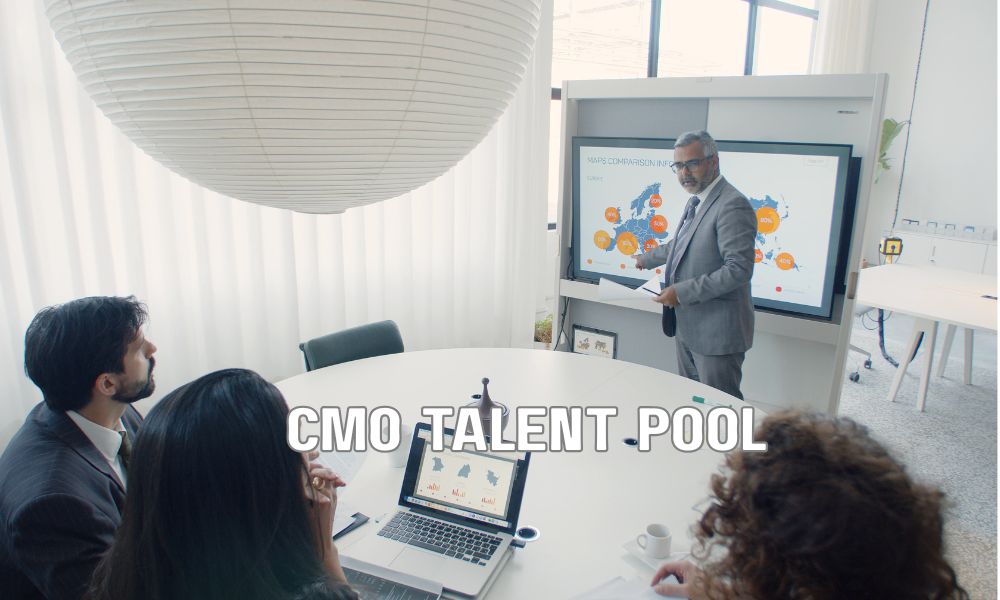
Companies should not automatically limit their search to executives currently working for direct CPG competitors.
Relevant leadership experience can also come from adjacent consumer sectors such as retail, food and beverage, beauty, personal care, health and wellness, hospitality, consumer technology, and other businesses with complex consumer journeys.
The critical question is whether the executive has faced comparable strategic problems.
A candidate from an adjacent sector may have strong experience building a premium brand, scaling e-commerce, developing customer communities, or integrating physical and digital customer experiences.
That experience can be valuable if the candidate also demonstrates the ability to learn the company’s category quickly.
Broadening the talent pool can be particularly useful when the company needs a CMO with an uncommon combination of retail, DTC, brand, data, and transformation capabilities.
A specialized executive search process can help companies map candidates across CPG categories, adjacent consumer businesses, retail organizations, DTC companies, and other relevant markets. JRG Partners’ Consumer Packaged Goods CMO Executive Search practice is structured around evaluating senior marketing leaders according to the organization’s brands, consumers, channels, and strategic objectives.
FAQs
What should a CPG company look for in a CMO who can lead both retail and DTC?
A CPG company should look for a CMO with a combination of brand leadership, retail marketing, e-commerce, DTC growth, consumer insights, analytics, commercial understanding, innovation, and cross-functional leadership. The ideal balance depends on the company’s growth strategy, channel mix, and organizational structure.
Should a CPG CMO have both traditional retail and DTC experience?
Direct experience in both areas can be valuable, but it should not necessarily be treated as an absolute requirement. Companies should evaluate whether the candidate has successfully led comparable omnichannel challenges and whether their experience demonstrates the ability to connect physical and digital customer journeys.
How do you evaluate a CMO’s DTC experience during an executive search?
Evaluate the candidate’s actual ownership of customer acquisition, e-commerce, conversion, retention, CRM, digital marketing, first-party data, and DTC economics. Ask for specific examples, business outcomes, strategic decisions, and lessons learned rather than relying solely on digital terminology in the résumé.
What retail experience should a modern CPG CMO have?
A modern CPG CMO may benefit from experience in shopper marketing, retailer relationships, brand activation, retail media, category dynamics, promotions, distribution, and commercial collaboration. The candidate should understand how brand demand and retail execution work together.
How can a CMO balance brand building and performance marketing?
A strong CMO should establish a marketing strategy that recognizes the different roles of long-term brand investment and short-term performance activity. The executive should understand when performance marketing is appropriate for measurable acquisition and when broader brand investment is necessary to build awareness, preference, and sustainable demand.
What questions should you ask a CMO candidate about omnichannel growth?
Companies can ask candidates how they have integrated retail and DTC teams, balanced channel investments, used consumer data, improved customer acquisition economics, connected brand and performance marketing, and resolved conflicts between physical and digital channels.
Can a CMO from outside CPG successfully lead retail and DTC growth?
Yes, depending on the candidate’s transferable experience. Executives from retail, consumer technology, beauty, wellness, hospitality, food and beverage, and other consumer sectors may possess relevant experience in brand building, digital commerce, customer engagement, and omnichannel growth. Category knowledge can be developed when the executive has strong transferable leadership capabilities.
How should a company structure a CMO search for an omnichannel growth leader?
The search should begin by defining the business mandate, required capabilities, leadership scope, channel responsibilities, and expected outcomes. The company can then map candidates across relevant CPG organizations and adjacent industries before evaluating them against a consistent leadership scorecard.
For organizations looking to build that leadership pipeline, JRG Partners’ Consumer Packaged Goods CMO Executive Search Firm provides a dedicated search focus for senior marketing leadership across CPG brands, channels, consumer segments, and growth priorities.

Tanya Gallardo
Managing Director, Executive Search & AI Talent Strategy
Tanya Gallardo is the Managing Director of Executive Search & AI Talent Strategy at JRG Partners, leading C-suite and Board engagements across key growth sectors including Technology, Financial Services, and Manufacturing.
With over 18 years of experience specializing in disruptive technology leadership, Tanya is recognized as a leading authority on talent architecture for future-focused executive roles, such as the Chief AI Officer (CAIO) and Chief Digital Officer (CDO). Her expertise lies in accurately assessing the cultural fit and technical depth required to ensure a high return on investment (ROI) for critical leadership appointments.
Prior to her role at JRG Partners, Tanya held senior roles directing global talent acquisition strategies at a major publicly-traded technology firm, advising on organizational design and succession planning for emerging executive functions. She is a recognized speaker and contributor to industry events, sharing data-driven insights on executive compensation, leadership development, and the measurable business impact of C-suite talent.
