


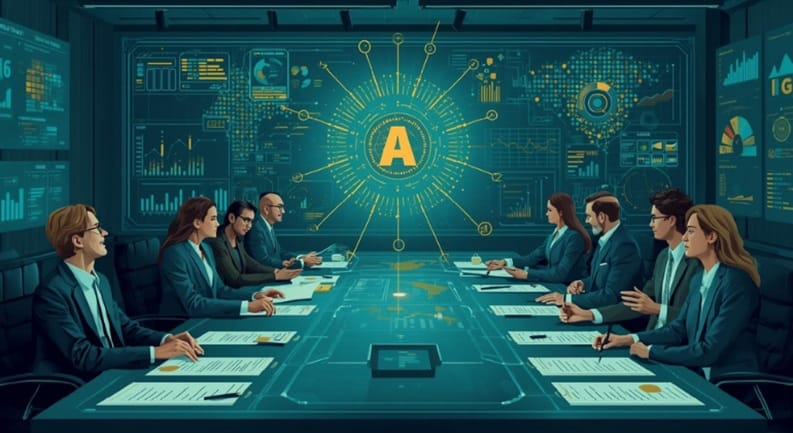
AI’s Impact on the CHRO Role: From Administrator to Strategic Tech-Savvy Partner
Key Takeaways:
- AI is rapidly transforming the CHRO role, shifting the focus from administrative tasks to strategic decision-making.
- CHROs must develop tech fluency to effectively leverage AI tools for talent acquisition, employee development, and performance management.
- The future CHRO will be a data-driven leader, using AI insights to optimize HR processes and contribute to overall business strategy.
- Ethical considerations surrounding AI in HR, such as bias and privacy, require careful attention and proactive mitigation strategies.
The Evolving Landscape of Human Resources
The role of the Chief Human Resources Officer (CHRO) is undergoing a seismic shift. We are observing a rapid evolution beyond traditional administrative and compliance functions to a strategic, data-driven approach. This transformation is largely fueled by the integration of Artificial Intelligence (AI) into various aspects of HR. This paradigm shift demands that CHROs understand how AI impacts the talent management. They need to transition to become strategic tech-savvy partners who can align HR initiatives with overall business goals. JRG Partners is at the forefront of identifying and recruiting these future-ready CHROs, having placed numerous executives adept at navigating this evolving landscape within Fortune 500 companies.
The traditional CHRO role, primarily focused on administration and compliance is rapidly fading. The rise of AI and its potential to automate routine HR tasks is driving this evolution. AI offers the potential to optimize existing processes, free up HR professionals to focus on higher-value activities, and provide deeper insights into the workforce. This is leading to a shift towards a more strategic and data-driven HR function. In fact, adoption of HR automation has seen exponential growth.
Consider for example the statistics that highlight the speed of this adoption. A recent study revealed a significant surge of companies that have adopted AI in HR in the past year.
AI-Powered Transformation in Key HR Functions
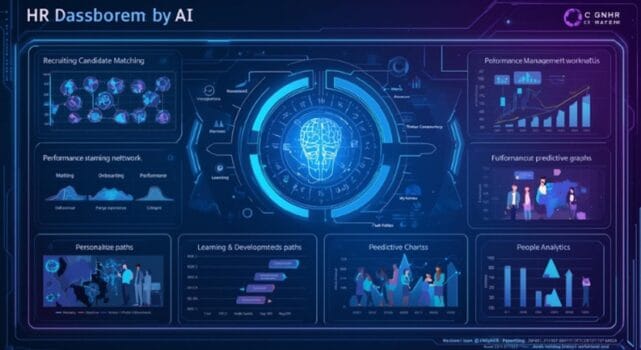
AI is not merely a technological trend; it is a fundamental re-architecting of the HR function. AI is revolutionizing key HR functions, creating opportunities for enhanced efficiency, improved decision-making, and a more personalized employee experience.
Talent Acquisition
- AI-driven sourcing and screening of candidates streamline the recruitment process, identifying top talent more efficiently.
- Predictive analytics offer invaluable insights for identifying candidates with the highest potential for success within the organization.
- Chatbots enhance candidate engagement and automate initial screening, improving the candidate experience and freeing up recruiters’ time.
For example, with AI powered employee engagement programs, organizations are seeing improvements. As JRG Partners continues to observe, organizations that embrace the automation of initial touch-points of the talent search process are proving to have greater success at identifying prospective talent.
Employee Development and Training
- Personalized learning paths, tailored to individual skill gaps, ensure that employees receive the training they need to succeed.
- AI-powered platforms deliver customized training content, adapting to individual learning styles and preferences.
- Skill gap analysis and proactive reskilling initiatives address emerging skills needs and prepare the workforce for the future.
Performance Management
- Continuous feedback and performance monitoring through AI enable real-time coaching and development opportunities.
- Identifying high-potential employees and creating personalized development plans supports career growth and succession planning.
- Data-driven insights into employee performance and productivity provide valuable information for optimizing workforce performance.
Employee Experience
- AI-powered chatbots provide instant support and query resolution, enhancing employee satisfaction and productivity.
- Personalized employee experiences, tailored to individual preferences, create a more engaging and fulfilling work environment.
- Sentiment analysis gauges employee morale and identifies potential issues, enabling proactive intervention and support.
The CHRO as a Strategic Tech-Savvy Partner

The successful CHRO of the future will be a strategic tech-savvy partner, adept at leveraging AI to drive business results. This requires developing tech fluency and understanding AI capabilities and leading the implementation and integration of AI solutions in HR. CHROs must collaborate effectively with IT and other departments to optimize AI use and leverage data insights to inform strategic HR decisions. Ultimately, the CHRO will become a trusted advisor to the CEO and other executives on talent-related matters. Understanding AI’s impact on overall talent strategy is critical for the HR leaders of tomorrow. The percentage of CHROs who believe AI is critical to the future of HR will continue to grow. As a leading executive search firm, JRG Partners recognizes the growing demand for CHROs with expertise in AI and talent strategy.
Addressing Ethical Considerations and Mitigating Risks
While AI offers tremendous potential, it also presents ethical considerations that must be addressed proactively. Bias in AI algorithms can lead to unfair hiring and promotion practices, undermining diversity and inclusion efforts. Data privacy concerns are paramount, requiring robust data security measures and transparent data governance policies. Transparency and explainability of AI-driven decisions are essential for building trust and ensuring accountability. Companies must ensure compliance with relevant regulations and ethical guidelines, developing responsible AI frameworks and policies. It is vital to ensure ethical AI implementation that prioritizes fairness and equality. The number of companies with ethical AI guidelines in place for HR is steadily rising, but there is still much work to be done.
The Ethical Imperative: Safeguarding the “Human” in Human Resources
While AI offers tremendous potential to streamline HR, it presents ethical risks that can fundamentally damage organizational culture if left unchecked. The CHRO now serves as the Ethical Architect, moving beyond simple compliance to build a framework of trust and equity.
1. Mitigating Algorithmic Bias in Talent Acquisition
Bias in AI can lead to unfair hiring practices that undermine diversity. A famous real-world example is Amazon’s 2018 experimental hiring tool, which was found to penalize resumes containing the word “women’s” because it was trained on decade-long patterns of male dominance in technical roles.
Mitigation Strategy: Strategic CHROs are now mandating “Bias Audits” and technical de-biasing. This involves stripping demographic indicators from training data and testing algorithms for “adverse impact” before they go live—ensuring that the machine evaluates skills, not stereotypes.
2. Data Privacy and Transparent Governance
With AI monitoring employee productivity and sentiment, data privacy is paramount. Organizations like Barclays faced significant backlash and regulatory scrutiny when they implemented “Big Brother” style tracking software to monitor how long employees spent at their desks.
Mitigation Strategy: Transparent governance is the solution. CHROs must implement Opt-In Policies and clear communication frameworks. This means being explicitly clear about what data is collected, why it is being collected, and ensuring that individual data is anonymized to protect the employee’s right to privacy.
3. Transparency, Explainability, and the EU AI Act
Transparency is essential for trust. Under new regulations like the EU AI Act, HR is classified as a “High-Risk” use case for AI. This means companies must be able to explain the “logic” behind an AI’s decision—such as why a specific employee was flagged for high turnover risk.
Mitigation Strategy: CHROs must prioritize Explainable AI (XAI). Instead of “Black Box” systems where the logic is hidden, they should choose tools that provide a “reason code” or a clear dashboard of factors that influenced the AI’s output, allowing human managers to validate the decision.
4. The Human-in-the-Loop Framework
To ensure fairness, AI should never be the final decision-maker. Companies like HireVue have shifted toward providing “transparency reports” that assist recruiters rather than replacing them.
Mitigation Strategy: Implement a mandatory Human-in-the-Loop (HITL) policy. AI should provide the data and the “shortlist,” but the final decisions regarding hiring, firing, and promotions must be made by a human professional who can account for empathy, nuance, and context that AI cannot perceive.
The number of companies with ethical AI guidelines in place for HR is steadily rising, but there is still much work to be done to ensure AI implementation truly prioritizes fairness and equality.
The Future of the CHRO Role

The future of the CHRO role is one of data-driven leadership and strategic partnership. CHROs must embrace continuous learning and adaptation to new AI technologies, fostering a culture of innovation and experimentation in HR. While AI will play an increasingly important role, the importance of human connection and empathy will remain paramount. As AI automates routine tasks, CHROs can focus on building strong relationships with employees, fostering a positive work environment, and championing employee well-being. Preparing for the CHRO role of the future will require expertise in both human relations and data science. The projected growth in demand for CHROs with AI expertise reflects this evolving landscape. JRG Partners specializes in identifying and recruiting CHROs who possess the unique blend of skills and experience necessary to succeed in this new era.
1. How is AI fundamentally changing the day-to-day responsibilities of a CHRO?
AI is shifting the CHRO focus from administrative oversight and manual talent management to strategic business partnership.
By automating routine tasks, the role evolves to include:
- Organizational Design: Leveraging AI insights to structure teams for maximum agility and innovation.
- Strategic Workforce Planning: Moving beyond current hiring needs to predict future talent requirements using data.
- Enhanced Employee Experience: Using AI-driven personalization to improve engagement and retention.
- High-Level Culture Building: Focusing on the human elements of the workplace that technology cannot replicate.
2. Does a CHRO need to become a technical expert to succeed in this new landscape?
No, a CHRO does not need to be a data scientist, but they must become “tech-savvy” leaders. The distinction is clear:
| Capability | Traditional CHRO | Strategic Tech-Savvy CHRO |
|---|---|---|
| Data Usage | Reporting on historical headcounts. | Using predictive analytics to forecast turnover and skill gaps. |
| AI Knowledge | Passive user of HR software. | Strategically selecting AI tools that align with business goals. |
| Tech Oversight | Delegating digital transformation to IT. | Leading the human side of digital transformation and AI adoption. |
The modern CHRO serves as the bridge between human talent and technological implementation.
3. How does AI help CHROs make better strategic decisions?
AI provides Predictive Analytics, moving the HR function from a reactive state to a proactive strategic driver.
Key strategic advantages include:
- Retention Intelligence: Identifying patterns that signal high-performing employees may be at risk of leaving before they resign.
- Skill Gap Analysis: Mapping the current workforce’s skills against future market demands to guide training and recruitment.
- Bias Mitigation: Using standardized AI tools to ensure talent selection is based on merit and data rather than unconscious human bias.
- ROI Modeling: Simulating the financial impact of different workforce scaling or compensation strategies.
4. What is the most critical challenge a CHRO faces when implementing AI?
The most critical challenge is Ethical Governance and Maintaining the “Human-in-the-Loop.”
A successful transition requires the CHRO to:
- Audit for Bias: Regularly ensuring that AI algorithms are not perpetuating historical prejudices in hiring or promotions.
- Ensure Transparency: Communicating clearly to employees how AI is used and how it affects their roles.
- Protect Privacy: Safeguarding sensitive employee data while still extracting useful insights.
Without ethical oversight, AI can damage company culture and employer brand trust.
5. Will AI eventually replace the need for a human-led HR department?
The consensus is no. While AI excels at efficiency and data processing, it lacks the Human Quotient (HQ) necessary for leadership.
The CHRO remains indispensable for:
- Complex Conflict Resolution: Navigating nuanced interpersonal issues and office politics.
- Mentorship & Coaching: Building high-level leadership pipelines and fostering professional growth.
- Empathy & Belonging: Ensuring employees feel valued as individuals, which is the core of organizational health.
- Ethical Judgment: Making final calls on sensitive talent decisions that require context AI cannot perceive.
Key Takeaways for the Strategic CHRO
As AI redefines the landscape of Human Resources, the following pillars will define the success of a modern CHRO:
- Strategy Before Software: Always define the business outcome (e.g., productivity, retention) before selecting an AI tool.
- CHRO as Orchestrator: The role is shifting toward managing a “barbell workforce”—leveraging AI-native junior talent while upskilling senior leadership in digital judgment.
- The “Bot” as a Colleague: View AI as a “digital co-worker” that handles execution, allowing humans to focus on orchestration and empathy.
- Continuous AI Adaptation: Move from one-off adoption to a mindset of continuous experimentation and “Strategic Refinement” of AI prompts and workflows.
Frequently Asked Questions
Q: How does AI help with “Internal Mobility” and employee retention?
A: AI analyzes employee skills and aspirations to match them with internal “gigs,” projects, or new roles. By surfacing opportunities that employees might not have found themselves, it reduces turnover driven by a perceived lack of career growth.
Q: What is the impact of AI on the size of the HR team?
A: While AI reduces the need for large teams dedicated to transactional tasks (scheduling, data entry), it increases the need for “Talent Advisors” and HR Data Scientists. The goal is a more efficient, high-impact team, not necessarily a smaller one.
Q: Is AI-assisted hiring actually fairer than human hiring?
A: It can be, but only if managed correctly. AI can remove unconscious human bias by focusing strictly on skills. However, it requires constant auditing to ensure the training data itself doesn’t contain historical prejudices.
Q: What is “Explainable AI” (XAI) and why does a CHRO need it?
A: XAI refers to AI systems where the “logic” behind a decision is transparent. For a CHRO, this is vital for compliance and trust—you must be able to explain to an employee or a regulator why a specific AI recommendation was made.
Q: How should a CHRO start the AI transformation journey?
A: Start by identifying the most significant “administrative bottlenecks” in your current lifecycle. Run a small pilot with one high-impact use case (like recruitment screening), measure the results, and then scale across the organization.
Real-World Impact: CHRO Case Studies in AI Transformation
The transition from administrator to strategic partner is already yielding results in global organizations. Below are three examples of how CHROs are leading this shift.
1. IBM: From “Bot Sprawl” to Strategic HR Excellence
IBM’s HR function was once bogged down by 30+ fragmented chatbots. CHRO Nickle LaMoreaux led a shift to a unified AI agent called AskHR.
- Strategy: Followed a “Eliminate, Simplify, Automate” framework to overhaul workflows rather than just adding tech on top.
- The Result: AskHR now handles 11 million interactions annually with a 94% resolution rate. This freed HR teams to focus exclusively on high-value leadership coaching and organizational health.
2. Unilever: Redefining Global Talent Acquisition
Managing 1.8 million applications annually made manual screening impossible. Unilever’s HR leadership implemented a digital funnel using AI-driven gamified assessments.
- Strategy: Shifted the recruiter’s role from “resume screener” to “final-stage talent consultant,” using AI to identify behavioral traits early in the process.
- The Result: The recruitment cycle was shortened by 75% to 90%, and the company saw a 16% increase in workforce diversity by removing human bias from the initial stages.
3. Schneider Electric: Unlocking the “Internal Gig Economy”
Data showed that nearly half of employees leaving Schneider Electric did so because they couldn’t see a clear internal career path. Global CHRO Charise Le launched an Open Talent Market (OTM).
- Strategy: Used AI to match employees with internal part-time “gigs,” full-time roles, and mentors based on skills rather than seniority.
- The Result: Unlocked 127,000 hours of hidden talent and significantly improved internal retention by giving employees agency over their own career growth.
In conclusion, the evolution of the CHRO from a traditional administrator to a strategic, tech-savvy partner is a fundamental shift necessitated by the rapid integration of artificial intelligence. By embracing AI-driven people analytics and automated workflows, HR leaders can move beyond transactional oversight to focus on high-value initiatives like workforce redesign and cultural transformation. JRG Partners is committed to navigating this new landscape with you, providing the executive search expertise and C-suite talent solutions required to identify and place visionary CHROs who can effectively bridge the gap between human intelligence and technological innovation.

Tanya Gallardo
Managing Director, Executive Search & AI Talent Strategy
Tanya Gallardo is the Managing Director of Executive Search & AI Talent Strategy at JRG Partners, leading C-suite and Board engagements across key growth sectors including Technology, Financial Services, and Manufacturing.
With over 18 years of experience specializing in disruptive technology leadership, Tanya is recognized as a leading authority on talent architecture for future-focused executive roles, such as the Chief AI Officer (CAIO) and Chief Digital Officer (CDO). Her expertise lies in accurately assessing the cultural fit and technical depth required to ensure a high return on investment (ROI) for critical leadership appointments.
Prior to her role at JRG Partners, Tanya held senior roles directing global talent acquisition strategies at a major publicly-traded technology firm, advising on organizational design and succession planning for emerging executive functions. She is a recognized speaker and contributor to industry events, sharing data-driven insights on executive compensation, leadership development, and the measurable business impact of C-suite talent.
