


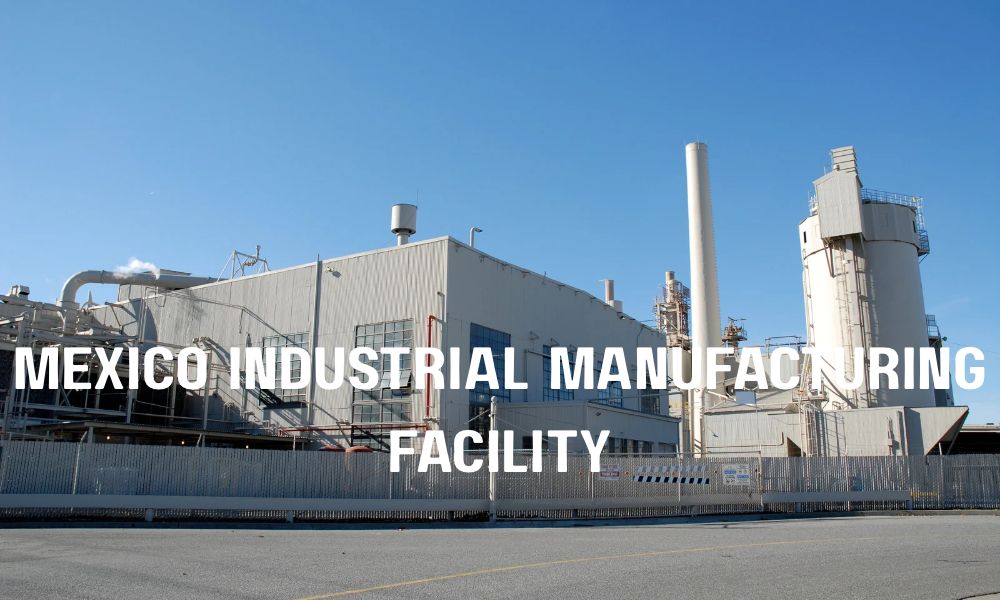
The global supply chain map has undergone its most radical realignment in three decades. Driven by escalating Section 301 tariffs on Chinese imports, geopolitical instability, and the tightening enforcement of United States-Mexico-Canada Agreement (USMCA) rules of origin, U.S. industrial manufacturers are aggressively relocating production capacity to Mexico. From Monterrey and Saltillo in the Northeast to the Bajío automotive and aerospace corridor (Querétaro, Guanajuato, San Luis Potosí) and border hubs like Tijuana and Ciudad Juárez, billions of dollars in foreign direct investment are fueling greenfield plant launches and brownfield expansions.
However, securing industrial real estate and shipping capital equipment across the border is only the beginning. The single greatest point of failure for U.S. manufacturers nearshoring to Mexico is executive leadership. Operating a cross-border manufacturing facility in 2026 requires far more than translating English Standard Operating Procedures (SOPs) into Spanish. A plant leader in Mexico sits at the volatile intersection of complex customs compliance (IMMEX), strict Regional Value Content (RVC) audits, aggressive Mexican labor reforms, and relentless U.S. corporate pressure for Lean manufacturing efficiency.
Transplanting a monolingual U.S. plant manager who lacks Mexican labor law fluency routinely triggers union friction, customs holds, and mass turnover. Conversely, hiring a purely localized manager who cannot navigate U.S. corporate boardroom expectations or ERP governance creates dangerous operational blind spots. This comprehensive guide examines the exact bilingual executive leadership profiles U.S. manufacturers must recruit in Mexico, detailing critical competencies, regional talent dynamics, evaluation scorecards, and compensation structures.
1. The 2026 Tariff & USMCA Reality: Why Plant Leadership Is a Trade Compliance Role
In the modern tariff era, nearshoring to Mexico is fundamentally a trade-compliance play. While USMCA-qualifying goods enter the United States duty-free, U.S. Customs and Border Protection (CBP) and Mexican authorities (SAT) have dramatically intensified audits surrounding rules of origin and Regional Value Content (RVC) thresholds. Manufacturers cannot simply import Asian sub-assemblies into Mexico, perform minimal light assembly, and claim North American origin without triggering severe tariff penalties.
Consequently, the modern Plant General Manager or Director of Operations in Mexico must act as a frontline guardian of trade compliance. They must partner seamlessly with supply chain and customs teams to localize Tier-2 and Tier-3 component sourcing within North America, maintain airtight Annex 24 and Annex 30 inventory control under Mexico’s IMMEX (maquiladora) program, and ensure every bill of materials (BOM) withstands intense bilateral customs scrutiny.
2. The Four Critical Leadership Archetypes for Mexican Operations
Whether launching a greenfield facility, operating under a shelter service provider, or scaling a standalone maquiladora, U.S. manufacturers must assemble four foundational bilingual leadership roles:
1. The Bilingual Plant General Manager / Country Director (The Cross-Border Bridge)
This executive is the ultimate operational commander on the ground, holding full P&L accountability for the Mexican facility while reporting directly to U.S. C-suite leadership (COO or VP of Manufacturing).
- Core Mandate: Harmonize U.S. corporate Lean/Six Sigma production standards with Mexican operational realities, oversee local regulatory and municipal relations, drive OEE (Overall Equipment Effectiveness), and protect gross margins.
- Ideal Profile: Fully bicultural and bilingual (fluent in technical English and Spanish), possessing an engineering degree and a proven track record of running tier-one automotive, aerospace, medical device, or industrial manufacturing plants in Mexico for U.S. parent companies.
2. Director of Supply Chain, Customs & IMMEX Compliance (The Tariff Shield)
In cross-border manufacturing, a single customs compliance error can freeze raw material imports at the border and shut down U.S. customer assembly lines within 48 hours. This executive owns end-to-end material flow and regulatory adherence.
- Core Mandate: Govern IMMEX program compliance, manage VAT (IVA) certification audits, calculate and document USMCA Regional Value Content, qualify local Mexican suppliers to replace Asian imports, and optimize cross-border freight logistics.
- Ideal Profile: Deep mastery of Mexican customs law (Ley Aduanera), TIGIE/HTS tariff classifications, and ERP material-tracking modules, combined with sharp vendor negotiation skills.
3. Director of Human Resources & Labor Relations (The Cultural & Union Stabilizer)
Mexico’s manufacturing boom has created fierce competition for skilled technicians and operators, driving annual turnover rates above 30% to 50% in high-density industrial parks. Simultaneously, Mexican labor law reforms (including mandatory union democratization, profit-sharing/PTU caps, and strict subcontracting rules) have transformed workforce management.
- Core Mandate: Design competitive retention and total-rewards programs (food vouchers, savings funds, transportation routes), lead collective bargaining agreements (CCT) with authentic labor unions, and prevent work stoppages.
- Ideal Profile: A battle-tested Mexican HR executive experienced in high-volume industrial staffing, union negotiations, and STPS (Ministry of Labor) regulatory audits.
4. Plant Controller / Finance Director (The Bilateral Financial Architect)
Managing cross-border financial operations requires fluency in both U.S. GAAP and Mexican IFRS/NIF accounting standards, transfer pricing rules, and foreign exchange (USD/MXN) volatility.
- Core Mandate: Manage cost accounting, track real-time labor and overhead variances, oversee transfer pricing compliance between the U.S. parent and Mexican subsidiary, and enforce strict working capital controls.
- Ideal Profile: A bilingual CPA/Contador Público with extensive manufacturing plant controllership experience in maquiladora or shelter environments.

3. Regional Talent Hubs: Matching Leadership to Industrial Clusters
Mexico is not a uniform labor market. Executive talent availability, compensation expectations, and union dynamics vary dramatically across the country’s primary manufacturing corridors:
- The Northeast Corridor (Monterrey, Saltillo, Reynosa): Mexico’s premier heavy industrial, automotive, and appliance powerhouse. Monterrey offers the deepest pool of U.S.-educated, bilingual C-suite and Plant GM talent, though intense competition from global OEMs drives rapid wage inflation and aggressive poaching.
- The Bajío Region (Querétaro, Guanajuato, San Luis Potosí, Aguascalientes): A massive hub for precision automotive, aerospace, and electronics manufacturing. The Bajío boasts strong technical university pipelines and high operational stability, making it ideal for complex engineering and quality leadership searches.
- The Northwest & Baja Border (Tijuana, Mexicali, Ciudad Juárez, Hermosillo): Dominated by medical devices, aerospace, and consumer electronics maquiladoras operating within hours of California, Arizona, and Texas. Executives here are deeply versed in cross-border just-in-time logistics and dual-residency commuting models (living in San Diego or El Paso while managing plants across the border).
4. The Bilingual Plant Leader Scorecard: 5 Vetting Domains
To avoid hiring executives who interview well in English at a U.S. headquarters but struggle to command respect on a Mexican shop floor, search committees must score candidates across five rigorous operational domains:
| Evaluation Domain | Critical Core Competencies | Sample Board Interview Question |
|---|---|---|
| 1. Bicultural Executive Presence | Code-switching fluency, U.S. boardroom reporting discipline, empathetic shop-floor leadership, eliminating “us vs. them” friction. | “Describe a time when U.S. corporate leadership pushed an aggressive productivity mandate that clashed with Mexican labor realities. How did you translate and execute that mandate without triggering floor turnover?” |
| 2. IMMEX & USMCA Trade Compliance | Annex 24/30 inventory control, Regional Value Content (RVC) auditing, VAT/IVA certification, border logistics contingency planning. | “Walk us through how you structured your plant’s material tracking and supplier qualification processes to guarantee zero USMCA origin audit failures or border customs holds.” |
| 3. Greenfield Ramp & Tech Transfer | Equipment installation/qualification, training local technicians, transferring tooling from U.S. or Asian facilities, scrap reduction. | “Detail your playbook for transferring a complex manufacturing line from the U.S. or Asia into Mexico while maintaining customer delivery SLAs and compressing the yield ramp timeline.” |
| 4. Labor Relations & Retention Engineering | Union collective bargaining, STPS compliance, supervisor leadership training, creative non-cash retention benefits. | “In an industrial park with 40% annual operator turnover, what specific operational, cultural, and compensation levers did you pull to stabilize your workforce below 15%?” |
| 5. Lean Execution & Cost Accountability | OEE optimization, Six Sigma root-cause analysis, scrap/rework reduction, transfer pricing and variance management. | “Beyond lower hourly labor rates, how have you driven true operational efficiency—such as automation integration or scrap reduction—to expand plant gross margins?” |
5. Compensation & Structuring Offers for Bilingual Leaders in Mexico
U.S. companies frequently lose top-tier bilingual plant leaders during final offer negotiations because they fail to understand Mexican executive compensation norms. Simply offering a U.S.-style base salary without accounting for mandatory statutory benefits and tax-advantaged perks results in an uncompetitive package.
- Base Salary Benchmarks: Depending on plant headcount, technical complexity, and region, bilingual Plant General Managers in Mexico typically command base salaries ranging from $140,000 to $240,000+ USD equivalent, while multi-plant Country Directors exceed $250,000 to $350,000+ USD.
- Mandatory Statutory & Market Benefits (Prestaciones): Mexican executives expect standard statutory and market-competitive benefits, including the Aguinaldo (year-end bonus, commonly 30 days of salary for executives), Prima Vacacional (vacation premium), Fondo de Ahorro (matched savings fund up to 13% capped), Vales de Despensa (grocery vouchers), major medical insurance (SGMM), and an executive vehicle allowance.
- Performance Bonuses & Long-Term Incentives: Annual performance bonuses (typically 25% to 50% of base) should be tied directly to OEE targets, safety records, quality PPM (parts per million), and customs compliance. For private equity-backed manufacturers, granting phantom equity or parent-company stock options is an increasingly decisive differentiator for locking in elite talent.

Conclusion
Nearshoring to Mexico offers U.S. manufacturers a decisive competitive advantage in the tariff era—compressing transit times from weeks to days, eliminating punitive Asian import duties, and strengthening North American supply chain resilience. However, low hourly labor rates alone never guarantee a profitable factory. Capturing the true economic value of nearshoring depends entirely on placing bicultural, technically rigorous, and trade-compliant executives at the helm of your Mexican operations.
Because verified bilingual Plant General Managers, IMMEX supply chain directors, and labor-savvy HR leaders are among the most heavily recruited executives in North America, relying on generic job boards or U.S.-centric staffing agencies consistently leads to costly delays and mis-hires. To map regional industrial clusters, rigorously vet bilateral technical and compliance fluency, and structure winning compensation packages, forward-thinking boards partner with specialized experts. Collaborating with a dedicated Nearshoring Mexico Manufacturing Executive Search Firm ensures your organization has confidential, direct access to the proven cross-border leaders who will turn your Mexican footprint into a high-performing operational engine.
Frequently Asked Questions (FAQs)
1. Why shouldn’t we just relocate an experienced U.S. Plant Manager to run our new facility in Mexico?
Relocating a monolingual U.S. plant manager is one of the most common and expensive mistakes in nearshoring. Even with translators, an executive who cannot communicate directly with supervisors, navigate Mexican labor unions, or understand IMMEX customs compliance will struggle to build trust on the shop floor. Furthermore, expatriate packages are extraordinarily expensive and frequently end in early repatriation due to family relocation fatigue.
2. What is the difference between operating under a Shelter company vs. a standalone Maquiladora (IMMEX) for executive hiring?
Under a Shelter model, the shelter provider holds the IMMEX registration and handles HR, payroll, customs, and facilities compliance, allowing the U.S. company to focus purely on hiring a bilingual Plant Manager and engineering leads. In a standalone entity, the U.S. manufacturer owns the legal entity directly and must recruit a full local C-suite—including a Country Director, Plant Controller, HR Director, and Customs/IMMEX Director.
3. How long does a retained executive search for a bilingual Plant General Manager in Mexico take?
A targeted, retained executive search for a bilingual Plant GM or Operations Director in Mexico typically requires 10 to 14 weeks from search kickoff to a signed offer letter. Because top bilingual leaders are constantly courted by expanding tier-one OEMs and private equity roll-ups, extracting passive candidates requires discreet, localized headhunting.
4. How do USMCA rules of origin impact the daily responsibilities of a Plant Manager in Mexico?
To enter the U.S. duty-free under USMCA, products must meet strict Regional Value Content (RVC) thresholds—meaning a specific percentage of components and value must originate in North America. The Plant Manager and Supply Chain Director must continuously track BOM origins, qualify local Mexican Tier-2 suppliers, and ensure production processes satisfy tariff-shift rules to prevent sudden border duties.
5. What are the biggest red flags when interviewing bilingual manufacturing executives in Mexico?
Key warning signs include: relying heavily on authoritarian, top-down management styles that drive massive operator turnover in modern industrial parks; lacking direct ownership of IMMEX/Annex 24 inventory audits; an inability to explain U.S. GAAP variance reporting; and exaggerating technical English fluency during initial screening calls.
6. Which regions in Mexico have the deepest talent pools for bilingual manufacturing executives?
Monterrey (Nuevo León) and Saltillo (Coahuila) possess the largest concentration of bilingual, U.S.-aligned industrial executives. Other major talent hubs include Querétaro and Guanajuato in the Bajío region (strong in automotive and aerospace), Guadalajara (electronics and high-tech), and border cities like Tijuana and Ciudad Juárez (medical devices and cross-border logistics).

Tanya Gallardo
Managing Director, Executive Search & AI Talent Strategy
Tanya Gallardo is the Managing Director of Executive Search & AI Talent Strategy at JRG Partners, leading C-suite and Board engagements across key growth sectors including Technology, Financial Services, and Manufacturing.
With over 18 years of experience specializing in disruptive technology leadership, Tanya is recognized as a leading authority on talent architecture for future-focused executive roles, such as the Chief AI Officer (CAIO) and Chief Digital Officer (CDO). Her expertise lies in accurately assessing the cultural fit and technical depth required to ensure a high return on investment (ROI) for critical leadership appointments.
Prior to her role at JRG Partners, Tanya held senior roles directing global talent acquisition strategies at a major publicly-traded technology firm, advising on organizational design and succession planning for emerging executive functions. She is a recognized speaker and contributor to industry events, sharing data-driven insights on executive compensation, leadership development, and the measurable business impact of C-suite talent.
