


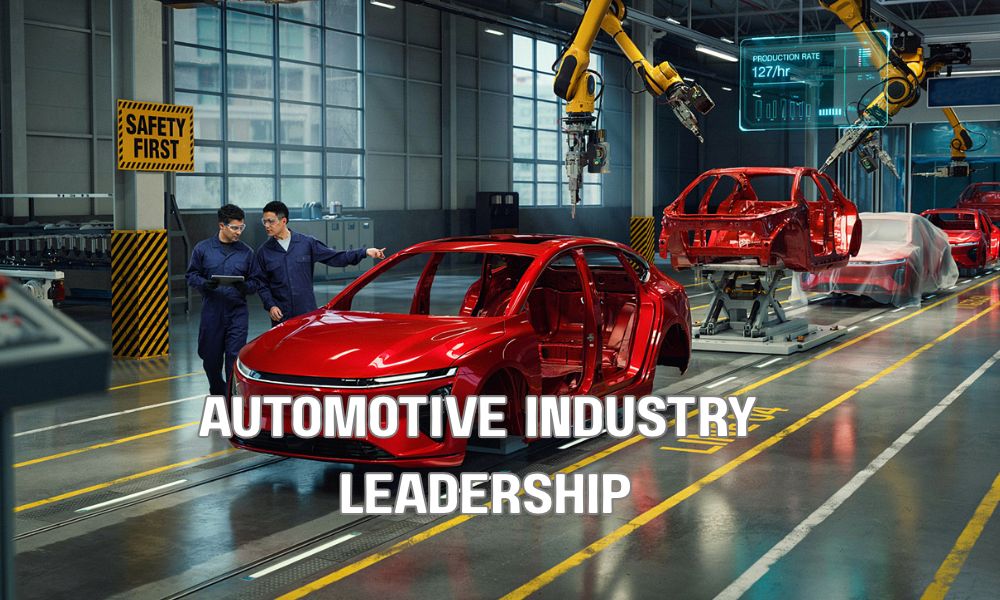
Finding the right executive in the automotive industry has become increasingly complex. Electric vehicles, software-defined vehicles, artificial intelligence, advanced manufacturing, and global supply chain restructuring are changing the leadership capabilities companies need to remain competitive.
Automotive manufacturers and suppliers are no longer competing exclusively for executives with traditional engineering and manufacturing backgrounds. They are also competing with technology companies, battery manufacturers, semiconductor businesses, energy companies, and emerging mobility platforms for leaders with specialized expertise.
The challenge is finding executives who can bridge these worlds. A technology leader must understand the realities of automotive engineering and safety. A manufacturing executive must manage production efficiency while supporting new vehicle architectures. A supply chain leader must balance cost, resilience, and geopolitical risk. Meanwhile, CEOs and CFOs must make significant investment decisions while navigating uncertain demand and changing competitive dynamics.
These overlapping requirements make certain leadership positions particularly difficult to fill.
For companies planning their next leadership appointments, understanding where talent shortages are most challenging—and how successful organizations approach these searches—can improve recruitment outcomes, reduce hiring delays, and strengthen long-term leadership capability.
This guide examines the 10 hardest executive roles to fill in the automotive industry in 2026, why each position presents recruitment challenges, and how companies can identify and attract the right candidates.
Why Automotive Executive Recruitment Is Becoming More Challenging
Automotive companies are managing several transformations simultaneously. Established manufacturers must maintain existing vehicle programs while investing in electrification, connected technologies, and software-driven products. Suppliers must adapt to changing component requirements, new customer expectations, and evolving manufacturing processes.
At the same time, automotive businesses increasingly need capabilities that were historically developed outside the industry.
According to KPMG’s automotive industry research, software, artificial intelligence, advanced computing, and supply chain volatility are becoming important factors in how automotive companies compete and innovate.
Several challenges are particularly relevant to executive hiring:
- Specialized technical expertise: Candidates must understand increasingly complex combinations of hardware, software, electronics, and manufacturing systems.
- Competition across industries: Automotive employers often compete with technology, aerospace, energy, and industrial automation companies for similar leadership capabilities.
- Transformation experience: Organizations need executives who have delivered measurable results during significant operational or technological change.
- Long development cycles: Automotive products involve extensive engineering, validation, manufacturing, and quality requirements that can make leadership mistakes costly.
- Compensation expectations: Highly sought-after technology and battery executives may compare automotive opportunities with packages offered by businesses in adjacent industries.
- Succession gaps: Experienced leaders in traditional automotive functions may not always have the expertise required for emerging technology-driven responsibilities.
The following ranking reflects these overlapping challenges. Actual hiring difficulty varies by geography, company size, business model, and the precise responsibilities assigned to each position.
1. Chief Software Officer

Why this role is difficult to fill: Automotive companies increasingly depend on software to differentiate their products, deliver connected services, manage vehicle functions, and support over-the-air updates. However, relatively few executives combine large-scale software leadership with a strong understanding of automotive engineering, safety, and manufacturing constraints.
A Chief Software Officer may oversee software platforms, embedded systems, development processes, software integration, and collaboration between engineering and digital product teams.
The challenge is that the strongest software leaders often have attractive opportunities in technology companies, cloud computing, consumer electronics, and enterprise software. Automotive employers must demonstrate that their organizations offer meaningful technical challenges, sufficient decision-making authority, and a credible product roadmap.
What leading companies should look for
- Experience scaling complex software platforms and engineering organizations.
- Understanding of embedded systems, automotive electronics, or safety-critical software.
- Knowledge of software architecture, cybersecurity, and continuous development processes.
- Ability to coordinate software releases with hardware development and vehicle validation.
- A track record of improving engineering productivity, software quality, or product delivery.
How to fill the role
Expand the search beyond traditional automotive employers. Relevant candidates may come from aerospace, semiconductor companies, consumer electronics, industrial automation, or large technology platforms.
Evaluate candidates on their ability to operate within automotive constraints rather than assuming that experience at a major technology company automatically translates into automotive success.
Companies should also define the position clearly. A Chief Software Officer responsible for vehicle software platforms requires a different profile from a CIO overseeing enterprise IT or a CTO responsible for the entire technology portfolio.
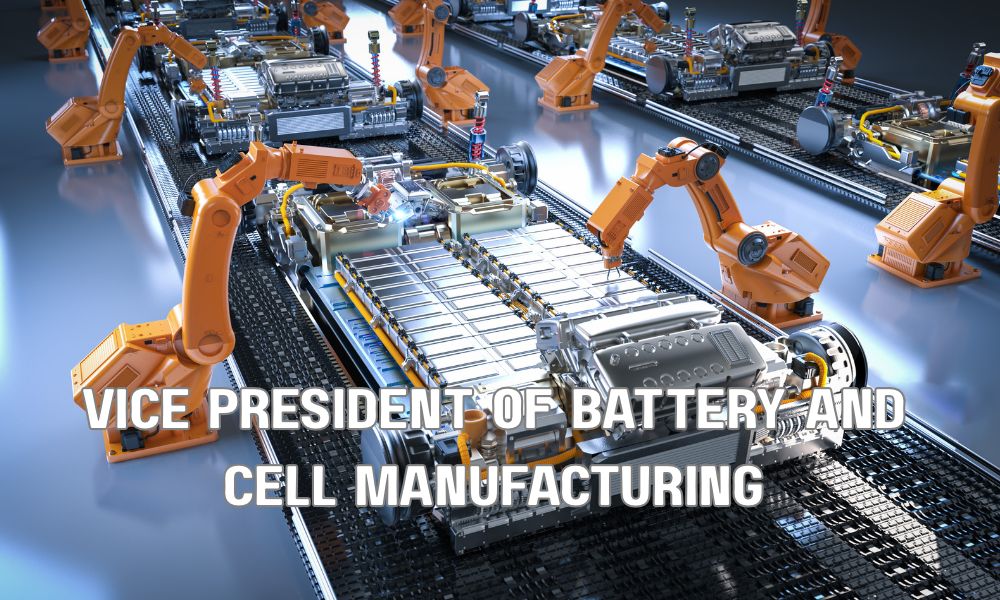
2. Vice President of Battery and Cell Manufacturing
Why this role is difficult to fill: Battery manufacturing combines specialized engineering, process control, production economics, safety, quality management, and industrial-scale execution. Launching a new facility or scaling production requires experience that cannot be developed through general manufacturing leadership alone.
Automotive companies and battery manufacturers need executives who understand the transition from laboratory development and pilot production to reliable, commercially viable manufacturing at scale.
These leaders must manage capital-intensive projects while addressing yield improvement, equipment performance, supplier quality, workforce development, and production ramp-up.
What leading companies should look for
- Experience launching or scaling battery manufacturing facilities.
- Knowledge of battery cell production, process engineering, and quality systems.
- Understanding of capital expenditure planning and manufacturing economics.
- Experience managing industrialization timelines and production ramp risks.
- Ability to coordinate engineering, procurement, operations, and quality teams.
How to fill the role
Look beyond conventional automotive manufacturing networks. Relevant talent may come from battery cell producers, energy storage businesses, chemical processing, electronics manufacturing, and other capital-intensive industrial operations.
Assess candidates on their actual contribution to facility launches, yield improvement, production readiness, and operational performance. Experience managing a mature plant is valuable, but it does not necessarily demonstrate the ability to establish a new battery manufacturing operation.
Companies should also align compensation with the specialized nature of the role and explain the project’s funding, technology strategy, production targets, and long-term commercial outlook.
3. Chief Operating Officer
Why this role is difficult to fill: Automotive COOs must increasingly manage two operating environments at once: established vehicle and component production, alongside new manufacturing requirements associated with electrification, automation, and software-driven product development.
The position requires more than operational efficiency. A successful COO must balance production volumes, quality, workforce capability, supplier performance, cost reduction, and transformation priorities without disrupting the company’s existing business.
For manufacturers operating multiple facilities or product platforms, the complexity increases further. Different plants may face different technology requirements, labor conditions, production schedules, and investment priorities.
What leading companies should look for
- Leadership experience across complex manufacturing operations.
- Evidence of improving productivity, quality, and delivery performance.
- Experience managing plant launches, operational restructuring, or technology transitions.
- Strong financial understanding and capital allocation judgment.
- Ability to lead cross-functional teams and manage organizational change.
How to fill the role
Prioritize measurable operating results over prestigious titles alone. Candidates should be able to explain how they improved production performance, managed a difficult transition, reduced operating costs, or strengthened quality across an organization.
Consider leaders from adjacent sectors such as aerospace, industrial automation, heavy equipment, and advanced manufacturing when their experience aligns with the company’s operating model.
Before launching a search, clarify whether the COO’s primary mandate is operational stabilization, manufacturing transformation, global expansion, or preparation for a new product portfolio. Each requires a different leadership emphasis.
4. Vice President of Electrification
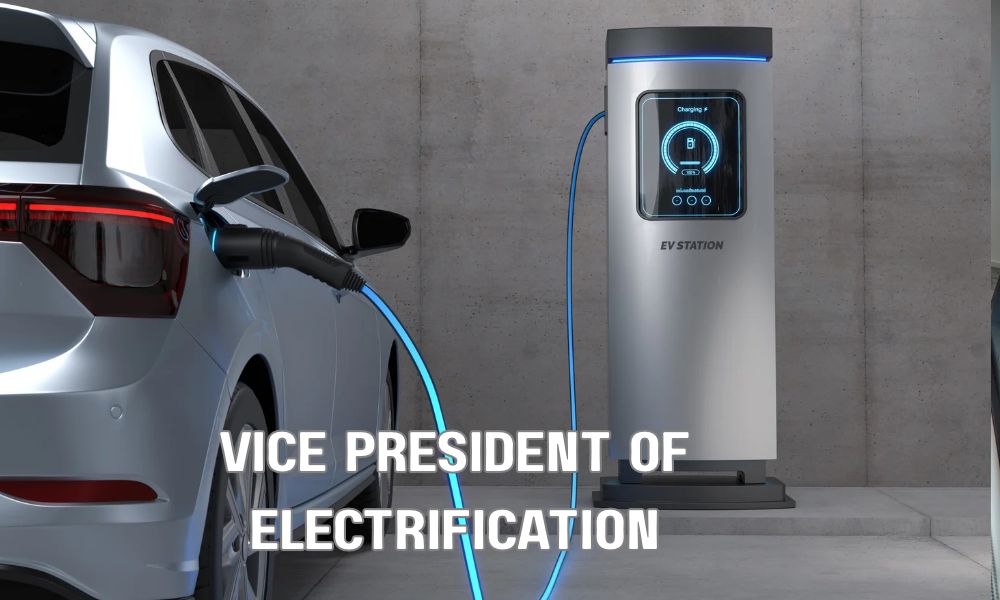
Why this role is difficult to fill: Electrification leadership requires executives who understand the technical, commercial, and manufacturing implications of transitioning from conventional powertrains to electric and hybrid systems.
The position may involve electric powertrain development, vehicle platform strategy, battery integration, power electronics, charging partnerships, and coordination between engineering and manufacturing.
Companies need leaders who can assess competing technology options while managing cost, product performance, production readiness, and customer requirements. They must also understand how electrification decisions affect the broader vehicle portfolio and long-term investment strategy.
What leading companies should look for
- Experience leading electrification programs or electric powertrain development.
- Knowledge of battery systems, power electronics, thermal management, or vehicle integration.
- Experience managing engineering budgets and product development milestones.
- Ability to evaluate supplier capabilities and technology partnerships.
- Commercial judgment concerning product costs, performance, and market requirements.
How to fill the role
Map the talent market across OEMs, Tier 1 suppliers, battery companies, power electronics manufacturers, and electric mobility businesses.
Assess the scale and complexity of programs candidates have led. Experience working on a component or subsystem may not be equivalent to leading an integrated electrification program across multiple vehicle platforms.
Companies should also avoid defining the role around a single technology assumption. The right executive should be able to evaluate different powertrain strategies according to market demand, regulation, product requirements, and business economics.
5. Chief Supply Chain Officer
Why this role is difficult to fill: Automotive supply chains span multiple countries, supplier tiers, production systems, and critical materials. Shortages involving semiconductors, batteries, electronic components, or specialized materials can affect manufacturing schedules and customer deliveries.
The Chief Supply Chain Officer must therefore balance cost efficiency with resilience. Traditional procurement experience remains important, but the modern role also requires risk modeling, supplier diversification, scenario planning, and a strong understanding of geopolitical exposure.
Leaders must determine where alternative sourcing is practical, which components create concentrated risk, and how much additional inventory or production flexibility is justified.
What leading companies should look for
- Experience leading complex, multinational supply chains.
- Knowledge of automotive supplier networks and critical component categories.
- Strong capabilities in risk management, demand planning, and inventory optimization.
- Experience building supplier partnerships and alternative sourcing strategies.
- Ability to balance working capital, cost, service levels, and continuity of supply.
How to fill the role
Consider candidates from automotive procurement, electronics, semiconductor manufacturing, aerospace, industrial equipment, and global logistics.
Use structured interviews to examine how candidates handled real supply disruptions. Ask what decisions they made, how they evaluated alternatives, and what measurable improvements followed.
Companies should also clarify whether the position owns procurement, logistics, demand planning, supplier quality, and supply chain risk—or only some of these functions. An unclear mandate can deter qualified candidates and create confusion after the appointment.
6. Vice President of Manufacturing
Why this role is difficult to fill: Automotive manufacturing leaders must deliver consistent production performance while adapting facilities, equipment, processes, and workforce capabilities to changing product requirements.
Some manufacturers need executives who can manage conventional powertrain production alongside new electric vehicle programs. Others require leaders who can establish new plants, modernize production lines, improve automation, or integrate digital manufacturing systems.
The difficulty lies in finding someone who can achieve operational targets today while preparing the manufacturing network for future products.
What leading companies should look for
- Experience managing multiple plants or large-scale production operations.
- Knowledge of lean manufacturing, continuous improvement, and quality management.
- Experience with production launches, capacity planning, and capital projects.
- Understanding of automation, industrial data, and workforce productivity.
- A demonstrated ability to improve cost, delivery, safety, and quality metrics.
How to fill the role
Assess candidates against the company’s specific manufacturing environment. A leader who has managed stable, high-volume production may need additional support when transitioning into a greenfield plant launch or a radically different production process.
Ask candidates to describe the production systems they have improved, the operational challenges they faced, and the results they achieved.
Leading companies also develop internal manufacturing talent through rotational assignments, plant leadership programs, and exposure to new product launches. These initiatives can strengthen the succession pipeline and reduce dependence on external hiring for every senior vacancy.
7. Chief Technology Officer
Why this role is difficult to fill: Automotive technology leadership increasingly spans mechanical engineering, electronics, batteries, software, connectivity, artificial intelligence, and advanced driver-assistance systems.
A CTO must make decisions across this technology portfolio while balancing product differentiation, engineering feasibility, safety, cost, and development timelines.
Finding an executive with deep expertise in every discipline is unrealistic. The recruitment challenge is identifying a leader with sufficient technical breadth to make informed decisions, strong engineering judgment, and the ability to build teams with complementary expertise.
What leading companies should look for
- Experience leading complex product engineering or technology organizations.
- Understanding of systems engineering and integration across hardware and software.
- Experience managing technology roadmaps and research and development investments.
- Knowledge of product validation, technical risk, and quality requirements.
- Ability to recruit and develop specialized engineering leadership.
How to fill the role
Define the CTO’s mandate before identifying candidates. Some organizations need a product engineering leader, while others require a technology strategist who can coordinate software platforms, connected services, and advanced vehicle architectures.
Explore candidates from automotive OEMs, Tier 1 suppliers, aerospace, industrial technology, and semiconductor businesses. Evaluate their ability to connect technical decisions with product strategy and business performance.
Boards should also distinguish the CTO role from the Chief Software Officer and CIO roles. Clear decision rights reduce duplication, improve accountability, and make the position more attractive to qualified candidates.
Why Specialized Automotive Executive Search Matters
Recruiting senior automotive leaders requires an understanding of both executive capabilities and the operating realities of the industry. The strongest candidate for a software leadership role may come from outside automotive, while a plant operations position may demand extensive experience with automotive production systems and supplier relationships.
A specialized search approach helps companies define these distinctions, identify relevant candidate markets, and evaluate the experience that matters most to the assignment.
JRG Partners supports organizations seeking senior leadership talent across specialized industries and functions. Companies recruing for manufacturing, engineering, electrification, supply chain, and other automotive leadership positions can explore Automotive & Mobility Executive Recruiters to learn more about its executive search services.
Before engaging a search partner, companies should assess industry knowledge, research methodology, candidate evaluation practices, confidentiality, stakeholder communication, and the partner’s ability to understand the specific business mandate.
Frequently Asked Questions
What are the hardest executive roles to fill in the automotive industry?
Some of the most challenging positions include Chief Software Officer, VP of Battery and Cell Manufacturing, COO, VP of Electrification, Chief Supply Chain Officer, VP of Manufacturing, CTO, VP of Quality, Chief Procurement Officer, and CFO. Hiring difficulty varies by company, geography, and role requirements.
Why are automotive software executives difficult to recruit?
Automotive software leaders need a combination of software engineering, platform development, cybersecurity awareness, and an understanding of automotive safety and product development. They also compete with technology businesses for experienced talent.
Should automotive companies hire executives from other industries?
Yes, when the candidate’s capabilities match the business requirements. Technology, aerospace, energy, semiconductor, and industrial automation companies may offer relevant expertise. Employers should evaluate transferable skills alongside industry-specific knowledge.
How can companies reduce the time required to hire automotive executives?
Companies can improve hiring speed by defining the role clearly, prioritizing essential qualifications, mapping the talent market early, coordinating decision-makers, maintaining competitive compensation, and using a structured assessment process.
What should automotive companies prioritize when hiring a CTO?
The ideal CTO profile depends on the organization’s strategy. Relevant capabilities may include product engineering, systems architecture, electrification, software integration, technology investment, and engineering leadership. Companies should clarify the CTO’s responsibilities before beginning the search.
Why is succession planning important in automotive leadership?
Succession planning helps organizations prepare for executive departures and develop internal candidates for critical positions. It is especially valuable when specialized expertise is difficult to recruit externally or requires substantial industry experience.
When should a company use an automotive executive search firm?
A specialized executive search firm can be useful when a role requires scarce technical expertise, confidential recruitment, cross-industry sourcing, or access to experienced leaders who are not actively seeking new positions.
Conclusion: Build the Automotive Leadership Team for What Comes Next
The most difficult automotive executive searches are increasingly concentrated in positions that combine traditional industry expertise with emerging capabilities in software, electrification, advanced manufacturing, supply chain resilience, and financial transformation.
Finding the right leaders requires more than matching job titles to résumés. Companies must define the business problem, identify the capabilities needed to solve it, explore the right talent markets, and evaluate candidates against measurable achievements.
Leading organizations also recognize that executive recruitment and succession planning work best together. External hiring can introduce specialized expertise, while internal development builds continuity and organizational knowledge.
For automotive companies navigating rapid technological and operational change, a thoughtful executive search strategy can strengthen leadership capability, improve execution, and support long-term competitiveness.
To explore executive recruitment for automotive manufacturers, suppliers, and mobility businesses, visit JRG Partners’ Automotive & Mobility Executive Recruiters page.

Tanya Gallardo
Managing Director, Executive Search & AI Talent Strategy
Tanya Gallardo is the Managing Director of Executive Search & AI Talent Strategy at JRG Partners, leading C-suite and Board engagements across key growth sectors including Technology, Financial Services, and Manufacturing.
With over 18 years of experience specializing in disruptive technology leadership, Tanya is recognized as a leading authority on talent architecture for future-focused executive roles, such as the Chief AI Officer (CAIO) and Chief Digital Officer (CDO). Her expertise lies in accurately assessing the cultural fit and technical depth required to ensure a high return on investment (ROI) for critical leadership appointments.
Prior to her role at JRG Partners, Tanya held senior roles directing global talent acquisition strategies at a major publicly-traded technology firm, advising on organizational design and succession planning for emerging executive functions. She is a recognized speaker and contributor to industry events, sharing data-driven insights on executive compensation, leadership development, and the measurable business impact of C-suite talent.
