


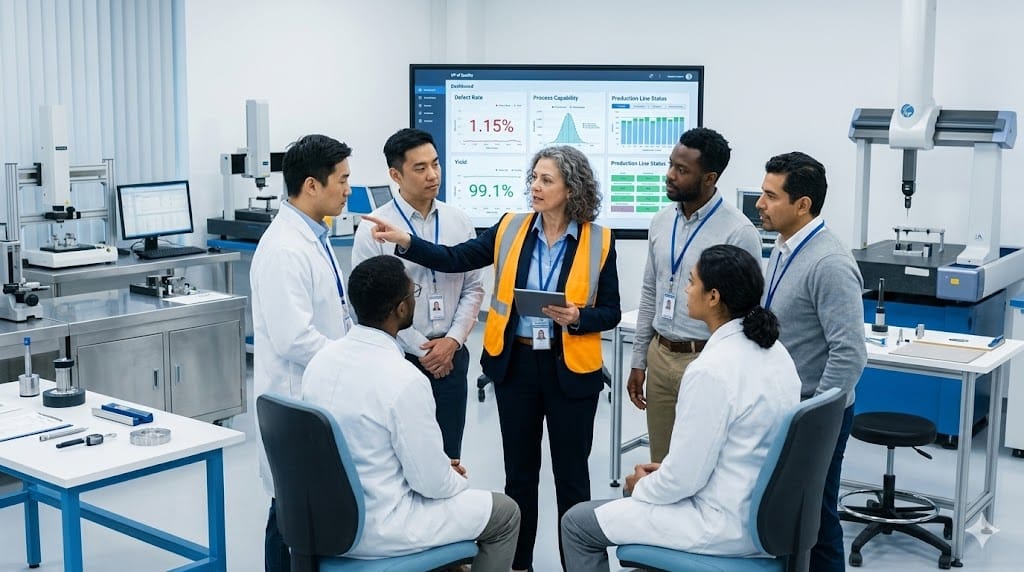
In the dynamic landscape of modern US manufacturing, the role of the Vice President of Quality has undergone a profound transformation. No longer merely a technical overseer, this executive is now a pivotal strategic leader, directly influencing enterprise profitability, brand equity, and market competitiveness. At JRG Partners, a premier US-based executive search firm, our in-depth market intelligence and executive placements across the nation consistently demonstrate that identifying and securing this caliber of talent is paramount.
Boards and CEOs are increasingly asking: What core skills distinguish an average VP of Quality from a truly strategic manufacturing leader? Our research indicates a clear differentiation lies in their capacity to not just enforce standards, but to architect a pervasive quality ecosystem.
The imperative for a strategic quality executive in US manufacturing has never been more pronounced. As business research consistently highlights, quality is no longer a cost center but a significant value driver. JRG Partners’ proprietary methodologies ensure that our candidates possess the visionary leadership and technical acumen required to navigate this complexity, providing a critical competitive edge.
Why the VP of Quality is Now a Strategic Imperative in US Manufacturing
The shift from a reactive, inspection-based function to a proactive, value-adding strategic discipline is undeniable. This transformation is driven by several critical factors impacting US corporations:
- Beyond Inspection: Proactive Quality Assurance & Risk Mitigation: Modern quality leadership focuses on preventing issues, not just identifying them post-production. This involves establishing robust preventive strategies that safeguard operations and product integrity.
- Impact on Brand & Customer Loyalty: In today’s transparent marketplace, product quality is a primary differentiator, directly driving consumer trust and market share. Superior quality enhances customer satisfaction and secures long-term loyalty.
- Financial Imperatives: Mitigating the Cost of Poor Quality (COPQ): The financial implications of inadequate quality control—ranging from scrap and rework to warranty claims and catastrophic recalls—are substantial. [STAT: The Cost of Poor Quality (COPQ) can account for 5-30% of a company’s revenue, making effective quality management a significant profit lever.] A strategic quality leader dramatically reduces this burden.
- Globalization & Supply Chain Complexity: Managing quality across intricate, globally distributed operations and complex supplier networks demands sophisticated oversight and strategic integration.
- Regulatory Landscape & Compliance Adherence: Navigating the increasingly stringent US national and international regulatory frameworks (e.g., FDA, OSHA) and avoiding costly penalties requires expert stewardship.
- Competitive Advantage & Market Share: Leveraging superior product quality and operational excellence enables companies to command premium pricing and accelerate market share growth.
- Integration with Industry 4.0 & Digital Transformation: Harnessing advanced data analytics, automation, Artificial Intelligence (AI), and the Internet of Things (IoT) for predictive quality and smart manufacturing processes is now fundamental.
Pivotal Technical Competencies: Standards, Systems, and Compliance in the US Landscape
A strategic VP of Quality must possess not only broad expertise but also specific, hands-on experience with the critical frameworks governing US industrial sectors. JRG Partners identifies candidates who exhibit a deep understanding and practical application of:
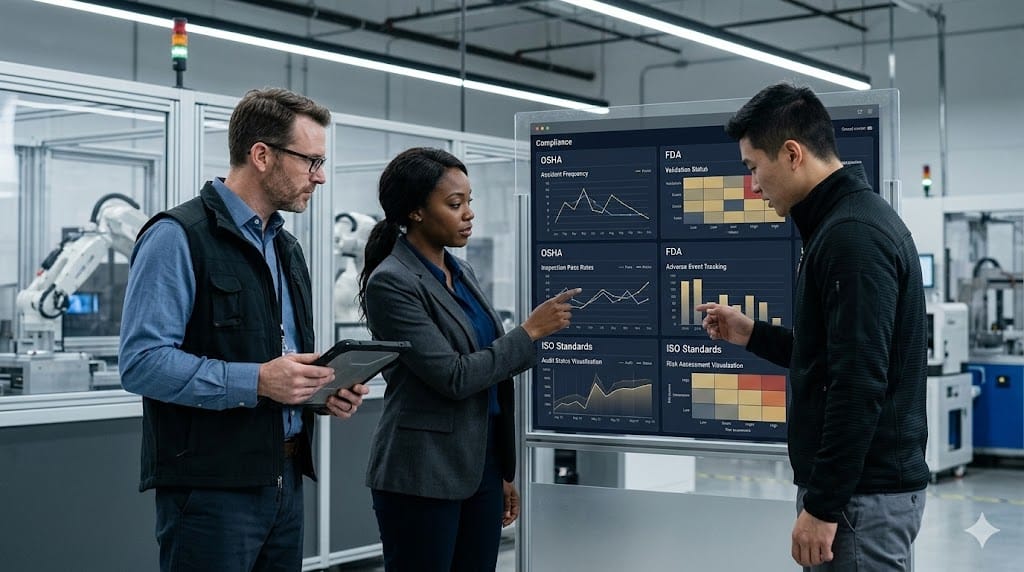
- Mastery of Quality Management Systems (QMS): Comprehensive command over established global QMS standards, tailored for US implementation.
- ISO 9001 (general US manufacturing excellence)
- IATF 16949 (US automotive supply chain precision)
- AS9100 (US aerospace and defense integrity)
- ISO 13485 (US medical devices regulatory compliance)
- GMP/GLP (US pharmaceuticals, food & beverage stringent controls)
Our search methodology rigorously vets candidates to determine precisely which quality frameworks (ISO, IATF, GMP, etc.) should a VP of Quality have hands-on experience with in modern plants?
- Regulatory Expertise: Profound understanding of relevant US national and international regulations (e.g., FDA, EPA, CE Mark, OSHA, ITAR).
- Statistical Process Control (SPC) & Data Analytics: Proficiency in leveraging advanced statistical tools and data analytics to monitor, control, and continuously enhance manufacturing processes.
- Audit Management & Corrective/Preventive Actions (CAPA): Extensive experience in managing internal, external, and supplier audits, alongside robust CAPA system development and implementation.
- Risk Management Methodologies: Expertise in critical methodologies such as FMEA (Failure Mode and Effects Analysis) and comprehensive hazard analysis.
- Supplier Quality Management (SQM): Developing and deploying robust programs for rigorous supplier selection, qualification, ongoing monitoring, and strategic partnership.
Operational Excellence: Lean, Six Sigma, and Continuous Improvement Architectures
Beyond theoretical knowledge, the ideal candidate will have a documented track record of implementing operational excellence initiatives that yield quantifiable results within US manufacturing environments. Our assessment delves into their experience with:
- Lean Manufacturing Principles: Practical application of waste reduction, value stream mapping, and 5S methodologies to optimize production flows.
- Six Sigma Methodologies: Proven expertise in DMAIC (Define, Measure, Analyze, Improve, Control) and DFSS (Design for Six Sigma), often evidenced by Black Belt certification. This proficiency is crucial for process variability reduction.
- Continuous Improvement (CI) Programs: Developing and sustaining CI programs, including Kaizen events, Gemba walks, and fostering a culture of perpetual process optimization throughout the organization. When we ask, how do you evaluate a candidate’s experience with Lean, Six Sigma, and continuous improvement programs? JRG Partners focuses on tangible project outcomes and their ability to institutionalize improvement.
- Process Capability & Optimization: Utilizing advanced tools to understand, predict, and significantly enhance process performance and efficiency.
- Integration with Production: Ensuring quality is intrinsically embedded within manufacturing processes, moving beyond mere end-of-line inspection.
- Driving Efficiency and Cost Reduction through Quality Initiatives: Demonstrable ROI from strategically led quality improvements.
Cross-Functional Leadership: Enterprise-Wide Integration and Influence
A strategic VP of Quality is a master collaborator, adept at integrating quality objectives across all critical business functions within a US corporation. They serve as an influential partner, not an isolated enforcer. JRG Partners seeks leaders who excel in:

- Collaboration with Operations: Aligning quality objectives with production schedules, efficiency targets, and capacity planning.
- Strategic Partnership with Supply Chain: Ensuring upstream supplier quality, managing incoming material integrity, and mitigating critical supply chain risks.
- Integration with R&D/Product Development: Implementing Design for Quality (DfQ), Advanced Product Quality Planning (APQP), and ensuring quality by design at New Product Introduction (NPI) stages.
- Engagement with Sales & Marketing: Translating customer requirements into quality specifications, articulating quality value, and converting market feedback into actionable improvements.
- Executive Team Influence: Advocating for essential quality investments, providing data-driven insights to the Board, and ensuring quality strategy is seamlessly aligned with overall business goals. What behavioral interview questions reveal a VP of Quality’s ability to influence plant leaders and operators? JRG Partners crafts scenarios that test for empathy, persuasive communication, and strategic alignment.
- Customer & Field Quality Management: Transforming customer complaints and field issues into structured, data-driven improvement projects. **
Cultivating a Pervasive Quality Culture: From Shop Floor to Boardroom
The most impactful VP of Quality creates a sustainable culture where quality is a shared responsibility, not a departmental mandate. Our assessment focuses on their ability to truly embed quality values:
- Vision & Communication: Articulating a compelling quality vision that resonates authentically across all organizational levels, from the shop floor to the C-suite.
- Employee Engagement & Empowerment: Fostering a sense of ownership, accountability, and active participation in quality initiatives throughout the workforce. What signals indicate that a VP of Quality can build a strong quality culture, not just enforce compliance? We look for evidence of sustained engagement programs, not just isolated training events.
- Training & Development Programs: Implementing comprehensive and continuous training on quality tools, standards, and structured problem-solving techniques.
- Recognition & Rewards: Establishing systems to acknowledge, celebrate, and incentivize quality performance and innovation.
- Leadership by Example: Demonstrating unwavering personal commitment to quality principles and practices, inspiring others through action.
- Performance Metrics & Dashboards: Developing transparent Key Performance Indicators (KPIs) to track, communicate, and drive quality performance improvements.
- ”Speak Up” Culture: Actively encouraging the open reporting of issues and potential risks without fear of reprisal, fostering psychological safety.
Experience Profile: US Industry Nuances, Scale, and Regulatory Acumen
JRG Partners’ rigorous screening emphasizes a candidate’s practical experience within relevant US industrial contexts:

- Industry Specificity: Prioritizing candidates with direct, analogous experience in the target industry (e.g., highly regulated US medical devices, high-volume automotive, complex aerospace, pharmaceuticals).
- Company Size & Growth Stage: Experience leading quality functions in organizations of comparable scale and complexity (e.g., startup scaling, large multinational, turnaround situation, private equity-backed entities).
- Global Exposure for US Operations: Demonstrated capability in managing quality systems and compliance across multiple international sites while maintaining robust US regulatory adherence.
- Track Record of Success: Documented achievements in driving significant quality improvements, demonstrably reducing costs (e.g., lower COPQ), and successfully navigating high-stakes audits or product recalls. How can you assess a candidate’s track record in reducing defects, scrap, and customer complaints? JRG Partners seeks specific metrics, project descriptions, and verified references detailing their impact. [STAT: A single product recall can cost a company an average of $10 million, excluding reputational damage.]
- Technological Acumen: Experience with digital quality tools, Manufacturing Execution Systems (MES), Quality Management Software (QMS platforms), and Industry 4.0 integrations.
- Change Management: Proven ability to lead organizational change and cultural transformation initiatives effectively, particularly those related to quality enhancement.
Rigorous Assessment: Interviewing and Vetting a Strategic VP of Quality Candidate
Our executive search process is designed to thoroughly evaluate both the technical prowess and the leadership potential of each candidate:
- Behavioral Interview Questions: Focus on leadership style, cross-functional collaboration, problem-solving under intense pressure, conflict resolution, and change management capabilities. We utilize structured behavioral interviews to predict future success.
- Technical Deep Dive: Scenario-based questions on QMS implementation, navigating complex regulatory challenges specific to the US, advanced data analysis techniques, and root cause analysis methodologies.
- Strategic Thinking Assessment: Evaluating their ability to define a comprehensive quality strategy, establish measurable success metrics, and align it seamlessly with broader corporate objectives.
- Cultural Fit & Influence: Assessing their capacity to build strong relationships, communicate complex ideas effectively, and influence diverse stakeholders without direct authority.
- Case Studies: Presenting realistic, industry-specific quality challenges and asking candidates to outline their strategic and tactical approach.
- Reference Checks: JRG Partners conducts exhaustive, multi-level reference checks to verify leadership impact, technical competence, and interpersonal skills across previous roles.
Compensation, Governance, and Integration for Enduring Impact
Securing and retaining a top-tier VP of Quality requires a thoughtful approach to compensation, clear reporting lines, and a structured onboarding process that maximizes long-term value realization. How should reporting structure and KPIs be designed to give the VP of Quality real impact? JRG Partners advises on optimal governance models.
- Competitive Compensation Structure: A total rewards package comprising a competitive base salary, performance-based bonuses, equity/stock options, and comprehensive benefits, benchmarked against top-tier US manufacturing executives.
- Strategic Reporting Lines: The VP of Quality typically reports directly to the Chief Operating Officer (COO), President, or even the CEO, underscoring the strategic criticality of the function to the executive leadership team and Board.
- Team & Resource Assessment: An initial evaluation of the existing quality team’s capabilities, identifying necessary investments in talent development, advanced tools, and training programs.
- First 90-120 Day Plan: A clearly defined set of objectives for initial assessment, critical stakeholder engagement, early quick wins, and the foundation of a long-term strategic quality roadmap. Our expertise guides the creation of a seamless transition. What onboarding plan ensures a new VP of Quality quickly understands processes, risks, and stakeholder expectations? We advocate for a structured, outcome-driven integration strategy.
- Integration with Executive Leadership: Ensuring immediate inclusion in strategic planning and key decision-making processes from day one, fostering credibility and influence.
- Clear Success Metrics: Establishing specific, measurable, achievable, relevant, and time-bound (SMART) KPIs for the VP of Quality’s performance and direct impact on the business.
The strategic importance of a visionary VP of Quality in US manufacturing cannot be overstated. This role is a fiduciary duty, directly impacting financial performance, brand resilience, and competitive standing. JRG Partners is uniquely positioned to identify, attract, and integrate these transformative leaders into your organization, leveraging our deep industry knowledge and unparalleled network. Our rigorous methodology and commitment to executive excellence ensure that our placements drive sustainable value realization. We remain dedicated to assisting your Board in architecting an executive talent strategy that secures your competitive advantage.
Looking for a specialized executive search partner?
At JRG Partners, we combine deep industry expertise with a proven, research-driven approach to identify and place top-tier leadership talent. Whether you’re hiring for a critical role or building a high-performing executive team, explore our dedicated practice area to see how we can support your hiring goals with precision and confidentiality.

Tanya Gallardo
Managing Director, Executive Search & AI Talent Strategy
Tanya Gallardo is the Managing Director of Executive Search & AI Talent Strategy at JRG Partners, leading C-suite and Board engagements across key growth sectors including Technology, Financial Services, and Manufacturing.
With over 18 years of experience specializing in disruptive technology leadership, Tanya is recognized as a leading authority on talent architecture for future-focused executive roles, such as the Chief AI Officer (CAIO) and Chief Digital Officer (CDO). Her expertise lies in accurately assessing the cultural fit and technical depth required to ensure a high return on investment (ROI) for critical leadership appointments.
Prior to her role at JRG Partners, Tanya held senior roles directing global talent acquisition strategies at a major publicly-traded technology firm, advising on organizational design and succession planning for emerging executive functions. She is a recognized speaker and contributor to industry events, sharing data-driven insights on executive compensation, leadership development, and the measurable business impact of C-suite talent.
