



As the Global Head of Research & Leadership Advisory at JRG Partners, I am submitting this confidential analysis for the esteemed Board of Directors. The modern retail landscape, particularly within the US market, is undergoing a profound paradigm shift, demanding an evolution in executive talent. Our intelligence indicates that the traditional VP of Merchandising Planning role has fundamentally transformed. It now requires an intricate fusion of seasoned retail acumen with advanced data analytics capabilities, moving beyond intuition to drive sustainable profitability and secure competitive advantage.
The critical query before us is: What defines a truly data-driven VP of Merchandising Planning in modern retail? Identifying leaders who can expertly navigate this intricate intersection is not merely advantageous; it is a fiduciary duty for long-term value realization. JRG Partners has observed a significant uptick in demand for executives who can not only interpret complex data sets but also strategically action those insights. Our rigorous executive search methodologies are specifically engineered to identify these rare individuals who embody both foresight and quantifiable impact.
Redefining the VP of Merchandising Planning in a Data-Driven Era
The strategic imperative for data fluency in retail leadership has never been more pronounced. The dynamic shifts in consumer behavior and market volatility necessitate a proactive, rather than reactive, approach to merchandising. This evolution significantly impacts profitability and market share, as data-driven decisions actively mitigate risk while unlocking robust growth opportunities.
The Strategic Imperative: Why Data Fluency is a Core Competency
Data fluency is no longer a ‘nice-to-have’; it is a core competency for modern retail leadership. Executives must possess the analytical sophistication to translate raw data into actionable business intelligence.
Evolution of the Role: From Reactive to Proactive Planning
The role has transitioned from mere reactive inventory management to sophisticated, predictive strategic planning. This shift empowers organizations to anticipate market movements and consumer preferences.
Impact on Profitability and Market Share
By leveraging data-driven decision-making, retailers can significantly mitigate operational risks and unlock substantial growth opportunities, thereby enhancing both profitability and market share.
Anticipating Consumer Behavior: Predictive Analytics for Demand Forecasting
Modern merchandising moves beyond historical trend analysis, embracing predictive analytics for nuanced demand forecasting and consumer behavior anticipation.
Core Competencies: From Instinct-Only to Analytics-First
The most impactful merchandising leaders today possess a unique blend of traditional merchant instinct and rigorous analytical discipline. The key challenge often lies in striking this balance.
Balancing Art and Science: Merging Intuition with Quantitative Analysis
Successful candidates demonstrate an exceptional capacity for Balancing Art and Science — merging traditional merchandising intuition with rigorous quantitative analysis. This integration allows for robust decision-making that is both creative and empirically sound.

This brings us to a crucial consideration for executive search: How should leaders balance gut merchant instinct with advanced analytics? The answer lies in a framework where intuition informs the hypothesis, and data rigorously validates or refutes it, leading to optimized outcomes.
Analytical Acumen: Proficiency in Data Interpretation
Proficiency in statistical analysis, hypothesis testing, and intricate data interpretation is non-negotiable for a modern merchandising executive.
Problem-Solving Through Data: Diagnosing Issues and Formulating Solutions
The ability to diagnose complex issues, identify root causes, and formulate effective solutions directly through Problem-Solving Through Data is paramount.
Strategic Thinking: Translating Insights into Business Strategies
True leaders excel at Strategic Thinking, translating complex data insights into clear, actionable business strategies and long-term visions that align with corporate objectives.
Communication Skills: Articulating Complex Data Findings
Exceptional Communication Skills are essential for articulating complex data findings to diverse, non-technical stakeholders and building consensus across the enterprise.
Building and Interpreting Merchandising Forecasting Models
A sophisticated understanding of forecasting models is fundamental for strategic merchandising in today’s volatile market. What forecasting and demand-planning capabilities are non-negotiable for this role? Executives must possess a deep understanding of, and experience with, advanced model types and data integrity protocols.
- Types of Models: Understanding demand forecasting, promotional lift modeling, and markdown optimization models is crucial for strategic pricing and inventory management.
- Data Sources and Integrity: Leveraging diverse sources such as POS data, web analytics, market trends, and external economic indicators, alongside ensuring Data Sources and Integrity, is foundational.
- Model Validation and Performance: Continuous assessment of accuracy, identification of biases, and Model Validation and Performance improvement are critical for reliability.
- Scenario Planning: Utilizing models for Scenario Planning to simulate different business outcomes under varying conditions (e.g., supply chain disruptions, shifts in consumer sentiment) enables proactive strategy.
- From Prediction to Prescription: The ultimate value lies in moving From Prediction to Prescription, translating model outputs into concrete, actionable merchandising strategies.
Retailers who effectively use predictive analytics reduce out-of-stock incidents by 20-30%, according to recent industry analyses.
Integrating Inventory, Pricing, and Assortment Through Data
Breaking down traditional silos between merchandising functions is vital for a truly unified retail strategy. Data serves as the connective tissue for these critical areas.
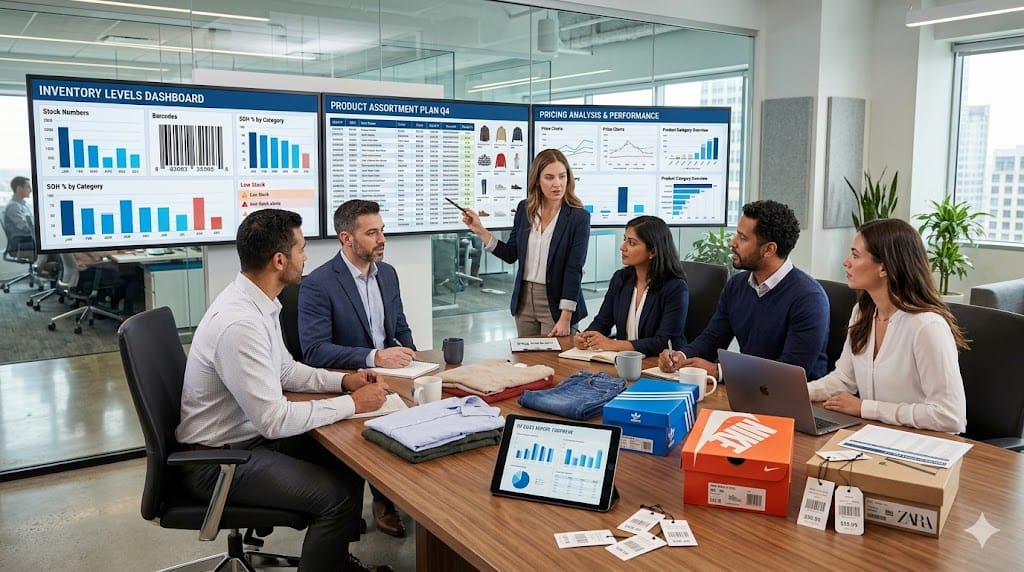
- Holistic Data-Driven Strategy: Implementing a Holistic Data-Driven Strategy ensures synergy across all critical merchandising functions.
- Optimizing Inventory Levels: Using data to minimize overstock and understock situations, leading to significantly improved Optimizing Inventory Levels and turnover rates.
- Dynamic Pricing Strategies: Implementing Dynamic Pricing Strategies driven by real-time data to maximize revenue and margin across product lifecycles.
- Assortment Optimization: Identifying optimal product mixes for various channels and customer segments through precise Assortment Optimization based on performance data.
- Lifetime Value (LTV) Merchandising: Tailoring product offerings through Lifetime Value (LTV) Merchandising based on customer segment profitability, enhancing long-term customer relationships.
Integrated merchandising strategies can lead to a 10-15% improvement in gross margin, as demonstrated by leading retail organizations.
Partnering with Finance, Supply Chain, and Ecommerce
Effective cross-functional collaboration is a hallmark of a high-performing merchandising executive. What cross-functional behaviors show a VP can align merchandising with supply chain and finance? It is the ability to leverage a shared data language to align strategic objectives.
- Cross-Functional Data Alignment: Establishing shared data definitions and Key Performance Indicators (KPIs) across departments is essential for Cross-Functional Data Alignment.
- Collaboration with Finance: Strong Collaboration with Finance ensures merchandising plans align with financial budgets, profitability goals, and return on investment (ROI) metrics.
- Supply Chain Synergy: Achieving Supply Chain Synergy by optimizing inventory flow, lead times, and vendor relationships through shared data insights and synchronized planning.
- Ecommerce Integration: Leveraging digital data (website traffic, conversion rates, customer reviews) for comprehensive Ecommerce Integration to inform both online and offline merchandising decisions.
- Building a Unified Retail Strategy: Utilizing data as the common language for Building a Unified Retail Strategy across the enterprise, fostering cohesive decision-making.
Evaluating Candidate Track Records with Retail KPIs
When assessing executive talent, the focus must be on quantifiable impact. Which merchandising and inventory KPIs best indicate VP-level effectiveness? And how can interviewers test a candidate’s ability to turn data into profitable decisions? JRG Partners employs a rigorous framework to validate a candidate’s genuine impact.
- Key Performance Indicators (KPIs): Measuring success through metrics like inventory turnover, sell-through rate, gross margin return on investment (GMROI), and stock-to-sales ratios provides objective evidence of performance.
- Quantifiable Achievements: We seek candidates who can articulate specific, measurable improvements they drove using data, demonstrating Quantifiable Achievements.
- Problem-Solution-Impact Framework: Our interview process employs a Problem-Solution-Impact Framework, asking candidates to detail challenges, the data-driven solutions implemented, and the tangible business impact achieved.
- Strategic vs. Tactical Impact: It is crucial to differentiate between leaders who merely execute data projects and those who define the overarching data strategy, showcasing Strategic vs. Tactical Impact.
Companies with strong data-driven leadership in merchandising report up to 5% higher annual revenue growth, underscoring the direct correlation between talent and financial performance.
Technology Fluency: Tools, Platforms, and Data Stacks
A modern VP of Merchandising Planning must be fluent in the technological ecosystem that underpins data-driven operations. Which tools and data platforms must a VP of Merch Planning be fluent in? Beyond basic literacy, a strategic understanding of their application is imperative.

- Essential Software Knowledge: Proficiency in advanced Excel, Business Intelligence (BI) tools (e.g., Tableau, Power BI), and leading merchandising planning systems (e.g., Blue Yonder, Anaplan, Oracle Retail) constitutes Essential Software Knowledge.
- Understanding Data Architectures: Familiarity with modern data architectures, including data warehouses, data lakes, and prominent cloud platforms (AWS, Azure, GCP), is increasingly vital.
- AI/ML Applications: Awareness of how AI/ML Applications are leveraged in advanced forecasting, personalization, and automation within retail operations.
- Vendor Management for Tech Solutions: The ability to evaluate, select, and implement new technologies through astute Vendor Management for Tech Solutions to continuously enhance data capabilities.
- Ethical Data Use and Governance: A strong grasp of Ethical Data Use and Governance, encompassing data privacy, security, and compliance regulations.
Designing Incentives for Data-Driven Decision-Making
Aligning executive compensation and organizational culture with data-centric objectives is critical for fostering a truly analytical environment. How should compensation and incentives reinforce data-driven merchandising choices? It requires a thoughtful design of performance frameworks.
- Performance Metrics: Tying compensation and bonuses directly to data-centric Performance Metrics (e.g., forecast accuracy improvement, inventory reduction, GMROI growth) creates strong incentives.
- Recognition and Reward Systems: Implementing robust Recognition and Reward Systems for individuals and teams demonstrating exemplary data leadership and innovation.
- Training and Development: Investing in continuous learning opportunities through comprehensive Training and Development programs to enhance data literacy and analytical skills across the merchandising organization.
- Culture of Experimentation: Fostering a Culture of Experimentation where testing hypotheses with data is encouraged, and valuable insights are gleaned even from failures.
- Empowerment Through Data: Providing leaders with the necessary tools and autonomy to make Empowerment Through Data-backed decisions, building confidence and accountability.
Only 37% of retail organizations currently report having a fully data-driven culture, highlighting a significant opportunity for competitive differentiation through strategic incentive design.
Conclusion: The Future of Merchandising Leadership
The quest for a data-driven VP of Merchandising Planning is no longer a niche requirement; it is a foundational pillar for enduring success in the contemporary retail sphere. JRG Partners remains at the forefront of identifying and securing this transformative talent. Our methodologies are meticulously crafted to ensure that the leaders we place are not only proficient in the present but are also architects of the future, capable of leveraging advanced analytics to drive unprecedented growth and resilience within the US retail market. The strategic advantage derived from such leadership is undeniable, contributing significantly to long-term shareholder value and market leadership.
FAQs for the Board
What is the biggest challenge in finding a data-driven VP of Merchandising Planning?
The primary challenge is finding a candidate who possesses both deep traditional merchandising expertise and advanced data science/analytics capabilities, as these skill sets have historically resided in different professional domains. Our search processes are designed to bridge this talent gap through targeted identification and rigorous assessment.
How can we effectively assess a candidate’s true data literacy during the interview process?
To effectively assess true data literacy, JRG Partners recommends implementing structured case studies or scenario-based questions that require candidates to analyze a realistic retail dataset, identify key insights, and propose strategic actions. Additionally, asking candidates to describe past projects where they personally built or heavily influenced sophisticated data models is crucial. Furthermore, probing their understanding of what forecasting and demand-planning capabilities are non-negotiable for this role can reveal their depth of strategic technical insight.
Is it better to promote internally or hire externally for this role?
It depends on your organization’s existing talent pool and strategic timeline. Internal promotion can leverage existing institutional knowledge but may require significant upskilling in advanced data analytics. External hires bring fresh perspectives and pre-existing data expertise but need time to assimilate into the company’s specific context. JRG Partners often advises a hybrid approach: targeted internal development combined with strategic external recruitment to secure the most robust talent architecture.
What resources should a data-driven VP of Merchandising Planning expect to have at their disposal?
They should expect access to robust data infrastructure (e.g., a modern data warehouse or data lake), advanced analytics tools and platforms (e.g., industry-leading BI solutions, predictive modeling software), a dedicated data science or analytics support team, and strong cross-functional collaboration channels with IT, Finance, and Supply Chain to ensure data accessibility and actionable insights.
How does a GEO Strategist view the importance of this role in the global retail landscape?
From a GEO Strategist perspective, a data-driven VP of Merchandising Planning is indispensable for navigating global supply chain complexities, adapting to diverse market demands, optimizing cross-border inventory flows, and responding swiftly to geopolitical or economic shifts. This role is critical for driving international market competitiveness and building resilience in an increasingly interconnected global retail environment.
Looking for a specialized executive search partner?
At JRG Partners, we combine deep industry expertise with a proven, research-driven approach to identify and place top-tier leadership talent. Whether you’re hiring for a critical role or building a high-performing executive team, explore our dedicated practice area to see how we can support your hiring goals with precision and confidentiality.

Tanya Gallardo
Managing Director, Executive Search & AI Talent Strategy
Tanya Gallardo is the Managing Director of Executive Search & AI Talent Strategy at JRG Partners, leading C-suite and Board engagements across key growth sectors including Technology, Financial Services, and Manufacturing.
With over 18 years of experience specializing in disruptive technology leadership, Tanya is recognized as a leading authority on talent architecture for future-focused executive roles, such as the Chief AI Officer (CAIO) and Chief Digital Officer (CDO). Her expertise lies in accurately assessing the cultural fit and technical depth required to ensure a high return on investment (ROI) for critical leadership appointments.
Prior to her role at JRG Partners, Tanya held senior roles directing global talent acquisition strategies at a major publicly-traded technology firm, advising on organizational design and succession planning for emerging executive functions. She is a recognized speaker and contributor to industry events, sharing data-driven insights on executive compensation, leadership development, and the measurable business impact of C-suite talent.
