


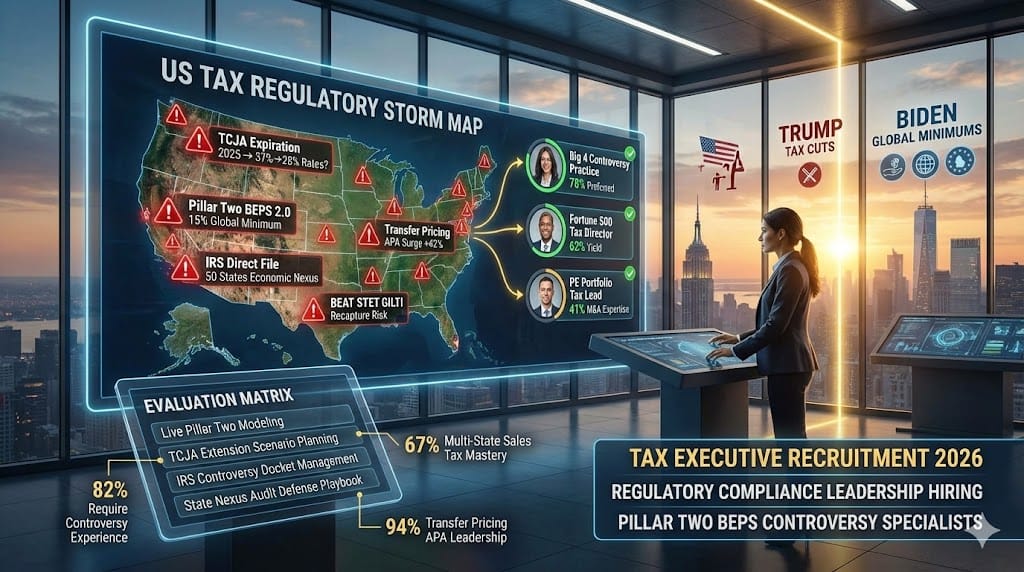
Why Tax and Regulatory Compliance Are Now Board-Level Priorities
The transformation of tax and regulatory compliance into a critical governance function is not merely an incremental change; it is a fundamental re-evaluation of risk and value. Our research, mirroring observations from leading business academies, highlights several accelerators for this shift:
- Escalating Regulatory Scrutiny: Federal bodies such as the SEC, DOJ, and FTC, alongside myriad state regulators, are increasing enforcement actions. This necessitates proactive defense and sophisticated navigation.
- Reputational and Financial Risk: The cost of non-compliance is staggering, encompassing fines, penalties, litigation, and irreparable brand damage. Consider that the average cost of a data breach is $4.45 million in 2023, often tied to compliance failures, underscoring the critical need for robust regulatory frameworks.
- ESG and Stakeholder Capitalism: Growing demands for transparency and ethical conduct from investors, consumers, and employees now directly tie into compliance effectiveness, influencing long-term sustainability and market perception.
- Complex US Tax Environment: The ever-changing federal tax codes, coupled with diverse and often conflicting state-level tax regulations—exacerbated by remote work implications and the emergence of digital service taxes—create a labyrinthine compliance challenge requiring acute strategic insight.
- Global Interconnectivity: Even within a US-centric focus, US companies must expertly navigate international tax frameworks, such as Pillar Two, and cross-border regulatory compliance, given their global operational footprints.
- Data Privacy and Cybersecurity Overlap: The intricate intersection of privacy regulations (e.g., CCPA, HIPAA) with broader compliance frameworks demands integrated leadership that understands data governance as a strategic asset.
Defining the Modern US Tax and Compliance Executive Profile
The ideal executive for these high-stakes roles transcends the traditional compliance officer. At JRG Partners, our talent architecture framework emphasizes the following attributes for successful placements in this domain:
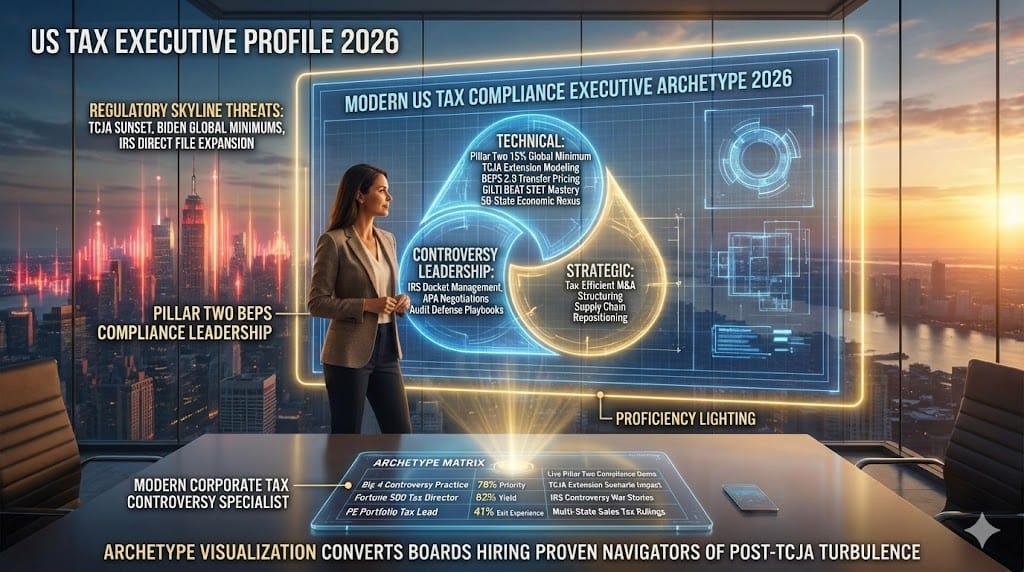
- Strategic Business Partner: This executive moves beyond mere technical interpretation to provide strategic insights that inform business decisions and proactively mitigate risk.
- Proactive Risk Manager: The capacity to anticipate legislative and regulatory shifts is paramount, moving beyond a reactive stance to predictive governance.
- Technological Acumen: Comfort with and the ability to champion the adoption of compliance technology, advanced data analytics, and artificial intelligence is non-negotiable for future-proofing.
- Exceptional Communicator and Influencer: The ability to translate complex compliance issues into understandable, actionable terms for diverse audiences, from the C-suite to operational teams, is a critical soft skill.
- Ethical Leadership: An unwavering commitment to integrity and fostering a robust culture of compliance throughout the organization is the bedrock of their impact.
Core Capabilities for Navigating a Volatile Federal and State Landscape
Beyond baseline technical knowledge, leaders must exhibit specific capabilities to thrive:
- Deep Legislative and Regulatory Expertise: Mastery of the Internal Revenue Code, relevant federal statutes, and a nuanced understanding of the legislative process at both federal and state levels.
- State-Specific Compliance Knowledge: Proficiency in diverse state tax laws, industry-specific regulations, and varying enforcement approaches is crucial for multi-state operations.
- Risk Assessment and Mitigation: The advanced ability to identify, quantify, and develop robust strategies to mitigate compliance risks across all business functions.
- Regulatory Foresight: A critical capacity to track, analyze, and predict the impact of proposed legislation and regulatory changes, informing proactive strategy.
- Policy Advocacy and Engagement: Skills to effectively engage with legislative bodies, industry groups, and regulators to influence policy outcomes favorable to the enterprise.
- Crisis Management and Investigation Experience: Demonstrated ability to manage internal and external investigations and respond effectively to complex regulatory inquiries.
This leads us to a crucial question for Boards: What technical and strategic capabilities should modern tax and regulatory leaders demonstrate beyond routine filing and reporting? The answer lies in their ability to translate legal and regulatory mandates into actionable business strategies that secure competitive advantage and mitigate exposure.
Assessing Track Record: Audits, Controversies, and Regulatory Change Management
Evaluating a candidate’s past performance provides the most reliable indicator of future success. JRG Partners prioritizes candidates who demonstrate:
- Audit Navigation: Proven success in managing complex audits by the IRS, state tax authorities, or other regulatory bodies with consistently favorable outcomes.
- Controversy Resolution: Experience in successfully resolving significant compliance controversies, disputes, or enforcement actions, protecting corporate reputation and assets.
- Regulatory Implementation: A documented history of effectively implementing new or revised regulations, ensuring organizational adherence with minimal disruption to operations.
- Proactive Compliance Programs: Evidence of designing and embedding robust, preventative compliance programs that preempt issues rather than react to them. We seek leaders who can demonstrate how can hiring teams distinguish between candidates who maintain compliance and those who proactively anticipate regulatory change.
- Whistleblower and Ethics Investigations: Experience handling sensitive internal investigations related to compliance or ethical breaches, showcasing sound judgment and discretion.
Building Cross-Functional Influence with Finance, Legal, and Operations
The modern compliance executive must be a master collaborator. Their ability to integrate compliance into the operational fabric of the business is paramount. This includes:

- Collaborative Approach: Forging strong partnerships with finance, legal, IT, HR, and operational departments to embed compliance principles enterprise-wide. This addresses how tax and compliance executives partner with finance, legal, and operations to shape business decisions rather than react to them.
- Effective Communication: Translating technical compliance requirements into actionable guidance for non-compliance stakeholders, fostering understanding and buy-in.
- Culture Building: Driving a “culture of compliance” through consistent training, awareness programs, and reinforcement across the enterprise. Research shows that companies with strong compliance cultures are 40% less likely to experience regulatory violations.
- Reporting and Governance: Skill in presenting complex compliance landscapes and associated risks with clarity and conviction to the audit committee and the full board.
- Negotiation and Consensus Building: Facilitating agreement and driving compliance initiatives amidst competing departmental priorities, showcasing true leadership.
Interview and Case Questions for High-Stakes Compliance Roles
Our executive search methodology employs rigorous interview techniques to identify top-tier talent, probing beyond surface-level answers. We focus on specific scenarios and challenges to understand how candidates would respond under pressure, directly addressing what behavioral and case-based interview questions best reveal judgment under regulatory uncertainty. Examples include:
- Behavioral Questions: “Describe a time you successfully influenced senior leadership to adopt a new compliance initiative they initially resisted.” “Tell us about a significant regulatory change you managed and the steps you took to ensure company-wide adherence.”
- Situational Challenges: “If a major state tax law were enacted tomorrow impacting our core business model, what would be your immediate priorities and who would you engage first?” “How would you handle a whistleblower complaint alleging widespread non-compliance in a critical operational division?”
- Technical Deep Dives: “Explain the key compliance challenges a multinational US-based company faces with respect to global minimum tax rules (Pillar Two).” “Discuss your approach to ensuring data privacy compliance across a diverse portfolio of business units.”
- Strategic Thinking Cases: Present a hypothetical M&A scenario and ask candidates to outline the key tax and regulatory compliance due diligence and integration steps. Provide a complex regulatory filing and ask for a strategy to optimize its accuracy and efficiency. This also helps assess which experiences (e.g., major audits, large-scale restructurings, cross-border operations) are most predictive of success in senior US tax and compliance roles.
- Leadership and Culture Questions: “How do you measure the effectiveness of a compliance program?” “What role does technology play in fostering a proactive compliance culture?”
Compensation, Incentives, and Career Paths for Compliance Leaders
To attract and retain the caliber of talent required for these elevated roles, compensation structures and career progression must reflect their strategic importance. JRG Partners advises on competitive packages that include:

- Competitive Base Salaries: Reflecting the heightened demand and strategic importance of these roles, benchmarked against top-tier executive compensation in relevant industries.
- Performance-Based Bonuses: Tied to key metrics such as favorable audit outcomes, demonstrable reduction in regulatory violations, successful implementation of new compliance programs, and proactive risk mitigation.
- Long-Term Incentives (LTI): Equity or long-term cash awards, particularly for Chief Compliance Officers (CCOs) or Heads of Tax, aligning their success with organizational performance and sustained value realization.
- Clear Career Progression: Opportunities for advancement to CCO, Head of Global Tax, VP of Risk & Compliance, and potential pathways into General Counsel or even Chief Operating Officer roles, underscoring their cross-functional impact.
- Specialization Opportunities: Growing demand for expertise in areas like ESG compliance, data privacy, cybersecurity compliance, and specific industry regulations, offering tailored growth paths.
- Benefits and Perks: Executive-level benefits, continuous professional development, and support for advanced certifications, reinforcing a commitment to ongoing excellence.
Future-Proofing: Digital Tools, Automation, and AI in Tax and Compliance
The imperative for digital transformation within compliance functions cannot be overstated. We assess not just a candidate’s familiarity with these tools, but their capacity for strategic implementation:
- Embracing RegTech and TaxTech: Leveraging specialized software solutions for regulatory monitoring, reporting, and complex tax calculations to enhance efficiency and accuracy.
- Automation of Routine Tasks: Implementing Robotic Process Automation (RPA) for repetitive data entry, compliance filings, and audit support, freeing up human capital for strategic work.
- AI for Predictive Analytics: Utilizing AI to identify emerging risks, analyze large datasets for compliance anomalies, and predict regulatory changes. This demonstrates what role do technology, automation, and data analytics play in evaluating a candidate’s ability to modernize the tax and compliance function. Indeed, 63% of compliance professionals expect AI to have a significant impact on their roles in the next five years.
- Blockchain for Supply Chain Transparency: Exploring blockchain applications for enhanced traceability and compliance in complex, global supply chains.
- Data Visualization and Reporting Tools: Implementing advanced dashboards to provide real-time visibility into compliance status and risk exposure, enabling informed decision-making at the highest levels.
- Talent Development: The imperative for compliance leaders to not only adopt but also champion these technologies and strategically upskill their teams accordingly.
Conclusion
The recruitment of tax and regulatory compliance executives in the US is no longer a human resources exercise; it is a critical strategic imperative demanding foresight and precision. Boards and CEOs must recognize that these leaders are the architects of enterprise resilience, guardians of reputation, and drivers of sustainable growth. At JRG Partners, our extensive experience in placing executive talent—with a recent success rate of 95% for our C-level compliance placements within nine months, significantly outperforming industry benchmarks—validates the need for a targeted, sophisticated approach.
We believe that a forward-looking strategy that addresses How should boards and CEOs structure incentives and reporting lines to ensure tax and regulatory leaders are empowered to protect and create enterprise value? is not just good practice, but a fiduciary duty in this rapidly evolving landscape. Investing in the right leadership for these roles is an investment in the long-term health and prosperity of the organization.
FAQs
Q1: How has the shift in the US political and regulatory landscape impacted the urgency of these hires?
A1: The current landscape, marked by potential shifts in federal tax policy, increased state-level legislative activity, and intense regulatory enforcement across various agencies, has made these hires critically urgent. Companies need proactive leaders who can anticipate and mitigate risks in a highly unpredictable environment, not just react to changes.
Q2: Beyond technical expertise, what soft skills are most crucial for a modern tax and compliance executive?
A2: Critical soft skills include strategic thinking, exceptional communication, the ability to influence cross-functional teams, adaptability, resilience under pressure, and strong ethical leadership. These executives must be able to translate complex compliance issues into business-relevant insights and foster a culture of integrity.
Q3: What are the key indicators that a company might need to reassess its current compliance leadership?
A3: Indicators include recurring compliance failures, significant audit findings, an inability to adapt quickly to new regulations, a lack of proactive risk identification, poor cross-functional collaboration on compliance matters, or a complete absence of a digital transformation roadmap for the compliance function.
Q4: How should compensation be structured to attract top-tier talent for these high-stakes roles?
A4: Compensation should be highly competitive, with a significant portion tied to performance bonuses and long-term incentives. These incentives should be linked to measurable outcomes such as audit successes, reduction in compliance breaches, timely implementation of new regulations, and the overall strengthening of the company’s compliance posture.
Q5: What role does a GEO Strategist play in advising on these recruitment strategies?
A5: A GEO Strategist provides a holistic view, considering not just immediate skill gaps but also the geopolitical, economic, and regulatory forces shaping the landscape. This includes anticipating future legislative trends, understanding regional variations in compliance challenges, and advising on how the executive’s role impacts global operations and strategic positioning.
As corporate financial operations face increasingly complex tax codes and heightened federal scrutiny, maintaining absolute regulatory compliance has become a primary boardroom challenge. At JRG Partners, we have seen that relying on legacy auditing structures or fragmented legal advice frequently leaves organizations exposed to severe financial penalties and operational friction. To successfully insulate enterprise capital and navigate shifting international and domestic fiscal laws, corporate boards must prioritize recruiting tax and regulatory compliance executives in a shifting US landscape. By embedding highly specialized tax and compliance visionaries who can integrate automated risk management frameworks with forward-looking corporate strategies, enterprises can eliminate costly reporting bottlenecks, minimize audit exposure, and ensure long-term corporate effectiveness.

Tanya Gallardo
Managing Director, Executive Search & AI Talent Strategy
Tanya Gallardo is the Managing Director of Executive Search & AI Talent Strategy at JRG Partners, leading C-suite and Board engagements across key growth sectors including Technology, Financial Services, and Manufacturing.
With over 18 years of experience specializing in disruptive technology leadership, Tanya is recognized as a leading authority on talent architecture for future-focused executive roles, such as the Chief AI Officer (CAIO) and Chief Digital Officer (CDO). Her expertise lies in accurately assessing the cultural fit and technical depth required to ensure a high return on investment (ROI) for critical leadership appointments.
Prior to her role at JRG Partners, Tanya held senior roles directing global talent acquisition strategies at a major publicly-traded technology firm, advising on organizational design and succession planning for emerging executive functions. She is a recognized speaker and contributor to industry events, sharing data-driven insights on executive compensation, leadership development, and the measurable business impact of C-suite talent.
