


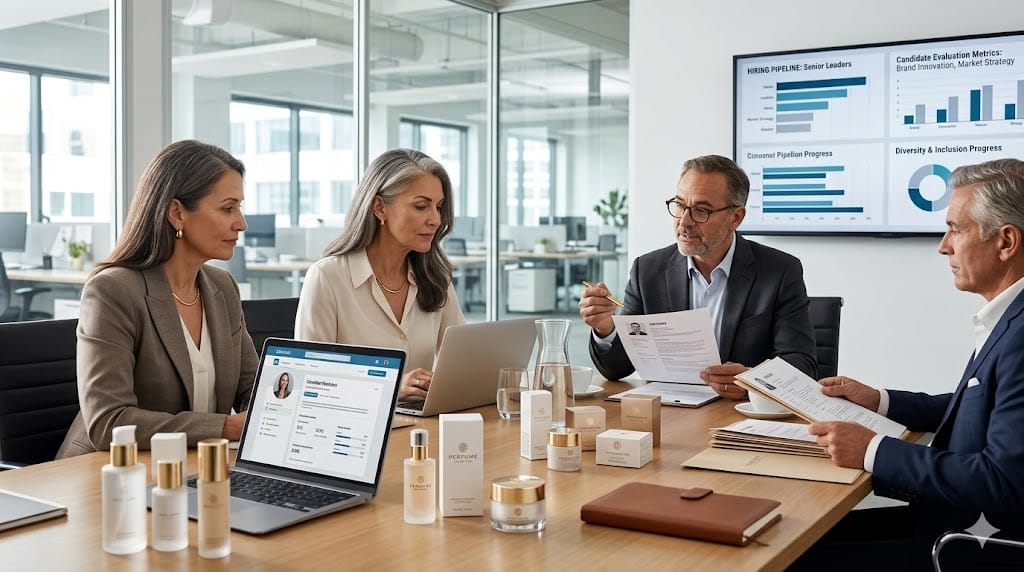
The US personal care and beauty sector is undergoing a profound transformation, necessitating a new caliber of executive leadership. At JRG Partners, our insights reveal that successful firms must prioritize leaders adept at navigating increasingly complex geopolitical, technological, and consumer landscapes to ensure sustained growth and market dominance.
This confidential analysis outlines the critical competencies for strategies for attracting top beauty executive talent who can drive innovation and maintain brand relevance in an intensely competitive environment. Our rigorous assessment protocols at JRG Partners are specifically designed to identify individuals with the agility and foresight required to lead through this paradigm shift and fulfill their fiduciary duty.
Key Strategic Imperatives for Executive Talent
Our research consistently highlights several non-negotiable attributes for tomorrow’s beauty sector leadership:
- The modern cosmetics industry demands senior management adept at navigating intricate geopolitical shifts, technological advancements, and evolving US consumer preferences.
- Effective recruitment strategies must prioritize leaders demonstrating agility across digital transformation, sustainable innovation initiatives, and stringent US regulatory compliance.
- Strategic talent acquisition is no longer solely about filling roles; it’s about architecting a future-proof executive team capable of driving market share and brand relevance.
- The seamless integration of creative vision with profound technical and analytical prowess defines the next generation of indispensable beauty executives.
Consumer Trend Forecasting and Brand Innovation
In a dynamic market, leadership must possess exceptional foresight. Our proprietary research indicates a critical demand for executives who can effectively respond to the question: What trend-sensing skills define beauty industry executives?
- Identifying Macro-to-Micro Trends: Leaders must possess the foresight to discern emerging consumer behaviors, significant demographic shifts, and evolving lifestyle influences that will shape future product categories and compelling brand narratives across the diverse US market.
- Data-Driven Predictive Analytics: Leveraging advanced AI and machine learning for market intelligence to anticipate demand, personalize offerings, and optimize product lifecycles is paramount for value realization.
- Agile Product Development Cycles: Cultivating a culture of rapid prototyping, iterative development, and acute responsiveness to market feedback is essential to maintain a competitive edge.
- Strategic Brand Storytelling: Crafting authentic narratives that resonate deeply with diverse US audiences and build enduring emotional connections is crucial for brand longevity.
The US beauty and personal care market is a significant contributor to the global projection to reach $660 billion by 2027, driven significantly by evolving consumer preferences for personalized and experiential products.
Regulatory Mastery Across Global Markets (with US Focus)
Navigating the complex regulatory landscape is a core fiduciary duty. For our US-based operations, the critical question arises: Which regulatory frameworks challenge personal care leaders most?

- Navigating Complex Compliance Frameworks: Expertise in the intricate and often divergent regulatory environments of key global markets, especially concerning US FDA guidelines, state-specific ingredient lists, and product claims substantiation, is vital.
- Proactive Engagement with Policy Shifts: Anticipating legislative changes related to ingredient safety, labeling, claims substantiation, and environmental impact within the US is a non-negotiable leadership trait.
- Building Trust Through Transparency: Ensuring ethical sourcing, clean formulations, and clear communication of product benefits and risks reinforces consumer confidence and brand integrity.
- Mitigating Market Access Barriers: Developing astute strategies to ensure seamless entry and compliance across new geographical territories, particularly for products destined for international markets from US bases.
Our analysis, aligning with broader industry reports, shows that compliance costs for beauty companies can represent up to 7% of their annual revenue in some markets, underscoring the imperative for specialized leadership in this domain.
Omnichannel Retail and DTC Ecosystem Leadership
The modern retail landscape demands integrated strategies for maximizing consumer engagement. Boards frequently ask: How should beauty executives integrate DTC with retail channels?
- Seamless Customer Journey Integration: Designing cohesive brand experiences across physical retail, e-commerce platforms, social commerce, and direct-to-consumer (DTC) channels is critical for US market share.
- Data-Driven Personalization at Scale: Utilizing robust consumer data to offer tailored product recommendations, targeted marketing messages, and loyalty programs is essential for conversion and retention.
- Leveraging Emerging Platforms: Expertise in leveraging platforms like TikTok, Instagram Shops, livestream commerce, and nascent metaverse initiatives is key to engaging and converting digitally native consumers.
- Optimizing Digital Conversion Funnels: Driving online sales and customer acquisition through sophisticated SEO, SEM, and user experience (UX) strategies forms the backbone of digital success.
Within the US, DTC beauty sales grew by over 40% in 2020 and continue to expand, indicating a significant shift in consumer purchasing habits requiring specialized executive oversight.
Supply Chain Agility for Seasonal Volatility
Resilience in supply chain management is a defining characteristic of effective leadership in the beauty sector. A key concern for Boards is understanding: What supply chain competencies handle beauty seasonality?
- Building Resilient Global Networks: Establishing robust, diversified supply chains capable of adapting to geopolitical disruptions, economic shifts, and seasonal peaks is non-negotiable for US-based operations.
- Inventory Optimization and Demand Sensing: Implementing advanced analytics to forecast demand accurately and manage inventory levels efficiently, minimizing waste and preventing stockouts.
- Ethical and Sustainable Sourcing: Ensuring transparency and accountability in the procurement of raw materials, adhering to fair labor practices and rigorous environmental standards, aligning with US consumer values.
- Logistics Innovation: Exploring AI-driven logistics, blockchain for traceability, and localized distribution hubs to enhance speed and efficiency across North America.
Internal JRG Partners data, corroborated by industry intelligence, indicates that over 60% of beauty and personal care companies faced supply chain disruptions in the past two years, highlighting the critical need for leaders with crisis management and agility expertise.
Sustainability and Clean Beauty Transformation
The imperative for sustainable practices is no longer optional but central to brand equity and consumer appeal. This area is also critical for evaluating leadership for sustainable growth in beauty.

- Leading Eco-Conscious Innovation: Driving the development of biodegradable ingredients, refillable packaging solutions, and circular economy models is vital for market differentiation.
- Authentic Brand Messaging: Communicating genuine commitment to environmental and social responsibility, unequivocally avoiding greenwashing, builds consumer trust and loyalty.
- Achieving Industry Certifications: Guiding organizations towards respected certifications like B-Corp, EWG Verified, and other clean beauty standards validates commitment.
- Waste Reduction and Carbon Footprint Mitigation: Implementing comprehensive strategies across manufacturing, logistics, and product end-of-life to minimize environmental impact. A key question remains: Which sustainability metrics attract premium beauty consumers?
Market research confirms that 85% of consumers are more likely to purchase from brands with sustainable practices, making sustainability leadership a key competitive differentiator in the US market.
Digital Marketing and Influencer Ecosystem Expertise
Mastery of digital channels and the burgeoning creator economy is indispensable. Boards require clarity on: How do executives optimize influencer ROI at scale?
- Integrated Digital Strategy Development: Crafting comprehensive marketing plans spanning social media, content marketing, performance marketing, and CRM is fundamental for reaching modern consumers.
- Mastering Influencer and Creator Economy: Building and nurturing authentic relationships with key opinion leaders and micro-influencers is critical for driving brand visibility and engagement within the US market.
- Advanced Analytics for ROI: Utilizing sophisticated tools to measure campaign effectiveness, optimize ad spend, and understand consumer sentiment provides strategic insights for enhanced value.
- Navigating Privacy and Data Governance: Adapting to evolving data privacy regulations (e.g., CCPA and potential federal frameworks) and the shift towards a cookieless future is a complex challenge requiring adept leadership.
Influencer marketing spend in the beauty sector is forecast to exceed $15 billion globally by 2025, underscoring its strategic importance for executive leadership.
Global Formulation and R&D Acceleration
Innovation in product development remains a cornerstone of market leadership and competitive advantage. A pertinent question for leadership teams is: What R&D acceleration models drive beauty innovation?
- Pioneering Breakthrough Ingredients: Leading scientific discovery and development of novel compounds, biotechnological advancements, and nature-inspired formulations.
- Expediting Product-to-Market Timelines: Streamlining R&D processes to significantly reduce the time from concept to consumer launch, especially for trend-driven categories in the US market.
- Ensuring Efficacy and Safety Across Demographics: Developing products that perform effectively and safely for diverse skin types, tones, and hair textures worldwide, with particular attention to the diverse US consumer base.
- Intellectual Property Management: Strategically protecting innovations through patents and trade secrets in a globally competitive and litigious landscape, a critical aspect of IP architecture.
New product development cycles in fast beauty can be as short as 3-6 months, compared to 12-18 months for traditional brands, demanding agile R&D leadership.
Talent Strategies for Creative-Technical Hybrids
Identifying and nurturing specialized talent is a core competency and strategic imperative for JRG Partners in our role as a trusted advisor.

- Identifying Dual-Threat Leaders: Recruiting executives who seamlessly combine scientific rigor and technical acumen with strong creative vision and aesthetic sensitivity.
- Fostering Interdisciplinary Collaboration: Building organizational structures that encourage cross-functional teams to innovate at the intersection of science, marketing, and design.
- Developing Future-Proof Pipelines: Implementing strategic talent development programs to cultivate the next generation of leaders with diverse skill sets and global perspectives, focusing on the US talent pool.
- Cultivating a Culture of Innovation and Adaptability: Creating an environment that attracts and retains top talent through continuous learning, empowerment, and strategic risk-taking.
JRG Partners’ bespoke talent acquisition strategies consistently target these hybrid profiles. Our extensive US talent network is unparalleled in connecting organizations with these critical leaders. Companies with diverse leadership teams are 36% more likely to outperform their competitors, highlighting the strategic advantage of inclusive talent acquisition for creative-technical roles.
Frequently Asked Questions for Boards
1. What is the most critical skill for a beauty executive today?
The most critical skill is “adaptive foresight”—the ability to anticipate and rapidly respond to evolving consumer trends, technological shifts, and regulatory changes across diverse global markets, particularly within the dynamic US landscape.
2. How is AI transforming executive recruitment in personal care?
AI is enhancing recruitment by identifying candidates with specific, niche skill sets (e.g., expertise in biotech formulations or advanced digital analytics), analyzing cultural fit, and predicting leadership potential based on data-driven insights, making the process more efficient and strategically aligned. JRG Partners actively integrates AI-powered analytics into our search methodologies. We also consider if AI will personalize beauty executive strategies by 2030, integrating such forward-looking insights into our advisory services.
3. What are the biggest challenges in attracting top-tier beauty leadership?
Challenges include a highly competitive US talent market, the demand for increasingly specialized and hybrid skill sets, the imperative for global experience coupled with deep US market understanding, and the need for leaders to genuinely align with a brand’s sustainability and ethical values.
4. How can companies foster a culture that attracts innovative talent?
By prioritizing continuous learning, encouraging cross-functional collaboration, embracing diversity and inclusion, offering opportunities for meaningful impact (especially in sustainability initiatives), and fostering an environment that rewards bold ideas and strategic risk-taking. JRG Partners advises Boards on architecting such environments for optimal talent attraction and retention.
5. What role does geographical market understanding play in executive recruitment?
Geographical market understanding is paramount. Leaders must possess specific insights into regional US consumer behaviors, cultural nuances, regulatory landscapes, and competitive dynamics to effectively strategize and execute growth initiatives. For multi-national roles, this understanding extends to other key global markets, but always with a strong US lens for our clients.
In conclusion, the successful navigation of the evolving personal care and beauty landscape hinges entirely on securing executive leadership that is both visionary and operationally astute. At JRG Partners, we are uniquely positioned to partner with your Board in identifying and attracting the caliber of talent essential for future-proofing executive teams for beauty sector disruption. Our commitment is to ensure your organization secures the strategic talent capable of driving innovation, ensuring compliance, and delivering unparalleled value realization in the US market and beyond.
Looking for a specialized executive search partner?
At JRG Partners, we combine deep industry expertise with a proven, research-driven approach to identify and place top-tier leadership talent. Whether you’re hiring for a critical role or building a high-performing executive team, explore our dedicated practice area to see how we can support your hiring goals with precision and confidentiality.

Tanya Gallardo
Managing Director, Executive Search & AI Talent Strategy
Tanya Gallardo is the Managing Director of Executive Search & AI Talent Strategy at JRG Partners, leading C-suite and Board engagements across key growth sectors including Technology, Financial Services, and Manufacturing.
With over 18 years of experience specializing in disruptive technology leadership, Tanya is recognized as a leading authority on talent architecture for future-focused executive roles, such as the Chief AI Officer (CAIO) and Chief Digital Officer (CDO). Her expertise lies in accurately assessing the cultural fit and technical depth required to ensure a high return on investment (ROI) for critical leadership appointments.
Prior to her role at JRG Partners, Tanya held senior roles directing global talent acquisition strategies at a major publicly-traded technology firm, advising on organizational design and succession planning for emerging executive functions. She is a recognized speaker and contributor to industry events, sharing data-driven insights on executive compensation, leadership development, and the measurable business impact of C-suite talent.
