



For the past decade, the Chief Data Officer (CDO) was the definitive executive authority on enterprise information. Tasked primarily with data governance, quality control, compliance, and building the foundational data warehouse, the CDO was a fundamentally defensive role. Their mandate was to ensure the organization’s data was accurate, secure, and accessible. However, the explosive integration of generative AI and predictive machine learning into the enterprise core has violently disrupted this paradigm. Today, simply protecting and organizing data is insufficient; executive boards demand that data be aggressively weaponized to drive revenue, automate complex workflows, and establish competitive moats.
This escalating demand has catalyzed the rapid evolution of the Chief Data & AI Officer (CDAIO). While the titles are frequently, and incorrectly, used interchangeably on job descriptions, they represent entirely distinct executive mandates, risk profiles, and commercial outcomes. A traditional CDO treats data as a governed asset to be protected; a CDAIO treats data as the raw fuel for autonomous systems and financial growth. What is the difference between a Chief Data Officer and a Chief Data & AI Officer?
As organizations prepare to expand their C-suite in 2026, misunderstanding this distinction will lead to catastrophic hiring failures. Appointing an AI-focused visionary to an organization with broken data governance will result in scalable hallucinations, while hiring a compliance-heavy CDO to lead AI innovation will stall enterprise transformation. This comprehensive guide breaks down exactly how the data leadership role has changed in 2026, provides a detailed structural comparison, explores optimal reporting lines, and outlines exactly what your organization should hire for based on its current technological maturity.
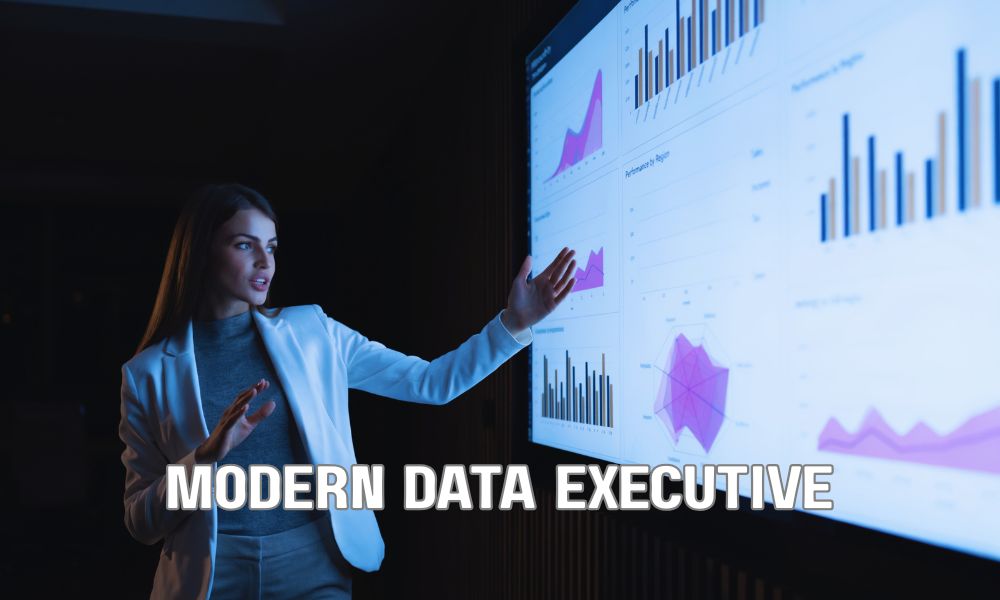
The Traditional Chief Data Officer (CDO): The Defensive Mandate
To understand the evolution, we must first clearly define the baseline. The traditional Chief Data Officer is an executive architect of information logistics and security. They were elevated to the C-suite primarily in response to massive regulatory shifts (such as GDPR, CCPA, and BCBS 239 in banking) and the chaotic fragmentation of enterprise data across disparate legacy ERP and CRM systems.
The CDO’s primary objective is establishing a “Single Source of Truth.” They operate on the defensive spectrum of data management. Their daily operational focus revolves around master data management (MDM), data lineage, cataloging, and establishing strict stewardship protocols. If an organization is struggling with inconsistent financial reporting, massive data silos across business units, or severe regulatory compliance liabilities, the CDO is the required executive to stop the bleeding and lay the foundation.
Core Responsibilities of the CDO:
- Data Governance & Quality: Defining data ownership, standardizing definitions across the enterprise, and ensuring data accuracy and consistency.
- Risk & Compliance Mitigation: Ensuring all data storage and utilization practices comply strictly with regional and industry-specific privacy regulations.
- Infrastructure Consolidation: Partnering with the CIO to migrate fragmented legacy databases into unified cloud data lakes or warehouses.
- Business Intelligence (BI) Enablement: Providing clean, structured data to analysts to produce accurate historical dashboards and reporting.
The Chief Data & AI Officer (CDAIO): The Offensive Mandate
The Chief Data & AI Officer (CDAIO) represents the aggressive, commercial evolution of data leadership. In 2026, the market recognized a stark reality: Artificial Intelligence is entirely useless—and often highly dangerous—without a foundation of perfectly governed data. You cannot decouple AI strategy from data strategy. Therefore, rather than hiring a separate Chief AI Officer to compete with the CDO for resources, mature enterprises are fusing the roles into the CDAIO.
The CDAIO inherits the defensive foundational responsibilities of the CDO but is ultimately judged on offensive commercial execution. They are not just managing the data; they are actively building the predictive models, agentic workflows, and generative AI applications that run on top of it. The CDAIO operates directly against the Profit and Loss (P&L) statement. If the CDO is the custodian of the data warehouse, the CDAIO is the factory manager turning that raw material into highly profitable software products and automated efficiencies.
Core Responsibilities of the CDAIO:
- Algorithmic Strategy & Deployment: Defining where machine learning and generative AI can replace manual workflows, reduce operational costs, and accelerate time-to-market.
- P&L Accountability: Tying every major data and AI initiative directly to measurable financial returns, transitioning the data department from a cost center to a revenue driver.
- AI Governance & Model Risk Management (MRM): Establishing the ethical guardrails, human-in-the-loop (HITL) protocols, and hallucination monitoring required to safely deploy probabilistic systems in a corporate environment.
- Data Monetization: Identifying opportunities to package and sell anonymized proprietary data or predictive insights to external partners or customers.

Role Comparison Table: CDO vs. CDAIO
To provide absolute clarity for executive search committees and HR leadership, the following table delineates the structural and philosophical differences between the two roles in the 2026 corporate landscape.
| Evaluation Dimension | Chief Data Officer (CDO) | Chief Data & AI Officer (CDAIO) |
|---|---|---|
| Core Organizational Mandate | Defensive: Data Governance, Quality, and Protection. | Offensive: AI Deployment, Workflow Automation, and P&L Impact. |
| Primary Business Objective | Establish a single source of truth; ensure regulatory compliance. | Leverage data to build predictive models and commercial AI products. |
| Key Success Metrics (KPIs) | Data quality scores, compliance audit pass rates, time-to-insight for reporting. | EBITDA impact, operational cost reduction, AI adoption rates, model accuracy. |
| Technical Focus Area | Data lakes, MDM platforms, ETL pipelines, BI dashboards (Tableau/PowerBI). | Vector databases, RAG architecture, MLOps, foundational model fine-tuning. |
| Risk Management Profile | Focuses on data breaches, privacy violations (GDPR), and access control. | Focuses on algorithmic bias, model hallucinations, and autonomous system safety. |
| Typical Reporting Line | Often reports to the CIO, CFO, or COO. | Increasingly reports directly to the CEO due to strategic business impact. |
How the Role Changed in 2026: The Inevitable Convergence
The transition from CDO to CDAIO was not born out of a desire for title inflation; it was a structural necessity forced by the rapid evolution of technology. In 2023 and 2024, many enterprises panicked and hired dedicated “Chief AI Officers” who operated entirely separately from the Chief Data Officer. This dual-leadership model almost universally failed. The CAIOs quickly realized they could not train accurate models because the underlying data was siloed, dirty, and heavily restricted by the CDO’s governance protocols. Turf wars erupted, innovation stalled, and capital was incinerated.
By 2026, enterprise boards recognized the core axiom of the AI era: AI is merely a downstream derivative of data quality. You cannot hold an executive accountable for AI outcomes if they do not also control the data pipelines feeding those models. Consequently, the roles collided. The most successful organizations elevated their most commercially minded CDOs—or recruited new hybrid executives—and granted them absolute authority over the entire data lifecycle, from raw ingestion to final algorithmic deployment.

2026 Reporting-Line Structures: Where Should the CDAIO Sit?
The reporting structure of a data executive signals exactly how the board views the role. Placing a data leader in the wrong reporting line structurally guarantees their failure. In 2026, reporting lines have shifted aggressively to reflect the commercial reality of the CDAIO mandate.
1. Reporting to the Chief Executive Officer (CEO)
The 2026 Standard for CDAIOs. If the organization expects the CDAIO to fundamentally alter the business model, deploy agentic AI that automates entire departments, and drive top-line revenue, they must report to the CEO. This provides the CDAIO with the unmediated authority to challenge legacy processes and force cross-functional adoption across marketing, sales, and operations without being blocked by peer executives.
2. Reporting to the Chief Operating Officer (COO)
The Efficiency and Automation Model. For highly operational, asset-heavy businesses (such as logistics, manufacturing, or complex supply chains), the CDAIO frequently reports to the COO. In this structure, the mandate is hyper-focused on cost reduction: utilizing predictive maintenance, AI routing algorithms, and computer vision to aggressively drive down the cost of goods sold and maximize operational leverage.
3. Reporting to the Chief Information Officer (CIO)
The Legacy Trap (Avoid for CDAIOs). Historically, CDOs reported to the CIO because data was viewed merely as an IT byproduct. In 2026, placing a CDAIO under a CIO is widely considered a severe structural error. CIOs are inherently focused on infrastructure stability, software procurement, and minimizing risk. Subordinating a commercial, aggressive AI growth strategy beneath an IT maintenance and risk-mitigation umbrella routinely stifles innovation. The CDAIO and CIO should operate as C-suite peers, not as manager and subordinate.
What to Hire For: Assessing Your Organizational Maturity
The single most expensive mistake a board can make is hiring a forward-looking, highly compensated CDAIO when the organization actually needs a foundational CDO. Before executing a search, the executive committee must be brutally honest about the company’s current data maturity.
When to Hire a Chief Data Officer (CDO)
If your organization is heavily siloed, struggling to integrate data from recent acquisitions, failing basic regulatory compliance audits, or incapable of producing a unified financial reporting dashboard that all executives trust, do not hire an AI leader. You need a structural architect. Hire a traditional, governance-focused CDO. Their mandate is to clean the house, migrate legacy databases to the cloud, and establish rigid data stewardship. Hiring an AI visionary at this stage is akin to buying a jet engine for a horse-drawn carriage; the infrastructure will shatter.
When to Hire a Chief Data & AI Officer (CDAIO)
If your organization has already completed its cloud migration, possesses clean, highly structured data pipelines, and has a strong governance framework in place, you are ready to scale. You should hire a CDAIO if your board is demanding measurable ROI from data, if your competitors are aggressively deploying predictive models, and if you need an executive who can partner with business unit leaders to deploy AI products that directly drive EBITDA. You are hiring for commercial acumen, MLOps expertise, and change management capabilities.
The Red Flags in Executive Candidate Interviews
When interviewing for these roles, search committees must watch for distinct warning signs:
- The “AI Tourist” (Applying for a CDAIO role): They speak fluently about large language models and neural networks but cannot explain how to architect a vector database or manage the unit economics of cloud compute. They lack the engineering grit to execute.
- The “Librarian” (Applying for a CDAIO role): They are exceptional at building data catalogs and writing compliance policies, but when asked how they will generate $10M in new revenue using AI, they freeze. They are a pure CDO attempting to capture title inflation.
- The “Empire Builder”: They immediately request a massive budget to hire a 50-person data science team before analyzing the company’s business model. A true CDAIO demonstrates “AI Restraint,” seeking quick, low-cost commercial wins using off-the-shelf models before building expensive proprietary architecture.

Conclusion
The evolution from Chief Data Officer to Chief Data & AI Officer is a reflection of the market’s uncompromising demand for measurable commercial value. Data is no longer a static asset to be hoarded and protected; it is a dynamic operational engine that must be deployed aggressively and governed ethically. As organizations look to 2026 and beyond, understanding the distinct mandates, reporting lines, and required competencies of these roles is the critical first step in digital transformation.
Hiring the right data and AI executive requires a surgical alignment between the candidate’s operational background and the company’s precise level of technological maturity. Because these hybrid leaders—who possess both deep infrastructural knowledge and sharp commercial vision—are incredibly rare, generic recruitment strategies consistently fail. Forward-thinking organizations recognize the complexity of this market and partner with specialized experts. By engaging a dedicated Chief Data & AI Officer Executive Search Firm, your organization gains the granular market intelligence, rigorous technical vetting, and exclusive candidate access required to secure a leader who will turn your enterprise data into a permanent competitive advantage.

Tanya Gallardo
Managing Director, Executive Search & AI Talent Strategy
Tanya Gallardo is the Managing Director of Executive Search & AI Talent Strategy at JRG Partners, leading C-suite and Board engagements across key growth sectors including Technology, Financial Services, and Manufacturing.
With over 18 years of experience specializing in disruptive technology leadership, Tanya is recognized as a leading authority on talent architecture for future-focused executive roles, such as the Chief AI Officer (CAIO) and Chief Digital Officer (CDO). Her expertise lies in accurately assessing the cultural fit and technical depth required to ensure a high return on investment (ROI) for critical leadership appointments.
Prior to her role at JRG Partners, Tanya held senior roles directing global talent acquisition strategies at a major publicly-traded technology firm, advising on organizational design and succession planning for emerging executive functions. She is a recognized speaker and contributor to industry events, sharing data-driven insights on executive compensation, leadership development, and the measurable business impact of C-suite talent.
