


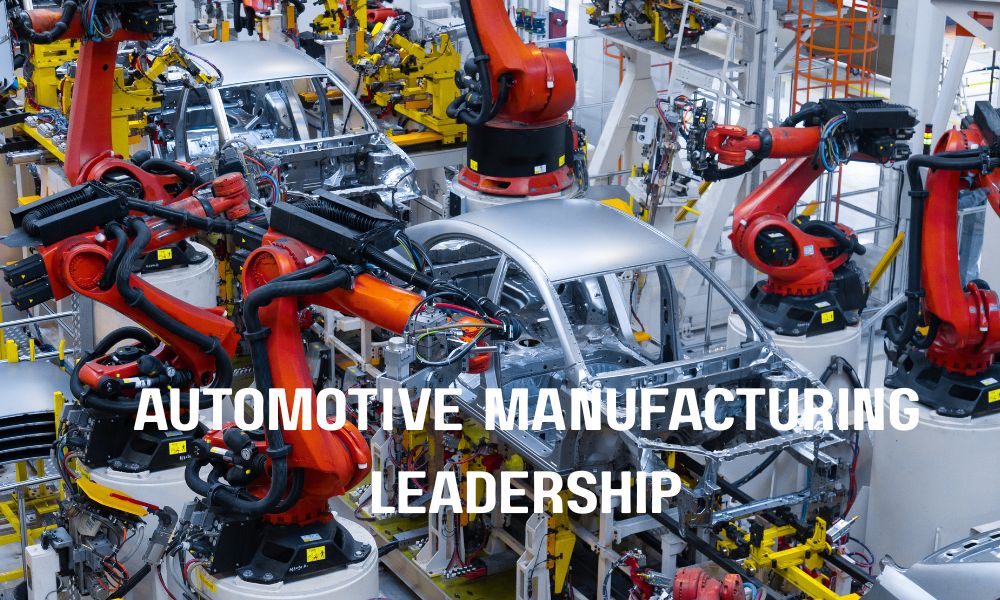
The challenge is not simply to recruit someone who understands robotics, electric vehicles, or procurement. Automotive manufacturers need leaders who can connect these areas to business outcomes. Automation investments must improve productivity and quality, electrification programs must support manufacturing readiness, and supply-chain strategies must protect production continuity without creating unnecessary costs.
For organizations hiring a Plant Manager, VP of Manufacturing, Director of Operations, Chief Operating Officer, or supply-chain executive, the recruitment process should evaluate both proven operational performance and the ability to lead future transformation.
1. Redefine the Automotive Manufacturing Leadership Profile
Traditional manufacturing leadership requirements remain important. Executives still need to manage safety, quality, cost, delivery, workforce performance, and customer commitments. However, these responsibilities increasingly intersect with automation, digital manufacturing, electrification, and supply-chain risk.
A candidate who has consistently managed an established production environment may not automatically have the experience needed to lead a major technology transition. Similarly, a transformation specialist may understand emerging technologies but lack the operational discipline required to maintain production during implementation.
Identify the organization’s immediate and future needs
Before beginning the search, hiring stakeholders should determine whether the role is primarily focused on operational excellence, technology adoption, manufacturing expansion, or supply-chain resilience.
- Does the organization need to improve existing plant performance or establish new manufacturing capabilities?
- Which automation or digital manufacturing initiatives are planned?
- How will electrification affect production processes, equipment, workforce skills, and supplier relationships?
- Which supply-chain vulnerabilities could interrupt production?
- What level of investment and decision-making authority will the executive control?
- What outcomes should the new leader deliver during the first year?
These questions help define a realistic leadership profile. They also prevent employers from treating every emerging technology as a mandatory qualification when only a few capabilities may be critical to the specific role.
2. Recruit Leaders Who Can Turn Automation Into Operational Value
Automation can improve production consistency, reduce repetitive manual work, support inspection, and increase manufacturing capacity. However, successful implementation requires more than technical familiarity with robots or automated equipment.
Senior manufacturing leaders must understand where automation can create measurable value, how it fits into the wider production system, and what organizational changes are required to achieve sustainable results.
Evaluate automation strategy and investment judgment
Ask candidates to describe an automation initiative they led or significantly influenced. Explore the business problem, the alternatives considered, the investment rationale, the implementation challenges, and the results achieved.
Strong candidates can explain why a particular process was suitable for automation and how the project was evaluated. They should understand that automation is not always the best answer to a production problem. In some cases, process redesign, improved maintenance, better material flow, or standardized work may deliver a more practical result.
Useful interview questions include:
- How do you determine whether a manufacturing process should be automated?
- How do you evaluate expected productivity gains against capital and operating costs?
- What risks do you consider when integrating automated equipment into an existing production line?
- How do you measure the performance of an automation project after implementation?
- How do you manage the workforce and training implications of automation?
Look for evidence that the candidate evaluates automation as a business and operating-model decision, not simply as a technology purchase.
Assess experience with connected manufacturing systems
Depending on the facility, relevant experience may include manufacturing execution systems, industrial data collection, automated inspection, predictive maintenance, robotics integration, or production analytics.
The executive does not necessarily need to design these systems personally. Instead, they should understand how to work with engineering, information technology, maintenance, and operations specialists to establish requirements, manage implementation risks, and measure business impact.
Strong leaders also recognize the importance of reliable data, system integration, cybersecurity, and clear ownership. Technology investments are less likely to deliver value when production data remains fragmented or employees lack the training needed to use new systems effectively.
3. Evaluate Leadership Experience in Electrification Manufacturing
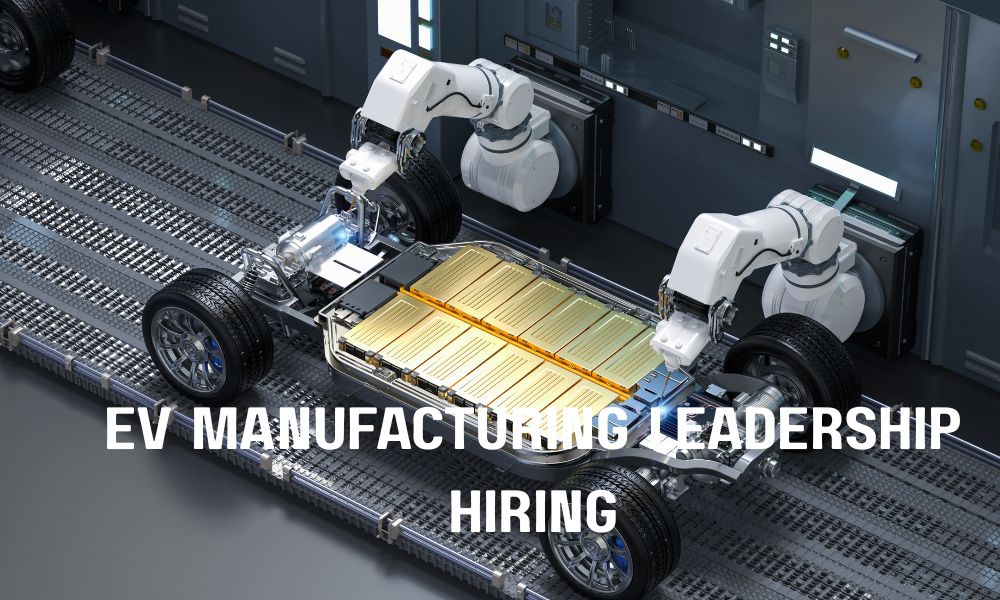
Electrification introduces different manufacturing requirements across vehicle assembly, battery systems, electric powertrains, power electronics, and associated components. The precise implications vary by product and manufacturing model, but many organizations must reconsider equipment, process controls, supplier capabilities, workforce skills, and production planning.
Automotive manufacturing executives need to understand how these changes affect plant readiness and operational performance. They must coordinate technical specialists, production teams, suppliers, and quality functions while maintaining clear responsibility for delivery.
Look for relevant transition and launch experience
Ask candidates whether they have led a new product introduction, production-line conversion, manufacturing expansion, or other major change involving new technology or processes.
Explore how they managed process validation, equipment readiness, workforce training, supplier coordination, and the transition from development to stable production. Strong candidates can explain how they handled unexpected problems without losing control of safety, quality, or schedule commitments.
For organizations manufacturing battery-related products or electric powertrain components, relevant experience may include specialized process controls, traceability, handling requirements, or production-quality systems. Employers should define which of these capabilities are essential for their own operations.
Assess the ability to manage a changing product portfolio
Some manufacturers must support established internal-combustion-engine products while expanding hybrid or electric-vehicle programs. This creates challenges involving capacity allocation, equipment investment, supplier strategy, engineering resources, and workforce planning.
Ask candidates how they have managed competing product priorities and allocated resources between current production requirements and future manufacturing capabilities.
Effective leaders understand that transformation must be sequenced carefully. Investments should reflect product demand, operational readiness, technical requirements, and the organization’s financial capacity rather than assumptions about a single future scenario.
4. Assess Supply-Chain Resilience and Production Continuity
Automotive manufacturing depends on the timely availability of components, materials, electronics, tooling, and specialized services. Disruptions can arise from supplier capacity constraints, logistics problems, geopolitical developments, quality failures, or sudden changes in demand.
Manufacturing executives must collaborate with supply-chain and procurement leaders to understand these vulnerabilities and protect production continuity. Their responsibility is not necessarily to own every sourcing decision, but to ensure that production risks are visible and operational responses are coordinated.
Evaluate risk identification and contingency planning
Ask candidates to describe a situation in which a supplier or material shortage threatened production. What information did they use to assess the exposure? How did they coordinate with procurement, engineering, and suppliers? What actions protected customer commitments?
Strong candidates demonstrate an ability to distinguish between immediate containment and long-term resilience. Expediting materials may resolve a short-term disruption, but recurring shortages may require changes to supplier capacity, inventory policies, sourcing arrangements, or product design.
Relevant areas to assess include:
- Identification of critical components and single-source dependencies.
- Coordination between production planning, procurement, and supplier management.
- Supplier quality and delivery performance monitoring.
- Inventory strategy and contingency planning.
- Alternative sourcing and supplier qualification, where feasible.
- Communication and escalation procedures during disruptions.
Strong executives understand that resilience involves trade-offs. Additional inventory or alternative suppliers may reduce certain risks but increase working capital, qualification effort, or operating complexity. The objective is to manage the most important vulnerabilities at an acceptable cost.
5. Look for Digital and Data-Driven Decision-Making
Advanced manufacturing environments generate data from equipment, production systems, quality processes, maintenance activities, and supply-chain operations. The value of this information depends on whether leaders can use it to identify problems, prioritize action, and improve performance.
Automotive executives do not need to be data scientists, but they should understand the role of operational data in decision-making. They must also recognize the limitations of incomplete, inconsistent, or poorly governed information.
Assess how candidates use operational data
Ask candidates to explain how they have used production data to improve a manufacturing outcome. Did they identify a recurring bottleneck, detect an equipment issue, improve quality monitoring, or strengthen production planning?
Explore how the candidate established the baseline, selected the relevant measures, involved technical teams, and verified the result.
Depending on the role, useful metrics may include:
- Overall equipment effectiveness and unplanned downtime.
- First-pass yield, scrap, and rework.
- Production schedule attainment and throughput.
- Maintenance response and equipment reliability.
- Supplier delivery and quality performance.
- Inventory levels and production interruptions.
Look for candidates who use data to guide investigation rather than treating dashboards as proof that a problem has been solved. Reliable performance improvement requires understanding the underlying process and verifying whether corrective actions produce sustained results.
6. Test Change Management and Workforce Development
Automation and electrification can change job responsibilities, technical skill requirements, maintenance practices, and the way teams coordinate work. Even a sound technology strategy can underperform if employees do not understand the reasons for change or lack the skills to operate new processes.
Manufacturing executives must communicate the purpose of transformation, involve relevant teams, and ensure that training and workforce planning support implementation.
Evaluate leadership through change
Ask candidates to describe a major operational change they led. How did they communicate expectations? How did they handle resistance? What training or organizational adjustments were necessary? How did they determine whether the new process had become established practice?
Strong candidates balance urgency with practical implementation. They involve frontline supervisors and technical specialists early, explain how responsibilities will change, and create channels for employees to raise concerns.
They should also understand that transformation requires capable middle management. Supervisors and plant-level leaders translate strategic decisions into daily operating routines, so their involvement is essential to sustaining new practices.
7. Evaluate Cross-Functional Leadership Across Manufacturing, Engineering, and Supply Chain
Automation, electrification, and resilience initiatives typically cross traditional functional boundaries. Manufacturing may focus on throughput, engineering on technical requirements, procurement on cost and availability, and quality on process control and compliance.
The executive must align these priorities around shared business outcomes and establish clear decision rights.
Ask about decisions involving competing priorities
Useful questions include:
- Describe a situation where manufacturing and engineering disagreed about production readiness.
- How have you handled a supplier constraint that threatened a production launch?
- How do you balance the need for rapid implementation with equipment validation and workforce readiness?
- How do you resolve disagreements about automation investment or production capacity?
- How do you ensure that operational risks reach senior decision-makers early enough for action?
Strong candidates explain how they use evidence, clarify accountability, and bring the right stakeholders into decisions. They understand that no single function can independently optimize the entire manufacturing system.
8. Use a Structured Scorecard for Automotive Manufacturing Leadership
A consistent scorecard helps employers compare candidates against the capabilities that matter most to their transformation agenda. The following example can be adapted to the seniority of the role and the organization’s operational priorities.
| Competency | Suggested weight | Evidence to evaluate |
|---|---|---|
| Manufacturing performance | 20% | Quality, throughput, cost, delivery, and operational stability |
| Automation and digital manufacturing | 20% | Technology investment decisions, implementation, integration, and measurable outcomes |
| Electrification and product transition | 15% | Production readiness, launch management, process adaptation, and technical coordination |
| Supply-chain resilience | 15% | Risk identification, contingency planning, supplier coordination, and continuity management |
| Change management and workforce leadership | 15% | Training, communication, frontline leadership, and adoption of new processes |
| Data-driven decision-making | 10% | Operational metrics, root-cause analysis, and sustained performance improvement |
| Cross-functional leadership | 5% | Coordination across manufacturing, engineering, quality, and supply chain |
| Total | 100% | Overall role alignment |
Use a consistent rating scale, such as 1 to 5, and require interviewers to document the evidence supporting each rating. The weights should change when the role has a different mandate. A plant focused on operational stabilization may require greater emphasis on quality and throughput, while a transformation leader may need stronger weighting for automation and change management.
The final score should support the hiring decision rather than determine it automatically. A candidate with limited experience in a critical area may not be suitable even if their overall rating is strong.
9. Validate the Candidate’s Track Record in Transformation
Executives may describe successful automation programs, electrification initiatives, or supply-chain improvements, but employers should investigate the details behind these claims.
For each major achievement, ask:
- What was the original business or operational problem?
- What responsibilities did the candidate personally own?
- Which decisions did they make, and which were made by other leaders?
- What resources, technology, or organizational changes were required?
- How was the result measured against the original baseline?
- Were the improvements sustained after implementation?
Context is essential. Improved productivity may reflect additional equipment investment rather than process changes alone. A successful launch may depend on supplier capabilities, engineering readiness, or substantial support from a wider project team.
The goal is to understand the candidate’s contribution and ability to repeat relevant success in a different environment. Where appropriate, structured references can help validate responsibilities, leadership approach, and the durability of reported outcomes.
10. Match the Executive to the Organization’s Transformation Stage

Different automotive manufacturers require different leadership profiles. An established plant introducing its first major automation program may need a leader who can manage technology adoption while preserving operational stability. A manufacturer expanding electric-vehicle production may prioritize launch experience, process readiness, and workforce capability. A business facing repeated component shortages may need stronger supply-chain coordination and contingency planning.
Hiring teams should consider the organization’s current maturity, investment plans, product mix, manufacturing footprint, supplier dependencies, and internal leadership capacity.
They should also assess whether the executive has experience operating at a comparable level of complexity. A leader who has implemented automation in a single process area may need additional support before overseeing a multi-site transformation. Conversely, a highly strategic executive may not be the best fit for a facility that requires hands-on operational stabilization.
The strongest appointment aligns the candidate’s capabilities with the organization’s immediate needs while providing enough flexibility to manage future changes.
11. Define First-Year Priorities Before Making the Offer
The hiring process should establish how the executive will translate the organization’s objectives into an achievable first-year plan. This creates continuity between the original hiring mandate and the work expected after appointment.
Depending on the role, initial priorities may include:
- Reviewing manufacturing performance, major operational risks, and current transformation initiatives.
- Assessing automation opportunities and the business case for planned investments.
- Evaluating production readiness for electrified products or changing product requirements.
- Identifying critical supply-chain dependencies and developing mitigation priorities.
- Reviewing workforce capability, technical training, and frontline leadership needs.
- Establishing clear measures for quality, throughput, cost, delivery, and project execution.
These priorities should reflect the actual starting point of the business. Employers should avoid imposing aggressive targets without considering investment requirements, supplier constraints, implementation complexity, and the executive’s authority.
Regular reviews can then evaluate progress, surface barriers, and adjust priorities when market conditions or business requirements change.
Frequently Asked Questions
What skills should automotive manufacturing executives have today?
Important capabilities include manufacturing operations, quality management, cost control, automation strategy, digital manufacturing, workforce leadership, and supply-chain risk management. Experience with electrification or advanced production systems may be essential when those areas are central to the organization’s strategy.
How should employers assess automation experience?
Ask candidates to explain the business problem behind an automation project, the options considered, the implementation challenges, and the results achieved. Evaluate whether they understand investment trade-offs, system integration, workforce training, and how to sustain performance after implementation.
Why is electrification experience relevant to manufacturing leadership?
Electrification can introduce new products, production processes, equipment requirements, quality controls, and workforce skills. Leaders need to coordinate these changes while maintaining production performance and ensuring manufacturing readiness.
How can manufacturing leaders strengthen supply-chain resilience?
They can work with procurement and supply-chain teams to identify critical dependencies, improve supplier visibility, establish contingency plans, and evaluate alternatives for vulnerable components. The appropriate response should balance continuity risk against inventory, sourcing, and operating costs.
Should automotive manufacturers hire leaders from outside the industry?
Adjacent-industry candidates may bring useful experience in automation, digital operations, or complex manufacturing. Employers should assess whether those capabilities transfer to automotive requirements, including product quality, production complexity, supplier relationships, and customer expectations.
How should success be measured after hiring an automotive manufacturing executive?
Measures should reflect the role’s mandate and may include throughput, quality, downtime, cost, production readiness, automation project outcomes, workforce capability, and supply-chain continuity. Transformation metrics should be evaluated alongside day-to-day operating performance.
Conclusion
Automotive manufacturing leadership increasingly requires executives who can maintain reliable production while guiding automation, electrification, and supply-chain transformation. These priorities are connected: technology investments affect workforce requirements, product transitions influence manufacturing readiness, and supplier resilience directly affects operational continuity.
Employers can improve leadership hiring by defining the transformation mandate, evaluating candidates against structured competencies, validating their achievements, and assessing their ability to lead cross-functional change. A consistent scorecard helps distinguish candidates who understand emerging technologies from those who can translate them into practical manufacturing results.
The objective is to recruit leaders who combine operational discipline with strategic adaptability. The right executive can strengthen today’s manufacturing performance while building the capabilities, processes, and workforce needed for tomorrow’s automotive production environment.

Tanya Gallardo
Managing Director, Executive Search & AI Talent Strategy
Tanya Gallardo is the Managing Director of Executive Search & AI Talent Strategy at JRG Partners, leading C-suite and Board engagements across key growth sectors including Technology, Financial Services, and Manufacturing.
With over 18 years of experience specializing in disruptive technology leadership, Tanya is recognized as a leading authority on talent architecture for future-focused executive roles, such as the Chief AI Officer (CAIO) and Chief Digital Officer (CDO). Her expertise lies in accurately assessing the cultural fit and technical depth required to ensure a high return on investment (ROI) for critical leadership appointments.
Prior to her role at JRG Partners, Tanya held senior roles directing global talent acquisition strategies at a major publicly-traded technology firm, advising on organizational design and succession planning for emerging executive functions. She is a recognized speaker and contributor to industry events, sharing data-driven insights on executive compensation, leadership development, and the measurable business impact of C-suite talent.
