



The global energy and utilities sector is navigating the most complex, capital-intensive transition in its history. Driven by the urgent mandate for decarbonization, the electrification of transportation, and the escalating frequency of extreme weather events, operators are forced to fundamentally re-architect the grid. Balancing the reliability of legacy baseload generation with the intermittent realities of utility-scale renewables and distributed energy resources (DERs) has created an unprecedented operational crucible. Capital is flowing rapidly from infrastructure funds and private equity into the sector, but deploying capital does not guarantee grid stability or commercial success.
The true bottleneck in the energy transition is a severe scarcity of elite executive leadership. Traditional utility managers who grew up in an era of stable, centralized fossil-fuel generation and predictable regulatory environments are often ill-equipped to govern the modern, digitized, and highly volatile energy landscape. Today’s infrastructure demands leaders who can execute multi-billion-dollar capital projects, navigate labyrinthine public utility commissions, integrate complex battery energy storage systems (BESS), and maintain flawless safety and reliability standards under extreme public scrutiny.
Securing a transformative Chief Operating Officer (COO), VP of Infrastructure, or VP of Transmission & Distribution is the single most critical lever for protecting the rate base and driving investor returns. This comprehensive guide outlines how corporate boards, infrastructure funds, and utility CEOs can successfully identify, evaluate, and recruit the modern energy executive capable of modernizing the grid, accelerating the energy transition, and executing aggressive operational mandates.
1. The Evolution of the Energy Executive: From Legacy Grid to Energy Transition
Historically, an operations executive in the energy and utilities sector focused primarily on centralized, linear power delivery: generating power at large coal or nuclear plants, transmitting it across high-voltage lines, and distributing it to passive consumers. The regulatory environment was predictable, and operational success was measured simply by minimizing downtime and executing routine maintenance.
The modern energy operations leader must operate as a highly sophisticated systems architect, a regulatory diplomat, and a digital orchestrator. The grid is no longer a one-way street; it is a dynamic, multi-directional network. Today’s executives must implement smart grid technologies (AMI), oversee the integration of thousands of megawatts of wind and solar, manage extreme grid-hardening initiatives against wildfires and hurricanes, and execute complex Engineering, Procurement, and Construction (EPC) contracts. Hiring a leader stuck in the analog mindset of the 20th-century utility model is a profound operational and financial risk.
2. Key Leadership Archetypes: Defining the Core Mandates
Before launching an executive search, the board or infrastructure sponsor must precisely define the organizational gap. In the energy sector, the commercial and operational mandates are distinctly different depending on the asset class and regulatory structure.
A. The Chief Operating Officer (The Grid & Generation Orchestrator)
The COO possesses ultimate accountability for the physical execution, safety, and reliability of the enterprise. Whether in a regulated investor-owned utility (IOU) or an independent power producer (IPP), they harmonize the often-competing forces of asset maintenance, capital expansion, and strict cost control.
- Core Strengths: Enterprise-wide reliability metrics (SAIDI/SAIFI), capital project governance, outage restoration command, and cross-functional leadership aligning generation, transmission, and customer operations.
- Ideal Background: Extensive experience managing massive operational P&Ls in heavily regulated environments, possessing the gravitas to interface directly with Public Utility Commissions (PUCs) and federal regulators (FERC/NERC).
B. VP of Transmission & Distribution / Infrastructure (The Grid Modernizer)
The VP of T&D is the master of the physical network. They own the substations, the poles, and the wires. Their mandate is focused on grid modernization, capacity expansion to support electrification (e.g., EV charging infrastructure), and extreme weather resilience.
- Core Strengths: Grid hardening, vegetation management, union labor relations (IBEW), smart grid/SCADA integration, and emergency storm response logistics.
- Ideal Background: Deep engineering and field operations expertise, often possessing Professional Engineer (PE) credentials, with a proven history of managing massive, distributed field workforces.
C. VP of Renewable Operations (The Transition Leader)
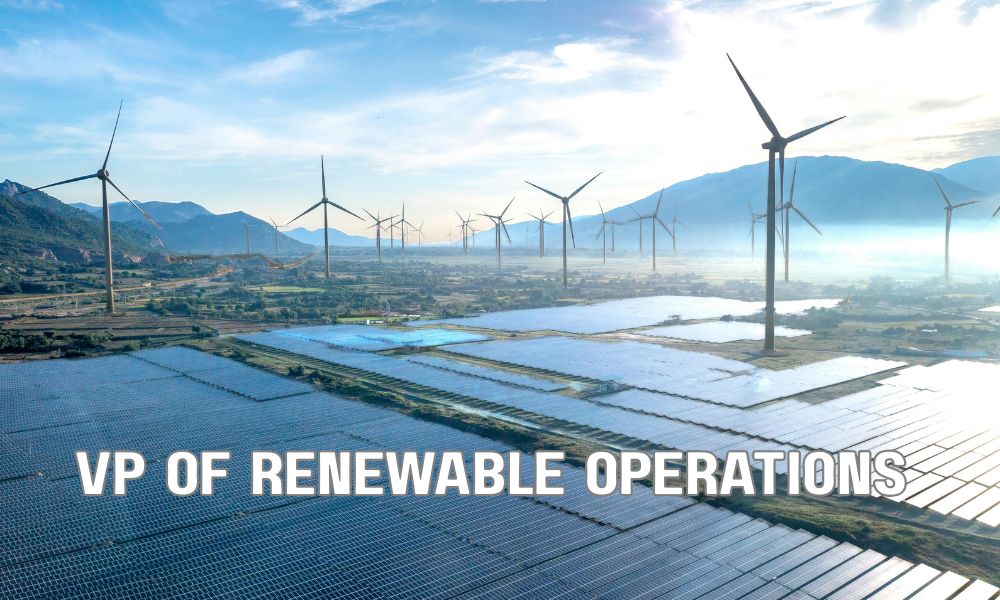
For independent power producers and utilities aggressively pivoting their generation mix, this executive is critical. They manage the specific operational nuances of utility-scale solar, onshore/offshore wind, and battery storage.
- Core Strengths: Intermittency management, BESS dispatch optimization, inverter health, OEM warranty negotiations, and EPC contractor management for greenfield sites.
- Ideal Background: A technical leader who understands the unique mechanical and software demands of renewable assets, capable of optimizing power purchase agreement (PPA) revenues through high asset availability.
3. Critical Competencies to Demand in Energy Leadership
Evaluating an executive candidate for a utilities or energy leadership role requires moving past generic management platitudes and interrogating their specific mechanical grasp of grid economics and safety. Search committees must rigorously assess four critical competencies:
1. Reliability, Safety & Outage Restoration
In utilities, reliability is the ultimate metric, and safety is the ultimate cultural mandate. A catastrophic failure costs lives and triggers massive regulatory fines. Elite executives do not just track lagging indicators; they proactively engineer safety into the grid. Furthermore, they must demonstrate mastery in Incident Command Systems (ICS) during major outage events, mobilizing thousands of mutual-assistance linemen seamlessly during hurricanes, freezes, or wildfires.
2. Capital Project Execution (EPC Management)
Building or upgrading energy infrastructure requires hundreds of millions, or billions, of dollars. The executive must possess supreme discipline in managing Engineering, Procurement, and Construction (EPC) contractors. They must demonstrate a history of preventing scope creep, managing massive supply chain delays (e.g., securing high-voltage transformers), and delivering infrastructure on time to ensure it enters the rate base without prudency disallowances.
3. Regulatory Diplomacy & Rate Case Support
Operations in the utility sector are inextricably linked to regulation. A transformative operations leader must be a skilled diplomat. They must be capable of testifying before utility commissions, mathematically defending capital expenditures, and proving to regulators that operational investments are prudent and directly benefit the ratepayer.
4. Decarbonization & Distributed Energy Resources (DERs)
The modern operations leader must bridge the gap between legacy infrastructure and decentralized power. They must oversee the technical integration of bi-directional power flows, rooftop solar, microgrids, and electric vehicle fleets, ensuring grid stability is maintained as intermittent assets replace heavy spinning mass.
4. The Energy Executive Scorecard: 5 Vetting Domains
To ensure objective assessment across the executive interview process, search committees should score every finalist across five distinct operational domains utilizing a structured rubric:
| Evaluation Domain | Critical Core Competencies | Sample Board Interview Question |
|---|---|---|
| 1. Reliability & Crisis Management | SAIDI/SAIFI optimization, extreme weather resilience, Incident Command System (ICS), mutual assistance logistics. | “Walk us through a time you managed a catastrophic, multi-day grid outage event. How did you coordinate field logistics, manage public communications, and safely restore power under extreme pressure?” |
| 2. CapEx & Infrastructure Projects | EPC contractor management, supply chain procurement, budget adherence, greenfield construction. | “Detail your framework for managing a massive transmission upgrade project. How did you navigate supply chain bottlenecks for critical components while keeping the project on budget?” |
| 3. Regulatory & Compliance Acumen | NERC/FERC compliance, PUC rate case testimony, environmental permitting, prudency defense. | “Describe a scenario where a utility commission aggressively challenged your operational capital expenditures. How did you mathematically and technically defend the necessity of those investments?” |
| 4. Energy Transition & Grid Modernization | DER integration, smart grid (AMI/SCADA) deployment, BESS optimization, grid hardening. | “How have you successfully integrated intermittent renewable generation into a legacy distribution network without compromising localized voltage stability or reliability?” |
| 5. Labor, Safety & Union Relations | Zero-harm safety culture, IBEW/union negotiations, field workforce retention, high-voltage safety protocols. | “Given the severe national shortage of qualified journeyman linemen, how have you structurally altered your workforce planning or union relationships to maintain operational readiness?” |

5. Executive Compensation & The Infrastructure Fund Influence
The energy and utilities sector is a primary target for massive global infrastructure funds and private equity sponsors seeking stable yields and ESG-aligned energy transition portfolios. Consequently, compensation packages for elite COOs and Operations Executives are highly competitive and must align directly with long-term asset value creation.
To attract top-tier utility and energy talent away from established regulated monopolies or global IPPs, organizations must structure aggressive, performance-driven offers:
- Base Compensation: Base salaries for mid-market to enterprise COOs and Infrastructure VPs typically range from $300,000 to $550,000+, scaling heavily alongside the organization’s megawatt capacity, rate base, and geographic footprint.
- Performance-Linked Annual Incentives: Short-Term Incentives (STI) typically range from 40% to 100% of base salary. These bonuses are tied strictly to hard operational metrics: achieving safety benchmarks (zero fatalities/LTI), hitting SAIDI/SAIFI reliability targets, and delivering capital projects on budget.
- Long-Term Equity & Profits Interests (PIUs): The true differentiator for elite executives is the equity stack. In PE-backed platforms and IPPs, operating executives command significant equity grants or Profits Interest Units, aligning their financial outcome directly with the sponsor’s exit valuation or long-term yield targets.
- Relocation and Retention Provisions: Because energy assets are geographically fixed, securing the perfect operator often requires relocation. Furthermore, extracting an executive from a major utility frequently requires signing bonuses to “make them whole” for unvested equity, deferred compensation, or impending annual bonuses they forfeit by resigning.

Conclusion
The energy and utilities industry will continue to experience aggressive structural disruption, extreme climate challenges, and technological modernization throughout the decade. Operators can no longer afford leadership that views the grid as a static, purely mechanical enterprise. The modern COO or VP of Infrastructure must operate as a commercial strategist, a regulatory diplomat, and an uncompromising executor of operational reliability and safety. They are the linchpin that connects capital investment with grid resilience and investor returns.
Identifying and extracting these rare, battle-tested executives requires moving beyond active job boards and generic staffing methodologies. Top energy leaders are heavily compensated, deeply entrenched, and laser-focused on keeping the lights on at their current organizations. To successfully map the market, confidently vet complex operational capabilities, and negotiate high-stakes equity structures, forward-thinking boards, infrastructure funds, and utility CEOs partner with specialized recruitment experts. By engaging a dedicated Energy & Utilities Executive Search Firm, your organization gains the proprietary networks and deep industry intelligence required to secure the transformative leadership that will dominate the modern energy transition.
Frequently Asked Questions (FAQs)
1. What is the difference between a traditional utility manager and a modern Energy COO?
A traditional utility manager focused primarily on routine maintenance, union relations, and managing predictable, centralized baseload power. A modern Energy COO is a corporate executive responsible for enterprise-wide grid modernization, navigating complex regulatory rate cases, executing multi-billion-dollar EPC contracts, and integrating intermittent renewable energy and battery storage into a dynamic, two-way power grid.
2. Why is regulatory and PUC experience so critical for a utilities operations executive?
In the regulated utility sector, capital investments (CapEx) are only recovered if the Public Utility Commission (PUC) deems them “prudent.” If an operations executive cannot effectively justify grid upgrades, storm hardening, or new substations to the regulators, the utility will suffer massive financial disallowances. The executive must be highly adept at providing defensible, mathematically sound operational testimony.
3. How long does a retained executive search for an Energy COO or VP of T&D take?
A rigorous, retained executive search for a C-suite or senior operations leader in the energy sector typically requires 12 to 16 weeks from the execution of the contract to a signed offer letter. This timeline accounts for deep market mapping, covert outreach to passive candidates (who are busy managing continuous operations), rigorous multi-stage technical vetting, and complex equity negotiations.
4. What role does the executive play in managing linemen and field labor shortages?
The shortage of qualified high-voltage linemen and specialized electrical workers is a massive threat to grid reliability. An elite executive tackles this by forging strong, collaborative relationships with unions (like the IBEW), building robust internal apprenticeship pipelines, and deploying advanced workforce management software to optimize dispatch routing and reduce unnecessary truck rolls.
5. How should a board evaluate a candidate’s capability in the energy transition?
Force the candidate to discuss specific technological and mechanical integrations. Ask them how they handled the grid instability caused by high penetrations of utility-scale solar, how they managed the operational dispatch of a massive Battery Energy Storage System (BESS), or how they modernized aging substations to handle the load profiles of new EV charging infrastructure.
6. What are the biggest operational red flags when interviewing an energy executive?
Key warning signs include: a dismissive attitude toward rigorous safety protocols and outage preparedness; an inability to clearly articulate how they manage capital project scope creep and EPC contractors; a lack of experience or hostility toward renewable integration; and poor communication skills that would translate badly in a high-stakes regulatory or public hearing.
7. How does an operations executive navigate extreme weather and grid resilience?
A top-tier COO understands that extreme weather (wildfires, deep freezes, hurricanes) is now the operational baseline. They must be adept at executing proactive grid hardening (e.g., undergrounding lines, implementing covered conductors, aggressive vegetation management) while maintaining a flawless, military-style Incident Command structure to restore power rapidly when outages inevitably occur.
8. Why use a specialized executive search firm instead of a generalist recruiter?
Generalist recruiters lack the granular industry vocabulary to accurately vet a candidate’s expertise in specialized areas like SCADA integration, NERC CIP compliance, high-voltage transmission physics, or wholesale power markets (ISOs/RTOs). A specialized firm brings deep, pre-existing networks of proven utility and infrastructure leaders and the technical credibility required to extract them from top national operators.

Tanya Gallardo
Managing Director, Executive Search & AI Talent Strategy
Tanya Gallardo is the Managing Director of Executive Search & AI Talent Strategy at JRG Partners, leading C-suite and Board engagements across key growth sectors including Technology, Financial Services, and Manufacturing.
With over 18 years of experience specializing in disruptive technology leadership, Tanya is recognized as a leading authority on talent architecture for future-focused executive roles, such as the Chief AI Officer (CAIO) and Chief Digital Officer (CDO). Her expertise lies in accurately assessing the cultural fit and technical depth required to ensure a high return on investment (ROI) for critical leadership appointments.
Prior to her role at JRG Partners, Tanya held senior roles directing global talent acquisition strategies at a major publicly-traded technology firm, advising on organizational design and succession planning for emerging executive functions. She is a recognized speaker and contributor to industry events, sharing data-driven insights on executive compensation, leadership development, and the measurable business impact of C-suite talent.
