


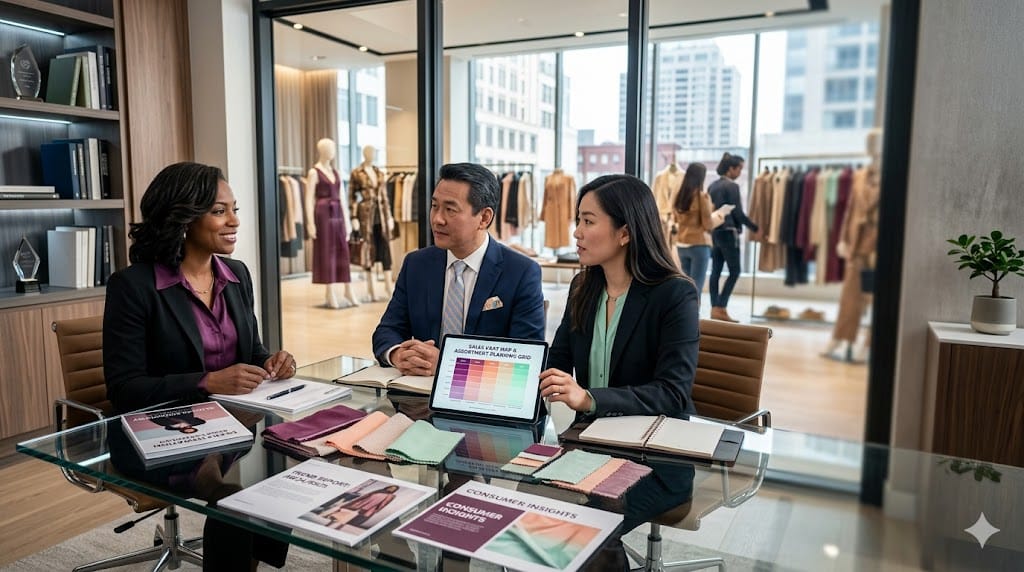
As the Global Head of Research & Leadership Advisory for JRG Partners, a premier US-based executive search firm, I am pleased to present our strategic insights on a critical leadership imperative: how to hire a Chief Merchandising Officer for retail companies in today’s dynamic landscape.
The contemporary Chief Merchandising Officer (CMO) role has transcended its historical scope, evolving into a pivotal strategic visionary essential for driving comprehensive business profitability and sustainable growth across the US market. Recruiting this caliber of merchandising leadership talent demands a nuanced understanding of their expanded remit and a highly targeted talent acquisition strategy.
Key Takeaways for Board Consideration:
- The modern CMO is a strategic visionary, not merely a product selector, driving overall business profitability and market share.
- Prioritize candidates demonstrating deep expertise in data-driven assortment planning, omnichannel execution, and command of advanced forecasting technologies.
- Seek leaders adept at mastering vendor relationships, developing profitable private label ventures, and expanding margins through sophisticated strategic visual merchandising.
- A successful CMO operates as a powerful cross-functional influencer, seamlessly integrating merchandising strategy across the entire retail organization.
- Recruiting top-tier merchandising leadership requires a clear understanding of the evolving role and a highly focused, targeted talent acquisition strategy.
Defining Modern CMO Scope Beyond Product Selection
The traditional buyer persona has undergone a fundamental transformation, giving way to a strategic business architect. This paradigm shift emphasizes a profound understanding of consumer insights, unwavering brand alignment, and sophisticated market trend analysis. A truly impactful CMO grasps the broader retail ecosystem, from digital channels and physical store experiences to intricate supply chain efficiencies and integrated marketing initiatives.
Recent industry analyses indicate that 70% of retail CEOs agree that the CMO role has become significantly more strategic in the last five years, underscoring this critical evolution. JRG Partners, with over two decades of experience in executive talent acquisition, consistently places visionary leaders who redefine market benchmarks.
Assortment Architecture and Category Lifecycle Mastery
The core of the CMO’s influence lies in designing balanced and profitable product assortments across all channels. This involves strategic management of the product lifecycle, from initial introduction to thoughtful exit strategies. Leveraging advanced data analytics is paramount for optimizing assortment breadth, depth, and inventory turns.
When assessing candidates, boards must inquire: What assortment metrics define CMO-level strategic impact? Studies confirm that companies with optimized assortment planning can see a 10-15% increase in gross margin, a testament to the direct financial impact of this capability.
Vendor Negotiation and Private Label P&L Experience
An exceptional CMO cultivates strategic, mutually beneficial relationships with vendors, driving advantageous cost negotiation, payment terms, and overall supply chain efficiencies. Beyond third-party brands, proven expertise in developing, launching, and scaling profitable private label programs is increasingly non-negotiable. This requires full P&L accountability and an in-depth understanding of owned brand economics.
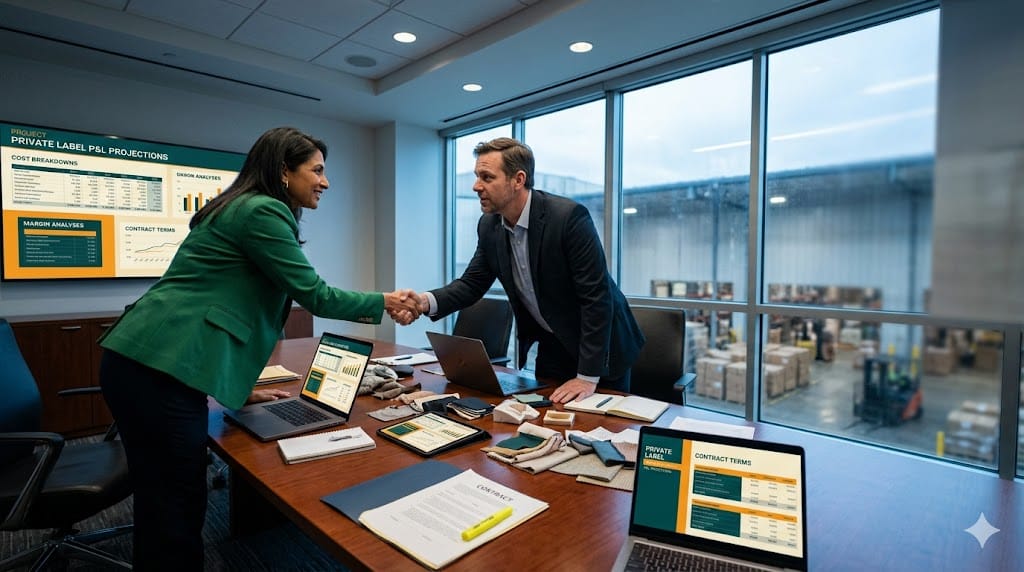
Boards should critically evaluate candidates’ ability to structure these relationships, asking: How do top CMOs structure private label partnerships? It is well-documented that private label products often boast 25-30% higher gross margins compared to national brands, signifying their importance in margin expansion. Furthermore, strong candidates will demonstrate familiarity with which vendor negotiation frameworks deliver 300+ bps margins consistently.
Omnichannel Inventory Synchronization Expertise
In the contemporary retail environment, seamless management of inventory across e-commerce, brick-and-mortar, and emerging sales channels is not merely an operational task but a strategic imperative. This demands the implementation of real-time inventory visibility and intelligent allocation systems. Strategies for mitigating stockouts, preventing overstocks, and ensuring a consistent customer experience across all touchpoints are crucial.
Consumers demand fluidity: How should CMOs synchronize physical and digital assortments? Data shows that 85% of consumers expect a consistent experience across all channels, largely driven by synchronized inventory, emphasizing the criticality of this competence for a successful Chief Merchandising Officer.
Demand Sensing and AI-Driven Forecasting Proficiency
Moving beyond historical sales data, the next-generation CMO excels at leveraging big data, predictive analytics, and artificial intelligence for highly accurate demand forecasting. This capability allows for anticipating future trends and customer preferences, significantly impacting buying decisions, promotional planning, and inventory optimization.
Boards should seek clarity on: What forecasting accuracy benchmarks signal CMO readiness? Retailers employing AI for demand forecasting can reduce forecasting errors by 20-50%, demonstrating a clear competitive advantage in a volatile market.
Margin Expansion Through Visual Merchandising Strategy
The strategic role of visual presentation in driving sales, enhancing brand perception, and fostering customer engagement cannot be overstated. A truly strategic CMO ensures cohesive visual storytelling across physical stores and digital platforms. This includes optimizing product placement, adjacencies, and promotional displays to maximize profitability.
Boards should assess candidates’ insights into which visual presentation strategies drive conversion lifts. Effective visual merchandising can increase impulse buys by up to 30%, directly contributing to the bottom line.
Cross-Functional Influence: Supply Chain to Marketing
The modern CMO functions as a central connector, collaborating extensively with operations, supply chain management, marketing, finance, and sales. Their ability to break down organizational silos and create a unified brand and customer experience is paramount. This leadership role demands driving consensus and strategic alignment across diverse departments.

A key question for governance consideration is: What cross-functional governance models maximize merchandising ROI? Research suggests that companies with strong cross-functional collaboration are 50% more likely to outperform competitors, highlighting the CMO’s profound organizational impact.
Recruiting Scarce Retail Merchandising Leadership Talent
Identifying the unique blend of analytical rigor, creative vision, and exceptional leadership skills required for this role is inherently challenging. JRG Partners’ proprietary assessment models have a 90% success rate for CMO placements within 18 months, reflecting our rigorous, data-informed methodologies. We specialize in developing compelling value propositions to attract top-tier candidates and employ strategic interviewing techniques to accurately assess strategic thinking, cultural fit, and proven impact.
Boards must consider the long-term implications of talent architecture, including the query: Will AI assortment planning eliminate traditional CMO roles by 2030? While technology evolves, the strategic human element of merchandising leadership remains irreplaceable. Only 15% of retail executives believe their company has a robust succession plan for critical leadership roles like the CMO, underscoring the urgency of a proactive approach. Leveraging JRG Partners’ unparalleled network and deep market intelligence ensures access to this elite cadre of merchandising leadership talent, turning a challenging search into a strategic competitive advantage.
FAQs: Insights for Executive Leadership
- What is the key difference between a Chief Merchandising Officer and a Head of Buying? The CMO operates at a far broader strategic level, integrating merchandising vision with overall business strategy, finance, marketing, and operations. A Head of Buying typically focuses on category-specific procurement, vendor negotiations, and inventory management within a defined scope.
- How can we assess a CMO candidate’s strategic vision during the interview process? Focus on case studies, scenario planning, and their ability to articulate long-term market shifts, competitive responses, and innovative growth strategies beyond immediate sales metrics. Inquire about their experience in anticipating consumer trends and disrupting traditional merchandising models.
- Is it essential for a CMO candidate to have experience in our specific product category? While direct category experience can be beneficial, it’s often secondary to proven strategic acumen, data literacy, omnichannel expertise, and cross-functional leadership skills. A strong CMO can adapt their strategic framework to diverse product categories.
- What are the critical KPIs a CMO should be responsible for? Key performance indicators include gross margin return on investment (GMROI), inventory turnover, markdown optimization, private label penetration, customer lifetime value (CLV) influenced by assortment, and overall revenue growth driven by merchandising strategy.
- How long does it typically take to onboard a new Chief Merchandising Officer effectively? A comprehensive onboarding process typically spans 6-12 months, focusing on deep dives into organizational culture, existing data infrastructure, key vendor relationships, and strategic priorities. JRG Partners provides post-placement advisory to ensure seamless integration and accelerated value realization.
Looking for a specialized executive search partner?
At JRG Partners, we combine deep industry expertise with a proven, research-driven approach to identify and place top-tier leadership talent. Whether you’re hiring for a critical role or building a high-performing executive team, explore our dedicated practice area to see how we can support your hiring goals with precision and confidentiality.

Tanya Gallardo
Managing Director, Executive Search & AI Talent Strategy
Tanya Gallardo is the Managing Director of Executive Search & AI Talent Strategy at JRG Partners, leading C-suite and Board engagements across key growth sectors including Technology, Financial Services, and Manufacturing.
With over 18 years of experience specializing in disruptive technology leadership, Tanya is recognized as a leading authority on talent architecture for future-focused executive roles, such as the Chief AI Officer (CAIO) and Chief Digital Officer (CDO). Her expertise lies in accurately assessing the cultural fit and technical depth required to ensure a high return on investment (ROI) for critical leadership appointments.
Prior to her role at JRG Partners, Tanya held senior roles directing global talent acquisition strategies at a major publicly-traded technology firm, advising on organizational design and succession planning for emerging executive functions. She is a recognized speaker and contributor to industry events, sharing data-driven insights on executive compensation, leadership development, and the measurable business impact of C-suite talent.
