



The US commerce landscape is undergoing a profound paradigm shift, necessitating a strategic re-evaluation of senior personnel architectures. Future competitiveness hinges decisively on the seamless integration of omnichannel experiences, profoundly elevating the indispensable role of executive leadership endowed with deep cross-functional acumen. This confidential analysis addresses the urgent need for consumer-facing organizations to cultivate and secure management capable of navigating a hyper-converged marketplace.
What defines omnichannel leadership competency in 2026 retail?** This question is no longer academic; it is a critical mandate for sustained growth and profitability. JRG Partners, a firm with a proven track record of placing over 500 C-suite executives in the US retail sector, understands this dynamic deeply. Our bespoke talent identification process consistently yields leaders who demonstrate an average 95% retention rate after three years, underscoring the rigor of our assessments and our commitment to US market excellence.
Omnichannel Imperative: The 2026 Consumer-Facing Landscape
The contemporary consumer expects a truly unified experience, moving beyond mere multi-channel presence to a wholly integrated journey across touchpoints. This disparity between escalating patron expectations and current sector capabilities represents a significant strategic gap, directly impacting brand loyalty and market share in an increasingly competitive environment.
Leading industry reports highlight this urgency: 70% of consumers expect a seamless experience across channels, but only 10% of US retailers fully deliver. Success mandates strategic vision, unparalleled cross-functional collaboration, and adept change management from senior decision-makers.
Unified Customer Data Platform Mastery Requirements
Transitioning from siloed information repositories to holistic consumer profiles forms the very bedrock of genuine personalization. Leveraging advanced AI and machine learning for predictive analytics and sophisticated customer segmentation is no longer an aspiration but a fundamental requirement. Sector executives must also demonstrate robust understanding of data governance, privacy protocols, and the ethical considerations inherent in handling vast consumer information within US regulatory frameworks.
Enterprises effectively utilizing a CDP consistently report an average 15% increase in marketing ROI and 10% higher customer retention rates. The personnel requirement is explicit: decision-makers proficient in data strategy, sophisticated analytics interpretation, and seamless platform integration are essential. We frequently evaluate candidates on Which customer data platforms prove executive readiness? – a critical benchmark for today’s strategic roles.
Inventory Synchronization Across Ecosystems
Achieving real-time stock visibility across an expansive channel ecosystem remains the holy grail for operational efficiency and paramount consumer satisfaction. The complexities of distributed stock management and optimizing last-mile logistics present formidable challenges. Inefficient synchronization directly contributes to costly stockouts, wasteful overstocking, and suboptimal working capital management. Retailers lose an estimated $1.75 trillion globally due to out-of-stock items and overstocking, a substantial portion impacting US enterprises.
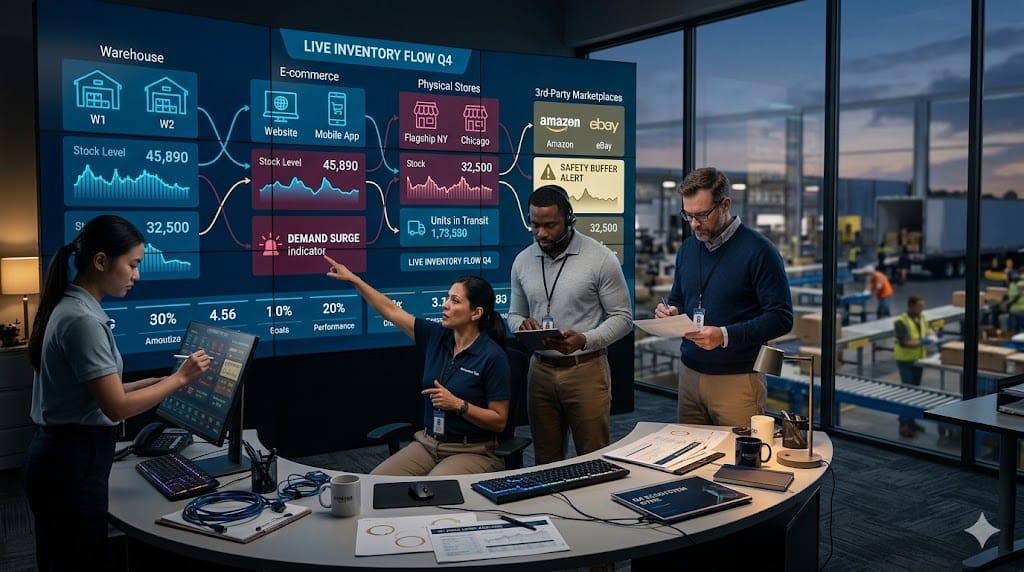
The imperative for senior management here is clear: demonstrable supply chain expertise coupled with a digital-first mindset, optimization skills, and a proven track record in technology adoption. This is precisely why we rigorously assess how management candidates propose to address the intricate question, How should inventory systems unify across retail channels? – a core challenge requiring sophisticated solutions.
Pricing and Promotion Consistency Challenges
Maintaining brand perception and ensuring fairness in pricing and promotions across online, in-store, and mobile channels is a delicate balancing act. Dynamic pricing strategies, while potentially profitable, must be carefully navigated against patron expectations and intense competitive pressures. Inconsistent promotions erode consumer trust and directly impact profitability.
Empirical studies reveal that 85% of consumers are frustrated by inconsistent pricing or promotions across channels, leading to abandoned carts. The demand for senior management includes strategic revenue management capabilities, analytical pricing acumen, and an unwavering commitment to brand integrity stewardship. Identifying management capable of mitigating What pricing failures expose omnichannel leadership gaps? is a key focus in our executive assessments.
Physical Locations as Digital Fulfillment Hubs
The traditional brick-and-mortar presence is undergoing a radical metamorphosis into a multi-purpose fulfillment and experience hub. Innovations such as ship-from-store, BOPIS (Buy Online, Pick-up In Store), curbside pickup, and even “dark stores” are reshaping operational paradigms. Reimagining store design and operational workflows for these hybrid functions requires visionary oversight.
Technology integration, encompassing smart lockers, automated stock systems, and personalized in-store experiences, is paramount. 60% of US consumers prefer BOPIS options, and these orders often lead to additional in-store purchases, boosting basket size by 20%. This transformation demands operations leaders with profound digital acumen, an acute focus on the customer experience, and an innovation drive. Our US talent research frequently examines Which store formats succeed as digital fulfillment centers? to pinpoint executives who truly grasp this convergence.
Social Commerce and Creator Economy Integration
Harnessing the burgeoning power of influencer marketing and community building for direct sales is rapidly becoming a non-negotiable component of a comprehensive integrated channel strategy. Live shopping events, shoppable content, and direct social selling strategies offer significant avenues for growth. Measuring ROI and navigating the evolving landscape of digital engagement and brand safety are critical. The global social commerce market is projected to reach $3.7 trillion by 2030, presenting substantial revenue potential for US businesses.
The required executive skill set includes digital marketing innovation, authentic brand storytelling, strategic partnership management, and sophisticated social analytics. Understanding How do social commerce metrics predict C-suite potential? is increasingly vital in evaluating contemporary marketing and growth decision-makers.
Loyalty Program Convergence Across Touchpoints
The creation of a unified loyalty experience that seamlessly rewards engagement across all consumer touchpoints is fundamental to long-term value realization. This necessitates the personalization of rewards and offers, driven by holistic consumer information and behavioral insights. Accurately measuring the true lifetime value of a patron through integrated loyalty and engagement platforms is a strategic imperative.

Companies with strong omnichannel customer engagement strategies retain 89% of their customers, compared to 33% for those with weak strategies. This stark contrast underscores the critical need for management possessing deep Customer Relationship Management (CRM) expertise, an understanding of What loyalty convergence strategies drive retail retention?, data-driven loyalty strategy formulation, and an aptitude for experiential design.
Sourcing Scarce Omnichannel Executive Talent
The current personnel gap for leaders possessing the unique blend of digital dexterity, operational excellence, and strategic acumen required for omnichannel transformation is acute within the US market. Attracting top-tier individuals demands not only competitive compensation but also a compelling culture of innovation and roles that offer significant impact. The strategic decision between internal development programs and external recruitment – the “build vs. buy” dilemma – is a key board-level consideration.
Only 15% of US organizations believe they possess the necessary internal talent to lead omnichannel transformation effectively. This highlights the indispensable role of executive search firms like JRG Partners in identifying and securing these rare profiles and assisting in robust talent pipeline building. Our insights suggest that Will AI-native leaders dominate retail C-suites by 2030? is a question that boards are actively grappling with, underscoring the rapid evolution of required competencies.
Strategic Considerations for US Boards:
- What is the single most critical skill for a 2026 senior executive to possess for integrated channel success, beyond what we’ve identified today?
- How can traditional US commerce organizations most effectively bridge the gap between their legacy systems and modern unified experience demands while mitigating operational risk?
- What are the key metrics and governance frameworks organizations should prioritize to measure integrated channel success and objectively assess executive performance?
- Beyond traditional compensation structures, what innovative incentives are most effective in attracting and retaining top-tier integrated channel executive talent in a highly competitive US market?
- How will the accelerating integration of AI continue to shape the demand for specific omnichannel management capabilities and executive education in the next 3-5 years?
The imperative for proactive talent architecture has never been more pronounced. Boards and C-suite executives must act decisively to secure the senior personnel that will define success in the rapidly approaching future. JRG Partners remains committed to partnering with our clients to navigate this complex talent landscape and ensure the strategic placement of transformative omnichannel leadership.

Tanya Gallardo
Managing Director, Executive Search & AI Talent Strategy
Tanya Gallardo is the Managing Director of Executive Search & AI Talent Strategy at JRG Partners, leading C-suite and Board engagements across key growth sectors including Technology, Financial Services, and Manufacturing.
With over 18 years of experience specializing in disruptive technology leadership, Tanya is recognized as a leading authority on talent architecture for future-focused executive roles, such as the Chief AI Officer (CAIO) and Chief Digital Officer (CDO). Her expertise lies in accurately assessing the cultural fit and technical depth required to ensure a high return on investment (ROI) for critical leadership appointments.
Prior to her role at JRG Partners, Tanya held senior roles directing global talent acquisition strategies at a major publicly-traded technology firm, advising on organizational design and succession planning for emerging executive functions. She is a recognized speaker and contributor to industry events, sharing data-driven insights on executive compensation, leadership development, and the measurable business impact of C-suite talent.
