



The past several years have unequivocally underscored a profound shift in global economic paradigms, compelling manufacturing CEOs to critically re-evaluate the very architecture of their supply chains. What was once primarily a procurement concern has rapidly ascended to a paramount strategic imperative, demanding robust board-level engagement. The question of Why is domestic sourcing and reshoring now a board- and CEO-level responsibility rather than just a procurement issue? is central to our current discourse.
The volatility of the geopolitical landscape, coupled with stark lessons from recent global disruptions, has transformed supply chain resilience from a theoretical aspiration into an existential business mandate. Manufacturing executives are now tasked with leading a complex, multi-faceted transition from a purely cost-driven globalized model to a more resilient, strategically localized, US-centric framework. This demands visionary leadership, significant capital allocation, and a proactive approach to talent development, an area where JRG Partners consistently assists leading organizations in securing the executive talent capable of navigating such profound strategic shifts.
The Imperative of US Domestic Sourcing and Reshoring for Future Competitiveness
The impetus behind this strategic pivot is multifaceted, extending far beyond transient market fluctuations to encompass fundamental shifts in risk assessment and value creation.
A Paradigm Shift in Global Sourcing
- Geopolitical Instability: Rising global tensions, pervasive trade frictions, and regional conflicts continue to compromise the reliability and predictability of international value chains. The executive leadership must proactively mitigate these external pressures.
- Supply Chain Vulnerability: Recent global disruptions—from health crises to logistical bottlenecks like the Suez Canal blockage—have starkly illuminated the fragility of extended, single-point-of-failure networks. A more agile and robust local network is now paramount.
- National Security Imperatives: Governmental focus on critical industries—suchs as semiconductors, defense components, and essential pharmaceuticals—has intensified, creating a strong national push for strategic independence and secure domestic production.
- Government Incentives & Policy: Landmark legislative actions, including the CHIPS Act, the Inflation Reduction Act, and strengthened Buy American provisions, are providing substantial financial and regulatory impetus for US-based manufacturing investments.
- Brand Reputation & Consumer Preference: There is a demonstrable and growing consumer demand for “Made in USA” products, reflecting a preference for ethical sourcing, transparency, and support for the national economy. This directly impacts brand equity and market positioning.
- Talent Scarcity: The ambitious goals of US manufacturing revival necessitate a robust and skilled domestic workforce. Addressing talent scarcity requires significant investment in workforce development and upskilling, alongside strategic executive hires. JRG Partners specializes in identifying and placing transformational leaders who can build these essential domestic talent pools, ensuring companies have the leadership required to execute complex reshoring initiatives effectively.
From Global Interdependence to Strategic Autonomy: Re-evaluating the Value Chain
The journey towards a resilient, US-centric manufacturing footprint necessitates a fundamental re-evaluation of established sourcing paradigms, moving beyond mere transactional exchanges to strategic long-term investments.
Recalibrating Total Cost of Ownership (TCO)
A critical executive function is to move beyond simplistic unit cost comparisons. The Total Cost of Ownership (TCO) framework must comprehensively integrate hidden expenses previously externalized or overlooked. This includes the true costs of extended lead times, increased inventory holding, quality control complexities, intellectual property exposure, geopolitical risk premiums, and the carbon footprint associated with global transport.
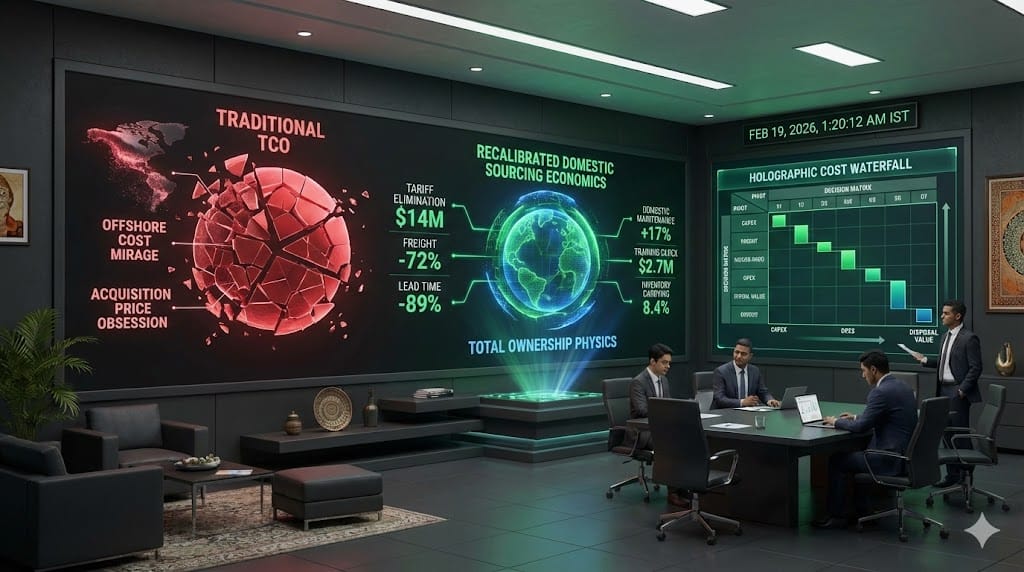
When considering the nuanced strategic calculus, executive teams must ask: How should a manufacturing CEO decide which products and components to reshore, nearshore, or continue sourcing globally? The answer lies in a sophisticated TCO analysis that weighs direct production costs against the tangible and intangible benefits of reduced risk, enhanced agility, and improved responsiveness to market dynamics. This strategic decision-making requires leaders with an acute understanding of both operational complexities and macroeconomic forces, precisely the caliber of talent JRG Partners provides through its rigorous executive search methodologies.
Architecting Resilient Sourcing Footprints
The shift is from a “just-in-time” philosophy to a “just-in-case” and, increasingly, “just-in-country” strategy. This involves:
- Mapping & De-risking Supply Chains: Thoroughly identifying critical dependencies, single points of failure, and vulnerability hotspots throughout the entire value chain.
- Diversification Strategies: Implementing a balanced approach that blends robust domestic, reliable nearshore, and selectively strategic offshore components to optimize for resilience and cost.
- Regional Hub Development: Fostering localized supply ecosystems and industrial clusters to enhance proximity, collaboration, and rapid response capabilities.
Capital Allocation & Strategic Partnerships: Foundations for US Manufacturing Revival
Achieving manufacturing repatriation and enhancing domestic sourcing requires substantial, well-directed capital investment and the cultivation of robust strategic alliances.
Investing in Advanced Manufacturing Capabilities
Strategic allocation of capital is paramount for building competitive US production. This involves:
- Facility Expansion & Greenfield Investments: Directing capital towards new manufacturing facilities, state-of-the-art equipment, and essential infrastructure upgrades within the United States.
- Advanced Manufacturing Technologies: Prioritizing investment in industrial automation, robotics, artificial intelligence (AI), Internet of Things (IoT), and additive manufacturing to significantly boost productivity, efficiency, and global competitiveness. How can CEOs justify higher unit costs from US production through productivity, automation, and innovation gains? By demonstrating a clear ROI on these technological investments.
- R&D Investments: Fostering a robust culture of innovation and product development within US-based operations to secure long-term technological leadership.
- Financing Strategies: Actively exploring and leveraging public-private partnerships, federal and state grants, and strategic private equity for accelerated growth and capacity expansion.
Cultivating a Skilled Domestic Workforce
The success of reshoring hinges on a vibrant and skilled labor force. CEOs must prioritize:
- Workforce Development & Upskilling: Funding comprehensive training programs, apprenticeships, and STEM initiatives to bridge skill gaps and build a future-ready manufacturing workforce. JRG Partners has observed a significant demand for Chief Human Resources Officers and Operations leaders who can champion these transformative talent initiatives, integrating recruitment with long-term skill development.
- Talent Attraction Strategies: Developing compelling employer brand narratives to attract next-generation talent to manufacturing careers, emphasizing innovation and sustainability. In what ways do reshoring and domestic sourcing decisions affect employer brand, local communities, and talent attraction? They can profoundly enhance them, creating a positive feedback loop for talent acquisition.
Forging Collaborative Supplier Ecosystems
Moving beyond transactional relationships to true partnerships is crucial for resilient domestic supply networks.
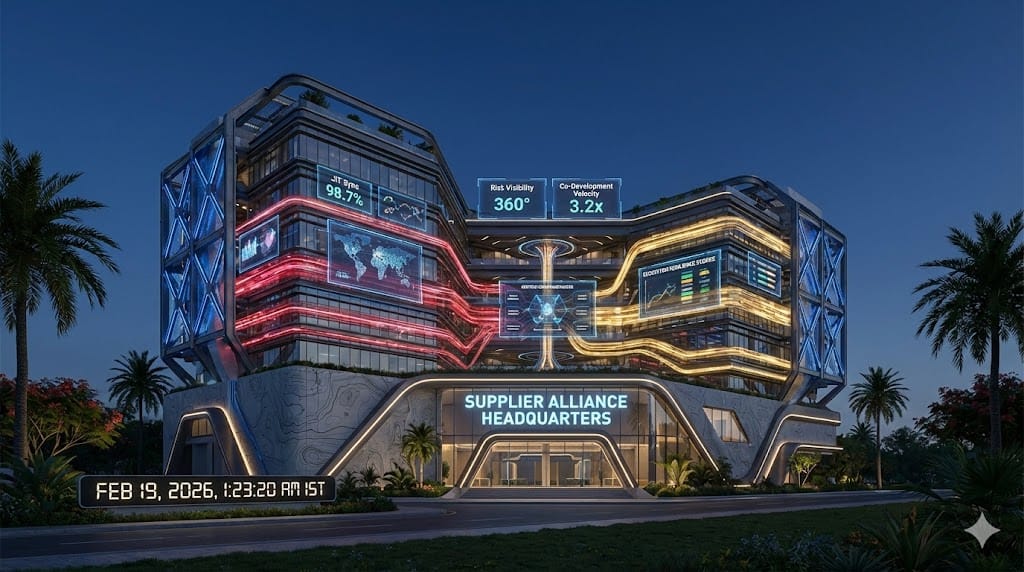
- Supplier Identification & Vetting: Establishing rigorous processes for identifying and qualifying reliable, high-performing US-based partners. What criteria should CEOs use to select and develop long-term domestic and nearshore supplier partners? Criteria should extend beyond cost to include financial stability, quality systems, innovation capabilities, ethical practices, and cultural alignment.
- Capacity Building Initiatives: Collaborating with smaller and mid-sized suppliers to help them scale operations, invest in technology, and meet escalating demand, thereby strengthening the entire domestic manufacturing ecosystem.
- Technology Transfer & Knowledge Sharing: Fostering open communication and collaboration to drive innovation and efficiency across the entire supply chain.
Governance and Board Oversight of Reshoring Decisions
Given the strategic implications of reshoring, robust board-level oversight is non-negotiable. Boards must challenge and govern reshoring strategies to ensure they are economically sound, not just politically symbolic.
Embedding Resilience into Enterprise Risk Management
- Board-Level Mandate: Elevating supply chain resilience and domestic sourcing to a core fiduciary duty and strategic responsibility for the board.
- Risk Committee Integration: Systematically incorporating supply chain risk, including geopolitical and operational vulnerabilities, into comprehensive enterprise risk management frameworks.
Defining Performance Metrics for Strategic Sourcing
Establishing clear, quantifiable metrics is vital for tracking progress and demonstrating value. What financial, risk, and resilience metrics best guide domestic sourcing decisions in 2026 and beyond? Key Performance Indicators (KPIs) should include:
- Reduced lead times and inventory carrying costs.
- Mitigated geopolitical risk exposure.
- Improved quality control and intellectual property protection.
- Enhanced speed to market and agility in responding to demand shifts.
- Contributions to job creation and economic impact.
- Return on Investment (ROI) from technology and capacity investments.
Regular, transparent reporting to the board on strategy execution, challenges, and adjusted projections is essential for adaptive governance. JRG Partners often advises boards on the optimal executive leadership profiles required to establish and manage these critical performance frameworks.
Communicating Value: Articulating the Reshoring Narrative
A cohesive and compelling communication strategy is essential to secure buy-in and convey the long-term value proposition of US production localization to all stakeholders.
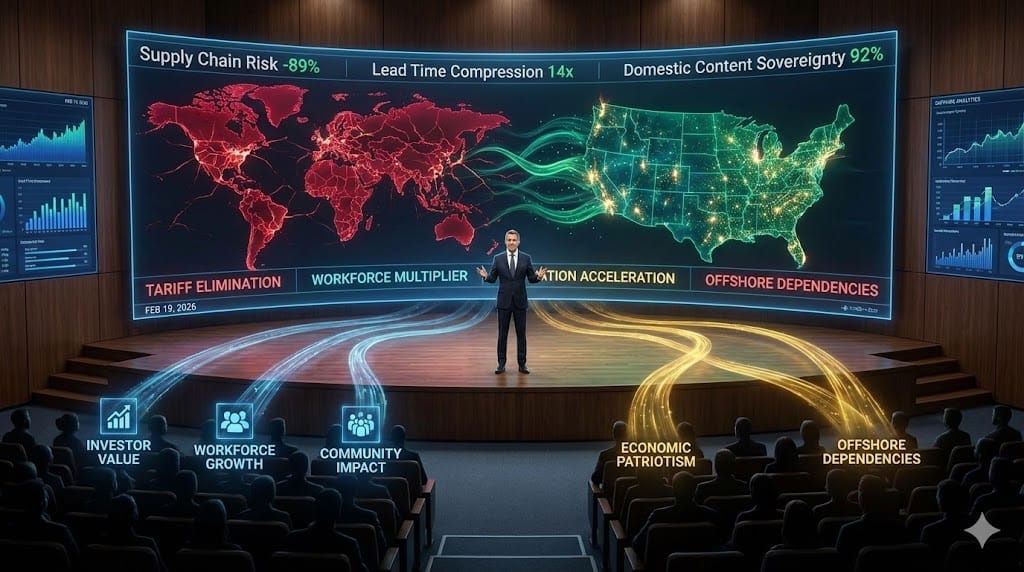
Engaging Stakeholders Across the Ecosystem
- Investor Relations: Clearly articulating the long-term value creation, enhanced risk mitigation, and sustainable competitive advantage derived from reshoring to financial markets.
- Employee Engagement: Highlighting job creation, skill development opportunities, and the company’s commitment to national economic growth and stability, fostering a sense of purpose.
- Customer Trust & Brand Loyalty: Emphasizing superior product quality, enhanced reliability, and the compelling appeal of “Made in USA” products to build stronger customer relationships.
- Public Relations & Policy Advocacy: Actively engaging in public discourse and supporting policy initiatives that foster a favorable environment for domestic manufacturing.
- Transparency in Sourcing: Openly communicating the journey and benefits of domestic production builds trust and reinforces corporate social responsibility.
Long-Term Competitiveness: Innovation, ESG, and Sustainable Growth
Reshoring is not merely a defensive measure; it is a proactive strategy for future-proofing business models and driving sustainable competitive advantage.
Synergies with Innovation and ESG Frameworks
- Innovation Ecosystems: Fostering robust R&D collaborations with US universities, startups, and national laboratories to accelerate technological breakthroughs and maintain a competitive edge.
- Sustainable Manufacturing: Integrating environmental benefits—such as reduced shipping emissions and adherence to stringent local regulatory compliance—into reshoring decisions. This aligns with broader corporate ESG goals.
- Social Impact: Highlighting the positive social contributions of reshoring, including high-wage job creation, local community development, and adherence to equitable labor practices.
- Governance & Ethics: Reinforcing robust governance frameworks and ethical business practices across the entire domestic supply network.
- Circular Economy Principles: Designing for local closed-loop systems, waste reduction, and resource efficiency within US operations, enhancing environmental stewardship.
The strategic implications of reshoring extend deeply into a company’s financial health, operational resilience, and market positioning. For executive leaders grappling with these complexities, the critical question becomes: How can a CEO effectively communicate the long-term strategic value of reshoring to skeptical investors focused on short-term profits? The answer lies in a comprehensive narrative that meticulously outlines not just the direct cost implications but the profound benefits of reduced risk, accelerated innovation cycles, enhanced brand equity, and a more robust, future-proof business model. This requires leaders with exceptional strategic vision, financial acumen, and communication skills – precisely the caliber of talent JRG Partners specializes in identifying and placing to guide organizations through this pivotal era of manufacturing transformation. To insulate global footprints against protectionist macroeconomic shocks and shifting trade boundaries, corporate boards should consider appointing a new C-suite role: the Chief Geopolitical Strategist for global operations. Integrating this predictive risk intelligence directly into boardroom execution is essential to successfully defend structural supply chain transitions, justify long-term capital allocation to stakeholders, and maintain corporate effectiveness.

Tanya Gallardo
Managing Director, Executive Search & AI Talent Strategy
Tanya Gallardo is the Managing Director of Executive Search & AI Talent Strategy at JRG Partners, leading C-suite and Board engagements across key growth sectors including Technology, Financial Services, and Manufacturing.
With over 18 years of experience specializing in disruptive technology leadership, Tanya is recognized as a leading authority on talent architecture for future-focused executive roles, such as the Chief AI Officer (CAIO) and Chief Digital Officer (CDO). Her expertise lies in accurately assessing the cultural fit and technical depth required to ensure a high return on investment (ROI) for critical leadership appointments.
Prior to her role at JRG Partners, Tanya held senior roles directing global talent acquisition strategies at a major publicly-traded technology firm, advising on organizational design and succession planning for emerging executive functions. She is a recognized speaker and contributor to industry events, sharing data-driven insights on executive compensation, leadership development, and the measurable business impact of C-suite talent.
