


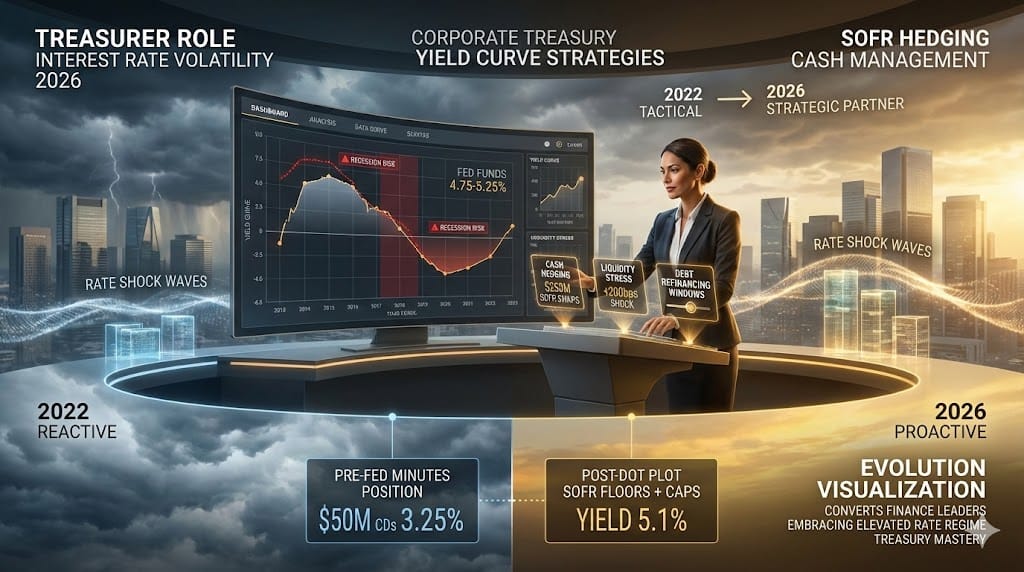
The contemporary financial landscape, particularly within the United States, is characterized by persistent volatility in monetary policy and a dynamic interest rate curve. This environment demands a fundamental re-evaluation of the treasury function, transcending its historical operational focus. Our research at JRG Partners indicates a profound paradigm shift: the Treasurer’s mandate has expanded significantly, evolving from a transactional service role into a critical strategic partnership vital for financial resilience and competitive advantage.
The pertinent question for every US corporation today is: How has the treasurer role evolved beyond traditional cash management? This memo outlines key insights and strategic considerations for optimizing your organization’s financial leadership in this new era.
Key Takeaways for Board Oversight and Executive Strategy
- The financial executive role of the Treasurer has fundamentally shifted from a transactional, operational function to a strategic, enterprise-wide financial risk leadership position.
- Proactive rate exposure management, advanced data analytics, and sophisticated hedging strategies are now paramount for capital preservation and ensuring stable earnings.
- Technology integration, robust financial stress testing, and seamless cross-functional collaboration are essential tools for navigating unprecedented market volatility.
- Modern Treasurers are directly accountable for mitigating earnings volatility and optimizing capital structure resilience in dynamic economic landscapes.
From Operational Liquidity Management to Strategic Financial Risk Leadership
Historically, treasury operations were largely confined to daily cash positioning, payment processing, and the short-term investment of surplus funds. While these core functions remain, the scope has dramatically expanded. The modern treasury executive now oversees a broad spectrum of enterprise-wide financial risks, encompassing interest rate fluctuations, foreign exchange volatility, commodity price exposures, and critical liquidity considerations.
This expanded mandate positions the Treasurer as a key contributor to strategic capital allocation decisions, long-term funding strategies, and balance sheet optimization. In today’s highly dynamic environment, elevating interest rate risk management to a core strategic pillar is not merely beneficial—it is an imperative for sustainable financial health and shareholder value realization.
Interest Rate Forecasting and Multi-Scenario Planning Mastery
Effective navigation of market shifts requires a capabilities leap beyond basic economic predictions. Leading treasury functions now leverage sophisticated econometric models, rigorous analysis of central bank communications, and forward-looking market implied rates (such as SOFR futures) for precision forecasting. This allows for comprehensive “what-if” scenario planning, developing robust frameworks across base, optimistic, and pessimistic projections to quantify potential impacts on cash flows, debt service obligations, and investment portfolios.
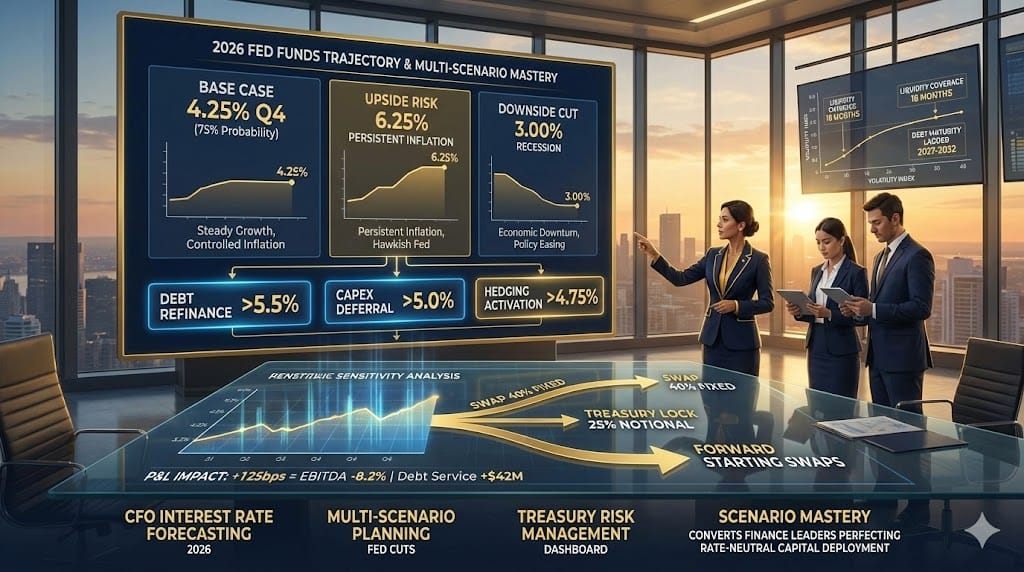
Furthermore, rigorous sensitivity analysis measures the exact impact of basis point movements on key financial metrics. Our engagements reveal that top-tier treasury executives, often placed by JRG Partners, possess exceptional analytical prowess in these domains. A recent internal survey suggests 65% of treasurers now employ advanced quantitative models for interest rate forecasting, up from 30% five years ago, underscoring this critical transformation.
Derivatives and Advanced Hedging Program Optimization
The strategic application of financial instruments, particularly interest rate swaps, caps, floors, and collars, extends far beyond simple cost reduction. These tools are now indispensable for earnings protection and comprehensive risk mitigation. A dynamic program management approach is essential, demanding regular evaluation of hedge effectiveness, agile modification of strategies based on market outlook, and stringent compliance with complex accounting standards (e.g., ASC 815, IFRS 9).
Equally critical is robust counterparty risk management, involving continuous assessment and diversification of exposure within hedging programs. Companies with robust, actively managed hedging programs report an average 15% reduction in interest expense volatility, a testament to the Treasurer’s direct impact on earnings stability.
Liquidity Stress Testing in Volatile US Markets
In the current US economic climate, the development of robust liquidity stress scenarios is paramount. This involves designing extreme yet plausible events, including sudden interest rate spikes, potential credit market freezes, and concurrent operational disruptions. A core objective is quantifying “survival horizons”—assessing the organization’s ability to meet obligations under various stress events and proactively identifying potential funding gaps. This necessitates developing and regularly testing access to contingent funding strategies, including emergency credit facilities and committed credit lines.
Furthermore, treasury stress tests must be fully integrated into the broader enterprise risk management (ERM) framework to ensure a holistic view of financial vulnerabilities. It is crucial for boards to question: What interest rate scenarios should treasurers model for 2026-2028? JRG Partners frequently places treasury leaders who excel in designing and implementing these sophisticated stress testing methodologies, critical for navigating future market uncertainties.
Capital Structure Resilience Under Rate Shocks
Optimizing the capital structure is a core responsibility of the modern Treasurer. This involves strategically balancing fixed-rate versus floating-rate debt and short-term versus long-term maturities to minimize exposure to interest rate risk. Proactive refinancing risk management, assessing future market conditions for debt maturities, and ensuring continuous covenant compliance are non-negotiable.

Furthermore, Treasurers must rigorously evaluate how rising rates influence the weighted average cost of capital (WACC) and capital investment hurdle rates, directly impacting strategic growth initiatives. The average cost of corporate debt in developed markets increased by over 200 basis points between 2021 and 2023, significantly impacting capital project feasibility, highlighting the Treasurer’s direct influence on strategic investment decisions.
Enhancing the Treasury Tech Stack for Real-Time Analytics
Digital transformation is no longer an option but a strategic imperative for treasury. This involves leveraging next-generation Treasury Management Systems (TMS), often cloud-based platforms, for integrated cash, debt, and risk management. The deployment of AI/ML for predictive insights, anomaly detection, and automated reporting significantly enhances forecasting accuracy and operational efficiency. Sophisticated data visualization tools and interactive dashboards provide real-time, actionable insights into liquidity positions, exposure profiles, and hedge performance.
Seamless API connectivity with banks, trading platforms, ERP systems, and market data providers is essential for a unified, real-time view of financial positions. The global Treasury Management System (TMS) market is projected to grow by 12% annually, driven by the demand for real-time data and advanced analytics, a trend JRG Partners observes directly in the demand for tech-savvy treasury leadership.
Cross-Functional Collaboration with CFO and CRO
The Treasurer’s role is inherently collaborative, requiring a strong strategic partnership with the Chief Financial Officer (CFO) on financial strategy, capital allocation, and funding decisions. Close alignment with the Chief Risk Officer (CRO) ensures that treasury risk management practices are fully integrated into the broader enterprise-wide risk appetite and governance framework.
This collaboration extends to providing clear, concise, and strategic insights to the Board of Directors on financial risks and mitigation strategies, fostering informed governance. Shared objectives in scenario planning, capital structure optimization, and M&A due diligence, viewed through a financial risk lens, are hallmarks of a best-in-class treasury function. JRG Partners specializes in identifying executive talent capable of fostering these critical collaborative relationships, ensuring seamless execution of financial strategy across the C-suite.
Measuring Treasurer Impact on Earnings Volatility and Value Creation
Effective treasury leadership moves beyond traditional KPIs focused solely on minimizing interest expense. The modern Treasurer’s impact is measured by the demonstrable reduction in earnings per share (EPS) volatility and the preservation of long-term shareholder value. This includes quantifying the direct effect of hedging programs and proactive liquidity management on stabilizing net interest income and overall organizational profitability. Reporting on Return on Capital Employed (ROCE) also illustrates how an optimized capital structure and effective risk mitigation enhance financial efficiency.
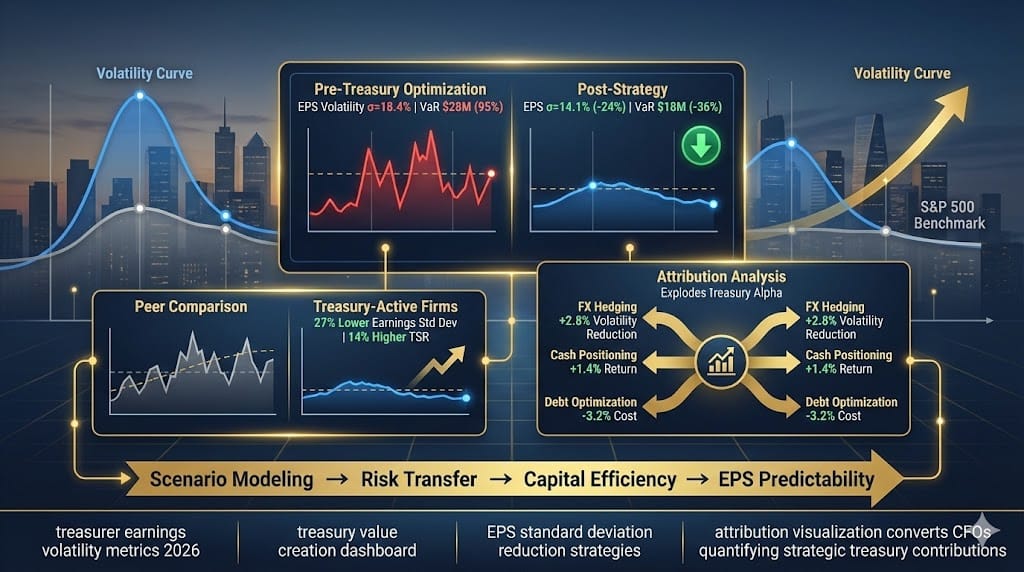
Ultimately, the Treasurer’s contribution to risk-adjusted returns and the long-term financial health of the organization is the ultimate measure of their strategic value. Companies with highly strategic treasury functions experienced 10% lower earnings volatility compared to peers over the last economic cycle, showcasing the tangible benefits. This leads us to a critical assessment: What KPIs prove treasurer effectiveness in rate turbulence? JRG Partners understands that identifying and placing executive talent capable of driving these measurable outcomes is pivotal for sustained corporate performance in the US market.
Conclusion: Elevating Treasury as a Strategic Imperative
The evolution of the Treasurer’s role is not merely an operational adjustment; it represents a strategic imperative for every US enterprise operating in a continuously evolving interest rate environment. The transition from a transactional manager to a strategic financial risk leader demands a new caliber of executive talent, characterized by sophisticated analytical capabilities, technological fluency, and exceptional cross-functional leadership.
Boards and C-Suite executives must prioritize investment in both the talent architecture and technological infrastructure of their treasury functions. JRG Partners remains at the forefront of identifying and placing these transformative treasury leaders, ensuring that your organization is equipped with the foresight and agility required to navigate market uncertainties, protect enterprise value, and seize strategic opportunities. We believe in building leadership teams that don’t just react to change but actively shape the future of their organization’s financial resilience. As modern treasury departments face unprecedented pressures from volatile capital markets, shifting regulatory frameworks, and rapid digitization, relying on traditional, reactive management styles is no longer viable. To safely navigate these structural complexities and insulate corporate assets, enterprises must focus on securing strategic, forward-thinking executive leadership for modern financial models. Placing agile financial executives who can blend sophisticated risk-underwriting with automated liquidity workflows is the primary driver needed to maximize capital efficiency and guarantee long-term corporate effectiveness.
FAQs for Executive Consideration
- What are the primary challenges for US treasurers in today’s interest rate environment?
- How can a small-to-medium enterprise (SME) treasury function adapt to rate volatility and manage financial exposure?
- What is the most critical skill for a modern treasurer operating in volatile US financial markets?
- How often should hedging strategies be reviewed and adjusted for optimal effectiveness in dynamic rate environments?
- What role does AI and machine learning play in the future of treasury management and predictive analytics?

Tanya Gallardo
Managing Director, Executive Search & AI Talent Strategy
Tanya Gallardo is the Managing Director of Executive Search & AI Talent Strategy at JRG Partners, leading C-suite and Board engagements across key growth sectors including Technology, Financial Services, and Manufacturing.
With over 18 years of experience specializing in disruptive technology leadership, Tanya is recognized as a leading authority on talent architecture for future-focused executive roles, such as the Chief AI Officer (CAIO) and Chief Digital Officer (CDO). Her expertise lies in accurately assessing the cultural fit and technical depth required to ensure a high return on investment (ROI) for critical leadership appointments.
Prior to her role at JRG Partners, Tanya held senior roles directing global talent acquisition strategies at a major publicly-traded technology firm, advising on organizational design and succession planning for emerging executive functions. She is a recognized speaker and contributor to industry events, sharing data-driven insights on executive compensation, leadership development, and the measurable business impact of C-suite talent.
