


When it comes to executive hiring, the success rate of a search model isn’t just a metric—it’s a direct reflection of how committed, strategic, and aligned the process is. While both retained and contingency firms can help fill roles, their respective success rates tell a very different story.
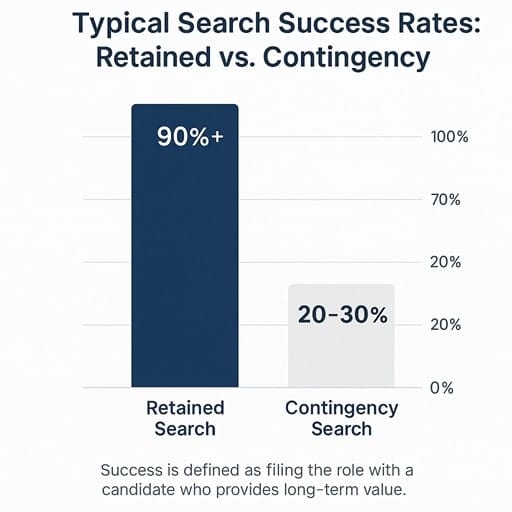
Retained Search: 85–95% Completion Rate
In a retained model, firms are exclusively engaged, with a portion of the fee paid upfront. This creates mutual commitment and allows the search partner to dedicate senior consultants, research resources, and time to execute a deep, exhaustive process. Because of this structure, most retained search firms maintain completion rates of 85–95%, often with average time-to-fill windows between 60–90 days.
Key reasons for high success:
-
Exclusive focus and alignment with client goals
-
Full market mapping and outreach to passive candidates
-
Ongoing client engagement and feedback loops
-
No pressure to “rush a résumé” for a quick win
Contingency Search: 20–35% Completion Rate
Contingency search firms are only paid if their candidate is hired. While this sounds like a performance-based win for clients, it often backfires. Because the model lacks commitment and allows for multiple firms to compete, it shifts focus from quality to speed. Most contingency firms operate with 20–35% success rates and often abandon difficult searches quickly if there’s no immediate traction.
Why the lower rate?
-
Firms prioritize roles they believe they can fill fastest
-
No upfront investment means minimal process depth
-
Limited access to passive or “hard-to-reach” talent
-
High candidate overlap and recruiter fatigue in the market
Why This Matters
A failed or abandoned search doesn’t just waste time—it delays critical business decisions and increases the risk of a mis-hire when urgency overtakes strategy.
If you’re hiring for a senior or strategic role, the higher success rate and deeper process of retained search is a smarter, lower-risk investment.
🔗 Learn more: Retained vs. Contingency: Which Is Right for Your Executive Hire?

Tanya Gallardo
Managing Director, Executive Search & AI Talent Strategy
Tanya Gallardo is the Managing Director of Executive Search & AI Talent Strategy at JRG Partners, leading C-suite and Board engagements across key growth sectors including Technology, Financial Services, and Manufacturing.
With over 18 years of experience specializing in disruptive technology leadership, Tanya is recognized as a leading authority on talent architecture for future-focused executive roles, such as the Chief AI Officer (CAIO) and Chief Digital Officer (CDO). Her expertise lies in accurately assessing the cultural fit and technical depth required to ensure a high return on investment (ROI) for critical leadership appointments.
Prior to her role at JRG Partners, Tanya held senior roles directing global talent acquisition strategies at a major publicly-traded technology firm, advising on organizational design and succession planning for emerging executive functions. She is a recognized speaker and contributor to industry events, sharing data-driven insights on executive compensation, leadership development, and the measurable business impact of C-suite talent.
