



Future-Proofing Executive Talent Strategy: Evaluating Leadership Performance in an Outcome-Based Hybrid Model
As we navigate the intricate demands of the contemporary US corporate landscape, the imperative to redefine executive performance assessment has never been more pronounced. The conventional, presence-centric evaluation paradigms are demonstrably obsolete in an era defined by distributed workforces and digital transformation.
This advisory outlines a strategic evolution toward outcome-based hybrid leadership evaluation, a critical shift for sustained organizational resilience and competitive advantage. Our extensive work at JRG Partners in advising leading US enterprises on executive talent architecture underscores the urgency of addressing a fundamental query: How should effective leadership be defined in an outcome-based hybrid work model?
Strategic Reorientation for Executive Performance
The transition from traditional, presence-based evaluation to an outcome-driven assessment framework is paramount for hybrid operational models. This strategic reorientation fundamentally shifts focus from mere activity or ‘seat time’ to demonstrable impact and value creation, a principle that resonates deeply with fiduciary duty to shareholders. Effective evaluation demands a sophisticated blend of quantitative results—articulating ‘what’ was achieved—and qualitative leadership behaviors—illuminating ‘how’ it was achieved.
Leveraging advanced data analytics and Artificial Intelligence (AI) is crucial for objective executive evaluation, rigorously mitigating inherent human biases such as proximity bias, and ensuring equitable assessment across geographically dispersed teams. The continuous refinement of feedback mechanisms and adaptive evaluation frameworks are indispensable for agile leadership development and bolstering organizational resilience within our dynamic global environment. Proactive adoption of these advanced tools and methodologies prepares our organizations for the evolving demands of executive leadership in increasingly complex, hybrid operational landscapes.
Rethinking Leadership Evaluation in Outcome-Based Hybrid Models
The prevailing paradigm shift compels us to move beyond archaic metrics tied to physical office presence, embracing instead a robust, results-oriented approach. The inherent challenges of a hybrid operational model lie in accurately bridging the perceived gap between in-office and remote contributions, ensuring absolute equity and transparency in all evaluative processes. This outcome-based assessment is not merely an HR initiative; it is a strategic imperative for fostering organizational agility, enhancing global competitiveness, and crucially, improving executive talent retention. Indeed, recent research suggests that organizations with meticulously defined outcome-based evaluation frameworks reported 25% higher employee engagement in hybrid settings, a testament to its efficacy.
Defining Outcomes: From Activity Metrics to Impact Metrics
A core element of this evolution is the precise articulation of what truly constitutes an ‘outcome.’ This involves meticulously differentiating between tasks completed and the tangible value generated. Outcomes must be rigorously aligned with overarching strategic corporate goals, ensuring that individual and team contributions directly amplify broader organizational objectives.
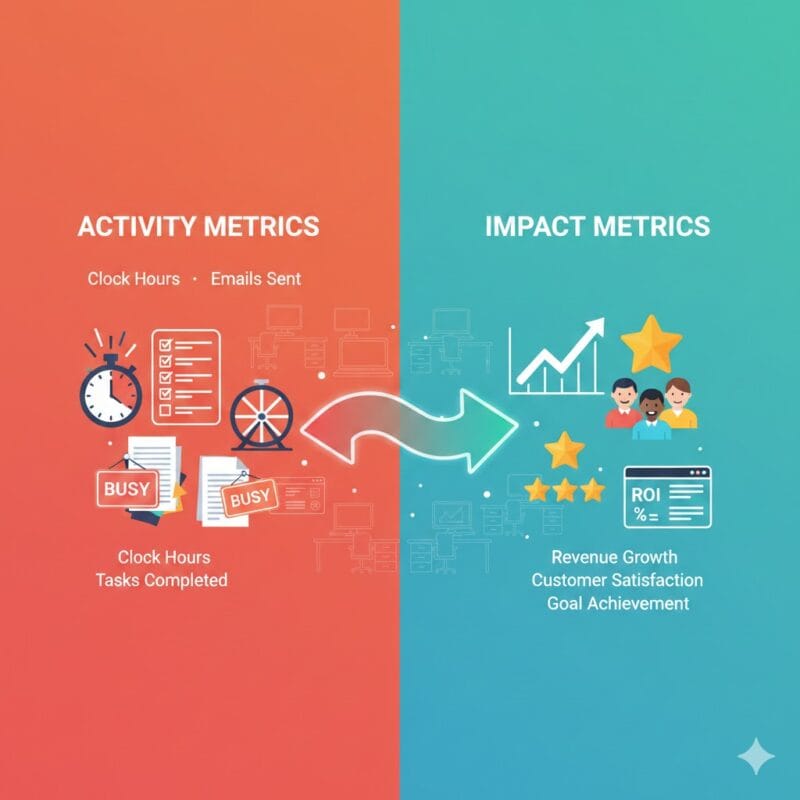
For instance, the focus shifts from a simplistic “number of meetings attended” to “project completion rates influencing market share,” or from “lines of code written” to “successful product launch and user adoption.” We must reimagine SMART (Specific, Measurable, Achievable, Relevant, Time-bound) goal principles, adapting them to the nuanced context of a hybrid operational model.
Core Impact Indicators for Hybrid Executive Performance
Establishing clear, measurable Key Performance Indicators (KPIs) is fundamental for assessing executive impact in a hybrid environment. These indicators must encompass both the strategic ‘what’ and the cultural ‘how.’ To help articulate which outcome metrics and KPIs best capture leadership impact across remote and in-office teams?, JRG Partners’ research identifies several critical dimensions:
| KPI Dimension | Key Indicators for Hybrid Executive Performance |
|---|---|
| Strategic Alignment & Execution | Percentage of strategic objectives achieved; timely delivery of key initiatives; market share growth attributable to strategic decisions. |
| Team Productivity & Efficiency | Project cycle times; optimized resource utilization; output quality and efficiency gains across distributed teams. |
| Employee Engagement & Retention | Voluntary turnover rates in managed teams; pulse survey scores on team morale and collaboration; psychological safety metrics. Companies with robust hybrid leadership performance management systems experience up to 15% lower voluntary turnover rates. |
| Innovation & Adaptability | Number of successful new initiatives launched; adoption rates of new technologies; leader’s demonstrable ability to navigate and leverage change. |
| Resource Stewardship | Budget adherence; optimized allocation of human, financial, and technological resources across operational nodes. |
| Cross-functional Collaboration | Success rates of inter-departmental projects; peer and subordinate feedback on collaboration effectiveness and synergy creation. |
Balancing Quantitative Results with Qualitative Leadership Behaviors
Effective executive evaluation transcends mere numerical outcomes. It meticulously weighs “the what” against “the how.” This involves assessing not just the achieved results, but also the executive’s leadership style, communication efficacy, and cultural stewardship. Developing rigorous qualitative frameworks, such as rubrics for evaluating mentorship, conflict resolution prowess, communication clarity, empathy, and inclusive leadership practices, is essential.
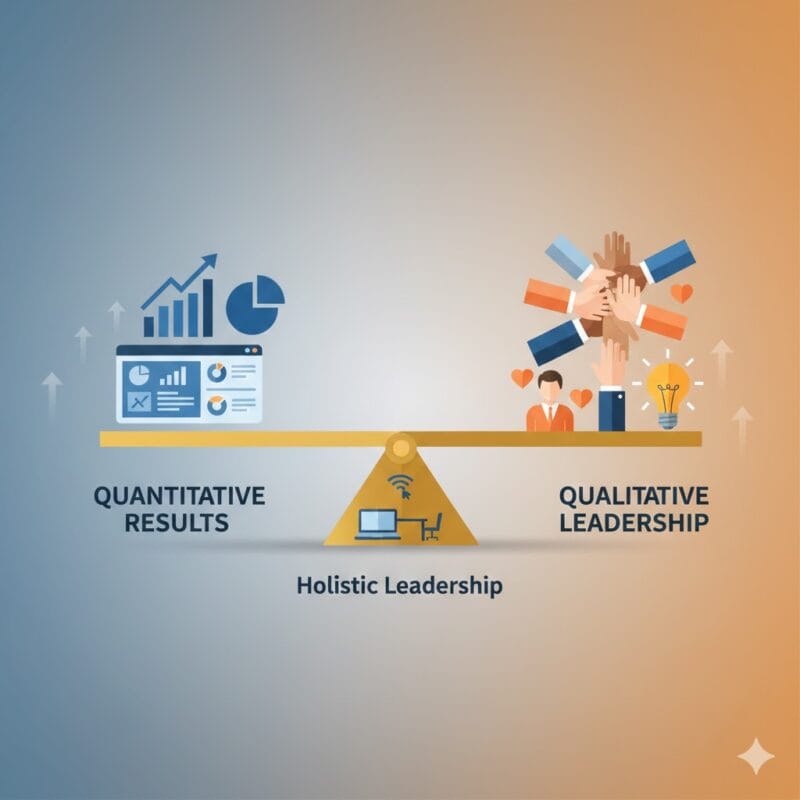
The impact of a leader on fostering trust, psychological safety, and a profound sense of belonging within a hybrid operational framework is a critical qualitative measure. Synthesizing these qualitative insights from comprehensive surveys and interviews with quantitative performance data creates a truly holistic view of executive capability and contribution. This balanced approach directly addresses the challenge of how can organizations fairly separate effort, activity, and true outcomes in hybrid leadership roles?
Leveraging Data, Analytics, and AI for Executive Assessment
The strategic deployment of data analytics and AI is a cornerstone of modern executive assessment. Automated performance tracking, utilizing sophisticated HRIS platforms, project management software, and collaboration tools, provides real-time data on project progression, task completion, and intricate communication patterns. AI, specifically, excels in pattern recognition, identifying performance trends, predicting leadership development needs, and flagging nascent operational issues. Ethical considerations are paramount: ensuring robust data privacy, proactively mitigating algorithmic bias, and maintaining unwavering transparency in all data collection and utilization processes are non-negotiable. Predictive analytics can further forecast future executive effectiveness based on past performance trajectories and development investments. Our experience at JRG Partners indicates that organizations effectively utilizing AI in leadership assessment report a 30% improvement in identifying high-potential leaders, underscoring its transformative power.
Mitigating Proximity Bias and Fairly Measuring Remote Influence
Understanding and actively mitigating proximity bias—the unconscious tendency to favor individuals physically closer or more visible—is a critical governance challenge in hybrid environments. Implementing standardized, objective evaluation rubrics that apply equally to all executive leaders, irrespective of their physical location, is fundamental.

The emphasis must shift to demonstrable impact: contributions to shared digital platforms, documented achievements, and measurable influence, rather than mere visible presence. Advanced collaboration technologies can significantly enhance remote work visibility, making contributions transparent and traceable without resorting to micromanagement. In certain contexts, blind assessments, where specific aspects of performance data are anonymized, can further reduce inherent biases. This directly answers the strategic question: How can evaluation frameworks reduce proximity bias and accurately reflect remote leaders’ influence?
Robust Feedback Loops: 360s, Pulse Surveys, and OKR Reviews
A comprehensive feedback architecture is indispensable for continuous executive development. This includes:
- Comprehensive 360-Degree Feedback: Gathering multi-source insights from peers, direct reports, managers, and self-assessments to construct a complete executive leadership profile.
- Regular Pulse Surveys: Conducting frequent, concise surveys to gauge team sentiment, well-being, workload equilibrium, and perception of leadership effectiveness.
- OKR (Objectives and Key Results) Reviews: Utilizing this framework for continuous goal setting, transparent progress tracking, and structured performance dialogues.
- Structured One-on-One Check-ins: Implementing consistent, documented sessions for coaching, strategic feedback, and personalized development planning.
These mechanisms collectively translate feedback into actionable development plans and strategic adjustments for executive leaders. This robust system helps address what mix of quantitative metrics and qualitative feedback creates a balanced leadership scorecard?
Future Outlook: The Evolution of Outcome-Based Executive Evaluation
The trajectory of executive evaluation points toward increasingly adaptive models—frameworks that are agile and responsive to rapidly changing market conditions and dynamic organizational structures. The integration of emergent technologies, including advanced AI, machine learning, and potentially even VR/AR, promises more immersive and data-rich leadership development and assessment capabilities. A heightened focus on leadership agility—the innate ability of executives to navigate profound complexity, uncertainty, and ambiguity in global contexts—will become a paramount evaluative criterion. Furthermore, the development of robust ethical governance guidelines for AI-driven assessment and data usage in executive evaluation will be critical for maintaining trust and integrity. The ongoing, critical role of effective executive leadership evaluation in ensuring organizational resilience and long-term success in an increasingly interconnected world is undeniable. How will AI and continuous data streams change leadership performance evaluation in hybrid organizations by 2030? JRG Partners anticipates a fully integrated, predictive assessment ecosystem that not only identifies high-potential talent but also proactively mitigates performance risks and precisely tailors executive development pathways.
Frequently Asked Questions: Leadership in a Purpose-Based Hybrid Model
As organizations move away from strict mandates toward a purpose-driven approach to hybrid work, leadership evaluation criteria must also evolve.
1. What is a “Purpose-Based Hybrid Model” compared to traditional hybrid work?
A traditional hybrid model often relies on arbitrary “desk-time” quotas (e.g., three days in office). In contrast, a Purpose-Based Hybrid Model dictates that the location of work is determined by the intent of the task. Collaborative, creative, and mentorship-heavy activities occur in person, while deep, focused work is done remotely. Leaders are evaluated on their ability to match tasks to the optimal environment.
2. How do you assess a leader’s effectiveness when they are not physically present?
Evaluation shifts from presence to impact. Strategic leaders in this model are assessed on “Outcome-Based Metrics” rather than visibility. This includes the clarity of their communication, the health of their team’s culture as measured by sentiment data, and their ability to hit KPIs without relying on constant physical supervision.
3. What is “Proximity Bias,” and how can leaders mitigate it?
Proximity bias is the tendency to favor or reward employees who are physically closer to the leader. Successful hybrid leaders mitigate this by adopting a “Digital-First” communication strategy—ensuring that all important discussions and promotion criteria are documented and accessible to everyone, regardless of their location on any given day.
4. Why is “Mentorship” a critical KPI in purpose-based leadership?
In a hybrid setting, junior talent can often feel isolated. A key leadership metric is now Mentorship Velocity—how effectively a leader uses “Office Days” to provide high-touch coaching and how they leverage digital tools for continuous development. Evaluation focuses on how well the leader maintains the professional growth of their team in a distributed environment.
5. What should boards look for when recruiting for a Purpose-Based Hybrid environment?
Boards should prioritize High Emotional Intelligence (EQ) and Technical Fluency. JRG Partners recommends looking for candidates who demonstrate “intentional leadership”—the ability to articulate a clear vision for *why* and *how* the team comes together, ensuring that the office remains a destination for connection rather than a site of obligation.
In conclusion, evaluating leadership performance within an outcome-based hybrid model is essential for ensuring that executive contributions are measured by strategic impact rather than physical presence. By shifting the focus toward clear deliverables, emotional intelligence, and team engagement metrics, organizations can foster a culture of accountability and trust that transcends geographic boundaries. JRG Partners is here to help you refine your leadership standards, providing the executive search expertise and human resources recruitment insights necessary to identify and develop leaders who excel in a results-oriented, decentralized environment.

Tanya Gallardo
Managing Director, Executive Search & AI Talent Strategy
Tanya Gallardo is the Managing Director of Executive Search & AI Talent Strategy at JRG Partners, leading C-suite and Board engagements across key growth sectors including Technology, Financial Services, and Manufacturing.
With over 18 years of experience specializing in disruptive technology leadership, Tanya is recognized as a leading authority on talent architecture for future-focused executive roles, such as the Chief AI Officer (CAIO) and Chief Digital Officer (CDO). Her expertise lies in accurately assessing the cultural fit and technical depth required to ensure a high return on investment (ROI) for critical leadership appointments.
Prior to her role at JRG Partners, Tanya held senior roles directing global talent acquisition strategies at a major publicly-traded technology firm, advising on organizational design and succession planning for emerging executive functions. She is a recognized speaker and contributor to industry events, sharing data-driven insights on executive compensation, leadership development, and the measurable business impact of C-suite talent.
