



Future-Proofing Executive Talent Strategy: Evaluating Leadership Performance in an Outcome-Based Hybrid Model As we navigate the intricate demands of the contemporary US corporate landscape, the imperative to redefine executive performance assessment has never been more pronounced. The conventional, presence-centric evaluation paradigms are demonstrably obsolete in an era defined by distributed workforces and digital transformation.
Category Archives: Search
COO Executive Recruiting, executive recruiting, Executive Search Challenges, Search
Recruiting the ‘Ambassador CEO’: Bridging the Gap Between Remote Employees and the Office

29
Dec
Dec
Recruiting the ‘Ambassador CEO’: Forging Unity in the Hybrid and Remote Workspace Executive Summary: The Strategic Imperative for a New Leadership Paradigm The profound shift towards distributed and hybrid work models has undeniably reshaped the landscape of executive leadership. Traditional leadership paradigms, once effective in co-located environments, now frequently fall short in uniting a geographically dispersed workforce.
Blog section for Employers and Job Seekers, COO Executive Recruiting, executive recruiting, Executive Search Challenges, Search
The Four Pillars of an Effective Remote-First Executive Team

26
Dec
Dec
The Four Pillars of an Effective Remote-First Executive Team In an increasingly interconnected yet geographically dispersed global economy, the design and operation of an executive leadership structure are paramount for maintaining competitive advantage, particularly within the dynamic US market. This confidential analysis delves into the foundational elements requisite for optimizing a remote-first executive team, addressing the strategic imperative to cultivate.
Blog section for Employers and Job Seekers, COO Executive Recruiting, executive recruiting, Executive Search Challenges, Search
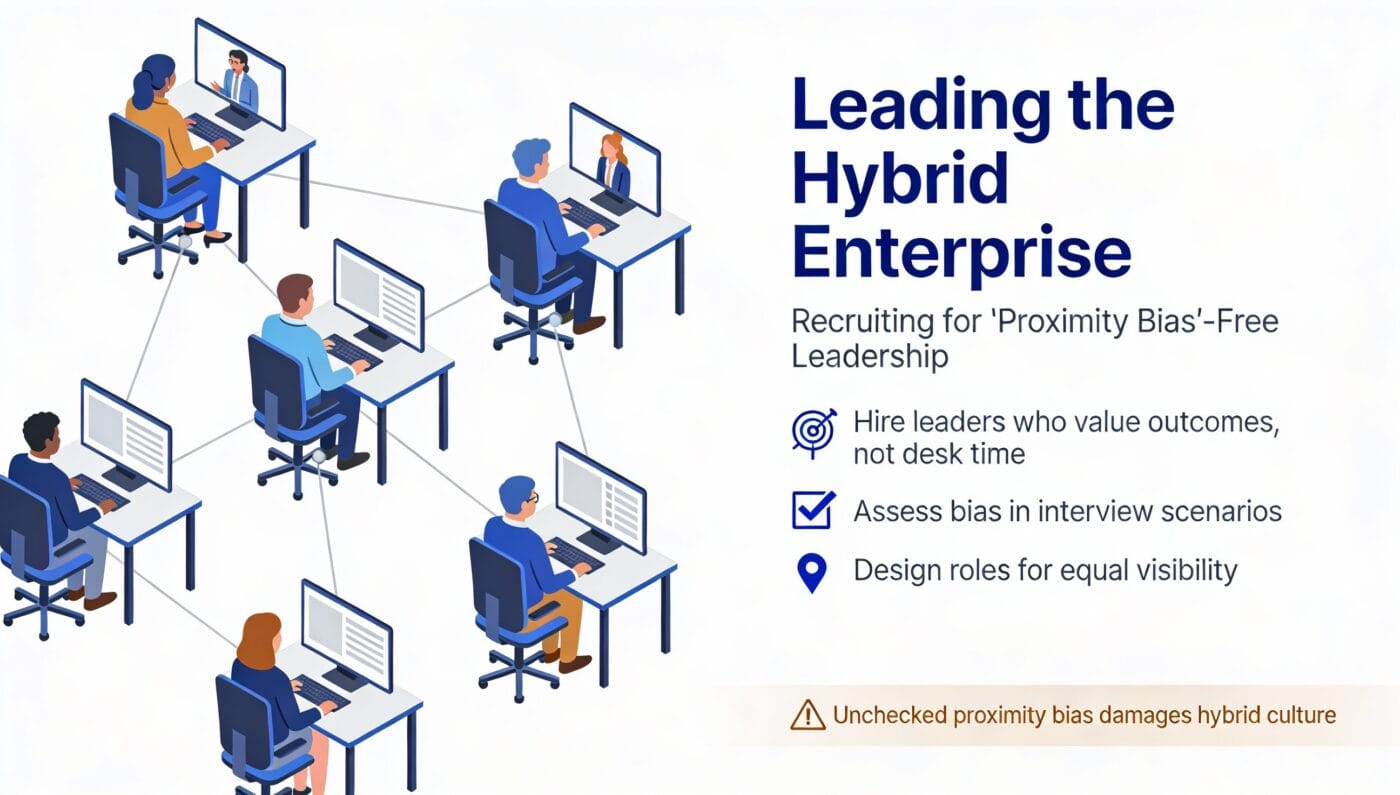
Leading the Hybrid Enterprise: Recruiting for ‘Proximity Bias’-Free Leadership
26
Dec
Dec
Confidential Briefing on “Leading the Hybrid Enterprise: Recruiting for Proximity Bias-Free Leadership” In an increasingly distributed operational landscape, the ability of an organization to foster innovation and ensure equitable growth hinges directly on its executive leadership. Our research at , a premier US-based executive search firm, indicates a critical emerging challenge: the pervasive, often unconscious, impact of proximity bias.
Blog section for Employers and Job Seekers, Executive Search Challenges, Search, Style
The Great Unbundling: How AI Will Change Core C-Suite Responsibilities

23
Dec
Dec
The Great Unbundling: How AI Will Change Core C-Suite Responsibilities Key Takeaways: AI will fundamentally alter the roles and responsibilities of C-suite executives. The “bundling” of tasks within current C-suite roles will be “unbundled” and augmented or automated by AI. Executives will need to focus on strategic oversight, ethical considerations, and creative problem-solving.
Blog section for Employers and Job Seekers, For Employers, Search
How AI is Transforming Decision-Making at the Board Level

23
Dec
Dec
How AI is Transforming Decision-Making at the Board Level Key Takeaways AI is moving beyond operational efficiencies to significantly impact strategic decisions at the board level. AI-powered insights enhance board oversight, risk management, and opportunity identification. Ethical considerations and data governance are paramount when implementing AI in board decision-making.
Blog section for Employers and Job Seekers, Search, Style
Case Study: Companies That Successfully Integrated AI Leadership (and those that didn’t)

22
Dec
Dec
Case Study: Companies That Successfully Integrated AI Leadership (and those that didn’t) Key Takeaways: Strategic AI integration, starting with well-defined business goals, is crucial. Data infrastructure and talent development are foundational for AI leadership success. Ethical considerations and responsible AI governance must be prioritized. Adaptability and continuous learning are essential given the rapid evolution of AI.
Blog section for Employers and Job Seekers, For Employers, For Jobseekers, Search
Beyond Resumes: Assessing a Candidate’s Readiness for AI-Driven Transformation

22
Dec
Dec
Beyond Resumes: Assessing a Candidate’s Readiness for AI-Driven Transformation Key Takeaways: Traditional hiring metrics are insufficient for identifying talent ready for AI-driven roles. Focus on assessing adaptability, learning agility, and AI literacy rather than just technical skills. Incorporate practical assessments and scenario-based interviews to evaluate real-world problem-solving abilities.
Executive Search Challenges, For Employers, Search
Data Fluency for Non-Technical Leaders: What the Modern Executive Must Know

20
Dec
Dec
Data Fluency for Non-Technical Leaders: What the Modern Executive Must Know Key Takeaways: Data fluency is no longer optional; it’s essential for modern leadership. Understand the types of data relevant to your business and how they can be used. Develop the ability to ask the right questions of your data teams and interpret their findings.
HR Employment Resources, Search
AI’s Impact on the CHRO Role: From Administrator to Strategic Tech-Savvy Partner

19
Dec
Dec
AI’s Impact on the CHRO Role: From Administrator to Strategic Tech-Savvy Partner Key Takeaways: AI is rapidly transforming the CHRO role, shifting the focus from administrative tasks to strategic decision-making. CHROs must develop tech fluency to effectively leverage AI tools for talent acquisition, employee development, and performance management.