


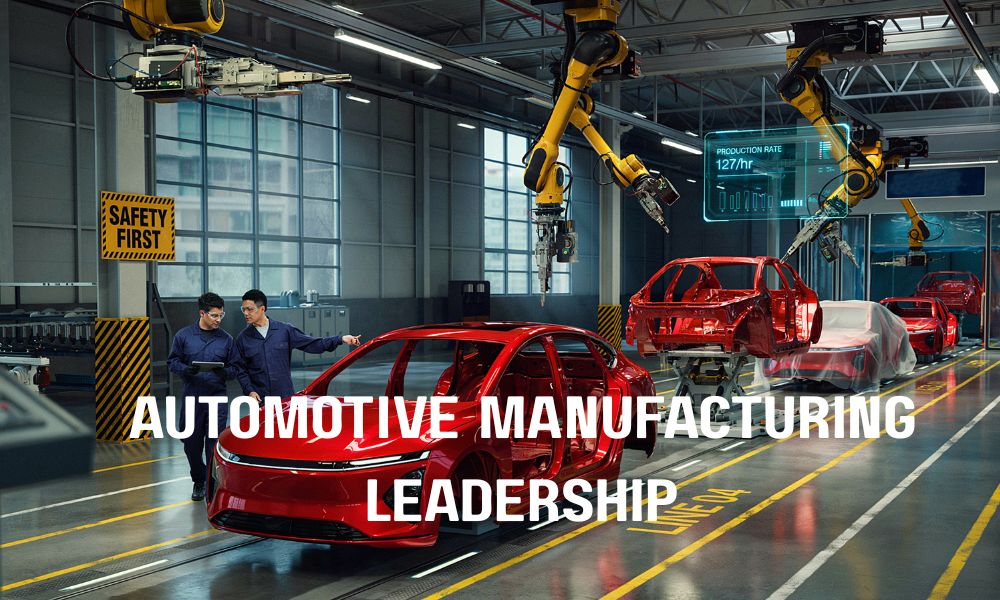
Automotive manufacturing environments place demanding expectations on production leaders. Assembly operations, supplier dependencies, equipment reliability, workforce capability, and changing production schedules can all affect output and product quality. A leader who performs well in one facility may not automatically succeed in another with different processes, automation levels, product complexity, or operational challenges.
For employers hiring a Plant Manager, Director of Manufacturing, VP of Production, or another senior automotive operations leader, a structured hiring process helps identify candidates who can improve performance while maintaining safe, reliable, and efficient production systems.
1. Define the Manufacturing Outcomes Before Starting the Search
The first step is to establish what the organization expects the new executive to accomplish. A general requirement for someone who can improve manufacturing performance is not sufficiently specific to guide an effective search.
One facility may need to improve first-pass yield and reduce recurring defects. Another may be struggling with missed production schedules, equipment downtime, or rising conversion costs. A plant preparing to introduce a new product may need a leader who can coordinate production readiness, workforce training, process validation, and launch execution.
Translate business challenges into leadership objectives
Before evaluating candidates, hiring stakeholders should identify the most important performance gaps and the executive’s authority to address them.
- Is the primary objective to improve quality, throughput, cost, delivery, or a combination of these measures?
- Does the facility need operational stabilization, continuous improvement, or a major transformation?
- What production volumes, product mix, and process complexity will the leader oversee?
- Which functions report directly to the role, and which require cross-functional influence?
- What resources and decision-making authority will be available?
- What results should the organization reasonably expect during the first 6 to 12 months?
Clear answers help the hiring team distinguish essential capabilities from desirable qualifications. They also prevent the search from becoming focused on impressive resumes rather than the problems the organization needs its next leader to solve.
2. Assess the Candidate’s Ability to Improve Manufacturing Quality
Quality is a central responsibility in automotive production because manufacturing defects can create rework, scrap, delivery disruption, customer dissatisfaction, and warranty exposure. Production executives must understand how to build quality into the manufacturing process instead of relying exclusively on final inspection.
They should be able to work with quality engineering, process engineering, maintenance, suppliers, and frontline supervisors to identify recurring problems and implement sustainable corrective actions.
Look for structured problem-solving experience
Ask candidates to describe a significant quality issue they helped resolve. Explore how they identified the problem, determined its root cause, contained the immediate risk, and prevented recurrence.
Strong candidates can explain the evidence behind their decisions and distinguish between a temporary containment action and a permanent process improvement. Their examples may involve structured root-cause analysis, corrective and preventive action, process audits, statistical process control, or other methods appropriate to the manufacturing environment.
Useful interview questions include:
- Describe a recurring production defect you helped eliminate. What caused it?
- How do you determine whether a quality problem originates in equipment, materials, process settings, or operator practices?
- How do you ensure corrective actions remain effective after implementation?
- How do you balance production demands with the need to contain a potential quality issue?
- How do you use quality data to identify patterns before they become larger problems?
Look for leaders who treat quality as a shared operational responsibility. A strong production executive works closely with quality teams while ensuring supervisors and operators understand their roles in maintaining process discipline.
3. Evaluate Throughput and Production Flow Management
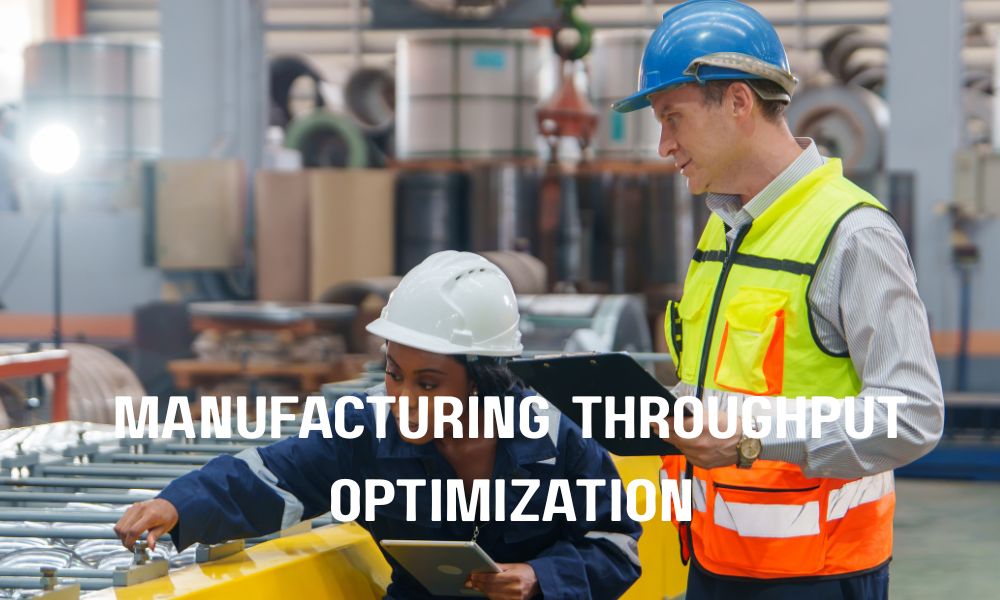
Throughput measures how effectively a manufacturing operation converts available resources into completed production. Improving throughput may involve removing bottlenecks, reducing unplanned downtime, balancing workstations, improving material availability, or addressing recurring changeover delays.
However, higher output is not necessarily evidence of better performance if it creates excess inventory, additional defects, unsafe working conditions, or downstream congestion.
Assess the candidate’s approach to bottlenecks
Ask candidates to explain how they improved production flow in a previous operation. What limited output? How did they establish the cause? Which changes were introduced, and how did they determine whether those changes improved the system?
Strong candidates should be able to discuss the relationship between production planning, line balancing, equipment availability, staffing, changeovers, and material flow. They should also understand that a bottleneck may move when one constraint is removed, requiring continued monitoring rather than a one-time improvement effort.
Relevant performance measures may include:
- Units produced against the production plan.
- Cycle time and line utilization.
- Overall equipment effectiveness, where appropriate.
- Unplanned downtime and changeover duration.
- First-pass yield and rework levels.
- Schedule attainment and work-in-process inventory.
These measures should be interpreted together. For example, a throughput increase accompanied by a significant decline in first-pass yield may indicate that the operation is creating additional downstream costs rather than achieving a sustainable improvement.
4. Examine Experience With Lean Manufacturing and Continuous Improvement
Automotive production executives often work in environments where incremental process improvements can create meaningful operational benefits. Lean manufacturing and continuous improvement practices can help organizations reduce waste, improve workflow, strengthen problem-solving, and increase process consistency.
Experience with improvement methodologies is useful, but certifications alone do not demonstrate that a candidate can deliver results. Employers should investigate how the candidate applied these methods in actual production settings.
Evaluate implementation, not just methodology
Ask candidates to describe a continuous improvement initiative they led. What was the original problem? How were employees involved? What changed in the process, and how was the outcome measured?
Relevant experience may include value stream mapping, standardized work, visual management, 5S, kaizen activities, waste reduction, line balancing, or structured daily management. The importance of each method depends on the facility’s operational maturity and production model.
Strong candidates understand that continuous improvement requires consistent leadership routines. They establish clear ownership, review performance data, encourage employees to identify problems, and ensure that improvements become part of standard operating practice.
They should also recognize when a proposed improvement is unlikely to work. A method that is effective in one facility may need adaptation because of differences in product mix, workforce skills, equipment, or customer requirements.
5. Assess Manufacturing Cost and Resource Management
Automotive production executives must manage output and quality while maintaining control over manufacturing costs. Their decisions may influence labor utilization, overtime, scrap, rework, energy consumption, maintenance expenditure, inventory, and equipment investment.
The objective is not simply to reduce spending. It is to identify sustainable improvements that preserve safety, product quality, delivery performance, and long-term equipment reliability.
Ask how candidates make cost-versus-performance decisions
Explore a situation where the candidate had to improve manufacturing economics without compromising essential production requirements.
Questions may include:
- How have you reduced scrap or rework while maintaining production targets?
- How do you evaluate whether additional automation is justified?
- How do you manage overtime and staffing when demand fluctuates?
- How do you compare short-term cost savings with long-term equipment reliability?
- How do you ensure cost-reduction initiatives do not create hidden quality or maintenance problems?
Strong candidates should explain the trade-offs behind their decisions and show how they measured the results. They should understand the difference between removing waste and simply transferring costs to another department or a later stage of the product lifecycle.
6. Evaluate Leadership of Frontline Teams and Supervisors

Manufacturing performance depends heavily on the effectiveness of frontline supervisors, team leaders, maintenance personnel, technicians, and operators. An executive may establish the production strategy, but the daily execution of that strategy depends on the people managing the process on the factory floor.
Automotive production leaders must create clear expectations, develop capable supervisors, maintain accountability, and encourage employees to raise problems before they escalate.
Assess the candidate’s leadership approach
Ask how the candidate has improved the capability of a frontline leadership team. Look for examples of supervisor development, standardized management routines, skills training, succession planning, and improved communication between production and support functions.
Useful questions include:
- How do you develop supervisors who struggle to meet production targets?
- How do you ensure production standards are applied consistently across shifts?
- How do you respond when employees repeatedly raise the same operational issue?
- How do you manage resistance to a new manufacturing process?
- How do you maintain accountability without discouraging employees from reporting problems?
Strong leaders understand that operational discipline and employee engagement are complementary. They create a culture in which expectations are clear, performance is reviewed consistently, and problems can be raised without being hidden to protect short-term output numbers.
7. Verify Knowledge of Automotive Manufacturing Systems
Automotive production environments may involve complex assembly processes, automated equipment, supplier coordination, traceability requirements, and demanding customer quality expectations. The required level of technical familiarity depends on the products and processes under the executive’s control.
Employers should assess whether candidates understand the systems that govern production performance and can collaborate effectively with engineering, quality, maintenance, and supply chain teams.
Explore relevant operational experience
Depending on the role, useful experience may include:
- Production planning and control.
- Manufacturing process engineering and industrial engineering.
- Preventive and predictive maintenance coordination.
- Quality management systems and corrective action processes.
- Supplier quality and material availability management.
- Production launch, process validation, and capacity planning.
- Manufacturing execution systems and production data analysis.
For relevant automotive operations, candidates may also need familiarity with industry quality practices and customer-specific requirements. Employers should determine which standards and processes are genuinely necessary for the position rather than treating every possible credential as mandatory.
Technical knowledge should be evaluated alongside the candidate’s ability to use manufacturing information to make practical operating decisions.
8. Test Cross-Functional Leadership and Supplier Coordination
Production executives rarely control every factor that determines manufacturing performance. Material shortages, supplier defects, engineering changes, maintenance constraints, and shifting customer demand can all disrupt production.
The executive must work across organizational boundaries to resolve these issues while maintaining clarity about priorities and accountability.
Evaluate how the candidate handles competing priorities
Ask candidates to describe a situation in which production was threatened by a supplier issue, engineering change, or equipment constraint. How did they assess the risk? Which stakeholders did they involve? How did they protect quality and delivery while addressing the underlying problem?
Strong candidates communicate clearly, establish ownership, and use evidence to evaluate options. They understand when to escalate a risk and when an issue can be resolved through routine operational coordination.
They should also recognize that production, quality, procurement, and engineering need shared objectives. If each function optimizes its own performance without considering the overall manufacturing system, the organization may experience recurring delays, excess inventory, or unresolved quality issues.
9. Use a Structured Scorecard for Automotive Production Executive Hiring
A consistent scorecard helps employers compare candidates against the same business-critical competencies. The weighting should reflect the facility’s current needs and the scope of the position.
| Competency | Suggested weight | Evidence to evaluate |
|---|---|---|
| Manufacturing quality | 20% | Root-cause analysis, defect reduction, corrective actions, and process discipline |
| Throughput and production flow | 20% | Bottleneck removal, downtime reduction, schedule attainment, and line balancing |
| Cost and resource management | 15% | Scrap reduction, labor planning, cost control, and investment decisions |
| People leadership | 15% | Supervisor development, accountability, engagement, and shift consistency |
| Continuous improvement | 10% | Structured improvement initiatives and sustained process changes |
| Automotive manufacturing knowledge | 10% | Relevant production systems, quality practices, and technical understanding |
| Cross-functional execution | 10% | Supplier coordination, issue escalation, and collaboration with support functions |
| Total | 100% | Overall role alignment |
Rate each competency on a consistent scale, such as 1 to 5. Multiply each rating by its assigned weight, dividing the rating by 5 first if the final score should be expressed as a percentage of the maximum.
The scorecard should support structured discussion rather than automatically determine the hiring decision. A candidate with excellent throughput experience but weak quality leadership may not be suitable for a plant struggling with recurring defects. The organization’s primary challenge should influence how the evidence is interpreted.
10. Investigate Results and Validate the Candidate’s Contribution

Senior candidates may describe improvements in production output, quality, cost, or delivery. Employers should investigate these achievements carefully to understand the candidate’s individual contribution and the conditions in which the results were achieved.
Ask for the original performance baseline, the actions taken, the time required, and the method used to measure improvement. Explore whether the results were sustained and whether other factors contributed to the outcome.
For example, an improvement in output may have resulted from additional equipment, a favorable product mix, increased staffing, or stronger demand rather than changes introduced by the candidate alone. Understanding this context helps the hiring team evaluate the candidate’s actual leadership impact.
Where appropriate, references can help validate the candidate’s responsibilities, operating style, and effectiveness in comparable manufacturing environments. Any reference process should respect confidentiality and follow the employer’s established procedures.
11. Match the Candidate to the Facility’s Manufacturing Maturity
The ideal production executive depends partly on the facility’s current operating model. A plant with established production systems may need a leader who can optimize performance, strengthen accountability, and improve consistency across shifts. A facility experiencing persistent operational instability may need someone who can diagnose root causes and restore reliable execution.
A site preparing for a major product launch may require experience in production readiness, workforce training, process validation, and coordination with engineering and suppliers.
Employers should evaluate whether candidates have managed comparable levels of complexity. Consider production volume, product variety, automation, workforce size, supplier dependence, customer expectations, and the scale of previous improvement initiatives.
The objective is not to find someone who has worked in an identical facility. It is to identify a leader whose experience and judgment transfer effectively to the organization’s specific operating conditions.
12. Define First-Year Expectations Before Making the Offer
The hiring process should establish what the selected executive will be expected to accomplish after joining. A first-year plan creates alignment between the original hiring rationale and the operational priorities the leader will own.
Depending on the facility’s needs, the plan may include:
- Reviewing production performance, quality trends, and major operational constraints.
- Assessing frontline leadership capability and workforce training needs.
- Identifying recurring causes of downtime, scrap, and rework.
- Strengthening daily production reviews and performance reporting.
- Improving coordination between production, maintenance, quality, and supply chain teams.
- Establishing a prioritized continuous improvement roadmap.
Targets should be based on the facility’s baseline, available resources, and the complexity of the required changes. A new leader should not be held accountable for unrealistic improvements without the authority or investment needed to achieve them.
Regular reviews during the first year can help the employer determine whether the executive is identifying the right priorities, building an effective leadership team, and delivering sustainable operational improvements.
Frequently Asked Questions
What should employers look for when hiring an automotive production executive?
Employers should assess manufacturing quality, throughput improvement, cost management, production planning, continuous improvement, workforce leadership, and cross-functional execution. The relative importance of each competency depends on the facility’s operational challenges and the executive’s scope of responsibility.
How can interviewers evaluate a candidate’s manufacturing performance?
Ask candidates to explain specific operational improvements, including the starting conditions, actions taken, performance measures, and sustained results. Explore the candidate’s individual contribution and the role of other teams or investments in achieving the outcome.
Why is quality experience important for production leaders?
Quality problems can lead to scrap, rework, delivery disruption, customer dissatisfaction, and additional operating costs. Production executives need to understand root-cause analysis, corrective action, process discipline, and collaboration with quality engineering to prevent recurring defects.
Should automotive production executives have lean manufacturing experience?
Lean and continuous improvement experience can be valuable, especially in facilities focused on waste reduction, production flow, and process consistency. Employers should evaluate the candidate’s practical results and ability to sustain improvements rather than relying on certifications alone.
How should employers measure a new production executive’s success?
Success measures should reflect the role’s objectives and may include first-pass yield, scrap and rework, production plan attainment, downtime, throughput, manufacturing cost, safety performance, and workforce capability. Measures should be evaluated together to ensure that gains in one area do not create problems elsewhere.
What is the most common hiring mistake for automotive production leadership roles?
A common mistake is prioritizing experience with production volume or technical systems without assessing leadership judgment and sustainable improvement capability. Employers should examine how candidates manage quality, develop supervisors, resolve cross-functional problems, and maintain performance under changing operating conditions.
Conclusion
Hiring an automotive production executive is a strategic decision that can influence manufacturing quality, throughput, cost, delivery, and workforce performance. The strongest candidates combine operational knowledge with disciplined problem-solving, effective frontline leadership, and the ability to coordinate across production, quality, maintenance, engineering, and supply chain teams.
Employers can improve hiring decisions by defining the facility’s most important challenges, evaluating candidates against consistent competencies, validating claimed results, and establishing realistic first-year expectations. A structured scorecard helps ensure that the selected executive’s strengths match the organization’s operational priorities.
The goal is to hire a leader who can do more than achieve a short-term production target. The right executive builds reliable processes, develops capable teams, and creates the conditions for sustained manufacturing performance.

Tanya Gallardo
Managing Director, Executive Search & AI Talent Strategy
Tanya Gallardo is the Managing Director of Executive Search & AI Talent Strategy at JRG Partners, leading C-suite and Board engagements across key growth sectors including Technology, Financial Services, and Manufacturing.
With over 18 years of experience specializing in disruptive technology leadership, Tanya is recognized as a leading authority on talent architecture for future-focused executive roles, such as the Chief AI Officer (CAIO) and Chief Digital Officer (CDO). Her expertise lies in accurately assessing the cultural fit and technical depth required to ensure a high return on investment (ROI) for critical leadership appointments.
Prior to her role at JRG Partners, Tanya held senior roles directing global talent acquisition strategies at a major publicly-traded technology firm, advising on organizational design and succession planning for emerging executive functions. She is a recognized speaker and contributor to industry events, sharing data-driven insights on executive compensation, leadership development, and the measurable business impact of C-suite talent.
