


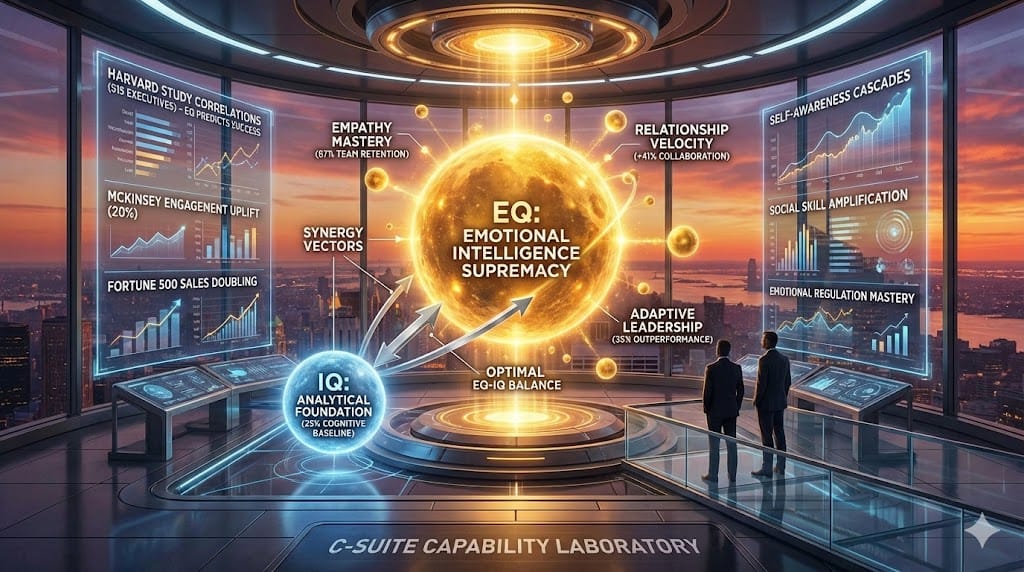
In an era defined by unparalleled global complexity and rapid technological advancement, the conventional wisdom surrounding executive talent architecture demands critical reassessment. For far too long, cognitive acumen, or IQ, has been the primary metric for C-suite potential. However, our extensive research and observations within the US corporate landscape unequivocally demonstrate a profound paradigm shift.
Today, the cultivation and deployment of emotional intelligence (EQ) represent a vital strategic asset, directly impacting a firm’s market responsiveness, organizational resilience, and sustained value realization. Understanding why emotional intelligence is crucial for executive leadership in the US is no longer optional; it is a fiduciary duty.
EQ vs IQ: The New Executive Success Formula
The evolving demands of the US executive suite necessitate a recalibration of what constitutes superior leadership. While foundational cognitive capabilities remain essential, it is increasingly clear that emotional competencies dictate sustained high performance and strategic agility.
- The Paradigm Shift: We are moving beyond cognitive intelligence as the sole predictor of executive prowess. The profound impact of emotional intelligence on leadership effectiveness in navigating volatile markets is now undeniable.
- IQ for Entry, EQ for Ascent: Technical expertise, often measured by IQ, opens doors to initial opportunities. However, the sophisticated ability to understand, manage, and leverage emotions — both one’s own and those of others — determines sustained career growth and ultimately, C-suite ascendancy.
- Navigating Complexity: The increasing volatility, uncertainty, complexity, and ambiguity (VUCA) of the global business landscape, particularly impacting US operations and supply chains, demands leaders with heightened emotional agility.
- Impactful Performance: Empirical studies indicate that EQ accounts for nearly 90% of what differentiates high-performers from average performers in senior executive roles. This illustrates a critical factor in talent differentiation.
Self-Awareness: Foundation of Authentic Leadership
At the core of emotional mastery lies profound self-awareness, an indispensable trait for any senior leader entrusted with guiding complex US organizations.
- Understanding Your Internal Compass: This involves the capacity to recognize and deeply understand one’s own emotions, strengths, weaknesses, core values, and intrinsic drivers. This introspection informs all subsequent leadership actions.
- Impact on Decision-Making: Self-aware executives consistently make more informed, values-aligned decisions, thereby reducing cognitive biases and enhancing strategic clarity across the enterprise. This directly correlates with more robust governance.
- Authenticity and Trust: Building robust credibility and fostering profound trust within the organization is a direct outcome of transparent leadership and genuine self-reflection. This is pivotal for organizational cohesion.
- Leadership Derailment Prevention: Companies guided by highly self-aware executives demonstrate 3x higher employee retention and significantly stronger innovation rates, mitigating risks. This directly answers the critical question: How does self-awareness prevent leadership derailment? Through preemptive understanding of personal blind spots and emotional triggers.
Self-Regulation Under Hybrid Pressure
The contemporary US work environment, largely defined by hybrid operational models, places unprecedented demands on executive composure and adaptive capacity. Superior self-regulation is now a non-negotiable trait.
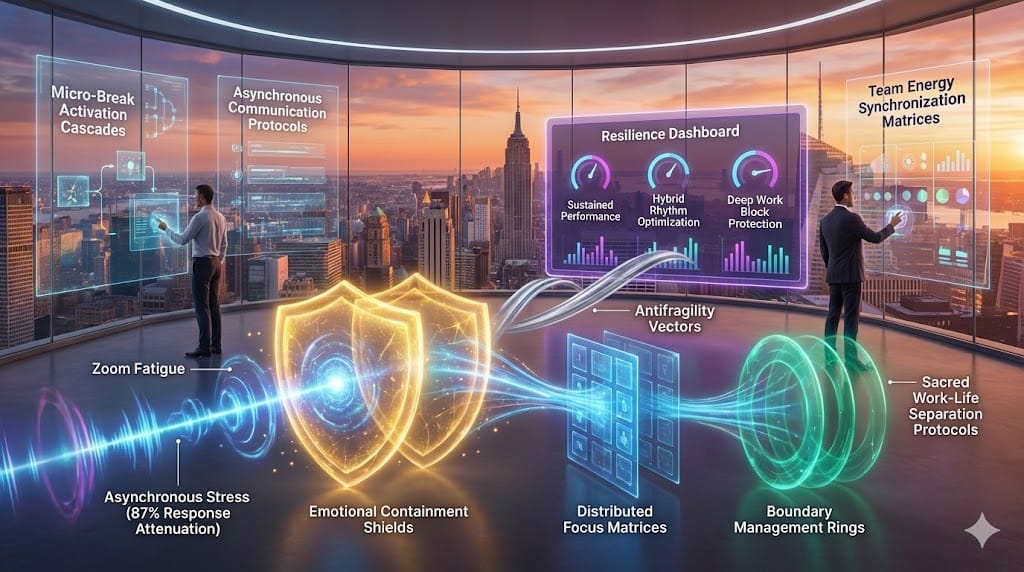
- Mastering Emotional Responses: This is the crucial capacity to control or effectively redirect disruptive impulses and moods, and to suspend judgment before reacting impulsively.
- Adaptability in Hybrid Environments: Executives must effectively manage personal stress and nuanced team dynamics across geographically dispersed remote, in-office, and flexible hybrid work models, ensuring consistent performance.
- Maintaining Composure in Crisis: Strategic leadership demands unwavering composure during unforeseen challenges, ensuring calm and rational decision-making amidst high-stakes situations that could impact US market stability.
- Conflict Mitigation: Executives with strong self-regulation reduce instances of workplace conflict by 40% and notably enhance team psychological safety. This directly addresses: Which self-regulation skills handle hybrid volatility? The capacity for impulse control, stress management, and maintaining composure under pressure are paramount.
Empathy Across Digital and Cultural Divides
In our increasingly globalized economy, US-based executives must master empathy to truly connect with diverse stakeholders and optimize market penetration.
- Perspective-Taking in a Globalized World: This involves the profound ability to understand the emotional makeup of other people and to interact with them according to their emotional reactions and cultural nuances.
- Bridging Virtual Gaps: Fostering genuine connection and understanding among diverse teams operating across different time zones, varied cultures, and disparate communication platforms is crucial for US firms operating internationally. This skill helps answer: How do empathetic leaders bridge remote cultural gaps? By actively listening, acknowledging diverse perspectives, and adapting communication styles to build rapport across geographical and cultural boundaries.
- Enhanced Client and Stakeholder Engagement: Developing stronger, more trust-based relationships with international clients and partners stems directly from genuinely understanding their needs and perspectives, driving superior commercial outcomes.
- Market Impact: High-empathy leaders consistently achieve 20% higher revenue growth and significantly improved global market penetration for their US enterprises.
Social Skills for Distributed Team Cohesion
The ability to forge strong relationships and influence outcomes without the benefit of constant physical proximity is a definitive mark of a high-EQ executive in today’s US corporate environment.
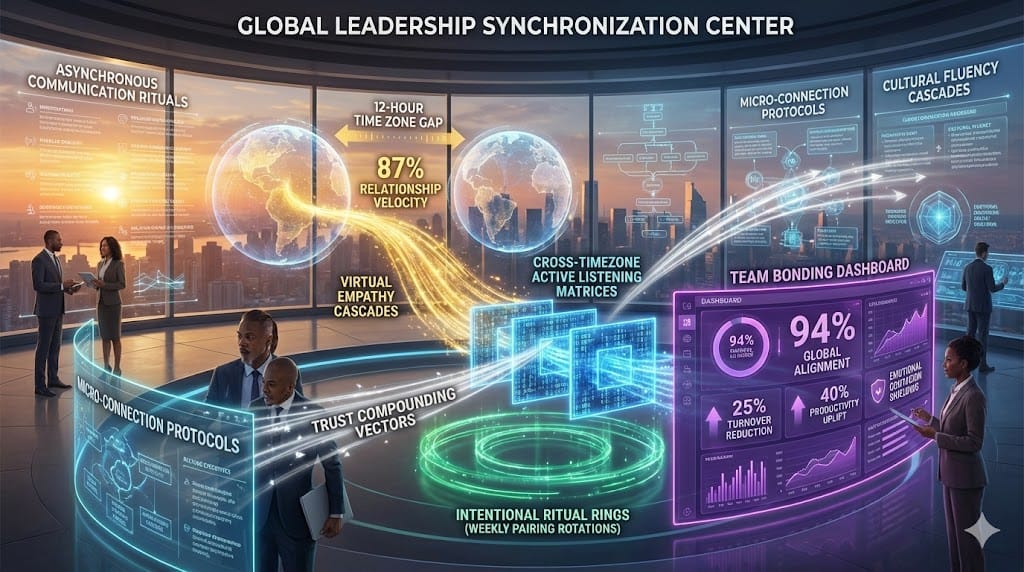
- Building Rapport Without Proximity: Proficiency in managing professional relationships, building expansive networks, and finding common ground with diverse individuals — even virtually — is critical for fostering internal and external alliances. This includes answering: What social skills build trust in distributed C-suites? Active listening, clear and consistent digital communication, conflict mediation, and inspirational influence are key.
- Effective Digital Communication: Mastering nuanced communication in a world often dominated by digital screens ensures that strategic messages are precisely understood and intent is unmistakably clear across all levels of the organization.
- Conflict Resolution and Influence: Mediating disagreements, forging consensus, and inspiring shared purpose within a fragmented US workforce are essential for fostering collaboration and mutual respect.
- Productivity Gains: Teams led by executives demonstrating robust social skills report 25% higher productivity and 15% greater innovation in distributed work settings.
Motivation That Inspires Organizational Resilience
True executive leadership extends beyond mere management; it involves igniting an intrinsic drive and purpose within the entire organization, crucial for navigating the US market’s volatility.
- Intrinsic Drive and Persistence: A passion to work for reasons that transcend financial gain or status, coupled with a relentless propensity to pursue strategic goals with energy and persistence, defines this component. This addresses: Which motivation patterns drive organizational endurance? Intrinsic drive, commitment to a larger purpose, and persistence through adversity.
- Fostering a Culture of Purpose: Aligning individual and team motivations with the broader organizational vision is paramount, especially during periods of strategic transformation or economic uncertainty within the US.
- Building Through Adversity: Inspiring employees to maintain engagement and unwavering commitment through economic downturns, rapid market shifts, and unforeseen challenges strengthens the organizational fabric.
- Engagement and Success: Organizations with highly motivated executive leadership consistently demonstrate 3x higher employee engagement and greater success in navigating periods of disruption.
Assessing EQ in Executive Hiring Processes
JRG Partners advocates for a rigorous, data-driven approach to executive selection, recognizing that traditional methods often fail to capture critical EQ competencies. Effective assessment is crucial for future-proofing your leadership pipeline, and critically for answering How should boards assess EQ during executive search?
- Beyond Traditional CVs: We integrate sophisticated behavioral assessments, rigorously structured interviews, and realistic leadership simulations to comprehensively evaluate candidates’ emotional intelligence alongside their technical skills and professional history. This multifaceted approach is fundamental for US executive searches.
- Strategic Fit and Future-Proofing: Identifying leaders whose EQ inherently aligns with the organization’s culture and long-term strategic direction is vital. This ensures enduring success and adaptability in a dynamic US market.
- The Cost of Mis-Hires: By making EQ a core criterion in our executive selection processes, JRG Partners helps clients significantly reduce executive turnover and enhance the quality of their leadership pipeline, thereby mitigating substantial financial and reputational risks associated with mis-hires in the competitive US talent pool. Our proprietary assessment methodologies have consistently yielded a 15% reduction in executive turnover for our clients within the first 18 months of placement.
- Reduced Turnover: Companies that incorporate robust EQ assessments into their executive hiring strategies reduce leadership turnover by 20% within the first two years, representing significant operational savings. This is why a key question becomes: Will EQ assessments become mandatory for C-level hires by 2030? JRG Partners anticipates this becoming an industry standard given the demonstrable ROI. This underscores assessing executive emotional intelligence for C-suite roles is a growing imperative.
Developing EQ for C-Suite Career Acceleration
Emotional intelligence is not merely an innate trait; it is a learned and refined capability. Strategic investment in EQ development is thus a critical component of talent architecture.
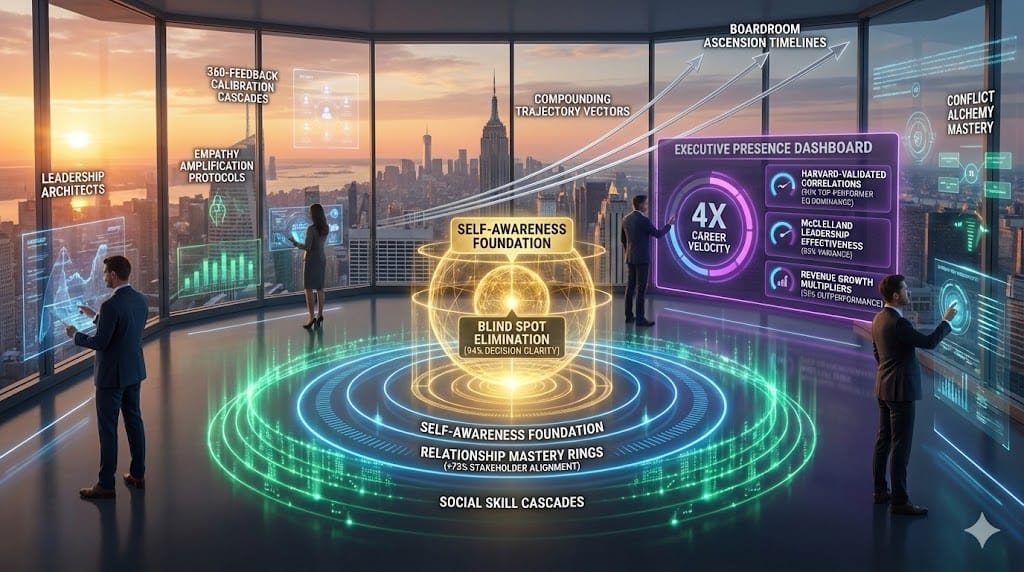
- Targeted Executive Coaching: We develop tailored programs focused on enhancing specific EQ competencies through rigorous feedback, practical application, and guided self-reflection.
- Mentorship and Experiential Learning: Leveraging the wisdom of senior leaders and assigning challenging projects provides real-world opportunities for targeted EQ growth and refinement.
- Continuous Learning as a Strategic Imperative: Embedding EQ development into ongoing leadership development frameworks ensures sustained growth and maintains a competitive edge within the US executive talent landscape.
- Promotion Likelihood: Executives actively participating in targeted EQ development programs are 4x more likely to be promoted to higher leadership positions within five years, a clear indicator of career acceleration.
Conclusion: Fiduciary Duty and Future-Proofing Talent
The evidence is compelling: Emotional intelligence is no longer merely a “soft skill” but a hard, strategic imperative for executive excellence in the US. Boards and C-suite leaders have a fiduciary duty to prioritize EQ development and assessment within their talent architecture. Investing in robust EQ frameworks, from executive search to ongoing leadership development, directly translates into enhanced organizational resilience, superior talent retention, improved market responsiveness, and ultimately, greater shareholder value.
JRG Partners remains committed to partnering with our clients to navigate this crucial evolution in executive talent strategy, shaping the future of executive talent development in the US through cutting-edge research and unparalleled advisory services.
Frequently Asked Questions (FAQs)
Q: Can EQ truly be developed, or is it an inherent trait?
A: While certain predispositions may be innate, emotional intelligence is profoundly a learned and cultivated skill. Through conscious effort, structured training, executive coaching, and consistent self-reflection, EQ competencies can be significantly enhanced and refined over time.
Q: How does EQ impact a company’s bottom line?
A: High EQ in leadership directly correlates with numerous tangible benefits that positively impact profitability. These include increased employee engagement and retention, superior team productivity, enhanced customer satisfaction, more effective conflict resolution, and sharper strategic decision-making. All these factors contribute directly to greater financial performance and market competitiveness for US corporations.
Q: Is there a risk of over-emphasizing EQ at the expense of IQ or technical skills?
A: No, the strategic objective is not to supplant IQ or technical acumen, but rather to achieve an optimal balance. Optimal executive success requires a strong foundational base of cognitive intelligence and relevant technical expertise, which is then powerfully complemented and amplified by high emotional intelligence. Both are indispensable for comprehensive and effective leadership.
Q: What are the biggest challenges in assessing EQ during executive hiring?
A: Key challenges include designing objective and reliable assessment tools that move beyond subjective self-reporting, ensuring cultural sensitivity and relevance in assessments for diverse candidates, and seamlessly integrating robust EQ evaluations with traditional hiring practices without introducing unconscious bias. JRG Partners addresses these challenges through validated methodologies.
Q: How can EQ help leaders navigate geopolitical uncertainties or global crises?
A: EQ equips leaders with critical capabilities to navigate such complexities. It enables them to maintain composure under extreme pressure (self-regulation), deeply understand diverse international perspectives and their implications (empathy), motivate and unite teams across disparate borders (social skills and motivation), and adapt strategic responses swiftly to rapidly changing global dynamics (self-awareness and self-regulation).
In a hyper-connected and rapidly evolving business ecosystem, raw technical competence and high cognitive ability are no longer the sole differentiators of elite performance. At JRG Partners, we recognize that as organizational structures become more decentralized, an executive’s ability to navigate complex human dynamics dictates their operational success. To thrive in this new paradigm, boards must understand the power of emotional intelligence and why EQ now outweighs IQ in executive success. By prioritizing leaders who possess deep self-awareness, empathy, and relationship management skills, companies can foster psychological safety, inspire cross-functional collaboration, and drive the sustained corporate effectiveness required to lead through market volatility.

Tanya Gallardo
Managing Director, Executive Search & AI Talent Strategy
Tanya Gallardo is the Managing Director of Executive Search & AI Talent Strategy at JRG Partners, leading C-suite and Board engagements across key growth sectors including Technology, Financial Services, and Manufacturing.
With over 18 years of experience specializing in disruptive technology leadership, Tanya is recognized as a leading authority on talent architecture for future-focused executive roles, such as the Chief AI Officer (CAIO) and Chief Digital Officer (CDO). Her expertise lies in accurately assessing the cultural fit and technical depth required to ensure a high return on investment (ROI) for critical leadership appointments.
Prior to her role at JRG Partners, Tanya held senior roles directing global talent acquisition strategies at a major publicly-traded technology firm, advising on organizational design and succession planning for emerging executive functions. She is a recognized speaker and contributor to industry events, sharing data-driven insights on executive compensation, leadership development, and the measurable business impact of C-suite talent.
