



In an era defined by rapid technological convergence, the caliber of leadership steering digital initiatives within the manufacturing sector has become a paramount determinant of market leadership. Our advisory at JRG Partners consistently observes that the nuanced process of evaluating manufacturing executive IoT data analytics experience transcends traditional technical assessments.
It demands a holistic appraisal of an executive’s capacity to harness industrial internet of things (IIoT) and advanced analytical capabilities to sculpt sustainable competitive advantage and fortify operational resilience across expansive, often global, footprints within the US market. A robust evaluation extends beyond mere technical competence, delving into an executive’s strategic foresight in leveraging these digital twin and data intelligence tools for competitive differentiation and long-term enterprise value realization. Our commitment at JRG Partners is to identify leaders who not only understand the digital imperative but possess a verifiable track record of translating vision into tangible, quantifiable impact.
Key Takeaways for Board Consideration
- A robust evaluation extends beyond technical competence, assessing an executive’s strategic foresight in leveraging IIoT and data analytics for sustainable competitive advantage and operational resilience on a global scale.
- Prioritize evidence of tangible, quantifiable impact: measurable improvements in production efficiency, quality assurance, cost reduction, and market responsiveness derived directly from digital initiatives.
- Look for a proven leader adept at unifying diverse stakeholders (IT, Operational Technology, Operations, Supply Chain) towards a common digital vision, fostering a data-driven culture, and navigating complex vendor ecosystems.
- Crucially, assess their experience in implementing robust cybersecurity governance within connected operations and demonstrating successful, scalable IIoT rollouts across multi-site or international footprints, proving practical application and not just theoretical understanding.
I. Strategic Vision for Digital Manufacturing Transformation
A transformative manufacturing leader must articulate a compelling digital roadmap. This encompasses:
- Defining a clear, long-term blueprint for IIoT and business intelligence that aligns with global market shifts and enterprise strategic goals.
- Demonstrated ability to identify emerging technologies—from edge computing to generative AI—and their strategic implications for manufacturing processes and supply chain optimization.
- Examples of translating broad strategic objectives into actionable digital initiatives that drive competitive differentiation and operational excellence.
II. Track Record of IoT-Driven Plant Performance Gains
Evidence of direct impact is non-negotiable. Boards must ask: “What IoT metrics prove manufacturing executive impact?”
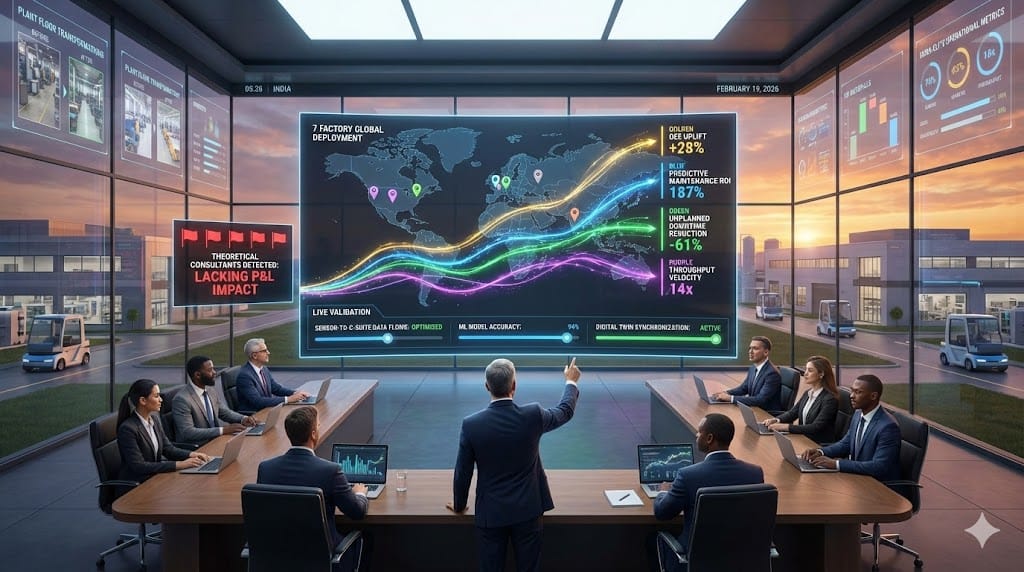
- Specific case studies and quantifiable metrics (e.g., Overall Equipment Effectiveness (OEE) improvement, energy consumption reduction, defect rate decrease, throughput increase) resulting from IIoT deployments.
- Experience with various IIoT applications: predictive maintenance, real-time quality control, asset tracking, environmental monitoring, and connected worker solutions.
- Understanding of how IIoT data can optimize resource allocation and enhance operational agility across diverse manufacturing sites.
III. Data Analytics Maturity: From Reporting to Prescriptive Insight
The evolution of an organization’s analytical capability is a direct reflection of executive leadership. Boards must discern: “Which data analytics depth signals C-suite readiness?”
- Evidence of elevating an organization’s analytical capabilities from basic descriptive reporting to diagnostic, predictive, and ultimately prescriptive insights.
- Examples of implementing advanced analytics, machine learning, and AI models to solve complex operational challenges (e.g., demand forecasting accuracy, process optimization, anomaly detection).
- Experience in establishing robust data governance frameworks, ensuring data quality, and promoting data literacy within the organization.
IV. Cross-Functional IoT Implementation Leadership
Digital transformation mandates collaboration. “What questions reveal true cross-functional IoT leadership?” This is critical for assessing an executive’s ability to unite disparate teams.
- Demonstrated ability to lead and integrate teams across traditionally siloed departments (IT, Operational Technology, Engineering, Production, Supply Chain, R&D) for successful IIoT initiatives.
- Examples of building consensus, managing interdepartmental dependencies, and facilitating effective communication to ensure holistic digital transformation.
- Experience in developing change agents and champions for IIoT adoption across the enterprise.
V. Vendor/Partner Ecosystem Navigation Experience
The strategic selection and management of technology partners are pivotal. “Which vendor ecosystems test manufacturing IoT maturity?” An executive’s skill here distinguishes a strategist from a mere operator.
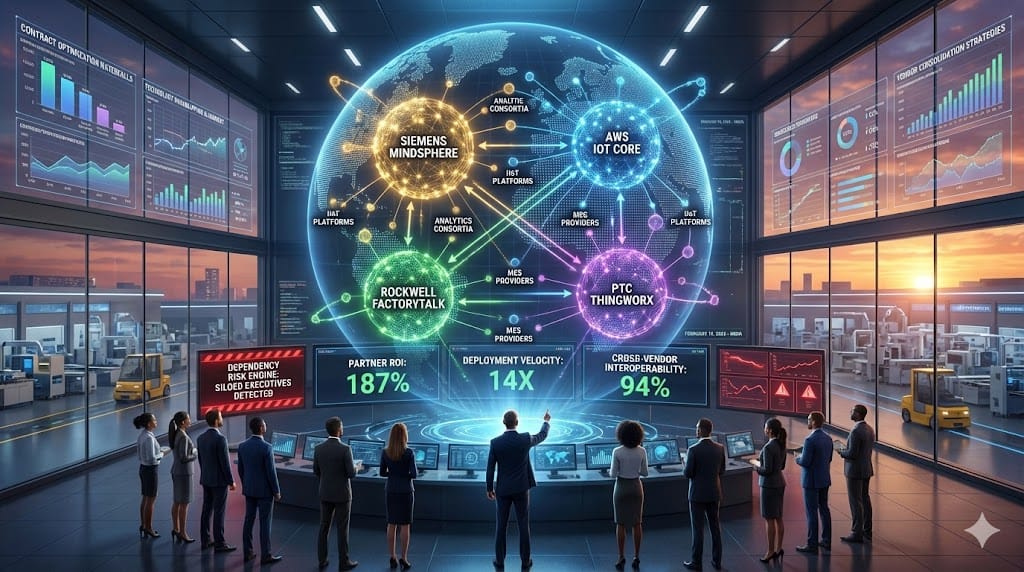
- Proven track record of strategic evaluation, selection, and management of IIoT platforms, analytics tools, system integrators, and technology partners. At JRG Partners, our assessment delves into how candidates handle this, helping distinguish effective operators from strategic consultants.
- Experience in negotiating complex contracts, managing service level agreements, and ensuring interoperability within a diverse technology stack.
- Understanding of open standards, proprietary solutions, and the strategic implications of vendor lock-in versus flexibility.
VI. Change Management for Digital Manufacturing Adoption
Technological change, however beneficial, often meets resistance. “What change management proves digital transformation success?” It’s about cultural transformation as much as technical.
- Strategies for overcoming resistance to technological change and fostering a proactive, data-driven culture throughout the workforce.
- Examples of successful training programs, upskilling initiatives, and employee engagement strategies designed for new digital manufacturing roles.
- Experience in communicating the value proposition of digital transformation to diverse stakeholders, from the shop floor to the executive board.
VII. Cybersecurity Governance in Connected Operations
The interconnected factory floor presents unique vulnerabilities. Boards must evaluate: “How should executives handle OT cybersecurity governance?”
- Deep understanding of the unique threat landscape and vulnerabilities associated with industrial IIoT and connected operational technology (OT) systems.
- Experience in developing and implementing comprehensive cybersecurity frameworks (e.g., NIST CSF, IEC 62443) specifically tailored for manufacturing environments.
- Demonstrated leadership in incident response planning, risk mitigation strategies, and ensuring data integrity and intellectual property protection across digital assets.
VIII. Scalability Proof: Multi-Site IoT Rollouts
Theory must translate to practical, widespread application.
- Concrete examples of successfully planning, executing, and standardizing IIoT deployments across multiple plants, regions, or global operations.
- Experience in designing scalable architectures, data models, and implementation methodologies that facilitate replication and rapid expansion.
- Understanding of the logistical, cultural, and regulatory challenges involved in international IIoT deployments and strategies for overcoming them.
IX. ROI Quantification from Analytics Initiatives
Ultimately, digital investments must yield measurable financial returns. The ability for quantifying ROI from analytics initiatives is a fiduciary duty of senior leadership.
- Proven ability to establish clear key performance indicators (KPIs) and develop robust methodologies for measuring and reporting the financial return on investment (ROI) for advanced analytics projects.
- Examples of creating compelling business cases, securing funding, and demonstrating the tangible economic impact of analytics, beyond just operational improvements.
- Experience in communicating financial outcomes to executive leadership and stakeholders, driving continued investment in digital initiatives.
X. Future-Proofing and Innovation Leadership
A true leader anticipates tomorrow’s challenges and opportunities. Boards should inquire: “How will edge AI reshape manufacturing executive evaluation?”
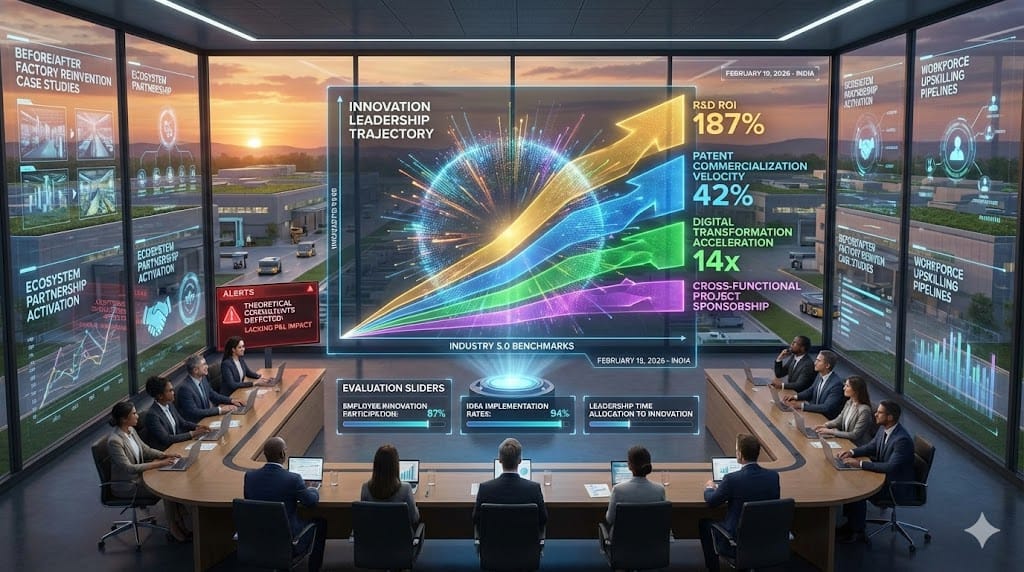
- Anticipation of future trends in IIoT, Artificial Intelligence, edge computing, digital twins, and their potential to disrupt or enhance manufacturing operations.
- Experience in fostering a culture of continuous innovation, R&D collaboration, and agile experimentation within the manufacturing context.
- Leveraging data and IIoT to drive new product development, service models, and customer experiences.
Strategic Intelligence & Market Insights
- 84% of manufacturers believe smart factory initiatives will be a critical competitive differentiator within the next five years. (Source: PwC)
- Companies extensively leveraging data analytics report a 6-8% improvement in decision-making speed compared to those with limited adoption. (Source: Deloitte)
- Predictive maintenance, enabled by IoT, can reduce unplanned downtime by up to 50% and extend asset lifespan by 20%. (Source: World Economic Forum)
- Cyberattacks targeting industrial operational technology (OT) systems rose by 200% in 2023, emphasizing critical governance needs. (Source: IBM X-Force Threat Intelligence Report)
- Only 30% of companies claim to have a comprehensive strategy for scaling IIoT initiatives beyond initial pilot projects. (Source: IoT Analytics)
- Organizations with mature data governance practices can achieve a 20% higher return on their data investments. (Source: Gartner)
Frequently Asked Questions for Board Deliberation
- What specific metrics should we use to evaluate an executive’s past success in driving IIoT-led plant performance gains?
- How can we assess an executive’s ability to bridge the cultural and technical divide between IT and OT teams effectively?
- What are the critical red flags to look for when evaluating an executive’s experience with large-scale digital transformation initiatives?
- How does a strategist ensure that cybersecurity governance for IIoT extends beyond compliance to true operational resilience?
- What methodologies are most effective for an executive to quantify ROI from analytics initiatives, particularly those with long-term or indirect benefits?
- How can an executive demonstrate “future-proofing” capabilities beyond merely being aware of emerging technologies?

Tanya Gallardo
Managing Director, Executive Search & AI Talent Strategy
Tanya Gallardo is the Managing Director of Executive Search & AI Talent Strategy at JRG Partners, leading C-suite and Board engagements across key growth sectors including Technology, Financial Services, and Manufacturing.
With over 18 years of experience specializing in disruptive technology leadership, Tanya is recognized as a leading authority on talent architecture for future-focused executive roles, such as the Chief AI Officer (CAIO) and Chief Digital Officer (CDO). Her expertise lies in accurately assessing the cultural fit and technical depth required to ensure a high return on investment (ROI) for critical leadership appointments.
Prior to her role at JRG Partners, Tanya held senior roles directing global talent acquisition strategies at a major publicly-traded technology firm, advising on organizational design and succession planning for emerging executive functions. She is a recognized speaker and contributor to industry events, sharing data-driven insights on executive compensation, leadership development, and the measurable business impact of C-suite talent.
