


For decades, the five-year strategic plan has been a central feature of corporate leadership. Organizations used long-term roadmaps to establish growth targets, allocate resources, enter new markets and define their competitive priorities. These plans provided direction and helped leadership teams coordinate decisions across departments.
However, the business environment heading into 2027 is making traditional long-range planning increasingly difficult. Artificial intelligence is changing industries, geopolitical developments are affecting international trade, customer expectations are evolving and economic conditions can shift faster than many organizations can revise their strategies.
A five-year plan developed around one set of assumptions may become outdated before its major initiatives are completed. This does not mean businesses should abandon long-term thinking. Instead, leaders need to reconsider how they translate long-term ambitions into decisions and actions.
The emerging approach combines a clear strategic direction with shorter execution cycles, continuous performance reviews and the flexibility to adjust priorities. In 2027, the question is no longer whether companies should plan five years ahead. It is whether they can remain committed to a direction without becoming trapped by an outdated roadmap.
Why Traditional Five-Year Planning Is Under Pressure
Traditional strategic planning often assumes that organizations can forecast important market developments with reasonable confidence. Leaders establish objectives, develop financial projections and assign resources based on expectations about customers, competitors, technology and economic conditions.
These assumptions become difficult to maintain when external conditions change rapidly.
Several developments are putting pressure on conventional planning models:
- Artificial intelligence: New technologies are changing productivity, business models and the skills organizations need.
- Geopolitical uncertainty: Tariffs, trade restrictions and changing international relationships influence sourcing and market access.
- Economic volatility: Interest rates, financing conditions and customer demand can affect investment decisions.
- Competitive disruption: New entrants and technology-enabled competitors can challenge established business models.
- Workforce transformation: Organizations must continuously reconsider talent requirements, leadership capabilities and employee development.
These factors do not make long-term strategy unnecessary. They make it more important to distinguish between strategic objectives that should remain stable and operating assumptions that may need frequent revision.
Why Long-Term Vision Still Matters
One common mistake is assuming that greater uncertainty requires organizations to abandon long-term planning altogether. Without a clear direction, businesses risk becoming reactive, shifting resources between competing priorities and losing alignment across leadership teams.
Long-term strategy provides a framework for making decisions when conditions are uncertain. It helps executives determine which opportunities deserve investment, which capabilities must be developed and which activities no longer support the organization’s objectives.
1. Strategy Creates Organizational Alignment
A clear strategic direction helps employees understand where the company is going and how their responsibilities contribute to broader objectives.
Without that direction, individual departments may pursue conflicting priorities. Sales teams may focus on rapid expansion while operations prioritize cost reduction. Technology teams may invest in systems that do not support the company’s most important business objectives.
Long-term strategic priorities provide a common reference point for these decisions.
2. Major Investments Require Extended Planning Horizons
Some business decisions cannot be evaluated within a quarterly or annual cycle. Manufacturing facilities, acquisitions, technology infrastructure, market expansion and leadership succession may require several years to deliver their intended value.
Organizations need a long-term view to understand the financial and operational consequences of these investments. Shorter planning cycles should improve decision-making, not eliminate consideration of long-term returns.
3. Strategic Continuity Supports Competitive Advantage
Companies often need sustained investment to develop capabilities that competitors cannot easily replicate. These may include advanced manufacturing expertise, strong customer relationships, proprietary technology, distribution networks or specialized leadership talent.
Frequent changes in direction can undermine these efforts. Leaders must know when to adjust execution and when to remain committed to a strategic objective despite temporary challenges.
From Fixed Five-Year Plans to Continuous Strategic Planning
The alternative to traditional planning is not an absence of structure. It is a more adaptable approach that separates long-term ambition from short-term execution.
Instead of treating a five-year document as a fixed commitment, leadership teams can establish a strategic direction and regularly review the assumptions supporting their plans.
1. Establish a Long-Term Direction
Organizations should define what they want to achieve over an extended period. This may involve improving market position, entering new markets, increasing operational efficiency, developing new products or transforming the business model.
These ambitions should be specific enough to guide decisions but flexible enough to accommodate changes in market conditions.
2. Convert Strategy Into Annual Priorities
Long-term objectives should be translated into annual business priorities. These priorities give departments a clearer understanding of the capabilities, investments and results required during the coming year.
Annual planning also creates an opportunity to reassess resource allocation. If a market opportunity changes or an initiative underperforms, executives can adjust spending and responsibilities without abandoning the overall strategy.
3. Use Quarterly Reviews to Reassess Assumptions
Quarterly strategic reviews can help leadership teams identify changes that require action. These discussions should go beyond reviewing financial performance.
Executives should examine whether customer behavior, competitive conditions, technology developments, supplier relationships and workforce requirements still support the original assumptions.
The purpose is not to rewrite the strategy every quarter. It is to identify emerging risks and opportunities before they become significant business problems.
4. Build Scenarios Instead of Depending on One Forecast
Traditional plans frequently rely on a central forecast. However, a single projection may not adequately reflect uncertainty around economic conditions, regulation, technology or demand.
Scenario planning gives executives alternative ways to think about the future. For example, organizations may examine how their strategy would change under stronger growth, weaker demand, higher financing costs or significant technological disruption.
Each scenario should identify potential consequences, decision triggers and appropriate responses. This makes strategic planning more practical when actual conditions differ from expectations.
The Role of AI and Data in Strategic Planning
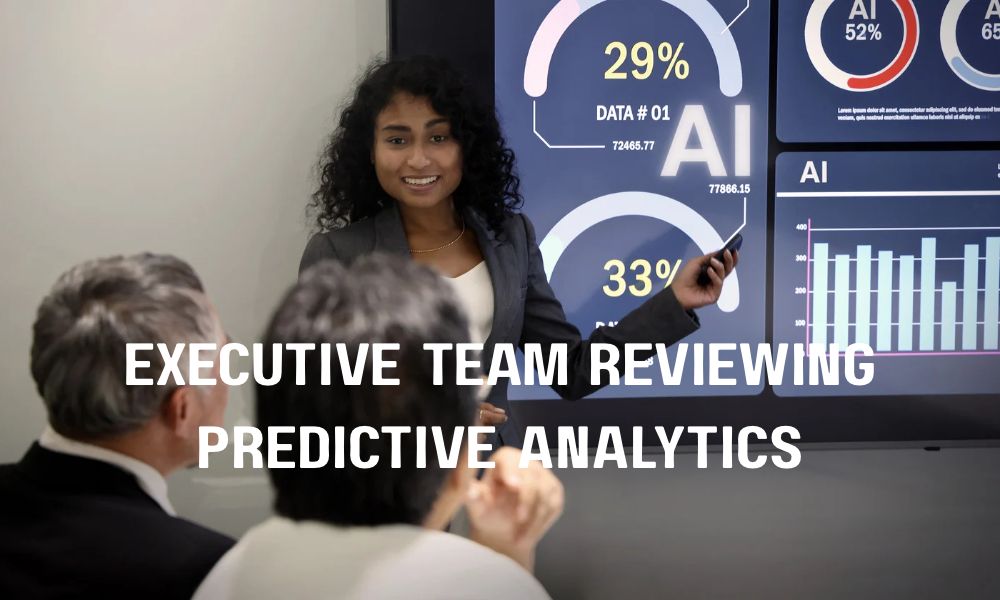
Artificial intelligence and advanced analytics are changing how organizations collect information, identify patterns and evaluate business decisions. These tools can help leadership teams develop a more informed view of changing market conditions.
1. Improving Market and Competitive Intelligence
AI-enabled analytics can help organizations process large volumes of market information, customer feedback and operational data. This can support earlier identification of changing customer preferences, competitive activity and emerging risks.
However, technology should support executive judgment rather than replace it. Leaders still need to assess the reliability of information, understand its limitations and consider the broader business context.
2. Connecting Strategy With Operational Performance
Strategic objectives become more useful when executives can connect them to measurable business outcomes. Data dashboards can help leadership teams monitor revenue performance, customer retention, operational efficiency, project delivery and investment returns.
This visibility makes it easier to identify whether strategic initiatives are producing meaningful progress or require intervention.
3. Using Predictive Insights Responsibly
Predictive analytics can help companies evaluate possible changes in demand, inventory requirements and operational performance. These insights can improve planning, but predictions should not be treated as guaranteed outcomes.
Executives must understand the assumptions behind analytical models and ensure that decisions account for risks that historical data may not capture.
Why Strategic Flexibility Requires Stronger Leadership
Flexible planning can create problems when leadership teams lack clear decision-making responsibilities. If priorities change frequently without accountability, employees may become confused about which initiatives matter most.
Executives must therefore balance adaptability with discipline. This requires a clear process for reviewing priorities, evaluating proposals and communicating changes across the organization.
1. CEOs Must Protect Strategic Focus
The CEO is responsible for maintaining alignment between long-term ambitions and changing business conditions. This includes deciding which priorities should remain unchanged and which assumptions need reconsideration.
Effective CEOs prevent short-term pressures from constantly redirecting the organization while remaining willing to make adjustments when evidence supports a different approach.
2. CFOs Must Connect Strategy With Capital Allocation
The CFO plays a central role in determining whether strategic priorities are financially achievable. This includes evaluating investment returns, managing cash flow and ensuring that resources are allocated to initiatives with credible business value.
As plans become more adaptable, financial leaders must also improve the organization’s ability to reassess budgets and investment commitments when conditions change.
3. COOs Must Translate Strategy Into Execution
The COO ensures that strategic priorities become operational improvements. This involves coordinating departments, managing implementation timelines and identifying execution barriers.
When business priorities change, operational leaders must determine how processes, people and resources should be adjusted without creating unnecessary disruption.
4. Chief Strategy Officers Must Challenge Assumptions
Chief strategy officers help leadership teams evaluate whether their strategic assumptions remain relevant. They monitor external developments, assess competitive positioning and identify opportunities that may require changes in direction.
Their role increasingly involves facilitating continuous strategic discussions rather than producing a planning document once a year.
What Organizations Should Stop Doing in 2027
Modernizing strategic planning also requires recognizing practices that can prevent organizations from responding effectively to change.
- Treating forecasts as guarantees: Financial projections should be reviewed as assumptions evolve, not treated as fixed outcomes.
- Confusing planning with execution: A detailed strategy document has little value without clear ownership and measurable actions.
- Changing priorities without explanation: Frequent strategic shifts can weaken employee confidence and create organizational confusion.
- Ignoring external developments: Market, technology and regulatory changes should inform regular strategic discussions.
- Measuring activity instead of outcomes: Leadership teams should evaluate whether initiatives deliver meaningful business results.
- Keeping outdated initiatives alive: Projects that no longer support strategic objectives should be reassessed rather than protected by previous commitments.
These changes help organizations create a planning process that is both disciplined and responsive.
How Executive Recruitment Will Influence Strategic Agility
As strategic planning becomes more continuous, organizations need executives who can operate effectively without relying on fixed assumptions. Traditional experience remains valuable, but leaders must also demonstrate adaptability, analytical judgment and the ability to translate changing priorities into action.
Boards and CEOs should evaluate whether executive candidates have demonstrated the ability to:
- Lead organizations through significant market or technological changes.
- Reassess business assumptions using financial and operational evidence.
- Balance long-term investment with short-term performance requirements.
- Coordinate cross-functional teams around changing priorities.
- Communicate strategic adjustments clearly to employees and stakeholders.
- Maintain accountability when business conditions create unexpected challenges.
Organizations may also need to reconsider the balance of experience across their leadership teams. A business pursuing digital transformation may require stronger technology and innovation leadership, while a company focused on operational expansion may need executives with manufacturing, supply chain or capital investment expertise.
JRG Partners helps organizations identify and recruit executive leaders whose experience aligns with their strategic objectives. As companies move toward more adaptable planning models, selecting leaders who can combine long-term judgment with effective execution becomes increasingly important.
Conclusion: The Five-Year Plan Is Evolving, Not Disappearing
The five-year strategic plan is not necessarily dead. What is becoming less effective is the assumption that a detailed roadmap can remain unchanged despite significant shifts in technology, competition, economic conditions and customer expectations.
Organizations still need long-term ambitions, investment priorities and a clear understanding of where they want to compete. However, those ambitions must be supported by shorter execution cycles, regular reviews and the ability to respond when underlying assumptions change.
In 2027, successful strategic planning will depend on the ability to combine direction with flexibility. Companies that maintain this balance can adapt to uncertainty without losing organizational focus.
Ultimately, the quality of a strategy depends not on how many years it covers, but on whether leaders can turn it into measurable progress while responding intelligently to change.
Frequently Asked Questions
1. Is the five-year strategic plan becoming obsolete?
Traditional fixed five-year plans are becoming harder to maintain in rapidly changing markets. However, long-term strategic direction remains important when supported by regular reviews and adaptable execution plans.
2. Why is strategic planning changing in 2027?
AI adoption, geopolitical uncertainty, economic volatility and changing customer expectations are making business assumptions less predictable and increasing the need for continuous planning.
3. What is continuous strategic planning?
Continuous strategic planning is an approach in which organizations maintain long-term objectives while regularly reviewing performance, external developments, resource allocation and business assumptions.
4. How often should companies review their strategies?
Many organizations benefit from quarterly strategic reviews combined with annual planning. The appropriate frequency depends on industry conditions, business complexity and the pace of change.
5. What role does AI play in strategic planning?
AI can support market analysis, forecasting, competitive intelligence and performance monitoring. Executives should use these insights alongside human judgment and appropriate data oversight.
6. Which executives are responsible for strategic planning?
The CEO provides overall direction, while the CFO, COO, chief strategy officer and other functional leaders contribute financial, operational and market expertise to planning and execution.
7. What leadership skills are important for strategic agility?
Strategic judgment, adaptability, financial discipline, analytical thinking, communication and cross-functional leadership help executives adjust plans while maintaining organizational focus.

Tanya Gallardo
Managing Director, Executive Search & AI Talent Strategy
Tanya Gallardo is the Managing Director of Executive Search & AI Talent Strategy at JRG Partners, leading C-suite and Board engagements across key growth sectors including Technology, Financial Services, and Manufacturing.
With over 18 years of experience specializing in disruptive technology leadership, Tanya is recognized as a leading authority on talent architecture for future-focused executive roles, such as the Chief AI Officer (CAIO) and Chief Digital Officer (CDO). Her expertise lies in accurately assessing the cultural fit and technical depth required to ensure a high return on investment (ROI) for critical leadership appointments.
Prior to her role at JRG Partners, Tanya held senior roles directing global talent acquisition strategies at a major publicly-traded technology firm, advising on organizational design and succession planning for emerging executive functions. She is a recognized speaker and contributor to industry events, sharing data-driven insights on executive compensation, leadership development, and the measurable business impact of C-suite talent.
