


Insurance companies are entering 2026 with a leadership challenge that extends beyond filling vacancies. As underwriting becomes more data-driven, claims operations face increasing complexity, and distribution models evolve, insurers need executives who can combine deep industry expertise with commercial judgment, technological fluency, and the ability to lead organizational change.
Competition for experienced leaders is particularly important in underwriting, claims, and distribution. These functions directly influence risk selection, loss performance, customer relationships, revenue generation, and profitability. A leadership vacancy in any one of them can affect the insurer’s ability to execute its strategy.
At the same time, the talent market is changing. Insurers must compete with other carriers, brokers, managing general agents, insurtech companies, and financial services organizations for professionals who understand emerging risks and can lead transformation. They also need to retain experienced employees while developing the next generation of insurance leadership.
For companies planning executive appointments in 2026, the challenge is to identify leaders who can deliver immediate results while preparing their organizations for future demands. This requires a more deliberate approach to executive search, compensation, succession planning, and leadership assessment.
Why Insurance Leadership Hiring Is Becoming More Competitive
Insurance leadership recruitment is being influenced by several overlapping developments. Technology is changing how insurers evaluate risk and manage claims. Competitive market conditions are increasing the importance of disciplined underwriting. Distribution is becoming more interconnected, with digital channels and partnerships creating new ways to reach customers. Meanwhile, experienced professionals remain essential for handling complex decisions that cannot be reduced to automated processes.
The Q3 2026 U.S. Insurance Labor Market Study from The Jacobson Group and Aon found that 89% of surveyed carriers intended to increase or maintain staffing over the following 12 months. Technology, underwriting, and claims were among the industry’s greatest hiring needs, while executive, actuarial, and technology positions remained particularly challenging to fill.
These findings suggest that insurers are not simply competing to expand their workforces. They are also competing to secure specialized capabilities and maintain operational continuity as experienced employees move between organizations or approach retirement.
Experienced Talent Is Difficult to Replace Quickly
Insurance expertise develops through years of evaluating risks, interpreting policy language, managing complex claims, negotiating with brokers, and understanding how individual decisions affect portfolio performance.
Replacing an experienced executive involves more than finding someone with a similar job title. The new leader must understand the company’s risk appetite, operating model, distribution relationships, regulatory obligations, and internal decision-making processes.
This challenge is particularly significant in specialty insurance, commercial property and casualty, professional liability, cyber insurance, and other areas where technical judgment and market relationships can influence business results.
Technology Is Changing Leadership Requirements
Artificial intelligence, predictive analytics, automation, and digital platforms are influencing underwriting, claims, and distribution. However, technology investment alone does not guarantee better performance. Insurers need leaders who understand where automation can improve efficiency, where human judgment remains essential, and how new systems should be governed.
Executives must also help employees adapt to changing responsibilities. As routine processing becomes increasingly automated, insurance professionals may spend more time handling exceptions, interpreting complex information, advising customers, and making decisions that require experience.
For insurers, this means evaluating candidates on their ability to lead both business performance and workforce transformation.
Underwriting Leadership: Competing for Executives Who Can Balance Growth and Risk
Underwriting leaders occupy a critical position between commercial growth and risk management. They must help insurers attract profitable business without allowing competitive pressure, inadequate pricing, or inconsistent risk selection to weaken portfolio performance.
In 2026, this responsibility is becoming more complex as insurers respond to changing market conditions, evolving exposures, advances in analytics, and growing demand for specialized coverage.
The Chief Underwriting Officer’s Expanding Mandate
The Chief Underwriting Officer (CUO) is responsible for translating the insurer’s risk appetite and business strategy into underwriting policies, portfolio priorities, pricing discipline, and operating standards.
Depending on the organization, the role may include oversight of multiple business lines, underwriting governance, delegated authority relationships, portfolio analytics, and underwriting talent development.
Leading candidates should demonstrate the ability to:
- Establish and maintain underwriting standards aligned with the insurer’s risk appetite.
- Balance premium growth with loss performance and long-term profitability.
- Use portfolio data and analytics to improve risk selection and pricing decisions.
- Develop underwriting teams with the technical knowledge required for complex exposures.
- Strengthen relationships with brokers, reinsurers, and distribution partners.
- Introduce technology without weakening underwriting accountability.
- Monitor emerging risks and adapt underwriting strategies as market conditions change.
Employers should assess candidates on their actual decision-making authority and business results. A senior underwriter who has managed a profitable portfolio may be an attractive candidate, but the CUO role also requires enterprise-level judgment, leadership development, and the ability to establish consistent standards across teams.
Finding Underwriting Leaders With Modern Analytical Skills
Traditional underwriting expertise remains important, but insurers increasingly value executives who can work effectively with data scientists, actuaries, product teams, and technology leaders.
These executives do not necessarily need to develop analytical models themselves. They must, however, understand how models influence risk selection, pricing, portfolio monitoring, and underwriting workflows. They should also recognize the limitations of available data and the importance of model validation, explainability, and human oversight.
When evaluating candidates, hiring teams should explore examples of how they used analytics to improve underwriting decisions. Questions should address the business problem, the quality of available data, how recommendations were implemented, and whether the resulting improvements were sustained.
Specialty Insurance Creates Additional Hiring Challenges
Specialty insurers may need leaders with expertise in areas such as cyber, environmental liability, professional indemnity, marine, energy, or complex commercial risks. These markets require knowledge of specialized exposures, policy structures, broker relationships, and changing risk conditions.
Candidate pools can be narrow when an insurer requires experience in a specific line of business, an established distribution network, and a proven record of portfolio management.
Employers should distinguish between essential technical requirements and preferences that can be developed after appointment. Broadening the search to adjacent specialty lines may reveal candidates with transferable expertise who would otherwise be overlooked.
Claims Leadership: Turning Complex Loss Management Into a Competitive Advantage

Claims performance influences customer confidence, operating costs, loss outcomes, and an insurer’s reputation. While claims functions have historically been evaluated largely through expense and efficiency measures, their strategic importance extends further.
Effective claims leadership can improve the quality of customer interactions, identify emerging loss patterns, strengthen fraud controls, and provide feedback that informs underwriting decisions. Conversely, weak claims governance can contribute to delays, inconsistent settlements, unnecessary disputes, and reputational damage.
What Insurers Need From a Chief Claims Officer
The Chief Claims Officer (CCO) or equivalent senior leader must establish a claims operating model that balances speed, technical quality, customer outcomes, and financial discipline.
Depending on the insurer, the role may oversee claims operations, complex loss management, litigation strategy, third-party administrators, fraud prevention, claims technology, and vendor relationships.
High-performing claims executives should bring experience in:
- Managing complex claims portfolios and improving resolution processes.
- Establishing consistent claims handling standards and escalation procedures.
- Controlling loss adjustment expenses without compromising claim quality.
- Overseeing litigation, external counsel, adjusters, and other service providers.
- Using claims data to identify trends and inform business decisions.
- Improving customer communication and complaint management.
- Developing technical claims talent and succession plans.
Employers should evaluate the scale and complexity of a candidate’s previous claims responsibilities. Experience managing high-volume personal lines claims may not fully prepare an executive for a role centered on complex commercial liability, catastrophic losses, or specialty claims.
Digital Claims Transformation Requires Experienced Leadership
Automation can help insurers streamline document processing, triage claims, identify anomalies, and improve workflow visibility. However, implementing these capabilities requires careful operational design and governance.
Claims executives must determine which activities can be automated, which decisions require specialist review, and how exceptions should be escalated. They must also ensure that efficiency targets do not encourage inappropriate claim denials, inconsistent treatment, or insufficient investigation.
When interviewing candidates, ask them to explain a claims transformation they have led. Explore how they established performance baselines, involved frontline employees, measured customer outcomes, and maintained appropriate oversight of automated decisions.
Retaining Technical Claims Expertise
One of the most difficult claims leadership challenges is maintaining technical knowledge as experienced professionals leave the workforce or move into other roles. Complex claims expertise cannot always be transferred through conventional training programs alone.
Insurers should look for leaders who can establish mentoring arrangements, structured case reviews, technical development pathways, and succession plans for critical specialties.
They should also assess whether candidates can build a culture in which experienced claims professionals share knowledge rather than allowing essential expertise to remain concentrated among a small number of individuals.
Distribution Leadership: Winning Through Relationships, Data, and Channel Strategy
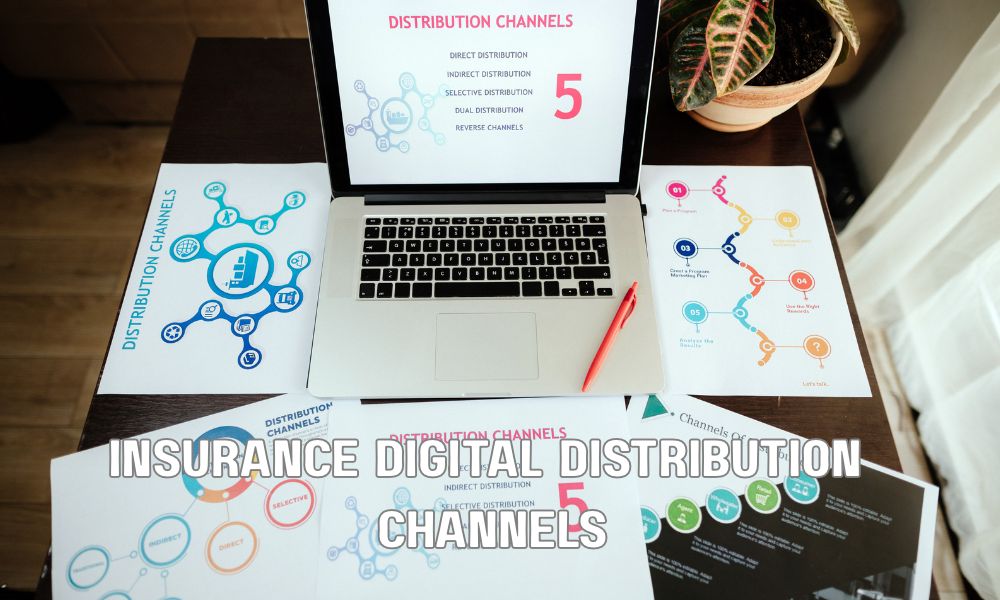
Insurance distribution is evolving as carriers expand digital capabilities, strengthen broker partnerships, develop embedded insurance relationships, and reconsider how different channels contribute to profitable growth.
Distribution leaders must navigate this complexity while maintaining strong relationships with intermediaries, improving customer access, and ensuring that growth aligns with underwriting capacity and business objectives.
The Chief Distribution Officer’s Strategic Responsibilities
The Chief Distribution Officer (CDO), Head of Distribution, or equivalent executive typically oversees the insurer’s distribution strategy and relationships with brokers, agents, managing general agents, strategic partners, or direct sales channels.
The precise scope varies by business model. A commercial insurer may depend heavily on broker relationships, while a personal lines carrier may place greater emphasis on direct acquisition, agency networks, and digital customer journeys.
Effective distribution leaders should demonstrate the ability to:
- Develop a channel strategy aligned with the insurer’s target markets and risk appetite.
- Build productive relationships with brokers, agents, and strategic partners.
- Identify new distribution opportunities without weakening underwriting discipline.
- Improve channel profitability and monitor the quality of business generated.
- Use customer and performance data to evaluate channel effectiveness.
- Coordinate distribution priorities with product, underwriting, marketing, and claims teams.
- Lead digital initiatives while preserving valuable relationship-based selling.
A candidate’s existing broker relationships can be useful, but employers should not treat a contact list as a substitute for strategic leadership. The strongest candidates understand how to build durable partnerships, create value for intermediaries, and develop a distribution model that can adapt to changing market conditions.
Balancing Digital Distribution With Intermediary Relationships
Digital tools can simplify customer acquisition, quoting, policy administration, and servicing. Yet many commercial and specialty insurance products continue to depend on broker expertise and detailed discussions about risk exposures and coverage requirements.
Distribution executives must understand where digital channels can improve access and efficiency without creating unnecessary channel conflict. They should also be able to align incentives, service standards, and data-sharing arrangements across different routes to market.
During interviews, ask candidates to describe how they have improved channel performance or introduced a new distribution model. Look for evidence that they considered profitability, customer experience, partner engagement, and operational readiness rather than focusing exclusively on sales volume.
Frequently Asked Questions
Why are insurers competing for underwriting leaders in 2026?
Insurers need experienced underwriting leaders who can balance premium growth with risk selection, pricing discipline, portfolio performance, and emerging exposures. Greater use of analytics and automation also increases the importance of leaders who can combine technical judgment with effective technology governance.
What skills should insurers prioritize when hiring claims executives?
Employers should prioritize complex claims management, technical judgment, operational leadership, litigation oversight, customer outcomes, and claims analytics. Experience implementing technology while maintaining appropriate investigation, escalation, and decision-making standards can also be valuable.
What makes a strong insurance distribution executive?
A strong distribution executive combines commercial strategy with relationship management, channel economics, customer understanding, and cross-functional leadership. The individual should know how to develop broker and agent partnerships, expand appropriate channels, and align sales priorities with underwriting and profitability objectives.
How can insurers attract executives who are not actively seeking new roles?
Insurers should communicate a clear leadership mandate, competitive compensation, meaningful decision-making authority, and a credible opportunity to influence business performance. Confidential outreach and a well-defined recruitment process can help engage experienced candidates who are satisfied with their current positions but open to a compelling opportunity.
Should insurers recruit executives from outside the insurance industry?
Cross-sector recruitment can expand the talent pool, particularly for technology-enabled operations, analytics, transformation, and commercial leadership. However, candidates must still demonstrate the technical understanding, regulatory awareness, and decision-making capabilities required for the position.
How can insurance companies reduce the risk of leadership vacancies?
Companies can reduce succession risk by identifying critical positions, developing internal candidates, documenting essential responsibilities, and maintaining relationships with external talent. Proactive planning gives insurers more options when a key executive leaves or the business enters a new phase of growth.
Conclusion: Treat Insurance Leadership as a Strategic Advantage
Competition for underwriting, claims, and distribution leaders in 2026 reflects a broader shift in the insurance industry. Insurers need executives who can protect technical standards, improve commercial performance, lead digital transformation, and develop the next generation of insurance professionals.
Winning these candidates requires more than offering an attractive compensation package. Companies must define their leadership needs clearly, understand the available talent market, assess candidates against measurable outcomes, and provide an opportunity that aligns with the executive’s expertise and ambitions.
Insurers that approach executive recruitment strategically can strengthen critical functions, reduce succession risk, and build the leadership capabilities required for long-term performance. A disciplined search process also helps organizations avoid costly hiring mismatches and identify candidates who can contribute beyond the immediate vacancy.
For organizations seeking specialized leadership talent, JRG Partners’ Insurance Industry Executive Recruiters can be a relevant resource when planning executive hiring across underwriting, claims, distribution, and other critical insurance functions.

Tanya Gallardo
Managing Director, Executive Search & AI Talent Strategy
Tanya Gallardo is the Managing Director of Executive Search & AI Talent Strategy at JRG Partners, leading C-suite and Board engagements across key growth sectors including Technology, Financial Services, and Manufacturing.
With over 18 years of experience specializing in disruptive technology leadership, Tanya is recognized as a leading authority on talent architecture for future-focused executive roles, such as the Chief AI Officer (CAIO) and Chief Digital Officer (CDO). Her expertise lies in accurately assessing the cultural fit and technical depth required to ensure a high return on investment (ROI) for critical leadership appointments.
Prior to her role at JRG Partners, Tanya held senior roles directing global talent acquisition strategies at a major publicly-traded technology firm, advising on organizational design and succession planning for emerging executive functions. She is a recognized speaker and contributor to industry events, sharing data-driven insights on executive compensation, leadership development, and the measurable business impact of C-suite talent.
