



The global electronics and semiconductor manufacturing landscape is undergoing a tectonic geographic and strategic shift. Driven by the historic capital deployment of the U.S. CHIPS and Science Act, escalating geopolitical trade tensions, and the vulnerabilities exposed by recent global supply chain fractures, the mandate to reshore advanced manufacturing is absolute. Hundreds of billions of dollars are flowing into the construction of mega-fabs, advanced packaging facilities, and high-tech Electronics Manufacturing Services (EMS) plants across North America and Europe.
However, the organizations executing these massive capital projects are encountering a severe, systemic bottleneck: the absolute scarcity of executive leadership capable of operating them. For decades, the intellectual property and operational muscle required to run high-volume, advanced electronics manufacturing and semiconductor fabrication were heavily concentrated in East Asia. As western nations attempt to rebuild this industrial base, they are fighting over a critically shallow pool of domestic executive talent who actually possess the hands-on experience to ramp a greenfield facility to high-volume manufacturing (HVM).
Securing a visionary Fab General Manager, VP of Advanced Manufacturing, or Chief Supply Chain Officer is the definitive factor in whether a multi-billion-dollar facility achieves commercial yield or becomes a stranded asset. This comprehensive guide outlines the operational archetypes, critical competencies, and strategic recruitment frameworks required to secure elite leadership in the highly competitive, CHIPS-era advanced manufacturing market.
1. The Reshoring Reality: Why CHIPS-Era Leadership is Fundamentally Different
Operating a mature, fully depreciated electronics manufacturing facility in an established international tech hub is a fundamentally different mandate than building a greenfield fab in the United States or Europe. The executives tasked with leading this new wave of advanced manufacturing face a compounded set of unique challenges.
First, they must navigate a severely constrained domestic labor market, building technical and engineering workforces from the ground up in regions that lack an established semiconductor or advanced electronics ecosystem. Second, they must operate within the strict compliance frameworks of federal CHIPS funding, which includes intense environmental scrutiny, prevailing wage requirements, and national security guardrails. Finally, they must execute complex tool installations and facility qualifications amidst a highly volatile global supply chain for critical capital equipment.
A leader who excels at incremental continuous improvement in a legacy plant may completely collapse under the chaotic, high-stakes pressure of a $5 billion greenfield construction and ramp project. Search committees must prioritize extreme agility, cross-functional project governance, and deep technical resilience.
2. Key Executive Archetypes in Advanced Electronics Manufacturing
To successfully execute a domestic semiconductor or EMS strategy, organizations must secure specialized leadership across three critical operational pillars:
A. The Greenfield Fab & Facility Commander (VP / GM of Operations)
This executive is the absolute authority on the manufacturing floor. In the CHIPS era, they must be bilingual in large-scale construction management and microelectronics manufacturing. They are responsible for taking the facility from a concrete shell to First Article Inspection and ultimately to High-Volume Manufacturing (HVM).
- Core Strengths: Tool move-in/qualification, Overall Equipment Effectiveness (OEE), cleanroom protocol establishment, and massive workforce upskilling.
- Ideal Background: Decades of front-end operational progression, specifically possessing “ramp” experience—taking a new advanced node, fab, or surface-mount technology (SMT) line from R&D into commercial production.
B. The Process, Yield & Packaging Innovator (VP of Engineering)
As Moore’s Law slows, the battleground has shifted to advanced packaging (e.g., 2.5D/3D integration, chiplets) and extreme defect mitigation. The VP of Engineering bridges device physics with manufacturing reality, managing complex lithography, etch, and micro-assembly processes.
- Core Strengths: Root-cause defect isolation, Statistical Process Control (SPC), Design of Experiments (DOE), and accelerating learning cycles to achieve target baseline yields.
- Ideal Background: Advanced degrees in Materials Science, Chemical Engineering, or Electrical Engineering, paired with relentless, hands-on debugging experience on the manufacturing floor.
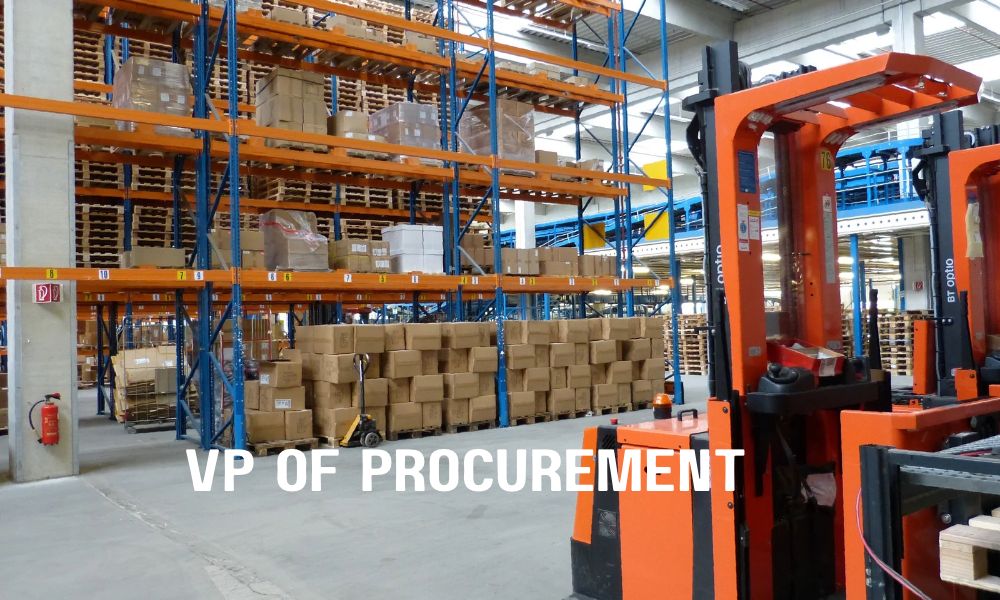
C. The Strategic Supply Chain & Procurement Chief (VP of Global Supply Chain)
An advanced electronics facility requires a flawless inflow of ultra-pure chemicals, specialized substrates, and replacement components. This executive builds the domestic supply chain ecosystem around the new facility, managing tier-1 vendors and mitigating geopolitical trade risks.
- Core Strengths: Capital equipment (CapEx) negotiations, inbound logistics orchestration, export control compliance (ITAR/EAR/BIS), and supplier localization.
- Ideal Background: A master negotiator who has navigated severe component shortages and successfully localized foreign suppliers to ensure supply chain sovereignty.
3. Critical Competencies to Evaluate for Domestic Mega-Facilities
When interviewing executive candidates for U.S. or European-based advanced manufacturing roles, boards and search committees must rigorously assess how they handle the specific frictions of domestic reshoring:
1. Domestic Workforce Architecture & Labor Relations
Western markets lack the deep pool of specialized fab technicians found in East Asia. An elite executive must demonstrate a proven framework for partnering with local community colleges, universities, and trade unions to build a sustainable, safety-first labor pipeline from scratch.
2. CapEx Discipline During Mega-Ramps
Equipping an advanced manufacturing facility requires staggering capital. The executive must demonstrate extraordinary commercial discipline in tool layout optimization, capacity planning, and managing the aggressive installation schedules of critical capital equipment to prevent billions of dollars from sitting idle.
3. Regulatory & Trade Compliance Stewardship
Executives managing subsidized U.S. facilities must operate under intense government oversight. They must be fluent in tracking and reporting the strict milestones required to unlock federal CHIPS grants, ensuring absolute adherence to environmental (NEPA) regulations, ITAR requirements, and EAR export controls.
4. The Advanced Electronics Executive Scorecard: 5 Vetting Domains
To ensure objective assessment across the executive interview process, search committees should score every finalist across five distinct operational domains utilizing a structured rubric:
| Evaluation Domain | Critical Core Competencies | Sample Board Interview Question |
|---|---|---|
| 1. Greenfield Construction & Ramp | Tool hook-up timelines, facility qualification, First Article milestones, capacity planning. | “Describe your framework for managing the transition of an empty cleanroom shell through tool hook-up and qualification under an aggressive, federally mandated timeline.” |
| 2. Yield & Defect Mitigation | SPC, automated defect inspection, inline metrology, rapid learning cycles, excursion recovery. | “Walk us through a major baseline yield excursion event at an advanced node. How did you isolate the root cause and align process engineering with operations to recover?” |
| 3. CapEx & Vendor Management | OEE optimization, tier-1 OEM negotiations, spare parts localization, supply chain resilience. | “How do you balance wafer cycle times or SMT throughput against tool utilization when dealing with complex bottlenecks and delayed equipment deliveries?” |
| 4. Workforce & Labor Strategy | Technician upskilling, union negotiations, safety culture, shift optimization. | “Given the severe shortage of specialized manufacturing technicians domestically, what specific localized apprenticeship pipelines have you built to staff a 24/7 line?” |
| 5. Regulatory & Trade Compliance | EAR/ITAR export controls, CHIPS Act milestone reporting, NEPA environmental permitting. | “How have recent changes in U.S. export controls and federal subsidy requirements impacted your equipment procurement strategy and engineering staffing?” |
5. Structuring Compensation to Win Elite Manufacturing Talent
The domestic advanced manufacturing talent pool is essentially a zero-sum game. To hire a top-tier Fab GM or Process VP, you must extract them from an active, highly competitive competitor. These leaders are heavily compensated and locked in by massive retention grants.
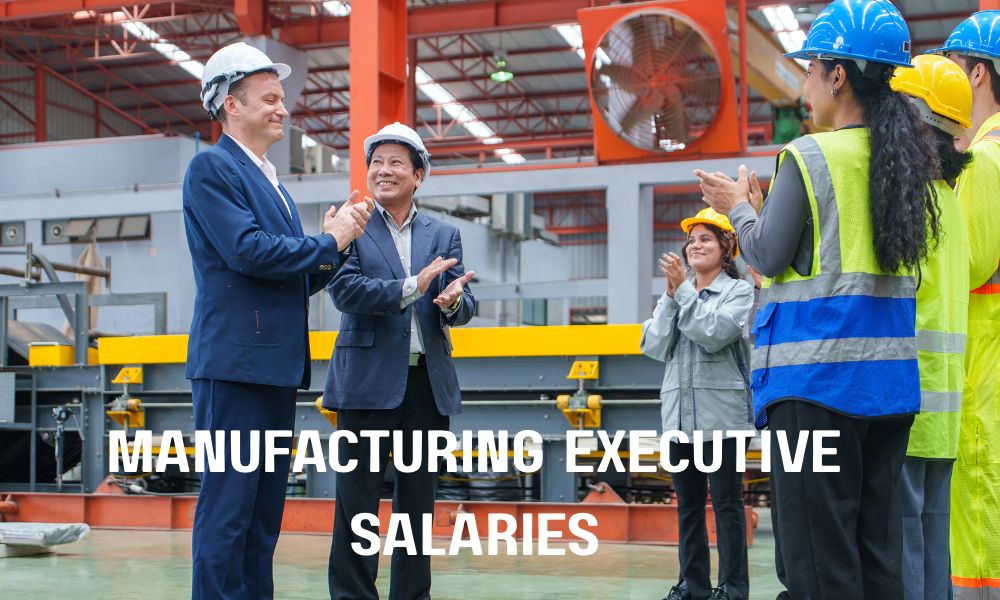
To successfully recruit them, organizations must structure aggressive, highly customized offers:
- Base Compensation: Base salaries for VP-level Operations and Engineering leaders at advanced facilities typically range from $350,000 to $600,000+, depending on the facility’s CapEx scale and technological complexity.
- Milestone-Driven Performance Bonuses: Annual cash incentives (40% to 75% of base) tied directly to hard operational KPIs: hitting First Silicon/First Article dates, achieving throughput targets, and clearing defect density hurdles.
- Make-Whole and Sign-On Equity: Elite candidates possess extensive unvested long-term incentive (LTI) pools. Securing them requires comprehensive “make-whole” cash or immediate equity grants to replace the value they forfeit by resigning.
- Comprehensive Relocation Packages: Because new mega-facilities are located in emerging tech hubs (e.g., Phoenix, Columbus, Taylor, Syracuse), top-tier candidates require premium relocation packages, including real estate transaction assistance and family integration support.
Conclusion
The U.S. and European advanced electronics build-out is a generational endeavor that will redefine global technological supremacy and domestic economic security. However, the billions of dollars allocated to building state-of-the-art mega-fabs and EMS facilities will underperform if the industry cannot solve its most acute bottleneck: executive leadership. The leaders required to execute this reshoring mandate must possess a rare amalgamation of atomic-level engineering expertise, massive CapEx discipline, and the agility to build localized workforces from the ground up.
Identifying, vetting, and successfully extracting these executives from global competitors requires surgical precision and deep industry fluency. Generalist recruitment strategies routinely fail to penetrate this insulated, highly specialized talent pool. By partnering with a dedicated Semiconductor & Electronics Manufacturing Executive Search Firm, corporate boards, foundries, and contract manufacturers gain the proprietary market intelligence, technical vetting rigor, and complex compensation negotiation expertise required to secure the visionaries who will build the future of domestic advanced manufacturing.
Frequently Asked Questions (FAQs)
1. Why is it so difficult to find Fab Operations leaders in the United States?
From the late 1990s through the 2010s, the vast majority of high-volume semiconductor and advanced electronics manufacturing migrated to Asia. Consequently, western markets stopped producing a deep pipeline of operational leaders with hands-on experience running advanced-node, high-volume mega-facilities. The current demand created by the CHIPS Act has vastly outstripped the remaining domestic supply.
2. Can an executive from aerospace or automotive manufacturing successfully run a semiconductor fab?
Generally, no. While automotive and aerospace leaders understand complex supply chains and large-scale manufacturing, semiconductor and advanced microelectronics operate at a microscopic, atomic scale. A single speck of dust or slight chemical impurity can destroy millions of dollars of product. The specific knowledge of photolithography, plasma etch, and nanometer-scale defect density cannot be easily learned on the job.
3. How long does a retained executive search for a Fab General Manager take?
A rigorous, retained executive search for a Fab GM or VP of Advanced Manufacturing typically requires 12 to 16 weeks. The talent pool is highly passive and heavily compensated. The timeline accounts for global market mapping, confidentially extracting candidates from competitors, rigorous technical vetting, and complex equity buy-out negotiations.
4. What role does advanced packaging play in the current talent market?
As traditional silicon scaling (Moore’s Law) hits physical limits, the industry is pivoting to advanced packaging (2.5D, 3D, chiplets) to drive performance. Executives who understand heterogeneous integration, complex substrate sourcing, and advanced thermal management are currently some of the most sought-after and highly compensated leaders in the electronics sector.
5. Why is “ramp” experience so highly valued in advanced manufacturing hiring?
Maintaining an established, mature facility is largely about optimizing existing processes. A “ramp” involves taking a completely new technology node or a brand-new facility and pushing it into high-volume commercial production. It is a chaotic, high-stress period characterized by low initial yields, constant tool debugging, and intense financial pressure. Executives who have survived and succeeded in a ramp environment are considered the elite of the industry.

Tanya Gallardo
Managing Director, Executive Search & AI Talent Strategy
Tanya Gallardo is the Managing Director of Executive Search & AI Talent Strategy at JRG Partners, leading C-suite and Board engagements across key growth sectors including Technology, Financial Services, and Manufacturing.
With over 18 years of experience specializing in disruptive technology leadership, Tanya is recognized as a leading authority on talent architecture for future-focused executive roles, such as the Chief AI Officer (CAIO) and Chief Digital Officer (CDO). Her expertise lies in accurately assessing the cultural fit and technical depth required to ensure a high return on investment (ROI) for critical leadership appointments.
Prior to her role at JRG Partners, Tanya held senior roles directing global talent acquisition strategies at a major publicly-traded technology firm, advising on organizational design and succession planning for emerging executive functions. She is a recognized speaker and contributor to industry events, sharing data-driven insights on executive compensation, leadership development, and the measurable business impact of C-suite talent.
