



Key Strategic Insights: U.S. Executive Talent Landscape 2026 Shifting Talent Acquisition Landscape: Executive placement remuneration in the U.S. is intensely fluid, shaped by sector-specific talent scarcity, evolving leadership role complexities, and a deepening focus on strategic value realization over mere transactional cost. Value-Centric Remuneration Dominates: While a percentage of first-year compensation remains a prevalent model, sophisticated […]
Category Archives: Executive Search Challenges

02
Jul
Jul
The State of US Chief Executive Leadership in 2026 The post-2025 era has marked a distinct inflection point in US corporate governance, with a pronounced desire for consistent leadership driving a decrease in executive turnover volatility. Boards are actively seeking stability to manage intricate supply chains, regulatory changes, and evolving consumer demands. Our proprietary intelligence […]
executive recruiting, Executive Search Challenges
How Much Does It Cost to Replace an Executive? The Full Turnover Math
02
Jul
Jul
The Unseen Calculus of Executive Talent Transition: A Strategic Imperative for Boards As JRG Partners continues to advise the nation’s leading corporations on critical human capital decisions, a recurring theme demanding heightened strategic oversight is the profound financial and operational impact of executive departures. The transition of senior leadership extends far beyond a simple replacement; […]
executive recruiting, Executive Search Challenges, For Employers, PE Recruitment Challenges
The Importance of Mentoring and Coaching Capabilities in Senior Executive Hires

24
Feb
Feb
In today’s dynamic US market landscape, where geopolitical shifts and technological accelerations reshape competitive paradigms daily, the foundational strength of an organization increasingly hinges on its leadership ecosystem. It is no longer sufficient for senior executives to merely possess functional brilliance; their ability to cultivate and scale leadership talent throughout the enterprise has become a paramount strategic imperative.
executive recruiting, Executive Search Challenges, For Employers, PE Recruitment Challenges
Case Study: Successful Transitions from Private Sector to Public Board Service

24
Feb
Feb
The imperative for robust, experienced leadership within the U.S. public sector has never been more pronounced. As we counsel our C-suite and senior executive clients, a critical area of focus is the nuanced process of transitioning from highly successful private sector careers to impactful public board service.
executive recruiting, Executive Search Challenges, For Employers
Recruiting the ‘Intrapreneurial’ Executive for Corporate Innovation

24
Feb
Feb
In an era defined by relentless disruption and accelerated market shifts, the traditional corporate playbook for growth is insufficient. For US corporations seeking to fortify their competitive advantage and ensure enduring relevance, the recruitment of intrapreneurial executives is not merely an option, but a profound strategic imperative .
executive recruiting, Executive Search Challenges, For Employers, PE Recruitment Challenges
The Board’s Role in Executive Well-Being and Burnout Prevention

24
Feb
Feb
In an increasingly complex and demanding US corporate landscape, the oversight of executive well-being has transcended its traditional classification as solely a human resources function. It is now a critical, strategic imperative, inextricably linked to organizational stability, leadership continuity, and long-term shareholder value creation.
executive recruiting, Executive Search Challenges, For Employers
Why Executive Storytelling and Communication Skills are More Important Than Ever

24
Feb
Feb
In an increasingly volatile, uncertain, complex, and ambiguous (VUCA) global landscape, particularly concerning the dynamic US market, effective executive communication is no longer merely an optional trait but a foundational strategic imperative. It’s time to critically ask: Why has executive storytelling overtaken technical skills in importance?
executive recruiting, Executive Search Challenges, For Employers, PE Recruitment Challenges
The Strategic Foresight Executive: Anticipating Global and Market Risks

24
Feb
Feb
The contemporary geopolitical and economic landscape demands an evolution in executive leadership, moving beyond conventional risk mitigation to proactive strategic foresight. As your Global Head of Research & Leadership Advisory, I emphasize that understanding what distinguishes foresight executives from traditional risk managers is paramount.
executive recruiting, Executive Search Challenges, For Employers, PE Recruitment Challenges
The New CEO-CMO Relationship: The Convergence of Brand and Business Strategy
24
Feb
Feb
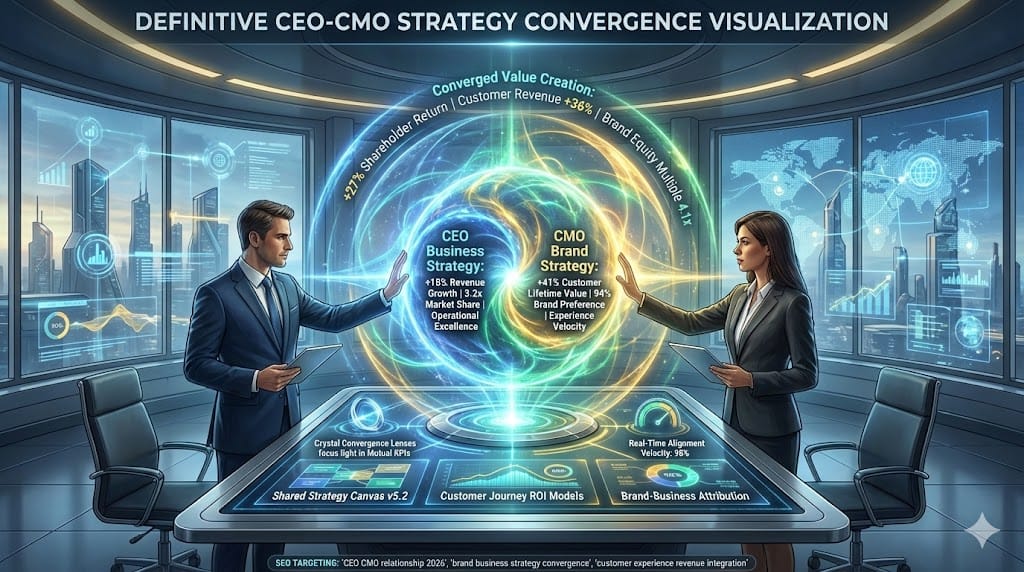
At , we observe a fundamental and irreversible transformation within the C-suite, particularly concerning the dynamic between the Chief Executive Officer (CEO) and the Chief Marketing Officer (CMO). This isn’t merely an evolution of functional roles; it represents a strategic imperative for unified leadership that directly impacts valuation and market longevity.