



In the dynamic and often unpredictable US business environment, the meticulous selection of top leadership talent is not merely an operational task; it is a critical differentiator for sustained organizational success. This confidential advisory outlines the profound strategic advantages of establishing a dedicated executive search committee, crucial for ensuring continuous strategic executive talent acquisition and robust governance. We, at JRG Partners, recognize that a structured approach to executive recruitment safeguards against talent missteps and propels forward-thinking enterprises.
Key Takeaways
- A dedicated committee ensures executive recruitment is treated as a continuous strategic imperative, not an ad-hoc task.
- Structured processes lead to more diverse, high-caliber candidate pools and reduce the risk of costly hiring mistakes.
- Clear governance and accountability improve board effectiveness and align leadership with long-term organizational strategy.
- Proactive executive search management enhances organizational resilience, innovation, and competitive advantage in the competitive US market.
The High Stakes of Executive Leadership Recruitment
In today’s volatile global landscape, particularly within the competitive US market, the right executive leadership is paramount for strategic direction and sustained organizational success. The complexity of these pivotal roles demands a rigorous, professional approach to leadership talent acquisition. For boards contemplating their governance structure, understanding what are the biggest risks of board-led executive searches without committees? is a foundational step. Our proprietary research at JRG Partners underscores that neglecting this dedicated focus can have severe consequences for value realization.
Over 50% of strategic initiatives fail due to leadership gaps or misaligned executive talent, directly impacting market share and investor confidence. This data point, consistent across various sectors in the United States, emphasizes the fiduciary duty of boards to optimize their talent architecture.
Failures of Ad-Hoc Executive Search Processes
Without a dedicated committee, critical leadership talent searches often suffer from inconsistent evaluation standards, reliance on limited personal networks, and a lack of defined accountability. This can lead to prolonged C-suite vacancies, suboptimal hires, and significant financial and reputational damage for US corporations. Such ad-hoc approaches frequently overlook critical evaluation metrics and fail to engage a diverse range of candidates, hindering progress towards inclusive leadership. This often results in a reactive stance rather than a proactive executive talent strategy.
Companies without a formal executive succession plan are 2.5 times more likely to report poor financial performance and leadership instability. This stark reality highlights the vulnerability of organizations relying on unstructured recruitment practices for their most senior roles.
Committee Charter: Governance and Authority Definition
A clearly defined committee charter is fundamental. It meticulously outlines the search committee’s mandate, scope of authority, decision-making processes, and reporting lines to the full board. This document ensures strategic alignment, prevents scope creep, and establishes clear expectations for all stakeholders involved in a top-tier executive search. It is essential to delineate precisely how should boards structure an executive search committee charter? to establish robust governance from the outset, a critical aspect of sound US corporate governance
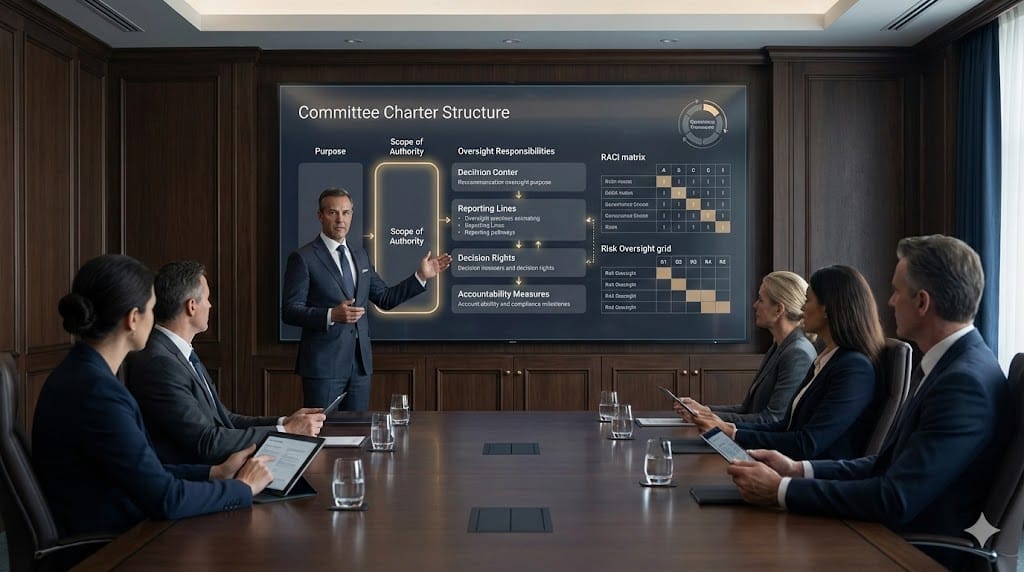
Boards with clearly defined committee charters experience a 15% reduction in internal conflict and faster, more confident decision-making regarding executive appointments. This structured approach is a hallmark of effective board governance in the US.
Role of the Search Committee Chair Responsibilities
The Search Committee Chair is pivotal in driving the process forward with integrity and efficiency. Responsibilities include setting the agenda, facilitating robust discussions, ensuring adherence to the charter, managing transparent communications between the committee, the board, and premier search firms like JRG Partners, and ultimately guiding the committee towards a consensus on top-tier candidates.
The Chair is the primary point of accountability for the search’s progress and ethical conduct. For optimal performance, boards must consider what qualifications define an effective search committee chair? to ensure strong leadership in this critical role. This leadership is instrumental in optimizing board oversight for C-suite appointments.
Building Diverse, High-Caliber Committee Composition
The effectiveness of any executive search committee is directly tied to its composition. Members should be selected for their diverse expertise (e.g., human resources, legal, finance, industry-specific knowledge), strategic perspective, and extensive professional networks across the US. A diverse committee inherently reduces unconscious bias and broadens the sourcing reach, leading to a more robust and inclusive candidate pool. This directly addresses how does committee composition impact hiring diversity outcomes? to foster innovation and resilience.
Diverse hiring committees are 1.5 times more likely to recommend diverse candidates for leadership roles, leading to stronger organizational performance. At JRG Partners, we have consistently observed that a variegated committee composition enriches the dialogue and assessment process, leading to more impactful leadership placements within the US market.
Search Firm Selection and Oversight Protocols
Choosing the right executive search firm is a critical strategic decision for any US-based organization. The dedicated committee must establish clear criteria for selection, including sector expertise, global reach (where relevant for specific mandates), methodological rigor, and an unwavering commitment to diversity and inclusion. Boards need to assess what criteria distinguish elite executive search firms? to partner with agencies that truly understand the nuances of the US talent market.

Robust oversight protocols, including regular performance reviews and transparent communication rhythms, ensure the firm, such as JRG Partners, remains aligned with the committee’s strategic objectives and ethical standards, safeguarding against potential derailment through clear governance protocols. This strategic partnership is vital for a successful leadership talent acquisition.
Candidate Pipeline Management and Vetting Standards
A dedicated committee implements systematic, multi-stage processes for sourcing, screening, and rigorously evaluating potential leadership candidates. This involves developing comprehensive candidate profiles, utilizing advanced assessment tools, and conducting thorough due diligence, including in-depth background and reference checks. The focus extends beyond current qualifications to assess long-term strategic fit, leadership potential, and cultural alignment within the US corporate context. Boards must also define how do committees standardize C-suite candidate evaluation? to ensure equity and objectivity in leadership selection.
Organizations with a structured, multi-stage vetting process reduce executive hiring mistakes by up to 40% within the first year. JRG Partners’ rigorous candidate assessment frameworks are designed precisely to mitigate these risks, ensuring long-term value creation through superior human capital strategy.
Interview Architecture and Decision Frameworks
Designing a structured interview process is key to objective evaluation in executive recruitment. This includes developing competency-based interview questions, standardized scoring matrices, and clear evaluation criteria to minimize subjective bias. Structured debriefs and predefined decision frameworks facilitate robust discussions and help the committee reach well-reasoned, consensus-driven recommendations for top leadership roles. This methodical approach is critical for navigating the complexities of C-suite selection in the US.
Performance Tracking: Measuring Search Outcomes
Effective committees define success metrics beyond merely filling a vacancy. This includes tracking candidate tenure, post-hire performance, strategic impact, and diversity targets within the organization. Regular post-hire reviews of the entire search process enable continuous improvement, ensuring that future searches leverage lessons learned and best practices. Understanding what metrics prove dedicated committees deliver superior hires? is essential for demonstrating the return on investment of a formalized approach to leadership acquisition.

Boards that regularly review the effectiveness of their executive search processes report 20% faster fill times for subsequent leadership roles, underscoring the efficiency gains of structured governance.
Conclusion: A Strategic Imperative for Board Effectiveness
Establishing a dedicated Executive Search Committee is no longer a luxury but a fundamental strategic imperative for modern board governance in the United States. It professionalizes the most critical aspect of board stewardship—leadership selection—safeguarding the organization’s future, enhancing its resilience, and ensuring a pipeline of exceptional talent capable of navigating geopolitical shifts and driving sustainable growth. This proactive approach is vital for future-proofing organizational leadership through proactive governance, ensuring long-term shareholder value and market leadership. At JRG Partners, we firmly believe this disciplined approach is key to securing enduring competitive advantage for our US clients.
FAQs
- How often should an executive search committee typically meet during an active search?
- What is the ideal size and composition for an executive search committee?
- Should current internal executives be included on the search committee?
- How does a dedicated committee manage confidentiality, especially in CEO succession planning?
- Is a dedicated committee justified for organizations that only hire executives sporadically?
As corporate governance demands intensify and shareholder activism reaches unprecedented levels, the process of selecting C-suite leaders has evolved from a periodic task into a high-stakes strategic imperative. At JRG Partners, we have found that leaving executive talent acquisition to an ad-hoc process or an overburdened compensation committee often leads to rushed placements and misaligned expectations. To mitigate these risks, forward-thinking organizations must recognize why your board needs a dedicated executive search committee. By establishing a permanent, specialized governance body focused solely on succession planning and candidate evaluation, boards can eliminate hiring biases, maintain rigorous confidentiality, and secure the leadership required to anchor long-term corporate effectiveness.

Tanya Gallardo
Managing Director, Executive Search & AI Talent Strategy
Tanya Gallardo is the Managing Director of Executive Search & AI Talent Strategy at JRG Partners, leading C-suite and Board engagements across key growth sectors including Technology, Financial Services, and Manufacturing.
With over 18 years of experience specializing in disruptive technology leadership, Tanya is recognized as a leading authority on talent architecture for future-focused executive roles, such as the Chief AI Officer (CAIO) and Chief Digital Officer (CDO). Her expertise lies in accurately assessing the cultural fit and technical depth required to ensure a high return on investment (ROI) for critical leadership appointments.
Prior to her role at JRG Partners, Tanya held senior roles directing global talent acquisition strategies at a major publicly-traded technology firm, advising on organizational design and succession planning for emerging executive functions. She is a recognized speaker and contributor to industry events, sharing data-driven insights on executive compensation, leadership development, and the measurable business impact of C-suite talent.
