


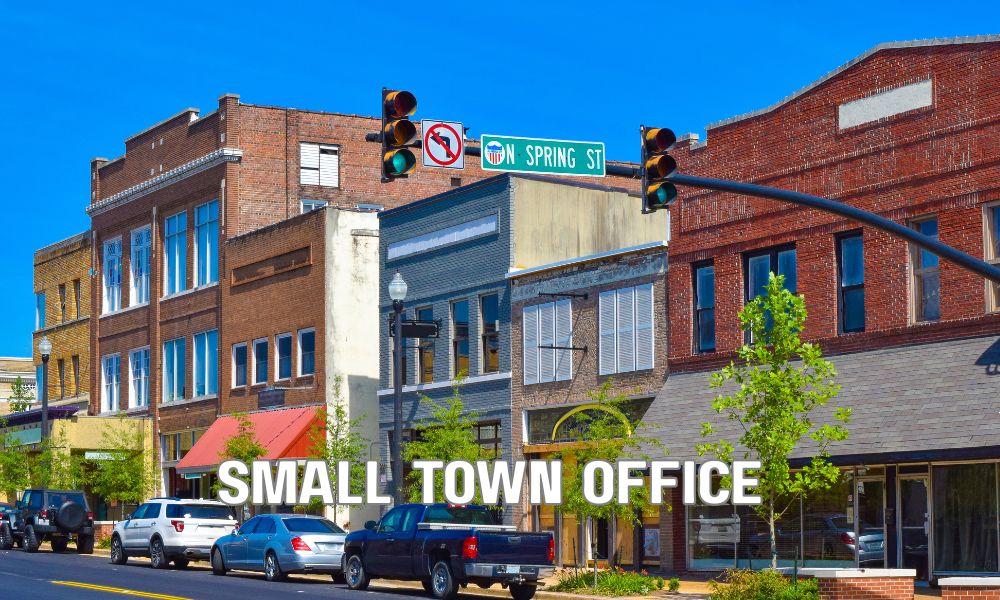
As Global Head of Research & Leadership Advisory at JRG Partners, I answer this question constantly from boards and employers, so here is the clear version. Sell the lifestyle and opportunity to the right candidates, consider relocation support and flexibility, and target executives for whom a rural location is an attraction rather than an obstacle. A rural or small-town headquarters narrows the pool but does not close it: some executives actively want the lifestyle, and others can be attracted with the right opportunity, relocation support, and flexibility. The key is targeting and selling to candidates for whom the location works, rather than fighting it.
Below we work through the definition, the practical mechanics, the trade-offs that matter, and the questions employers most often bring us on this topic. The aim is a working understanding a board member or hiring executive can use in a real decision, not a textbook entry.
Key Takeaways
- A rural headquarters narrows the pool but does not close it.
- Some executives actively want the small-town or rural lifestyle.
- Sell the lifestyle and opportunity to the right candidates.
- Consider relocation support and flexibility (e.g., partial remote) to widen the pool.
- Target candidates for whom the location is an attraction, not an obstacle.
The Location Narrows, But Doesn’t Close, the Pool
A rural or small-town headquarters does narrow the executive pool, some candidates will not relocate there, but it does not close it. The mistake is treating the location as an insurmountable obstacle. In reality, some executives actively want a small-town or rural lifestyle, lower cost of living, quality of life, space, community, and others can be attracted with the right opportunity and support. The task is to recognize the narrowed but real pool of candidates for whom the location works, and to target and attract them, rather than concluding that no strong executive will come.
Sell the Lifestyle and Opportunity
Attracting executives to a rural headquarters means selling both the opportunity (scope, impact, challenge, as for any role) and the genuine appeal of the lifestyle to candidates who value it. For the right candidate, a rural location offers quality of life, affordability, community, and space that urban locations cannot, and this is an attraction, not just a compromise. Selling the lifestyle compellingly, to candidates who want it, alongside a strong opportunity, is how you attract executives who will genuinely value being there, which also aids retention.
Support and Flexibility Widen the Pool
Practical measures widen the pool: relocation support (making the move easier and more attractive), and flexibility such as partial remote arrangements (letting an executive spend some time at the headquarters and some remotely) can attract candidates who would not fully relocate.

Flexibility, in particular, can substantially widen the pool by not requiring full relocation to a rural area. Combining a strong opportunity, the lifestyle appeal for those who value it, relocation support, and flexibility is how a rural-headquartered company attracts strong executives despite the location constraint.
How It Works in Practice
In practice, recruit executives to a rural headquarters by targeting candidates for whom the location works, some actively want the lifestyle, and selling both the opportunity and the genuine lifestyle appeal to them. You consider relocation support to ease the move and flexibility such as partial remote arrangements to widen the pool beyond those who will fully relocate. Rather than treating the location as an insurmountable obstacle, you recognize the narrowed but real pool, target and sell to it, and use practical measures to expand it. This attracts executives who will genuinely value the location, aiding retention too.
Why This Matters for Employers
Treating a rural headquarters as an insurmountable obstacle, and failing to target and sell to the candidates for whom it works, needlessly forgoes strong executives who would value the location. Recognizing the real pool, selling the lifestyle and opportunity, and using support and flexibility to widen it is what lets a rural-headquartered company attract strong leaders.
Common Misconceptions
The misconception is that no strong executive will relocate to a rural area, so the location is fatal to recruiting. In reality, some executives actively want the lifestyle, others can be attracted with the right opportunity and support, and flexibility can widen the pool. The location narrows the pool but does not close it, and targeting the right candidates overcomes it.
A Practical Example
A rural-headquartered company assumes no strong executive will relocate and struggles. A competitor targets executives who want a small-town lifestyle, sells the quality of life and a strong opportunity, offers relocation support and a partial-remote arrangement, and attracts a strong executive who genuinely values being there. Targeting the right candidates and using practical measures overcame the location constraint the first company treated as fatal.
The Bottom Line
Recruit executives to a rural or small-town headquarters by targeting candidates for whom the location is an attraction, selling the lifestyle and opportunity, and using relocation support and flexibility to widen the pool, because the location narrows but does not close the pool of strong executives.
Related Resources
For employers going deeper, see How Do I Attract Executives to a Company in a ‘Boring’ Industry, Should I Pay for an Executive Candidate’s Spouse to Visit Before Relocation, Selling the Role.
Frequently Asked Questions
- Q: How do I recruit executives to a rural headquarters?
- A: Target candidates for whom the location works, sell the lifestyle and opportunity, and use relocation support and flexibility to widen the pool.
- Q: Will strong executives relocate to a rural area?
- A: Some actively want the small-town or rural lifestyle, and others can be attracted with the right opportunity and support, so the location narrows but does not close the pool.
- Q: How do I sell a rural location?
- A: By selling both the opportunity and the genuine lifestyle appeal, quality of life, affordability, community, space, to candidates who value it, alongside a strong role.
- Q: Can flexibility help?
- A: Yes; partial remote arrangements can attract candidates who would not fully relocate, substantially widening the pool for a rural-headquartered company.
- Q: Is a rural headquarters fatal to recruiting?
- A: No; it narrows the pool but does not close it, and targeting the right candidates with the lifestyle appeal, support, and flexibility overcomes the constraint.

Tanya Gallardo
Managing Director, Executive Search & AI Talent Strategy
Tanya Gallardo is the Managing Director of Executive Search & AI Talent Strategy at JRG Partners, leading C-suite and Board engagements across key growth sectors including Technology, Financial Services, and Manufacturing.
With over 18 years of experience specializing in disruptive technology leadership, Tanya is recognized as a leading authority on talent architecture for future-focused executive roles, such as the Chief AI Officer (CAIO) and Chief Digital Officer (CDO). Her expertise lies in accurately assessing the cultural fit and technical depth required to ensure a high return on investment (ROI) for critical leadership appointments.
Prior to her role at JRG Partners, Tanya held senior roles directing global talent acquisition strategies at a major publicly-traded technology firm, advising on organizational design and succession planning for emerging executive functions. She is a recognized speaker and contributor to industry events, sharing data-driven insights on executive compensation, leadership development, and the measurable business impact of C-suite talent.
